One Day in Montepulciano: A Walkable Itinerary for the Steep Hill Town
Plan one day in Montepulciano with a realistic walking route: Il Corso, Piazza Grande, an underground cellar tasting, pici and San Biagio, plus parking tips.
On this page
Montepulciano rewards a single well-paced day because almost everything you came for sits on one ridge: a main street lined with wine shops and artisan boutiques, a Renaissance piazza, churches stacked along the slope and a celebrated temple just below the walls. The catch is the gradient. The old town is compact but steep from the bottom, so the order in which you climb matters more than the number of stops you tick off.
This route starts low and finishes outside the walls at San Biagio, so you gain height once and then descend, rather than zig-zagging uphill repeatedly. It deliberately separates free wandering along the street and past church facades from anything paid, such as a cellar tasting or a museum interior. Treat the timings as suggestions, not rules: build the day around your own pace and the daylight you actually have.
Before You Go: Parking Outside the Walls and Shoes That Grip
Cars are barred from the historic centre for non-residents, so your parking choice effectively decides where your walk begins. The two accounts behind this itinerary park in lots ringing the centre rather than inside it, and they name Via Bernabei as a small lot close to the main entrance, Piazza Nenni as the larger fallback across the street and Il Bersaglio as an option toward the south end. Check current signage and any local charges on arrival, since lot rules and payment methods are not published in these accounts. For wider planning, see Montepulciano Historic Centre Orientation.
Footwear is the practical decision that shapes the whole day: the climb is continuous and cobbled, and comfortable shoes with grip make the difference between enjoying the upper street and enduring it. A shuttle has historically run from the lower town to the top, but its schedule and season vary, so confirm locally rather than planning around it. Carry water in summer, when the heat plus the incline is the main reason people cut their route short.
Morning: Espresso and a Slow Walk Up Il Corso
Start with a coffee and a pastry in the lower town, then walk the main street, Il Corso, which runs through the middle of the hilltop town past wine shops, cafes and small artisan stores. The point of the morning is not shopping efficiency but orientation: you pass hidden courtyards and viewpoints over the surrounding countryside as you gain height, which makes the later piazza feel like a destination rather than a surprise.
Because the street climbs steadily, walk it once and resist doubling back for every shop; you can return downhill in the afternoon far faster than you came up. If you want a structure for this stretch, a self-guided walking route through Montepulciano helps you sequence the side lanes and church stops without repeated uphill detours. Keep the morning loose: the ascent takes longer than the map suggests, and rushing it is the most common way to spoil the day.
Travel accounts describe a morning espresso at a historic cafe such as Caffe Poliziano before the walk up to Piazza Grande, which is a sensible pattern rather than a required stop. If the cafe is full, any bar along the lower street serves the same purpose. What matters is arriving at the piazza before the midday heat and before lunch reservations pull you back down the hill.
Piazza Grande and Palazzo Comunale: What to Look At
Piazza Grande is the civic heart of the town, anchored by the Palazzo Comunale with its fourteenth-century design and bell towers and by a Renaissance well designed by Antonio da Sangallo. Even a short circuit gives you the measure of Montepulciano: the piazza is small, the facades are austere, and the interest lies in the stonework and the views out rather than in grand scale. Allow a relaxed pause here rather than a rushed photo stop.
Whether you go inside the Palazzo Comunale depends on opening arrangements, which vary and are not published in these accounts, so check the door or the town's official site on the day before committing. The same applies to the cathedral on the piazza and to any interior: the square itself is free to wander, while interiors may have separate arrangements. Budget for what you can confirm on site, and keep the piazza as the fixed anchor of your morning.
Churches Along the Route: Sant'Agostino, the Cathedral and Quiet Gesù
Sant'Agostino sits along the main street and is easy to fold into the climb, with a Renaissance stone facade designed by Michelozzo on a church originally built in the thirteenth century. Higher up, the cathedral of Santa Maria Assunta on Piazza Grande has an understated exterior that opens into notable religious artwork, including an altarpiece by Taddeo di Bartolo. Both are stops of a few minutes unless you are specifically following the art, so treat them as punctuation in the walk.
The Chiesa del Gesù is quieter and simpler, a sixteenth-century church worth a look if you are passing rather than a detour in its own right. Church interiors are free to enter in the normal way, but doors close at times that are not listed in these accounts, so do not build the day around entering any single one. If a door is shut, move on: the route is designed so that the walk itself, not any one interior, carries the day.
For a route that threads these stops together without wasted steps, follow a self-guided walking route that starts low and ends high, then descend the way you came for lunch. If you want more of the overlooked corners between the churches, the hidden gems in Montepulciano are best collected on this same uphill pass rather than in a separate afternoon circuit.
Lunch: Pici and the Case for Booking a Table
Pici, the fat hand-rolled pasta of the region, is the lunch to have here, ideally with a local red and a plate of pecorino from the surrounding countryside. Several well-known osterias in town take reservations and are described as essential for popular tables in busier seasons, especially terrace seats. Book ahead for a late-morning or early-afternoon slot so that lunch does not become an hour of queueing in the sun.
Portions and menus vary by kitchen, and no prices are published in these accounts, so check the menu at the door and confirm what a shared antipasto and two pastas will cost before sitting down. A light lunch serves the afternoon better than a long one: the cellar tasting comes next, and a heavy meal makes the descent to San Biagio feel longer than it is. Reserve the bigger dinner for the evening instead.
Early Afternoon: An Underground Vino Nobile Tasting
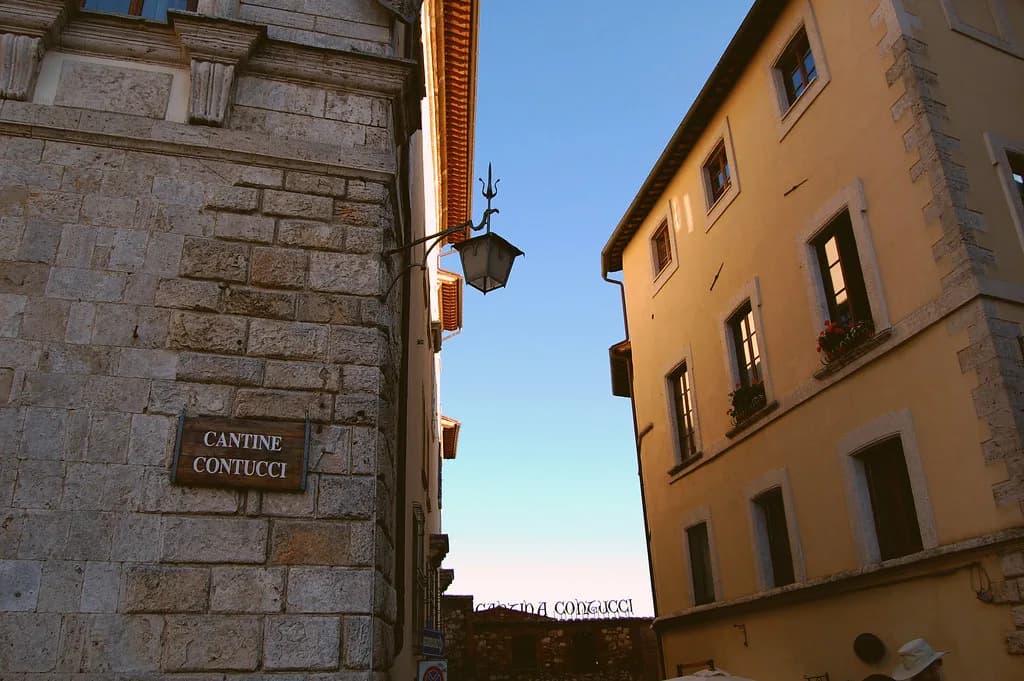
Many of Montepulciano's wine cellars sit beneath Renaissance palazzi, which means tasting here often happens underground in vaulted rooms rather than at a bar counter. The town's signature red is Vino Nobile di Montepulciano, made mainly from Sangiovese, called Prugnolo Gentile locally, and the name refers to the town rather than to a grape variety. Guided tastings and cellar tours at established cantinas usually require reservations, so book ahead for those and treat a walk-in as a bonus rather than the plan.
Names that recur in visitor accounts include De' Ricci Cantine Storiche for its historic cellars, Ercolani for extensive underground tunnels, Gattavecchi as a long-established producer and the Vecchia Cantina cooperative car park-side, with Talosa mentioned as a place where a walk-in tasting happened to work. Availability at any of these changes, so contact the cantina directly before relying on a drop-in. Tasting fees, pours and whether the charge is waived against a purchase are not published here and should be confirmed at the counter.
Do not confuse your order: Montepulciano d'Abruzzo is a completely different wine from another region, made from the Montepulciano grape, and asking for it here signals a misunderstanding rather than a preference. Order Vino Nobile, or a Rosso di Montepulciano if you want something lighter, and let the cellar guide set the order of the pours. One tasting is plenty for a day that still includes a walk and a drive.
Tempio di San Biagio: The Closing Sight Below the Walls
Finish at the Tempio di San Biagio, the sixteenth-century church just below the walls, considered one of the most beautiful Renaissance churches in Tuscany and set among cypress trees and open countryside. Its Greek cross design is attributed to Antonio da Sangallo the Elder, and the walk down from the town gives you the building in the landscape rather than pressed against it. This is the natural end point because you are already descending, and the return to the car park is shorter from here than from the piazza.
The grounds around San Biagio are free to walk, but treat the interior as a separate question and check the door when you arrive rather than assuming access. Late afternoon light is the reward for putting San Biagio last; if the day has run long, cut the interior and keep the exterior view. Then head back toward town for an aperitivo or an early dinner before driving on.
Timing Trade-offs: What to Cut If You Are Slow, Late or Hot
If you are short on time, one full day is enough to see the highlights and enjoy a proper meal and a wine tasting, according to the account this itinerary draws on, and around half a day plus a meal is a reasonable minimum for a first visit. Those figures are travel-writer suggestions, not official guidance. On a half day, cut the cellar to a single glass at a wine bar and skip the Church of Gesù and the Palazzo Comunale interior entirely.
On a late start, reverse nothing: still begin low, walk up once, eat when you reach the top and take the tasting on the way back down, because that sequence protects you from repeated climbing. On a hot summer afternoon, move the tasting earlier and give San Biagio the cooler evening hour. If daylight is short in winter, drop San Biagio rather than the piazza, since the descent to the church at dusk is the least rewarding part of the day.
Pairing the Day: Pienza and Two-Day Variants
Montepulciano pairs naturally with Pienza, about a short drive away, a UNESCO-listed village known for its architecture and pecorino cheese; the historic centre there was redesigned in the fifteenth century by Pope Pius II as an ideal city. Adding Pienza turns a good day into a full one, so decide before you park whether you are staying local or splitting the day. Keeping Montepulciano itself as the base means you walk only one hill town on foot.
With two or three days, you can slow down, take a cooking class, and add nearby towns such as Pienza and Montalcino without compressing the Montepulciano walk into a sprint. The Val d'Orcia countryside around town rewards a slower circuit on a second day. Browse the wider set of hidden gems for the corners you will have time to reach only on that second visit.
Plan Your Visit
The workable pattern is simple: park below the walls, climb Il Corso once, linger on Piazza Grande, eat pici, taste Vino Nobile underground on your way back down and close at San Biagio. Everything volatile, from cellar bookings to church doors and interior openings, is worth checking on the day rather than trusting in advance. The town's own site carries current notices for civic venues.
Before you set out, confirm three things: your parking lot and its payment method, your lunch reservation and any tasting appointment. Wear shoes for cobbles and carry water in warm months. Then let the day run at walking pace, because the climb, not the checklist, is what this town is really about.
Frequently Asked Questions
How much time do I need in Montepulciano?
One full day is enough to see the highlights and enjoy a proper meal and a wine tasting, according to the visitor account behind this itinerary, while a half day plus a meal is a workable minimum for a first visit. Those figures are writer suggestions, not official guidance. Two or three days let you add a cooking class and nearby towns without rushing the walk.
What should I not miss in Montepulciano in one day?
Walk Il Corso up to Piazza Grande and the Palazzo Comunale, look inside Sant'Agostino on the main street and the cathedral on the piazza, taste Vino Nobile in an underground cellar, eat pici and finish at the Tempio di San Biagio below the walls. The order matters: climb once, then descend, rather than zig-zagging uphill multiple times.
How do I handle parking and the steep walk in Montepulciano?
Cars are kept out of the historic centre for non-residents, so park in one of the lots ringing the walls and walk in; visitor accounts mention Via Bernabei, Piazza Nenni and Il Bersaglio, and you should check current signage and payment rules on arrival. Wear shoes with grip, and plan the route so you gain height once and descend at the end.
Do I need to book a wine tasting in advance?
Guided tastings and cellar tours at established cantinas usually require reservations, so book ahead for the cellar experience you actually want and treat a walk-in as a bonus rather than the plan. Availability, pours and whether a fee is waived against a purchase vary by cantina and are not published in advance, so confirm directly with the winery.
Is Vino Nobile di Montepulciano the same as Montepulciano d'Abruzzo?
No. Vino Nobile di Montepulciano is the town's signature red, made mainly from Sangiovese, known locally as Prugnolo Gentile, and the name refers to the town. Montepulciano d'Abruzzo is a different wine from another region, made from the Montepulciano grape. Ordering one when you meant the other is the most common mistake.
Is Montepulciano or Montalcino the better day trip?
They suit different days. Montepulciano is compact but steep, with a main street, piazza, churches and cellars within a short walk, which makes it workable in a single day. Montalcino is a separate town south of the Val d'Orcia, best treated as its own outing; combine the two only if you have a car and a second day.
Sources
Continue exploring
More guides you'll find useful