Best Time to Visit Montepulciano: Season-by-Season Guide
Time a Montepulciano visit by season: mild spring and fall walking, crowded summer heat, quiet winter, and dated October events to plan around in 2026.
On this page
Montepulciano sits on a ridge above the Val d'Orcia, and almost everything rewarding about a visit involves either walking uphill on cobblestones or sitting in a cool cellar. That makes the season more than a background detail: heat, rain and daylight hours shape how much of the town you can comfortably cover. The short answer is fall or early spring for walking comfort, summer for long evenings, and winter for calm with an opening-hours caveat.
One fixed reference point: the municipality's notices list Autunno in Fiera on Sunday 18 October 2026 and the Camminata tra gli Olivi on Sunday 25 October 2026, both dates that affected traffic and footfall in town. The same official site is where civic notices and events are published, so treat it as the place to verify dates rather than relying on older listings.
Why Timing Shapes a Day in Montepulciano
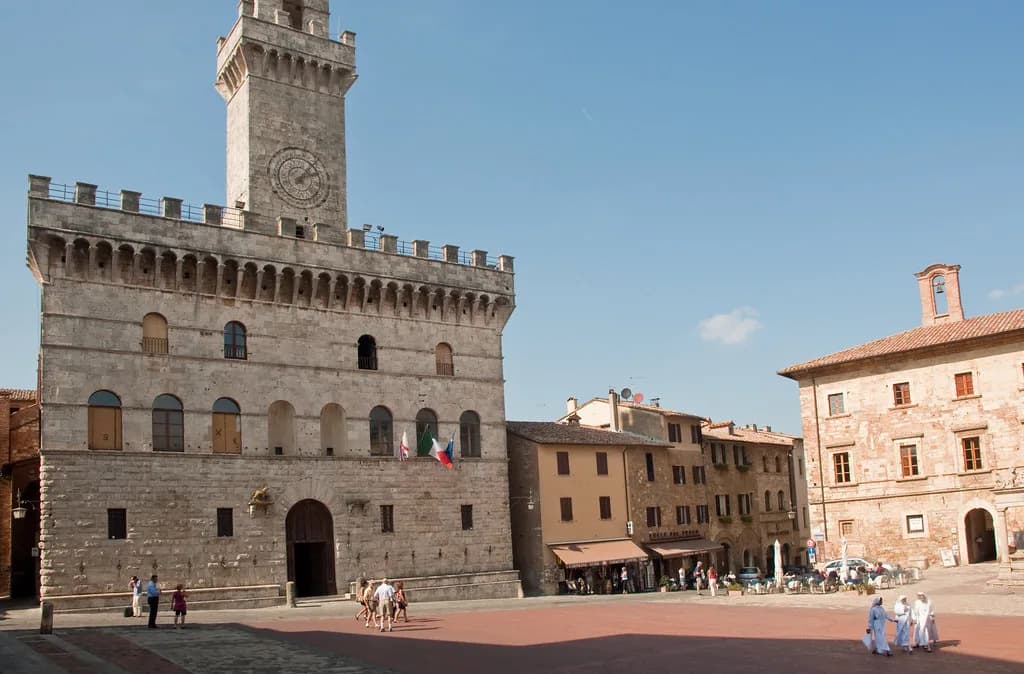
The town's main axis, the Corso, climbs steadily from Porta al Prato past Renaissance palazzi to the clocktower and Piazza Grande. Walking it in July heat or January drizzle changes the experience far more than any single sight will, so build the day around when your legs and the weather cooperate. A practical rhythm is an early uphill walk, a midday stop indoors, and a terrace at sunset.
Cellars and wine bars give you an indoor option at any hour, but they are also where crowds concentrate in high season. Tasting in town is easy to arrange on the fly in many cases, while visiting actual vineyards in the surrounding countryside usually needs advance booking, according to one travel writer's account of the area. Decide which of those two wine experiences you want before you fix a month.
Quick Answer: Fall and Early Spring for a First Visit
A travel blogger who knows the town well suggests fall or early spring, roughly March to April or September to October, as the ideal windows, citing hot and crowded summers and chilly winters with smaller crowds. That is a writer's preference rather than an official rule, but it matches the practical logic of a hill town built for walking. If you only have one trip to plan, start there.
Within that band, September and October add harvest atmosphere in the vineyards below town, while March and April bring greener countryside and shorter queues. Neither window guarantees dry weather, so pack a light rain layer and keep one indoor plan per day. Weekdays are generally calmer than weekends in both periods.
Spring in Montepulciano: Mild Walking and Growing Vines
Spring is the season when the Corso walk feels least like effort: mild temperatures, longer daylight and vineyards in early growth on the slopes below the walls. It suits travellers who want to combine the historic centre with countryside side trips without committing to summer heat.
Spring is also a good time to spread your days across the Val d'Orcia. Pienza, Montalcino and Bagno Vignoni all sit within reach if you have a car, and the travel account of the region describes them as natural add-ons to a Montepulciano base. Without a car, buses exist but slow you down considerably, so plan fewer stops.
Summer in Montepulciano: Heat, Crowds and Long Evenings
Summer brings the fullest wine country and the longest evenings, but the middle of the day is best spent indoors. Shift your uphill walk to early morning, use midday for a cellar visit, a church interior or a long lunch, and save the panoramic viewpoints for the cooler hours. The terrace at the Enoliteca Consorzio Vino Nobile inside the fortress is one spot a visitor highlights for a sunset glass.
Book dinner ahead in summer, since the better tables fill quickly; one writer notes that a day's notice sometimes works but a couple of weeks is safer for in-demand places. That advice is anecdotal, yet the underlying habit is sound in any busy month. Reserve the meal before you build the rest of the day around it.
Fall in Montepulciano: Harvest Atmosphere and October
Fall is the strongest all-round case: harvest activity in the vineyards, comfortable walking temperatures and the wine culture at its most visible. The same travel account that recommends fall lists it alongside early spring as the ideal window, and the reasoning holds for anyone planning a first visit centred on Vino Nobile and the historic centre.
October concentrates that appeal, but it also brings event days that reshape traffic and footfall in the centre. Check the municipal events calendar before fixing dates, especially if you plan to drive into town or rely on parking near the walls. Two Sundays in October 2026 were on the official schedule, and they matter more than generic claims about festival season.
October in Practice: Two Dated 2026 Events
Autunno in Fiera was held on Sunday 18 October 2026, a traditional market fair organised by the Unione Polisportiva Poliziana with municipal patronage. The comune published a separate notice listing the road and circulation changes for that day, which is the document to read if you are planning a similar event-day visit by car. Expect a busier centre and plan parking accordingly.
The Camminata tra gli Olivi on Sunday 25 October 2026 was part of the national olive-oil day promoted by the Città dell'Olio association, described by the comune as a morning outdoors among the area's flavours and history. It is a walking event rather than an in-town fair, so it pairs well with a countryside day. Verify meeting details and any participation requirements directly with the organiser before you travel.
Winter in Montepulciano: Calm With an Opening-Hours Risk
Winter is genuinely off-season: fewer visitors, shorter days and a town that feels more local. The trade-off is that some places run reduced hours or close, and you cannot assume a cellar, church or museum interior is open just because the town is. Forum advice for the January-to-March stretch is blunt: call ahead about winter opening hours rather than trusting a summer listing.
That said, the same local advice notes the town stays open year round and that the deep off-season can be a rewarding time to come. Treat it as an opportunity to see the architecture and piazzas without summer density, and build in flexibility for the odd closed door. Two nights is enough to absorb the centre at this pace.
What Each Season Means for Wine Tasting
Tasting inside town is the low-commitment option: wine shops and bars along the Corso pour Vino Nobile and the lighter Rosso di Montepulciano, and several cellars under the streets welcome walk-in visits for self-guided looks at the barrels. One visitor found the cellars at Talosa and Contucci enjoyable without a formal tour, while noting De Ricci Cantine Storiche required a reservation.
Vineyard visits are the opposite: they need planning, and the travel account advises booking ahead for tastings out among the vines. Season matters here because harvest activity peaks in early autumn, filling appointment slots and making spontaneous drop-ins less likely. If vineyard time is your priority, aim for fall and contact producers well before you leave home.
Churches, Piazza Grande and Viewpoints by Season
The headline sights are mostly outdoor or free to approach: Piazza Grande, the exterior of the Tempio di San Biagio just outside town, and the painted interior of the Chiesa del Gesù near the top of the Corso. Check whether interiors are open on the day you visit, since religious buildings keep their own schedules. A spring or fall afternoon gives you the most comfortable conditions for combining them.
For a structured half-day that threads these together, a self-guided walking route takes the guesswork out of the uphill sequence. Pair it with a viewpoint stop; Piazza di San Francesco and the terrace above the fortress are both recommended by a visitor for the view.
Building a Day Around the Season
In warm months, start early with the climb from Porta al Prato to Piazza Grande, then retreat indoors for a cellar or church interior during the hottest hours. Return outside for late-afternoon light and a terrace drink. In cooler months you can compress this: walk the centre in one stretch, pause for a long lunch, and still catch sunset without rushing.
If you have longer, give the town two nights and treat one day as a countryside loop. The travel account suggests something closer to five days for a full Val d'Orcia base, though that is a preference rather than a requirement. Match the length to whether you want wine appointments or just the town.
Matching the Season to Your Trip Style
Photographers benefit from the low light of spring and fall and from October's harvest colour in the vineyards below the walls. Wine lovers should prioritise fall for atmosphere or spring for quieter tasting rooms, and book vineyard visits either way. Slow travellers can take winter's calm in stride, while families will find summer evenings and the open piazzas easiest.
Families and heat-sensitive travellers should also consider altitude: the town is on a hill, and the accumulated climb through the centre is real. Splitting the walk into short segments with stops works better than one push. Any season, that yields a more comfortable day.
Side Trips by Season
Pienza, Montalcino and Bagno Vignoni are the natural extensions of a Montepulciano stay, and each pairs best with warmer, drier months when you will spend hours outdoors. Bagno Vignoni's hot spring and Pienza's pecorino shops are the kind of stop where good weather does most of the work. In winter, check that individual businesses are open before driving out.
Having a car makes these loops far easier, since the travel account notes renting one is the simplest way to reach the surrounding countryside. Buses are possible but slow you down substantially. If you are without a car, choose one side trip and treat it as the day's main outing.
Practical Planning Checklist
Decide first whether you want in-town tasting, which is flexible, or vineyard visits, which need advance booking. Fix your dates around that, then check the municipal events calendar for anything falling on your travel days—October 2026 already had two entries worth planning around. Reserve dinner early if you are travelling in summer or on an event weekend.
Finally, confirm winter-sensitive details by phone or email before you commit, especially for cellar tours and church interiors. A short call removes most of the uncertainty. Keep one indoor fallback per day so weather never derails the plan.
When to Go, and How to Confirm It
For most first visits, fall and early spring give the best balance of walking comfort, wine country atmosphere and manageable crowds, with October carrying extra energy thanks to the two dated 2026 events. Summer works if you build the day around early starts and long evenings, and winter rewards those who accept shorter hours in exchange for quiet.
Whatever you choose, verify the specific details that matter—event dates, winter hours, vineyard appointments—rather than assuming. The comune's event listings and a direct call to the venue are the two checks that prevent most wasted days.
Frequently Asked Questions
Is October a good time to visit Montepulciano?
Yes, for many travellers. October combines harvest atmosphere in the vineyards with comfortable walking temperatures, and it is one of the windows a regular visitor recommends alongside early spring. The caveat is that local events can make the centre busier and change road access, so check the comune's event listings for your dates before fixing plans.
What is Montepulciano like in winter?
Quiet and cool. The town stays open year round, but some cellars, churches and businesses run reduced hours or close, so it is wise to call ahead rather than trust a summer listing. In exchange you get the architecture and piazzas with far fewer people, which suits slow travellers who value calm over guaranteed access to every sight.
When is the wine harvest, and does it affect a visit?
Harvest activity is concentrated in early autumn, which is why fall feels like the most alive season for wine country. It fills appointment slots at vineyards, so if you want a tasting among the vines, contact producers well before you travel. Tasting in town at wine bars and cellar rooms is generally easier to arrange at shorter notice.
How many nights should I stay in Montepulciano?
Two nights covers the historic centre comfortably and leaves room for a relaxed meal and a viewpoint at sunset. Add a third if you want a countryside side trip to Pienza, Montalcino or Bagno Vignoni. Longer stays make sense mainly if you plan several vineyard appointments, and a car helps considerably.
Do I need to book wine cellar tours in advance?
It depends on the cellar. Several in-town cellars let visitors look around on their own, while at least one noted for its historic tunnels requires a reservation. Vineyard tastings out in the countryside generally need advance booking. Ask each producer directly, since policies vary and change.
Should I rent a car or take the bus?
A car makes side trips across the Val d'Orcia far easier and lets you park outside the walls rather than driving into the centre. Buses are workable but slow you down considerably. If you skip the car, choose one side trip and plan the day around it rather than trying to cover several towns.
Which dates should I check before booking an October trip?
For 2026, the comune listed Autunno in Fiera on Sunday 18 October and the Camminata tra gli Olivi on Sunday 25 October. The first brought a market fair and published traffic changes, the second a morning walk in the countryside. Confirm current details on the comune's site before arranging travel around either.
Sources
Continue exploring
More guides you'll find useful