Two Days in Mantua: Palazzo Te, the Lakes and the Old Centre
A two-day Mantua itinerary pairing Palazzo Te's frescoes with the lakefront, Teatro Bibiena and an evening passeggiata, plus food stops and walking tips.
On this page
Two days is a sensible suggestion for Mantua because the historic centre is compact and level, with nearly everything you want to see within a pleasant walk along porticoed streets. The city also sits inside a ring of three lakes, so a palace morning can be paired with a waterfront afternoon without transport planning.
The plan below deliberately separates the two big set pieces. Give the Palazzo Ducale a full morning and treat Palazzo Te as its own half-day, since trying to squeeze both Gonzaga-era complexes into one day flattens the experience. Timings are a suggested pace, not an official recommendation, and should be shifted to your own rhythm.
Why Two Days Suit Mantua
For nearly four centuries the Gonzaga family ruled from Mantua, and the court they built made this small city on the Mincio one of the most admired in Europe. UNESCO recognised that legacy in 2008, inscribing Mantua together with nearby Sabbioneta as a World Heritage Site.
The setting does much of the work. Three lakes, formed in the twelfth century when engineers bent the river around the city walls, surround Mantua on three sides, so domes and towers appear to rise straight from the water. The water also shapes where you walk: lakeside paths give you skyline views that no street can, and they connect naturally to the compact centre.
That compactness is why two days works. The old centre, from Piazza Sordello through Piazza delle Erbe to the Basilica di Sant'Andrea, is walkable in a single unhurried loop, and Palazzo Te sits within a short walk on the southern edge. If you want quieter corners beyond the headline sights, browse our pick of hidden gems in Mantua before fixing your route.
How to Split the Two Days
Day one belongs to the Gonzaga heart and the old centre: Piazza Sordello, the Palazzo Ducale with the Camera degli Sposi, Piazza delle Erbe, the Rotonda di San Lorenzo, the Basilica di Sant'Andrea and a look at the Teatro Bibiena. Day two pairs Palazzo Te's frescoes with the lakefront and, if you want one, a boat trip.
Keep the ordering flexible. If your first morning is wet, swap in the frescoed interiors and move the lakeside loop to the clearer afternoon; both days are short enough on the ground that the exchange costs you little. The one fixed element worth planning around is the Camera degli Sposi, where entry arrangements are managed by the palace and should be confirmed with the operator before you travel.
Day One, Morning: Piazza Sordello and the Palazzo Ducale
Start in Piazza Sordello, the long cobbled square flanked by the cathedral and the Palazzo Ducale, the Gonzaga residence that grew over centuries into a city within the city of some five hundred rooms, courtyards and gardens. Inside its Castello di San Giorgio waits the Camera degli Sposi, where Andrea Mantegna painted the Gonzaga court with such life that the room still feels inhabited.
Allow this complex a proper morning rather than an hour. The route between the apartments, the castle and the gardens is long, and the Camera degli Sposi rewards standing still rather than passing through. Before you go, check the palace's current visiting arrangements and any booking requirement directly, since these are set by the site and can change with the season.
Day One, Midday: Piazza delle Erbe and the Rotonda di San Lorenzo
A few steps south, Piazza delle Erbe gathers daily life beneath the Palazzo della Ragione, the fifteenth-century astronomical clock tower, and the Rotonda di San Lorenzo, the round eleventh-century church that is the city's oldest. For many years the Rotonda was hidden behind surrounding houses until they were demolished, and it now stands in its former setting, with remains of twelfth- and thirteenth-century frescoes visible inside.
This is the natural place for a standing coffee and a first taste of the local larder. Mantua's best-known speciality is tortelli di zucca alla mantovana, a pumpkin pasta enriched with amaretti, while the shop windows around the square are good for a look at the city's sweet side before you move on.
Treat the square as an open public space rather than a ticketed sight: you can walk through Piazza delle Erbe and around the Rotonda freely, and any interior you enter, whether the church or a palace, has its own access arrangements to confirm on the spot.
Day One, Afternoon: Sant'Andrea and the Teatro Bibiena
In Piazza Mantegna you reach the Basilica di Sant'Andrea, Leon Battista Alberti's Renaissance landmark, whose vast barrel-vaulted nave shelters Mantegna's tomb and the city's most venerated relics. The basilica safeguards the golden vessels said to hold earth soaked by the blood of Christ, carried in procession on Good Friday, and Andrea Mantegna himself is buried here.
The Teatro Bibiena is the afternoon's wildcard. Famous for hosting a fourteen-year-old Mozart in 1770, it is shaped like a bell with four storeys of stucco balconies curving around the walls. Do not plan the day around going inside: the theatre is not presented as a permanently visitable interior, so ask about access locally and treat it as a stop to confirm on the day.
Day One, Evening: Aperitivo and Passeggiata
Mantua's early evening belongs to the passeggiata, the stroll Italians take between Piazza Broletto and Piazza delle Erbe as the lights come on. Join it without an agenda, then eat close to where you walked rather than crossing town. Finish with torta sbrisolona, the crunchy almond cake that local tradition breaks in the middle rather than slicing.
Check what is on before you choose an evening. The city publishes a rolling events calendar with concerts, talks and readings, from jazz and chamber seasons to literary gatherings, so a date can bring a performance worth building dinner around, or a busy centre worth booking ahead for.
Day Two, Morning: Palazzo Te and the Sala dei Giganti
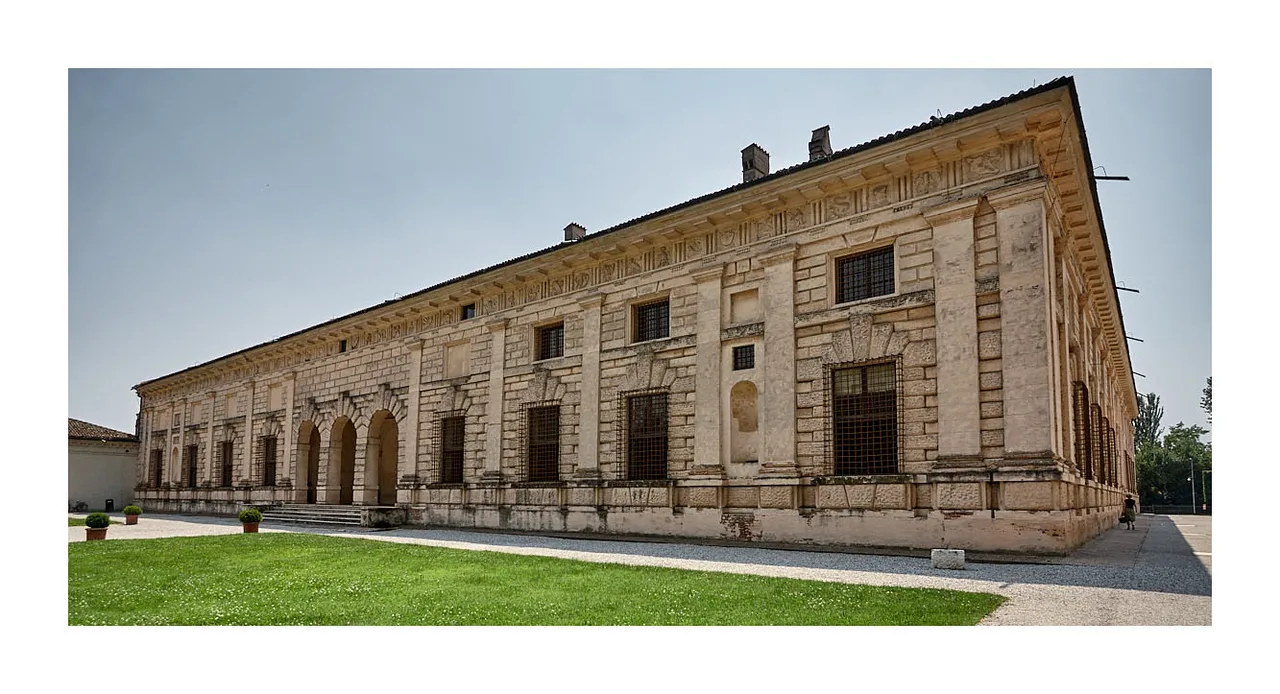
Palazzo Te answers the Palazzo Ducale with pure invention: the pleasure palace Giulio Romano built for Federico II Gonzaga, where the Sala dei Giganti collapses around the visitor in one of the most audacious frescoes ever painted. The room devoted to Cupid and Psyche, where the duke held his banquets, depicts bacchanalian scenes on a similar scale.
Give the frescoes a generous morning and go early, because the rooms are the kind you want to stand in rather than file through. Admission and opening details are set by Palazzo Te itself, so confirm them on the official channels rather than relying on a third-party listing that may be out of date. A Palazzo Te ticket covers that palace only; it does not stand in for the Palazzo Ducale or the Camera degli Sposi.
Day Two, Midday: Lunch Before the Water
Keep lunch simple and close to Palazzo Te so the afternoon stays open. This is the moment for a plate of tortelli di zucca if you did not already have one, or something lighter if the pumpkin pasta has already claimed a dinner. The walk back toward the lakes is short and flat, which makes a slow midday easy to justify.
If you are travelling in high summer, the garden calendar matters more than any restaurant booking. July and August are when the lotus flowers bloom across Lago Superiore, and an early-morning or late-afternoon boat is the way to see them without the heat of the day.
Day Two, Afternoon: The Lakefront Loop and an Optional Boat
Treat the waterfront as a walking loop rather than a fixed itinerary. Crossing the Ponte di San Giorgio at dawn or dusk, with the full silhouette of the Palazzo Ducale and the domes mirrored in Lago di Mezzo, is one of the finest first impressions any Italian city can offer, and the lakeside paths continue at walking pace with benches placed where the skyline composes itself best.
A boat trip is the optional extra. Boats circle the city walls or follow the river through the nature reserve, which gives an unhurried view of Mantua that no street can match. Operators, fares and timetables were not confirmed for this guide, so arrange the trip locally or through the city's tourism pages and confirm departure points and prices before paying.
Beyond the centre, the reed beds and wetlands protected within the Parco del Mincio shelter herons and egrets alongside the more famous lotus carpet. If birdlife matters to you, bring binoculars and take the quieter side of the loop rather than the busiest promenade.
Day Two, Evening: Sunset, Then a Final Dinner
End the second day on the water with the light at your back, then return to the centre for dinner. If the evening is fine, the walk back through the porticoed streets is the point; if it is not, retreat to a trattoria and look for stracotto, the slow-cooked stew the region is known for, rich enough that it does not need a second course.
Before you sleep, check the next day's listings if your stay extends. The city's calendar runs well beyond the obvious seasons, with jazz, chamber music and photography series that can make a third night worthwhile. Further visitor details appear in Comune di Mantova.
Practical Tips for Walking Mantua
Bring shoes that handle cobbles, because both days are almost entirely on foot and the level ground only helps if your soles do. Carry a light layer for the lakeside, where the breeze off the water can change the feel of an afternoon, and keep a paper or downloaded map since the porticoed streets fold back on themselves.
Time your photography around the season rather than a fixed hour. Late spring and early autumn are the connoisseur's seasons in this part of the Po plain, with green lakeside paths and piazzas that live outdoors, while winter fog lends the Gonzaga skyline a theatrical quality worth planning a short walk around.
Expect crowds when something is programmed. The official events calendar shows the city's concert seasons, talks and readings, and the centre fills accordingly. If you want emptier squares, choose dates outside those windows.
Do not assume step-free routes everywhere. The centre is compact and level, but cobbles, kerbs and waterfront paths vary, so ask locally or check the city's published information before relying on a particular route if mobility is a consideration.
What to Do With a Third Day
A third day opens the surroundings. Sabbioneta, the ideal city built by a Gonzaga prince from nothing, lies in the same UNESCO inscription and makes a natural half-day companion to Mantua's Renaissance story. Cycling and walking paths follow the Mincio north for those who would rather move slowly through the countryside. Further visitor details appear in Mantua Travel Guide | Trips 2 Italy.
Mantua also folds neatly into a wider northern journey. Verona is close by and Milan, Venice and the lakes all connect conveniently, which makes two nights here a graceful pause between larger cities rather than a detour.
Plan Your Visit
What to fix in advance: the Palazzo Ducale complex with the Camera degli Sposi and Palazzo Te, each booked separately on its own official terms, and a boat trip if you want one. What to leave loose: the Teatro Bibiena, the lakeside loop and the evening passeggiata, all of which work better on the day's weather than on a schedule.
Start with this itinerary, then tailor it with our full set of Mantua Attractions guides before you lock in dates and tickets. For related planning, see One Day in Mantua: A Realistic Walking Plan.
Frequently Asked Questions
Is two days enough to see Mantua, Palazzo Te and the lakes?
Two days covers the old centre and Palazzo Te at a relaxed pace, which is what this plan assumes. It is a suggested itinerary rather than an official recommendation. Add a third day for Sabbioneta or the Mincio paths if you want the surrounding area as well.
Can you walk from Mantua's centre to Palazzo Te?
Yes. Palazzo Te lies within a short walk of the centre along the city's flat, porticoed streets, and the centre itself is compact enough to cover on foot. Wear shoes that handle cobbles and check current opening details before setting out.
Do you need to book Palazzo Te or the Camera degli Sposi in advance?
Booking arrangements are set by the palaces themselves, and Mantua's official channels are the place to confirm current entry rules and any timed booking for the Camera degli Sposi. Check before you travel rather than relying on older trip reports, and note that the two palaces are ticketed separately.
Where can you walk along the lakes in Mantua?
Lakeside paths ring the city, with viewpoints such as the Ponte di San Giorgio giving you the classic skyline across Lago di Mezzo. The route is a walking loop rather than a fixed trail, and a boat trip through the nature reserve is an optional way to see the same water from the other side.
When is the best time to visit Mantua for two days on foot?
Late spring and early autumn give comfortable walking weather and softer light. Summer brings the lotus blooms on Lago Superiore, while winter fog gives the skyline a different character. Check the city's events calendar for festival dates that fill the centre.
Sources
Continue exploring
More guides you'll find useful