Mantua Rainy Day: Indoor Palaces and Covered Walks
Plan a wet day in Mantua around two vast indoor palaces, loggia-lined squares and smaller museums, with honest notes on tickets, timing and what to skip.
On this page
Mantua rewards a wet day better than most Italian art cities. The centre is small enough to cross on foot, the Gonzaga left behind two enormous complexes that are largely indoors, and the main squares are lined with porticoes, so you can keep moving between stops while staying mostly under cover. That combination turns a washed-out forecast into a simpler decision: pick one big palace for the morning and let the arcades handle the rest.
The trade-off is that the two palaces sit at opposite ends of the historic centre and are ticketed separately, so squeezing both into one rainy day usually means rushing the thing you came to see. A calmer plan chooses one palace properly, adds a covered walk through the squares, and holds a smaller museum in reserve. As a rough editorial suggestion, allow at least a couple of hours for whichever palace you choose.
Why Mantua Works Well in the Rain
Mantua spreads across a low, watery landscape where the Mincio River widens into three lakes that wrap the old town, which is why the centre feels contained and walkable. The whole historic centre, together with nearby Sabbioneta, holds UNESCO World Heritage status for its Renaissance planning, so the streets between the sights are part of the attraction rather than just transport. A compact core also means fewer exposed crossings when the weather turns.
Most of the heavyweight art sits under a roof. The Ducal Palace alone is described as a city within a city, with hundreds of rooms, courtyards and gardens stitched together over centuries, while Palazzo Te is a self-contained villa whose famous rooms are all interior spaces. Between them you have enough indoor material for a full day without ever checking the radar.
The third piece is the street plan. Mantua's central squares run almost in a line from Piazza Sordello through Piazza Broletto to Piazza delle Erbe, and the shopping streets around them are lined with porticoes and arcades. When a shower passes, you can step under a loggia, wait it out, and continue rather than abandoning the walk.
Start With the Ducal Palace
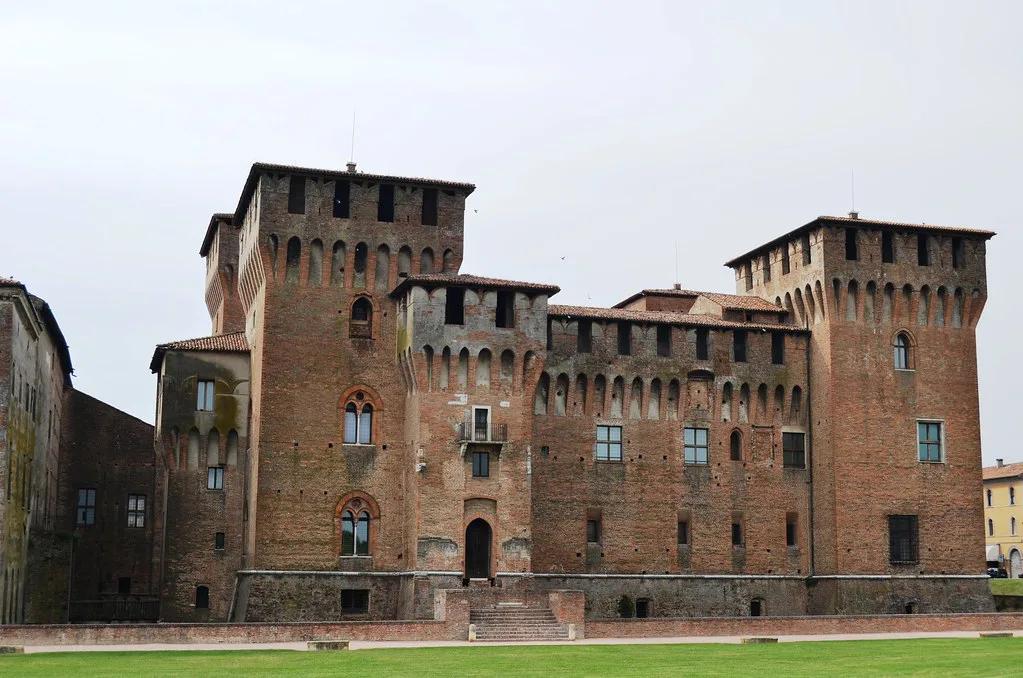
The Palazzo Ducale on Piazza Sordello is the obvious first stop, partly because it is the biggest thing in town and partly because it eats time in the best way. It grew as the Gonzaga residence from the early fourteenth century until the dynasty ended at the start of the eighteenth, accumulating towers, courtyards, churches and gardens as successive dukes expanded it, so the visit reads as a walk through changing architectural taste.
Plan your schedule around the Camera degli Sposi, the room Andrea Mantegna frescoed in the castle of San Giorgio. It is the reason many people come, it is small, and access is managed with timed entry, so the slot you book shapes the rest of your morning rather than the other way round. Secondary guides report that you reserve a time when you buy your palace ticket, but confirm the current procedure with the museum before you build a day around it.
Budget at least a couple of hours for the complex and expect to walk further than you think, since the route links separate buildings through open courtyards. That exposed stretch is the one place where rain genuinely interrupts a palace visit, so carry a jacket rather than rely on an umbrella indoors. If you are travelling slowly, the palace is also a sensible anchor for a wet afternoon when the light outside is flat.
Cross Town to Palazzo Te
Palazzo Te sits south of the centre, a Mannerist pleasure villa that Giulio Romano designed for Federico II Gonzaga in the 1520s and 1530s. Its rooms are the draw on a wet day: the Hall of the Giants wraps the fall of the giants around walls and ceiling, and the Chamber of Cupid and Psyche turns a classical love story into dense, theatrical fresco.
The operator publishes current opening hours: Monday and Wednesday to Sunday from 9am to 7pm, Tuesday from 1pm to 7pm, with last entry one hour before closing. The palace is closed on 25 December and open on other holidays. Those hours are the single most practical fact for planning a rainy day, because they set a hard stop on how late you can start.
Reaching Palazzo Te from the centre is straightforward in bad weather. The operator says it is about fifteen minutes on foot or ten by bike from the centre, and it also runs a free shuttle, the Navetta Te, that leaves every fifteen minutes, with weekday service from 7am to 9pm and weekend service from 9am to 9pm. Bus lines also connect the centre and the railway station, and the operator lists free parking at Piazzale Montelungo and Viale Montello if you arrive by car.
Inside, the visit mixes ticketed rooms and open ground. The Palazzo Te ticket covers the palace, the MACA museum at Palazzo San Sebastiano and the Tempio Leon Battista Alberti, each once, and can be bought at either ticket office. The gardens and courtyards belong to the same complex but sit outdoors, so treat them as a bonus between showers rather than the backbone of the day.
Which Palace if You Only Have Half a Day
With half a day, choose one complex and give it room. The Ducal Palace suits anyone who wants depth and a single unbroken thread from medieval fortress to Renaissance court, but the timed Camera degli Sposi slot adds a scheduling constraint that can make a short visit feel rushed. Palazzo Te suits anyone who wants concentrated spectacle in a smaller footprint, since the celebrated rooms are close together and the villa is easier to leave when you are done.
The mistake to avoid is assuming one ticket opens both doors. They are separate museums with separate admissions, and the Palazzo Te ticket covers Palazzo Te, MACA and the Alberti Temple only. Guides that pair the two palaces in a single day are describing a long, full day of walking, which works in dry weather but is punishing when every transfer happens in the rain.
Palazzo Te Ticket Options
The operator lists a full-price adult ticket, a concession rate, a lower special concession for visitors aged 12 to 18 and for university students, and a family ticket for three to five people with a maximum of two paying full price. Children up to 11 enter free, as do visitors with a disability card, qualified guides accompanying groups and holders of certain museum cards. There is also a combined ticket that adds the Sonnabend Collection within 48 hours.
Prices change, and the operator's page notes that a new tariff took effect from 26 September, so use the published figures as a planning guide and confirm at the ticket office or on the site before you budget. The same page also sells longer cards that bundle several Mantua museums and monuments for a set period, which only pays off if you plan to visit more than one collection. For a single wet day at one palace, the standard ticket is usually the simpler purchase.
Book through the operator rather than a resale platform if you want the combined options and the free categories to apply cleanly. The visitor services office answers questions on weekdays in the afternoon, and the ticket office phone line is the quickest way to check whether a particular reduction applies to you. Group and school bookings follow a separate process and need advance notice.
A Covered Walk Through the Squares
When the rain eases, walk the sequence of squares rather than committing to a long route. Start at Piazza Sordello, the oldest of them, framed by the cathedral and the palace facade, then slip through Piazza Broletto to Piazza delle Erbe, where the arcades and porticoes give you cover along the shopfronts. The whole stretch is short enough to repeat if a shower catches you mid-way.
Under the arcades on Piazza delle Erbe, two interior stops are effectively free shelter. The Rotonda di San Lorenzo, an eleventh-century round church, is small enough for a short look, and the clock tower above the square carries an astronomical mechanism worth studying from the passage below. Both let you duck out of the weather without buying a ticket.
Treat the cafés under the porticoes as part of the plan rather than a failure of it. A long lunch or a coffee buys you the worst half hour of a downpour and puts you back on the street when it passes, which is cheaper than adding a museum you did not want to see.
Basilica di Sant'Andrea: Free Interior, Careful With the Caveats
The Basilica di Sant'Andrea, a few steps from Piazza delle Erbe on Piazza Mantegna, is one of the best free indoor stops in the centre. Leon Battista Alberti redesigned it from 1472, wrapping a classical temple front around a single vast nave, and the effect is monumental enough to justify a slow walk down the length of the church even if you have no interest in liturgy.
The church holds a relic associated with the blood of Christ, kept in the crypt and shown on particular feast days, which is why the building was rebuilt on such a grand scale. Remember that a church interior is a place of worship first: dress and behaviour expectations apply, and photography may be restricted during services.
Do not confuse the free church with the ticketed museums nearby. The Palazzo Ducale complex, the Palazzo Te complex and the Sonnabend Collection each have their own admission, and a church visit costs nothing but also gets you no closer to seeing Mantegna's most famous fresco. Keep the two categories separate when you count the day's spending.
Smaller Indoor Stops to Hold in Reserve
If you have already done a palace and the rain settles in, a handful of smaller collections can fill an afternoon. The Teatro Scientifico del Bibiena, a bell-shaped eighteenth-century theatre, is an indoor architectural treat, and the Sonnabend Collection above Piazza delle Erbe brings postwar international art into the city. The Museo di Palazzo d'Arco preserves a noble interior with furnishings and paintings intact. Related guide: Palazzo d'Arco Mantua: Guide to the Counts of Arco's Home.
None of these should be promised as open on any given afternoon. The operator pages carry the current hours, and smaller city museums often run reduced schedules or close between exhibitions, so check the day before and again on the morning. Casa del Mantegna, the house the artist built for himself around a circular courtyard, is a further option when its exhibition programme is running.
What to Drop When the Rain Is Heavy
Be honest about which Mantua pleasures need dry weather. The lake paths, the gardens at Palazzo Te, the bicycle loop around the centre and the walk out to the church of San Giorgio all lose most of their appeal in steady rain, and some become slippery or exposed. Keep them for another visit rather than forcing them into a wet afternoon.
Long walks to outlying sights are the other thing to cut. If a shower is short, a wet walk is fine; if it is set in for the day, every transfer should end somewhere you can stay for an hour. Build the day around two or three indoor anchors and let the arcades join them.
A Practical Wet-Weather Rhythm
A workable shape for the day is a palace slot first thing, a covered walk and a long lunch in the middle, and a second indoor stop in the afternoon once you know how the weather is behaving. Book the Camera degli Sposi time before you finalise anything else if the Ducal Palace is your priority, since that single slot dictates when you arrive.
Keep the official city site open on your phone. It carries notices on temporary arrangements and civic updates that can affect a visit, and it is a useful check when a museum's own page is unclear about a holiday opening. For the widest choice of indoor stops, the guides to Mantua Attractions break down the individual sights, and a look at the hidden gems in Mantua will tell you which quieter corners fit a slow afternoon.
Accessibility and Small Print at Palazzo Te
The Palazzo Te operator page sets out rules worth knowing before you arrive. Visitors may not eat or drink in the rooms and smoking is banned throughout the palace area, including the gardens. Leashed animals are not admitted except guide dogs for visitors with visual impairments, though small animals travelling in their own carriers are allowed indoors.
A dog-sitter service can be booked at least 24 hours ahead, and the palace publishes accessibility information and a mobility guide for the route from the entrance through the rooms. Audio guides are available in several languages and free for blind and visually impaired visitors. Ask at the ticket office if you need step-free routing or other adjustments.
Plan Your Visit
A rainy day in Mantua comes down to one sensible decision: choose a single palace and give it the time it deserves, then let the porticoes and squares carry you between meals. If the weather clears, add the lakeside walk; if it does not, a smaller museum or a second coffee under the arcade is a perfectly good use of an afternoon.
Before you go, check the Palazzo Te operator page for current hours and ticket scope, confirm Ducal Palace access to the Camera degli Sposi, and look up the smaller museums individually, since those are the details most likely to change. Pack a rain jacket you can wear indoors and leave the garden plans loose.
Frequently Asked Questions
Can you see Palazzo Ducale and Palazzo Te in one rainy day in Mantua?
It is possible but rarely enjoyable. The two complexes are at opposite ends of the centre, each needs a couple of hours to be worthwhile, and you would be making the transfer in the rain. If you have only one day, pick the palace that matches your interests and spend the rest of the time under the arcades and in a smaller museum.
Does the Palazzo Te ticket include the Ducal Palace?
No. The Palazzo Te ticket covers Palazzo Te, the MACA museum and the Tempio Leon Battista Alberti, and it is valid for one admission to each. The Ducal Palace is a separate museum with its own admission, so budget for them individually rather than assuming a combined ticket exists.
What is free to visit in Mantua when it rains?
Church interiors such as the Basilica di Sant'Andrea and the small Rotonda di San Lorenzo on Piazza delle Erbe cost nothing and provide real shelter, and the porticoes around the central squares keep you dry between stops. Mantua's palaces and most museum collections are ticketed, so treat the free stops as a way to break up a wet day rather than replace one.
How do you get to Palazzo Te from central Mantua in bad weather?
The operator describes the walk from the centre as about fifteen minutes, or ten by bike, and it runs a free Navetta Te shuttle with frequent departures and extended weekend hours. Local buses also connect the centre and the railway station. In heavy rain the shuttle is the sensible choice, since it drops you at the palace rather than a street away.
Do you need to book the Camera degli Sposi in advance?
Access to Mantegna's frescoed room is managed with timed entry because the space is small, and guides report that you reserve a slot when buying your palace ticket. Confirm the current procedure and any booking requirement with the museum before you travel, then plan the rest of the day around the slot you are given.
Which Mantua squares have covered walkways?
Piazza delle Erbe is the most useful, with arcades and porticoes running along the shopfronts and the Rotonda di San Lorenzo tucked into the square itself. The streets linking Piazza Sordello, Piazza Broletto and Piazza delle Erbe also pass under covered stretches, letting you move between the three squares while staying mostly out of the rain.
Sources
- Comune di Mantova
- Marvelling at Mantua’s Palazzo Ducale : European Waterways Marvelling at Mantua’s Palazzo Ducale
- Palazzo Ducale and Palazzo Te in Mantua: why visit them | ItaloBlog
- Top Attractions In Mantua, A Renaissance Marvel In Northern Italy - The Geographical Cure
- Basilica of Sant'Andrea (Mantua)
- Casa del Mantegna — Google Arts & Culture
- Art galleries in Mantua: guide and map – Alpha Reproduction
- Visit - Palazzo Te
- Tickets for Palazzo Te in Mantua: tours, guided tours, skip the line and last minute tickets
Continue exploring
More guides you'll find useful