Piazza delle Erbe Mantua: Market Guide and What to See
Plan a visit to Piazza delle Erbe in Mantua: what the square holds, how to check market days, the Rotonda di San Lorenzo, and nearby food worth trying.
On this page
Piazza delle Erbe is the square most visitors cross without stopping, which is a mistake. It anchors the historic centre, links the city's chain of piazzas and holds one of Mantua's oldest buildings below the level of the pavement.
This guide separates what is documented from what changes week to week. The square's cafes, loggias and churches are dependable features of any visit, while traders' schedules are not published in any source consulted here, so you should confirm them with the city's tourism office before planning a trip around a market morning.
Where Piazza delle Erbe Sits in Mantua's Historic Centre
Mantua's old centre strings together three squares in a line: Piazza Sordello, Piazza Broletto and Piazza delle Erbe. Walking from Sordello toward Erbe takes you past the Palazzo Ducale complex and the cathedral, so the square works best as a stage in a route rather than a standalone stop.
The city itself is compact and ringed by lakes on three sides, which keeps the centre walkable and easy to cover by bike. Martha's Italy notes that the station sits at Piazzale Don Leoni, a short walk from the historic core, with the bus station nearby at Piazzale A Mondadori.
Mantua and neighbouring Sabbioneta were inscribed as a UNESCO World Heritage site in 2008 for their Renaissance architecture and town planning. Treat Sabbioneta as a separate town to the south, not a district of Mantua, if you plan to add it.
What the Square Actually Is
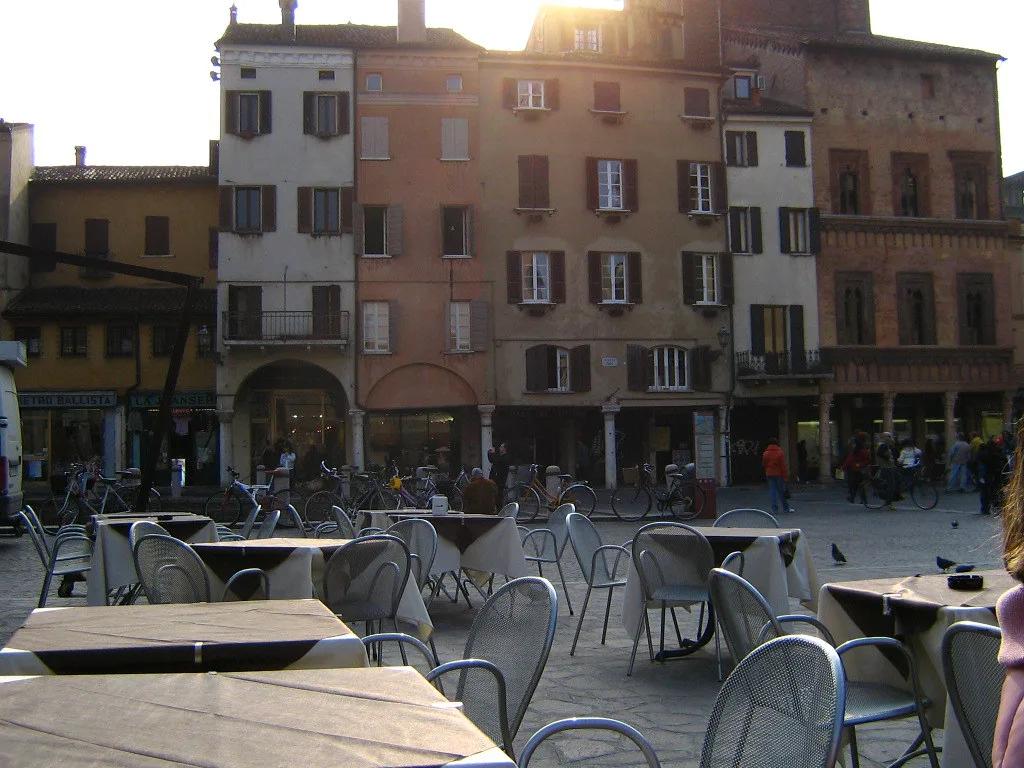
Piazza delle Erbe is a functioning civic space rather than a monument with a gate. Several shops line the square, including the medieval Casa del Mercante, one of the oldest buildings in the city, and there are good restaurants on the piazza itself.
The square is dominated by its Clock Tower, built in 1472 by Luca Fancelli for Ludovico II Gonzaga. Its clock face carries Roman numerals, zodiac signs, planetary hours and moon days, and a Time Museum inside the tower explains the mechanism.
Because the square mixes commerce, worship and daily errands, you should expect ordinary foot traffic rather than a curated visitor experience. That is the appeal: sit at a cafe table, watch the city work, then step into the buildings around you.
The Market Question, Answered Honestly
Travel writing often recalls Thursday as Mantua's traditional market day, when mediators once settled deals with a handshake and the local economy tracked the price of milk. Italia Slow Tour describes that history, but a past account does not confirm what traders set up on Piazza delle Erbe today.
No source consulted here publishes a stall list, opening hours or best arrival time for the square's market, so any specific schedule you read elsewhere may be stale. Before travelling, check the city's official website for current notices, or ask at the tourist information office in Piazza Mantegna when you arrive.
If a market is running during your stay, treat it as a bonus rather than the reason for the trip. The square's architecture, cafes and churches fill a morning on their own, and you avoid the disappointment of arriving on a quiet day.
The Rotonda di San Lorenzo
La Rotonda di San Lorenzo is the city's oldest church, a circular building raised in the late 11th century under Matilda of Canossa and modelled on the Church of the Holy Sepulchre in Jerusalem. Its round plan was a deliberate statement in medieval Christian symbolism, where the circle stood for eternity.
Over the centuries shops crowded around and over the structure until the church vanished behind ordinary facades. Historical research and urban renovation uncovered it again in 1908, when the surrounding buildings were dismantled and the near-intact rotunda re-emerged.
You enter by descending several steps below the modern street, which explains the sunken floor and the faded frescoes on the walls. Look for the ring of columns, the upper women's gallery and the small windows that move light around the interior through the day, and check locally for current opening arrangements.
Torre della Gabbia: Admire It, Do Not Plan to Climb
The Torre della Gabbia rises 55 metres above Via Cavour and belongs to the Palazzo Castiglioni group of buildings facing Piazza Sordello. It once belonged to the Acerbi family and passed to Pinamonte Bonacolsi in 1281, before the Gonzaga era reshaped the surrounding palace.
The tower takes its name from a cage fixed to the facade in the 16th century, when the building served as a prison; documents from 1576 record a pickpocket held inside it for more than three months. The city's own tourism page notes that Mantua has not yet created a system to open the tower as a public viewpoint.
Plan to look up from the street and photograph the red brick shaft and its marble detailing rather than budgeting time for a climb. For panoramas, spend your effort on the palace courtyards and lakeside paths instead.
What to Buy and Eat Around the Square
Mantua's food vocabulary is specific and worth learning before you order. Pumpkin tortelli with mostarda, donkey stew with polenta, cotechino and the crumbly sbrisolona cake are the dishes the region is known for, and shops around the centre sell packaged mostarda and sbrisolona to carry home.
Nearby, the Basilica of Sant'Andrea holds the tomb of Andrea Mantegna and a relic said to contain Christ's blood, brought up in a vial on Ascension Day. Both the basilica and the Rotonda are churches you enter on foot from the same walk.
For a wider sweep of the city's eating, from street snacks to sit-down trattorias, use a dedicated local food guide rather than guessing from menus. Menus change with the season, so confirm prices on site instead of relying on older write-ups.
Timing Your Visit
Spring and autumn are the most comfortable seasons in Mantua, and September brings the Festivaletteratura literature festival, which draws writers from around the world. That same month, lotus flowers bloom along the banks of Lago Superiore.
Winter suits the city's hearty cuisine, from pumpkin tortelli to stracotto and sbrisolona, but the historic centre is quieter and the famous fog can flatten the lake views. If you want festival atmosphere and lotus blossoms together, target September and book accommodation early.
Arriving and Getting Around
Mantua has no airport, so most visitors arrive by train from Milan, Bologna or Verona. Martha's Italy places the station a short walk from the centre, and Italia Slow Tour describes connecting from Milan's Malpensa airport via Milan Central Station.
Once in the centre, walking is the simplest way to link the squares. Bikes are the local alternative, and the tourist information office in Piazza Mantegna can point you to rentals and the lakeside path that circles the historic centre.
Beyond the main squares, the city repays wandering into smaller quarters and quieter streets. A guide to the historic quarters helps you choose where to loop back toward the centre.
A Suggested Half-Day Around the Square
Allow roughly half a day, a suggestion rather than an official itinerary, to cover Piazza Sordello, Piazza Broletto and Piazza delle Erbe on foot. Start at the Palazzo Ducale entrance and work east, keeping the Clock Tower as your landmark.
Spend the middle of the morning inside the Rotonda di San Lorenzo and the Basilica of Sant'Andrea, then take a cafe table on the square for lunch. Finish with the Torre della Gabbia from the street and a slow walk toward the lake.
If you prefer a structured route through the Renaissance layers, follow a self-guided walk that stitches the palaces and churches together in order. It saves backtracking and keeps the square as a natural midpoint rather than a detour.
Plan Your Visit
Piazza delle Erbe rewards a slower look: down into the sunken rotunda, up at the clock and the caged tower, and across the table at a cafe. Confirm market days and opening times with the city before you travel, and leave room in your plan for the ordinary life of the square.
For more overlooked corners of the city, pair the square with a wider guide to Mantua's hidden gems and other sights in the historic centre.
Frequently Asked Questions
Is there a market on Piazza delle Erbe in Mantua, and on which days?
Travel accounts describe Thursday as Mantua's traditional market day, but no current official timetable was found for Piazza delle Erbe. Check the Comune di Mantova website or ask at the tourist information office in Piazza Mantegna before planning your morning around a market.
What can you buy at the market in Mantua?
No reliable current inventory of stalls on Piazza delle Erbe is published. Shops around the centre regularly sell Mantuan specialities such as mostarda and sbrisolona, and the dishes to look for in restaurants include pumpkin tortelli, donkey stew with polenta and cotechino.
What time should you arrive to avoid crowds?
There is no verified arrival time for a market on the square. As a rule, early mornings are calmer in Italian historic centres, and you can confirm whether a market is running that day with the city's tourism office before setting out.
Is Piazza delle Erbe free to visit?
The square itself is public space and costs nothing to walk through. Individual buildings around it, such as museums and church interiors, set their own entry rules, so check each one rather than assuming a single ticket covers them.
How long do you need in Piazza delle Erbe and the Rotonda di San Lorenzo?
A suggested half day covers Piazza Sordello, Piazza Broletto, Piazza delle Erbe, the Rotonda and the Basilica of Sant'Andrea at an unhurried pace. That is a recommendation, not an official duration, and longer stays suit anyone lingering over lunch.
Is the Rotonda di San Lorenzo open to visitors, and is there a ticket?
The Rotonda is an 11th-century church with a sunken floor below street level. Opening arrangements change, so check locally or with the tourist office on the day; no confirmed ticket or schedule is published in the sources used here.
What food should you try near Piazza delle Erbe?
Look for pumpkin tortelli with mostarda, stracotto or donkey stew with polenta, cotechino and sbrisolona cake. Shops near the square sell packaged mostarda and sbrisolona, and menus list current prices.
When is the best time of year to visit Mantua?
Spring and autumn are the most comfortable seasons, and September combines the Festivaletteratura literature festival with lotus blossoms on Lago Superiore. Winter suits hearty local cooking but brings quieter streets and the city's famous fog.
Sources
Continue exploring
More guides you'll find useful