Livorno Viewpoints: City, Port and Coast Vistas Worth Seeking
A practical guide to Livorno viewpoints, from the Montenero hilltop sanctuary to Fortezza Nuova ramparts and the Terrazza Mascagni seafront, with light tips.
On this page
Livorno is a working port that has never tried to hide its industrial edge, and that is exactly what makes its viewpoints interesting. From a hill above the city you see the harbour and the coastline at once; from the canals you see a quieter, water-level Livorno that many day-trippers miss. The three settings in this guide serve different purposes, so plan them as separate moments rather than one grand panorama.
A useful starting point is to think in layers: the Sanctuary of Montenero sits above the city and looks out over sea and port, the Fortezza Nuova gives you canal-level sightlines from a free public park, and Terrazza Mascagni faces the open sea. If you have a single afternoon to spare, the canal district and the seafront combine comfortably on foot; save the hill for a clear morning. Broader context on the city's quieter corners is gathered in this guide to the hidden gems in Livorno. Related guide: Livorno Attractions: Visitor Guides to 10 Sights.
Start High: The Sanctuary of Montenero Above the City
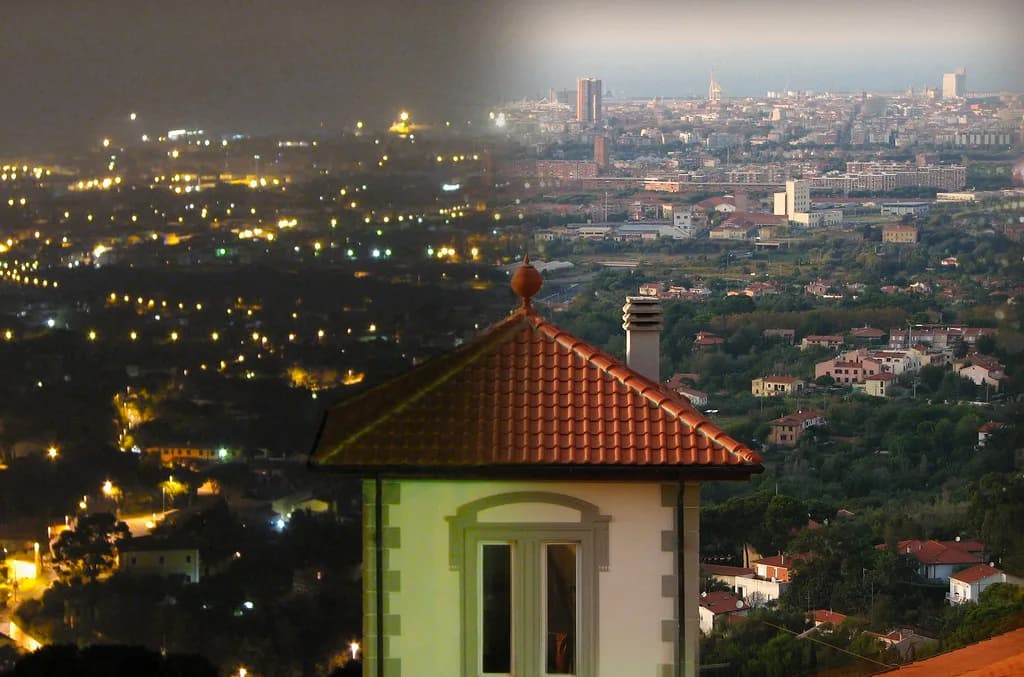
The Sanctuary of Montenero sits on a hill overlooking the sea and the port of Livorno, and the church itself dates back to 1345. That elevated position is what makes it the most expansive of the city's viewpoints: on a clear day you get the bay, the harbour and the urban spread in a single sweep. Treat the panorama as a bonus rather than the main event, because this is an active place of pilgrimage first.
Because the sanctuary is a working religious site, dress and behaviour should match the setting: quiet voices inside, shoulders covered, and no scrambling for a photo during services. Editorially speaking, a suggested rather than official half-day works well here, leaving time to linger in the small square outside for a coffee while the view settles in.
For a deeper look at the site's story and how to approach a visit respectfully, see this guide to Visiting the Santuario di Montenero Above Livorno. Condé Nast Traveler notes that a funicular ride up to the sanctuary is part of many visitors' mornings, though schedules and fares change and should be checked locally before you rely on them. The sanctuary's own website is the place to confirm current visiting arrangements.
Timing matters more here than anywhere else on this list. Clear mornings tend to give the sharpest view of the port and the coastline, while haze builds through the day in warmer months. If the hill is the centrepiece of your day, go early and keep the canal district for the afternoon.
Fortezza Nuova: Canal Views from a Fortress-Turned-Park
The Fortezza Nuova is a fortified island in the middle of Livorno's Venezia Nuova district, and today it functions as a public park rather than a museum. The city's tourism board describes it as a green lung hidden behind imposing walls, with a panoramic view over the canals of the Venice and Pontino neighbourhoods and the adjacent Piazza della Repubblica. That combination of water, walls and skyline makes it the most distinctive viewpoint in the city.
Entry to the park is free, and it is reachable on foot from the centre, which makes it an easy addition to any walking day. The trade-off is that you are walking surviving ramparts and a garden, not touring furnished interiors: there are no exhibition rooms to work through, just walls, water and views. A self-guided circuit is short, so pair it with the surrounding canal streets rather than treating it as a half-day destination.
That free park is not the same thing as the guided inside-the-walls tours sold by third-party operators, which are pitched as access beyond the public garden with historical narration. If you want the fortress's Medici history explained in depth, the paid tour is the option; if you want the view and a wander, the park costs nothing. Check current tour availability and what the ticket includes with the operator before booking.
Reading the Fortress Landscape: Why Only Part of It Survives
The Fortezza Nuova was commissioned in 1590 and designed by Bernardo Buontalenti as a five-bastion star-fort protecting the Medici port. Roughly 60 percent of the structure was demolished in 1690 to let the Venezia Nuova canal district expand, leaving two bastions, the connecting walls and the moat. Knowing this changes what you see from the ramparts: you are looking at a deliberate fragment, not a complete fortress.
The moat that once surrounded the fortress has been absorbed into the canal network, and the surviving walls now enclose a garden on an island reached by bridges from Piazza della Repubblica. The Visit Livorno entry notes the fortress was built from 1590 on Buontalenti's design and later served as a barracks and warehouse before wartime bombing destroyed most internal structures. That layered history explains why the site reads as park and ruin at once, and why the view outward is more rewarding than looking for rooms within.
For the older half of the city's defensive story, the Fortezza Vecchia Livorno guide: the old fortress at the port covers the stronghold near the docks, a different site with a different viewpoint over the harbour. Seeing both gives you the two ends of Livorno's fortification logic without conflating them. The Livorno Attractions hub collects the city's main sights in one place if you are building a fuller itinerary.
Piazza della Repubblica and the Voltone
Piazza della Repubblica is not really a square but a wide bridge over the Fosso Reale, and locals simply call it the Voltone after the vault covering the canal beneath. Standing on it, you get sightlines along the water toward the Fortezza Nuova and into the Venezia Nuova district, with the dome of Santa Caterina rising behind. It is a free, open, always-available piece of city theatre rather than a formal viewpoint.
The better trick is to see the square from below: boat excursions pass through the tunnel under the Voltone, giving you the fortress silhouette and the underside of the bridge from water level. Walkers rarely get this angle, and it reframes the whole canal district. Boat operators and the tourism office can confirm what is running during your dates.
Pair the Voltone with a slow circuit of the surrounding streets: a self-guided Livorno walk: canals, fortresses and the old harbour is the natural way to link these water-level viewpoints without doubling back. Wear shoes with grip, since canal edges and bridges can be smooth underfoot.
Santa Caterina's Dome as a Skyline Marker
The Church of Santa Caterina rises inside Venezia Nuova under a large dome that shapes the profile of the whole neighbourhood, which is why it keeps appearing in canal views. Construction began in 1720, and the building took generations to complete; the unfinished marble facade is part of its character. Use the dome as your orientation point when wandering the canals.
This is a church, not a lookout, but stepping inside is worthwhile: the interior holds a Vasari altarpiece and a dome frescoed across a vast surface, among the largest in Tuscany. Treat it as a separate cultural stop rather than a viewing platform, and keep quiet if a service is underway.
Terrazza Mascagni and the Open Sea
Terrazza Mascagni is Livorno's great seafront promenade, a checkerboard-paved terrace facing the Tyrrhenian Sea. The Visit Livorno material on the city's waterfront describes the patterned floor and its columns framing the panorama, though you should visit for the effect rather than to count anything. This is the viewpoint for horizon, sky and water rather than rooftops.
The atmosphere changes through the day. Early mornings are described as quiet and good for photography and runners, while late afternoon brings the passeggiata, when the terrace fills with families, cyclists and conversation. If you want stillness, arrive early; if you want the city's rhythm, come for the evening.
For a closer look at how to plan a visit, including the promenade's position on the seafront, read Terrazza Mascagni Livorno: visiting the checkerboard seafront terrace. It pairs naturally with the aquarium and the waterfront church of San Jacopo in Acquaviva, so build it into a coastal half-day rather than a quick photo stop.
Light and Season: When to Go
Practical guides to Livorno consistently point to late spring and early autumn as the most comfortable windows for long walks, cycling and lingering on the coast without midsummer intensity. The light is also kinder for photography in the evenings, when the city softens and the waterfront becomes cinematic. Treat this as editorial advice rather than a forecast: check the weather before committing to a hilltop morning.
Summer afternoons are hard work on the Fortezza Nuova ramparts, which are exposed with little shade, so aim for morning or late afternoon there. Canal photography benefits from low, angled light that catches stone and water; midday flattens it. For the sanctuary, clear mornings give the longest views over the port and coast.
The city publishes official notices on weather alerts and civic events, which is worth checking if a storm is forecast during your stay.
Linking the Viewpoints on Foot
A sensible day links the Voltone, the Fortezza Nuova park and the canals on foot, then follows the waterfront to Terrazza Mascagni; the distances are short and the route is largely flat. Keep Montenero separate, since it sits on a hill above the city and deserves its own half-day. Trying to combine all three in one rushed port call is the most common mistake.
From Livorno Centrale the centre is walkable, and the canal district is easily covered on foot once you arrive, though local buses exist if you prefer to save your legs for the sea. For cruise passengers, ship-run shuttles are commonly arranged to bring people near the historic centre; confirm the arrangement for your own sailing.
Expect to walk a lot on stone and bridge steps, so pack water, sun protection and grippier shoes than you would for a museum day. If a summer afternoon flattens your plans, the Livorno rainy-day guide and the Livorno with kids guide both offer calmer alternatives for the hours when the ramparts are least comfortable.
Where to Eat Between Viewpoints
The Mercato Centrale is the natural pause between the canal district and the seafront, and it works as a working market rather than a tourist attraction. Look for cacciucco, Livorno's seafood stew, whose recipe dates back in some accounts to the 19th century, or a simple fried seafood cone from a counter.
If you want a smaller stop, the city's chickpea flatbread sandwich, the 5e5, is a quick street-food option sold in compact local spots near the market. Expect queues at lunchtime and plan to eat standing or take it away.
Common Mistakes and What to Skip
The most frequent error is expecting the Fortezza Nuova to be a museum. It is a public park on a surviving fragment of a star-fort, so plan for walls, water and a garden rather than interpreted rooms. If you want the history explained, book a tour and check exactly what it covers.
The second error is hunting for a single best panorama. Livorno's strengths are distributed: hilltop, ramparts and seafront each show something different, and none is a substitute for the others.
Finally, don't squeeze Montenero into a rushed port day. The hill is a pilgrimage site with its own pace, and a rushed visit does neither the place nor the view justice.
Plan Your Visit
Livorno rewards a slow approach. Give the hilltop a morning, the canals an afternoon and the seafront an evening, and you will have three genuinely different views of a city that turns outward to the sea.
Use the Livorno Attractions hub to plan companion stops and check current opening arrangements directly with each site before you travel, since details change season to season.
Frequently Asked Questions
Is Fortezza Nuova free to visit?
The surviving fortress area functions as a public park and entry to the park is free. That is a different product from paid guided inside-the-walls tours, which are sold separately by third-party operators. Check with the operator what a tour includes if you want the history narrated.
Can you see the port and coast from the Montenero sanctuary?
Yes. The sanctuary sits on a hill overlooking the sea and the port of Livorno, and on a clear day the view takes in the bay, the harbour and the city. Treat it as a working pilgrimage church first, and check the sanctuary's own website for current visiting arrangements.
When is the light best for photographing Livorno's canals?
Low, angled light in the morning or late afternoon brings out the texture of stone and water, while midday light flattens the scene. Walking guides suggest late spring and early autumn as the most comfortable seasons for long days outdoors. Check the forecast before you commit to a plan.
How long do you need at Terrazza Mascagni?
There is no fixed duration, but the terrace works best as an unhurried stop where you walk, sit and watch the sea. Early mornings are quiet, while late afternoon brings the passeggiata crowd. Pair it with the nearby seafront church for a fuller coastal half-day.
Is the Fortezza Nuova park the same as the guided inside-the-walls tour?
No. The park gives free access to the garden and surviving ramparts, while guided tours are pitched as access beyond the public area with historical narration. If you book a tour, confirm exactly what it covers and its current availability before you go.
What is the closest airport to Livorno?
Pisa's Galileo Galilei airport is the nearest major airport, and it connects to Livorno by train or bus. Schedules and fares change, so check current timetables before you travel. Florence's airport is further away but also serves the region.
Is Livorno walkable from the cruise port?
The historic centre and canal district are generally reachable on foot once you are near the city centre, though walking from the port itself involves a longer stretch. Cruise ships commonly run shuttles to bring passengers closer to the centre. Confirm arrangements with your operator.
Sources
- From Livorno to the Sea: Discover the Coastline on a Guided Excursion - Laila Vallebuona
- Official event website
- Città di Livorno
- The Fortezza Nuova | Visit Livorno
- Fortezza Nuova, Livorno: Visitor Guide & Inside-the-Walls Tour 2026 — Castles & Palaces
- Visit Livorno in Italy for Sea Light and Tuscan Soul | Designer Journeys
- Livorno Tuscany Port City Guide for Canal Adventures | Designer Journeys
- Piazza della Repubblica | Visit Livorno
- The church of Santa Caterina | Visit Livorno
- Sanctuary of Montenero, Livorno, Tuscany, Italy - Landmark Review | Condé Nast Traveler
- My favourite things to do in Livorno - My Italian Diaries
Continue exploring
More guides you'll find useful