Fortezza Nuova Livorno: Visiting the Pentagonal Fortress
Plan a slow visit to Fortezza Nuova in Livorno's Venezia Nuova quarter: the Medici pentagonal fortress, its canal-side park and how it fits a city walk.
On this page
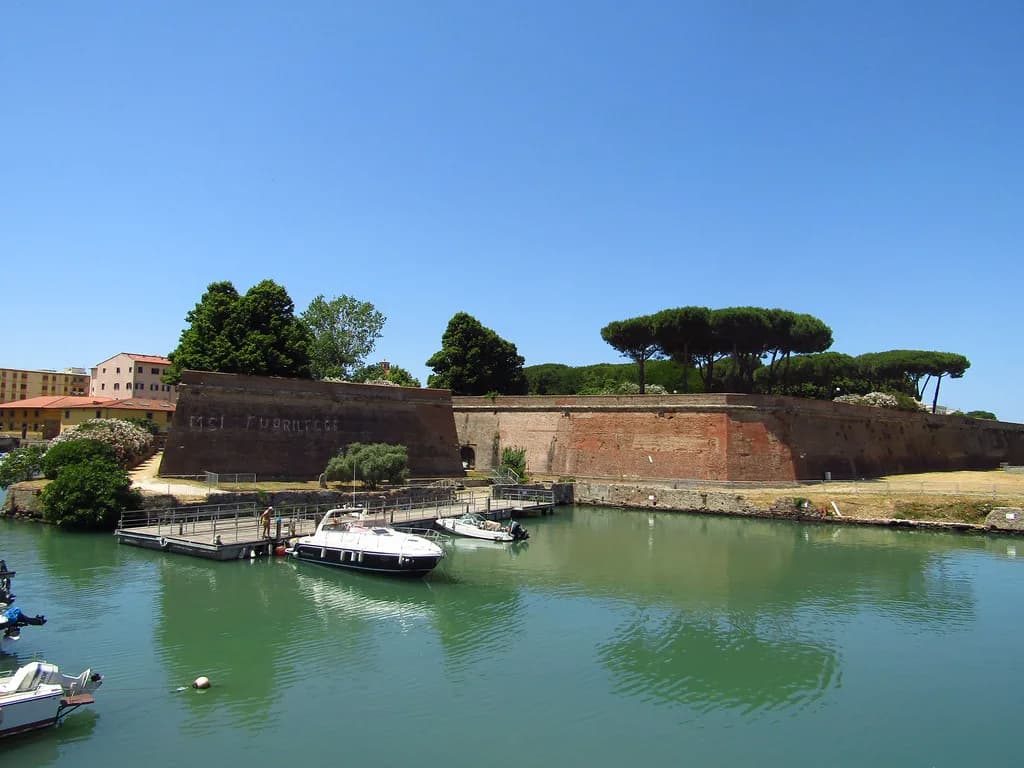
Fortezza Nuova sits on a canal island in Livorno's Venezia Nuova quarter, and the practical starting point is simple: the grounds inside the surviving walls work as a public park reached from Piazza della Repubblica by small bridges. The Visit Livorno page for the fortress describes it as a green lung behind imposing walls, with a panorama over the canals of the Venezia and Pontino neighbourhoods. Plan around that rather than around a museum visit, and the site makes sense immediately.
This guide separates what is freely open from any separately booked tour, explains why the fortress is pentagonal yet only partly intact, and suggests how to time a walk so the light works in your favour. Volatile details such as access hours and third-party tour prices change, so treat the sections below as a framework and confirm the current situation with the city or the organiser before setting out.
What the Fortezza Nuova Actually Is
Fortezza Nuova is one of the two Medici fortresses that guarded Livorno, the port city the Medici were deliberately building up from the late sixteenth century. Visit Livorno records that it was erected from 1590 on a project by the architect Bernardo Buontalenti, with construction continuing for decades under later architects and engineers. Its most quoted feature is the pentagonal plan, with cannon-armed points covering the approaches from several directions.
The shape was not purely functional. Third-party guides describe a five-bastion star-fort in the trace italienne tradition, commissioned by the Medici as both a defensive work and a piece of dynastic theatre for receiving dignitaries. That dual role matters for visitors: you are looking at architecture designed to impress as much as to defend, which is why the surviving walls read as a stage set around the park. Treat the finer detail on commissioning dates and designers as historical background that different sources phrase differently.
Why Only Part of the Pentagon Survives
If you arrive expecting five complete bastions, the site will feel incomplete. Third-party accounts explain that Livorno's commercial expansion eventually outweighed the fortress's military value, and that much of the structure was later taken down so the Venezia Nuova canal district could grow around it. What remained was a fragment of walls, bastions and moat, later adapted into the garden you walk through today.
Visit Livorno adds a more recent layer to that story: the fortress served at various times as a barracks and a warehouse, and suffered heavy damage from aerial bombing during the Second World War, which destroyed most of the internal structures. That explains the absence of furnished rooms, courtyards or interpretation panels inside. Read the walls, the water and the plan itself; the historical detail is better gathered beforehand than expected on site.
Getting In and What Is Free
Access is the part worth planning carefully. Visit Livorno describes the entrance as surrounded by a defensive enclosure topped with corner towers and connected to the mainland by an old three-arched bridge that replaced an earlier drawbridge; third-party accounts describe two crossings from Piazza della Repubblica. The exact crossing you use matters less than arriving at the square and following the walls, since the park sits inside them rather than behind a separate ticket line.
The park itself is the free experience, and it is the one most visitors should plan around. A separate guided visit inside the surviving walls is marketed by third parties at a changeable price and with no guarantee of daily departures, so never build a trip around it without checking the operator first. If you want the tour, book and confirm directly; if you simply want the fortress, walk in and enjoy the grounds.
Do not assume a fixed daily opening schedule. The city publishes news, events and service updates that can affect access, and the park is a public space rather than a staffed monument with a ticket desk at every gate. Check the municipal site shortly before you go, especially around public holidays or after severe weather, and treat any closure notice there as authoritative.
Views from the Ramparts and the Canal Quarter
The reward for climbing the surviving ramparts is the view back across the water. Visit Livorno highlights the panorama over the canals of the Venezia and Pontino neighbourhoods and towards the adjacent Republic Square, which is exactly the frame you want for understanding how the fortress once controlled the edge of the city. Walk the length of the accessible walls before settling on a spot, because the angle changes considerably from one bastion to the next.
Photographers should aim for late afternoon, when low light rakes across the water and picks out the brickwork. Third-party guidance also flags spring and autumn as the most comfortable seasons, with summer afternoons hot and the park comparatively exposed. Carry water, wear a hat and plan shade breaks in the canal streets rather than on the walls.
Suggested Timing and the Neighbourhood Walk
Allow roughly half an hour to three quarters of an hour for a self-guided circuit of the walls and park, a suggestion rather than an official figure; add time if you plan to sit, sketch or photograph. The visit is short because there are no interior collections to work through. Slot it into a longer wander rather than making it a destination in its own right, and the day feels better balanced. Further visitor details appear in Fortezza Nuova, Livorno: Visitor Guide & Inside-the-Walls Tour 2026 — Castles & Palaces.
The natural pairing is a slow loop through Venezia Nuova, the canal grid immediately around the fortress, taking in the bridges and the small squares on the way to and from Piazza della Repubblica. If you would rather follow a ready-made route, the Livorno self-guided walk: canals, fortresses and the old harbour links the historic water districts in a logical order. Build in pauses at cafes along the canals, since the neighbourhood rewards lingering more than rushing.
For travellers hunting smaller, less staged corners of the city between the major sights, the guide to hidden gems in Livorno is a useful companion for filling the rest of the afternoon. Both work best read before you arrive, when you can still adjust the route.
Practical Cautions Before You Go
Historic ramparts mean uneven surfaces, worn edges and water close by; watch your footing and keep an eye on children near the moat edges. This guide makes no claim about step-free routes across the bridges or along the walls, so if mobility is a concern, ask the city's tourist information service about current conditions before travelling. That is a question better answered locally than assumed from photographs.
Expect a park, not a museum. There are no exhibition rooms or panels to explain what you are seeing, which is why the preparation here matters: know the Medici origin, the pentagonal plan and the later partial demolition, and the walls will tell a coherent story. Bring the context with you.
Finally, remember that this is an outdoor site in a working city. Weather, maintenance and event programming can all affect a visit, and user-generated review listings are not a reliable substitute for checking with the organiser. A quick verification before you leave your accommodation avoids a wasted walk across town.
Where to Go Next: Fortezza Vecchia and Beyond
Fortezza Nuova is the younger sibling of Livorno's older stronghold, and seeing both in one day clarifies how the city's defences developed. The Fortezza Vecchia Livorno guide: the old fortress at the port covers the waterfront complex, its different access arrangements and what is actually open once you are inside. Give the two sites separate time slots rather than trying to compress them.
Fortezza Nuova also works as a cultural venue in its own right: Visit Livorno notes that its walls host exhibitions, concerts and performances through the year, so check the local events calendar in case something coincides with your stay. For the broader set of sights across the city, the Livorno Attractions collection puts the fortresses alongside museums, markets and waterfront walks in one place.
If you still have energy after the canals, the seafront is a different register entirely. Terrazza Mascagni Livorno: visiting the checkerboard seafront terrace explains the city's best-known promenade and how to enjoy it without fighting the crowds. It pairs naturally with a fortress morning.
Plan Your Visit
Treat Fortezza Nuova as the pivot of a Venezia Nuova walk: arrive at Piazza della Repubblica, cross to the island, circle the surviving ramparts for the canal views, then drift back through the water streets. Know in advance that this is a free park with no interiors, and that any guided tour is a separate, changeable extra rather than part of the package.
Confirm access and any event programming with the city before you travel, especially outside the mild spring and autumn months, and carry the historical context with you rather than expecting to find it on site. With expectations set that way, the fortress delivers exactly what it promises: walls, water and a quiet pause in the middle of Livorno.
Frequently Asked Questions
Is entry to Fortezza Nuova free?
The park within the surviving walls is generally described as freely accessible, and that is the experience most visitors have. Separately sold guided visits inside the walls are a different product at a changeable price, so confirm any booking directly with the operator before relying on it.
How do you get into Fortezza Nuova from Piazza della Repubblica?
Crossings lead from the square onto the canal island where the fortress stands, replacing the earlier drawbridge arrangement described in historical accounts. Route names and exact bridge access can vary with maintenance and events, so check with the city's tourist information before you set out.
How long should you spend at Fortezza Nuova?
A self-guided circuit of the walls and park fits comfortably into well under an hour, and that is a suggestion rather than an official figure. There are no interior collections to slow you down, so the visit works best as a stop within a longer walk through the canal neighbourhood.
Is there anything to see inside the fortress walls?
Inside, expect an open green space enclosed by surviving bastions and curtain walls, with water views across the canals. There are no furnished rooms or interpretation panels, since much of the interior was destroyed in the twentieth century, so read up on the Medici origin before arriving.
Why is the fortress pentagonal and only partly intact?
The pentagonal star-fort plan came from late Renaissance military design, with angled bastions covering the approaches. Most of the structure was later removed as the Venezia Nuova district expanded around it, leaving the fragment of walls, bastions and moat that now forms the park.
What is the best time of day to visit Fortezza Nuova?
Late afternoon tends to give the most flattering light across the water and brickwork, while summer middays can be hot and the park is fairly exposed. Spring and autumn are generally the more comfortable seasons, and carrying water is sensible whenever the sun is strong.
Sources
Continue exploring
More guides you'll find useful