Duomo di Livorno Visitor Guide: History, Art and What to See
A short guide to Livorno's cathedral on Piazza Grande: how wartime bombing reshaped it, what to look for inside, and how to fold it into a walk through the centre.
On this page
Livorno's cathedral closes the central side of Piazza Grande and is the natural starting point for a walk through the city's historic core. Treat it as one stop on a compact route rather than a destination in itself: the interior rewards a short, attentive look, and the surrounding streets carry much of the atmosphere. This guide covers what the building has been through, what to notice inside and out, and how to fit it into a half day.
One thing to know before you go is that the cathedral visible today is largely a reconstruction. A Livorno city guide notes that the building has stood on the square since the late 16th century but was almost entirely rebuilt after the bombing of the Second World War, which changes how you read its architecture and finish.
Where the Duomo Sits in Livorno's Centre
The cathedral faces Piazza Grande, the square that Via Grande and parallel streets feed into as they run west from the canal grid toward the port. The city guide describes the square as having been laid out with an ambition that influenced later European planning, and it remains a crossroads rather than a quiet monument square. Arrive on foot and you pass shops, banks and café tables before you reach the church steps.
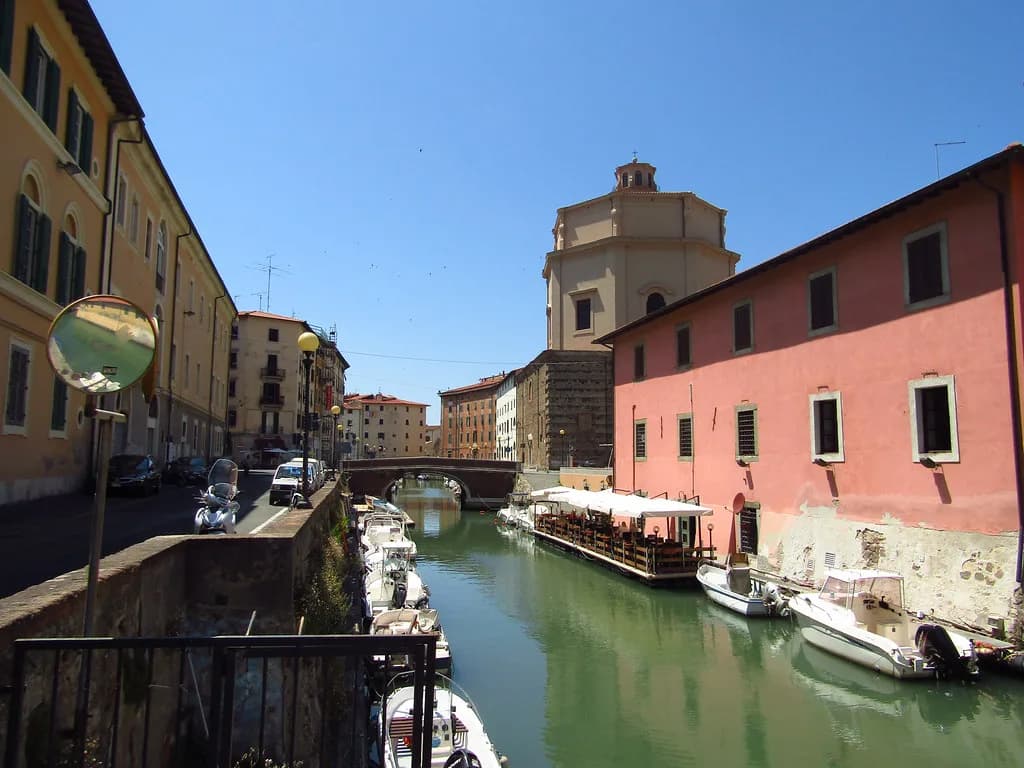
Because the cathedral sits mid-route between the station end of Via Grande and the Venezia Nuova canals, it works poorly as a detour and well as a hinge. A sensible approach is to walk the length of Via Grande, pause at the square, then continue north into the canal quarter. The same streets are strung together in an outlined sightseeing route of about 5 km covering 22 sights, which shows how much sits within easy walking distance.
For orientation, the Diocese of Livorno publishes contact details for its central offices, which is the correct place to direct questions the parish website does not answer. Address queries about access and services there rather than relying on third-party listings.
What Survived the War and What Was Rebuilt
The wartime story is the single most useful fact for a visitor: the cathedral was all but destroyed by Allied bombing and then rebuilt, so the fabric you touch is largely mid-20th-century work fitted into an older footprint. That explains the relative plainness of some surfaces alongside surviving older elements, and it is why guidebook superlatives about the facade can feel overstated. Read the building as a reconstruction and it becomes more interesting, not less.
The same guide places the cathedral's foundation in 1587 on the central side of Piazza Grande and pairs it with the town hall of 1720, so you are looking at a square rebuilt in layers — one building restored from the Renaissance footprint, its neighbour from the Baroque. Walking the perimeter in order gives you a compressed lesson in how Livorno has patched itself together. Keep the comparison in mind when you look at the stonework.
Livorno's wartime losses were not confined to the cathedral, and the wider reconstruction shaped the modern street plan and the mix of old and new along Via Grande. If the building leaves you wanting more context, the diocesan cultural pages are the most reliable place for the institutions that hold the church's records and heritage.
Livorno's Medici Origins and the Cathedral's Place in Them
Livorno as a planned city is a Medici project: Francesco I de' Medici initiated it and Ferdinando I carried it forward under the design guidance of Bernardo Buontalenti, with the canal ring and fortifications defining the early town. The cathedral belongs to that programme, which is why its position on the main square reads as civic as much as religious.
The guide also ties the city's growth to the Livornine laws of 1593, which turned Livorno into a free port and extended freedom of worship to merchants of many nations. That decision explains the extraordinary religious variety packed into a few hundred metres — a synagogue, an Armenian church and a Greek Orthodox tradition among them. Seen against that policy, the cathedral is one voice in a deliberately plural cityscape.
What to Look For Inside and Outside
Approach from Piazza Grande and give the exterior a few minutes before going in: the relationship between the church front and the flanking town hall is the most legible piece of urban design in the centre. The guide's comparison to Covent Garden as an example of the square's influence is a reminder that you are looking at a plan, not an accident.
Inside, look for the traces of the rebuild — the way older proportions meet newer materials, and how the post-war scheme handles light and volume. Published sources describe the reconstruction but do not itemise individual altarpieces or relics, so treat any specific artwork attribution you overhear with caution and check the parish's own material. Photographing details rather than the whole nave usually tells you more afterwards.
Around the square, the town hall with its external double staircase and the grand-ducal palace of the 17th century sit within sight of the cathedral doors, so a single slow circuit covers all three. Do that circuit before moving on to the canals; it takes far less time than doubling back later.
Combining the Cathedral With Nearby Sights
From Piazza Grande, head north to Piazza della Repubblica, the vast square that the guide describes as covering well over 19,000 square metres above the covered canal, then continue into the Venezia Nuova quarter. This is where the city's self-guided routes and its lesser-known corners overlap, and where a short cathedral stop turns into a half day.
The obvious companions are the Chiesa di Santa Caterina with its unusual dome and frescoes, the synagogue, and the canal-side streets around the Fossi Medicei. The city guide flags Santa Caterina as the most important element of the district, noting frescoes by Cesare Maffei and Giuseppe Maria Terreni and relics brought from Cagliari in the 17th century. Those are concrete things to look for rather than vague atmosphere.
A self-guided route through the canal district, the fortress parks and the old harbour keeps the cathedral in sequence with the waterfront rather than isolated in the shopping streets. For wider planning, see A Self-Guided Livorno Walk Through the Canal District, Fortresses and Old Harbour.
If you want to keep costs down, the public squares, church exteriors and canal streets are all open to walk without a ticket, and a published free sightseeing route lists a dozen central sights including the cathedral, the synagogue, the market and the Modigliani birthplace. Timed entry to individual churches and museums is a separate question — confirm with each site.
Entry, Hours and Tickets: What to Confirm Locally
No published source in this guide confirms the cathedral's current opening hours, whether entry is free, or whether any part of the interior is ticketed. Rather than plan around a number found on a third-party listing, check the Diocese of Livorno's site or ask at the parish before you build your day around a visit. Churches in Italy often close for part of the afternoon and reopen for evening services, but confirm rather than assume.
Guided tours of the cathedral are likewise not documented in the sources used here, so treat any offer as something to verify directly with the operator and the parish. If a paid tour is what you want, commercial walking tours of the historic centre exist, with third-party listings quoting prices that change with season and platform, so read the current terms at the point of sale.
One clear distinction worth holding onto: the square and the streets around the cathedral are public space and cost nothing, while access to interiors, museums and any guided visit is a separate matter to check site by site. The diocesan museum is a distinct institution with its own arrangements, not an extension of the cathedral ticket.
How Long to Allow and a Suggested Walking Order
As an editorial suggestion rather than an official figure, allow about 20 to 30 minutes inside the cathedral and on the square, and two to three hours for the full circuit from Via Grande through the canals. The published walking routes through the centre cover several kilometres, so comfortable shoes matter more than a tight schedule.
A workable order is: start at Piazza Grande and the cathedral, walk north to Piazza della Repubblica, loop through the Venezia Nuova canals to Santa Caterina and the synagogue, then return south along the seafront to the Terrazza Mascagni if the weather holds. That sequence keeps the densest sightseeing in the morning and leaves the waterfront for the softer light.
The Terrazza Mascagni itself is a free public promenade and a good place to end, with the aquarium nearby if you want an indoor stop. Pushing further out to Montenero rewards you with the view back over the whole city, though it adds transport time you should budget for.
The fortress parks give you a breather between churches if the day is warm, and they cost nothing to walk through.
Visiting Respectfully
This is an active parish church, not a museum, so dress modestly with shoulders and knees covered and keep voices low if a service is in progress. If the doors are open for Mass, wait or return later rather than walking the aisles with a camera. A brief pause at the entrance to check the atmosphere costs nothing and avoids awkwardness.
Flash photography, tripods and group commentary are best avoided inside, and any restoration work you see is a sign the building is in use rather than closed for your convenience. Ask before photographing people at prayer.
Plan Your Visit
The Duomo di Livorno is best understood as a survivor rather than a showpiece: a 16th-century foundation on Piazza Grande, rebuilt after wartime destruction, still anchoring the daily life of the centre. Give it half an hour, read it as part of the Medici plan, and let the canals do the rest of the work.
Before you travel, confirm opening times and access with the Diocese of Livorno, and check the current terms of any walking tour or museum you plan to add. Everything else — the square, the streets, the seafront — you can decide on the day.
Frequently Asked Questions
Is the Duomo di Livorno free to enter?
No published source confirms current entry terms, so do not assume the cathedral is free or ticketed. Check the Diocese of Livorno website or ask at the parish before you plan around a visit. The square and surrounding streets are public space and cost nothing to walk.
How long does a visit to Livorno's cathedral take?
As an editorial suggestion, allow around 20 to 30 minutes for the interior and the square, and two to three hours if you continue through Piazza della Repubblica and the canal district. No official visit length is published, so adjust to your own pace.
What happened to the Duomo di Livorno during the Second World War?
The cathedral was almost entirely destroyed by bombing and rebuilt afterwards, which is why much of the fabric reads as mid-20th-century work on an older footprint. Knowing this makes the mix of plain surfaces and surviving elements easier to interpret.
Is the Duomo worth visiting on a short stop in Livorno?
Yes, if you are already walking the centre: it sits on Piazza Grande between Via Grande and the canals, so it costs little time to include. On a very short stop, prioritise the square and the canal streets and treat the interior as optional depending on whether the doors are open.
What else can I see near Piazza Grande in Livorno?
Within a short walk are the town hall with its external staircase, Piazza della Repubblica above the covered canal, the Venezia Nuova quarter, the Chiesa di Santa Caterina, the synagogue and the central market. A published self-guided route links about a dozen such sights in the centre.
Do I need to book to visit the Duomo di Livorno?
No source documents a booking requirement for the cathedral, and none confirms that guided tours are offered. Ask the parish directly if you want a guided visit, and check the current terms of any commercial walking tour before paying.
What should I wear when visiting the cathedral?
Cover shoulders and knees and keep voices low, especially if a service is under way. If the doors are open for Mass, wait outside or come back rather than touring the aisles.
Sources
Continue exploring
More guides you'll find useful