Livorno Food Guide: What to Eat and Where to Find It
A Livorno food guide to the city's seafood cooking: cacciucco, market culture, street snacks and where each food surfaces, without a restaurant ranking.
On this page
Livorno is Tuscany's largest port and second-largest city, and its table follows the water rather than the vineyard. The dish most closely tied to the city is cacciucco, a spicy soup-stew built from whatever came off the boats that morning, often compared to Marseille's bouillabaisse. A suggested half-day is enough to see the central market, eat one seafood meal and take a canal-side walk; that is editorial advice, not an official programme. This guide explains what Livornese cooking actually is and where each food tends to surface, and it deliberately does not rank restaurants.
That matters because Livorno is easy to misread. Cruise passengers often head straight for Pisa or Florence and never eat in the city at all, which is a shame given how specific its food culture is. Treat the sections below as dish literacy first and logistics second: once you can recognise cacciucco, riso nero or a 5e5 on a menu, choosing where to sit becomes a much simpler decision.
One practical caveat before you start: publishable prices, opening hours and market days change and are not reliable in third-party write-ups. Check the operator or the city's own channels before you plan a meal around a specific place, and use this guide to decide what to look for rather than to lock in a booking.
A Free Port That Cooked for Strangers
Livorno's food identity starts with the Medici decision to make the city a free port in the late sixteenth century, drawing merchants and communities from across Europe and the Mediterranean. The 1593 Livornina edict offered legal protections and commercial freedoms to traders of many faiths, which made Livorno one of the most cosmopolitan ports in the Mediterranean and gave it a population used to foreign tastes.
That history helps explain why a Livorno menu feels broader than a classic Tuscan hill-town menu. Alongside local seafood you will find influences absorbed through trade and migration rather than a single farmhouse tradition, and the city's cooking is built around availability rather than ceremony.
For orientation on the ground, the Venezia Nuova quarter and the Fortezza Nuova park give you a walkable frame for the historic centre, and the broader Livorno Attractions hub is the place to match sights to mealtimes. Plan a loop that keeps you near the canals at lunch and near the seafront later, so you are not crossing town for a single dish.
What Livornese Cooking Actually Is
Seafood is the staple, and local menus are described as changing with the daily catch rather than holding a fixed list. Expect to see seppie, or cuttlefish, whose ink is the base of riso nero, the black risotto; totani, baby squid; bottarga, cured tuna roe; and riccio, sea anemone, which is often paired with linguine. Recognising these four ingredients is the fastest way to read a menu in a port city.
Because the cooking follows the catch, a dish can be excellent in one week and absent the next, and asking what is good today is more useful than ordering by habit. That also means a cheap, unglamorous room near the market can be a better bet than a polished dining room with a frozen supply chain. Judge the menu by how much of it changes with the season.
Fish is not the whole story, but it is the organising principle. Fried seafood, anchovies and simple grilled catch sit alongside the stews, and the everyday rhythm is one hero dish with a small side rather than a long tasting sequence.
Cacciucco Explained
Cacciucco is a spicy soup-stew made with a mix of fish and seafood, and it functions as the city's culinary signature in the way bouillabaisse does in Marseille. The comparison is useful because both are built on what the boats brought in rather than on a fixed recipe, and both are slow, bread-heavy dishes rather than plated showpieces.
One traveller's account describes the traditional version as using fish left unsold at the market at the end of the day, which tells you two things about how to approach it. First, the stew is a practical dish rather than a luxury one, so a modest trattoria is a perfectly sensible setting. Second, quality depends on the day's supply, so ask before committing your main meal to it.
Cacciucco's local fame has even produced a food trail mapped by the city's tourism service, which is a better starting point than any list of supposedly best venues. Check current details through the tourist office before you set out, since trail maps and participating venues change.
The Market as Your Reference Point
The Mercato Centrale is the city's everyday food theatre, a place where Livornesi shop rather than a staged tourist market. Stalls carry the fresh catch, herbs, citrus and seasonal produce that later appear on restaurant plates, so an hour here teaches you what is actually in season before you order. The Mercato Centrale di Livorno guide covers the stalls and layout in more detail.
Go with a question rather than a shopping list. Ask what is best today, watch which stalls have queues, and note the names of fish you do not recognise; that vocabulary pays off later when a waiter describes the day's delivery. Because market days and individual stall hours shift, confirm them with the market or the city before building a morning around it.
The market also spills onto the surrounding streets, where casual counters and small operators sell snacks rather than full meals. That makes it the right first stop on a port day: you can eat lightly, learn what is good, and decide where to spend a longer lunch.
Street Snacks and Small Bites
Livorno has a genuine snack culture, and the most distinctive example is the 5e5, a chickpea pancake known as torta di ceci tucked into bread. The name literally means five and five, a reference to the days when the bread and the chickpea slice were each bought for five lire, and the sandwich is typically offered with a choice of bread and optional additions such as garlicky aubergine.
Frati Livornesi, deep-fried doughnuts, are registered as an Italian street food and turn up around the market area. A sweet fizzy non-alcoholic drink such as Spuma Bionda is the traditional match, and eating standing at a counter is normal rather than a compromise.
Treat these as flexible habits rather than rules. The point is to leave room for a small, cheap bite between sights so you are not choosing between a market snack and a sit-down lunch; if a queue looks unmanageable, come back outside the peak rush.
Canal-Side Eating in Venezia Nuova
The Venezia Nuova quarter, built on canals crossed by small bridges, is the most atmospheric setting for an evening meal in the city. The neighbourhood is quiet and walkable, and the waterside streets give you a natural route between aperitivo and dinner without needing a fixed reservation plan.
Food here surfaces in neighbourhood bars and small rooms rather than in a single restaurant row, so the sensible approach is to pick a canal-side street and walk it rather than target one address. A modest drink plus a small plate often works better than a full menu, and it leaves the option to move on.
If you want a self-guided shape for the evening, combine the canal streets with the Fortezza Nuova park, a public green space inside the surviving fortress walls that the city says hosts events through the year. Check what is actually on through Visit Livorno rather than assuming a festival is running.
Trattoria Rhythm and How to Order
Livorno's sit-down eating is largely family-run trattoria territory, and one travel write-up describes lunch and dinner windows of roughly early afternoon and evening. Arriving in the gap between typical service periods is the most common way to end up with a disappointing meal, so build your day around one of those windows and confirm actual hours with the venue.
Ordering without a ranking is simpler than it sounds. Pick one seafood hero dish, add a vegetable side, share a starter if portions are generous, and ask what is local; the aim is a short, confident order rather than a full tour of the menu.
For a second meal, the directory of restaurants near the port shows the spread of cuisines and price bands bookable around Livorno and the wider region, including Tuscan, Italian and seafood options. Use it to see what is available on a given date, not as a quality ranking.
Beyond Seafood: Reading a Port City Menu
If you do not eat fish, Livorno still works: Tuscan menus in the city and across the region carry bistecca and other meat dishes, plus pasta and vegetable courses, and some restaurants publish vegetarian, vegan and gluten-free options directly in their listings. Check the menu before you sit down rather than relying on improvisation at the table.
A useful habit in this part of Tuscany is to separate what is local from what is regional shorthand. Bistecca alla fiorentina is a Florentine marker rather than a Livornese one, so order it because you want it, not because the city is known for it. The genuinely local flavours are the sea-led ones and the snack counter.
Also be honest about portion sizes. A shared starter and a single main is often enough in a trattoria, and leaving unfinished food is not a statement about the kitchen; it simply reflects how much was put in front of you.
Extending the Day: Nearby Food Destinations
Livorno sits within easy reach of the rest of Tuscany, and the nearest extensions for a food-focused day are inland and along the coast. Pisa, Lucca and Florence all appear in guide literature as day trips from the port, and each has a distinct table: Pisa's historic centre, Lucca's wine bars, and Florence's steakhouse and rooftop dining scene.
The Etruscan Coast south of the city, nicknamed the Costa degli Etruschi, strings beaches and resort towns such as Castiglioncello together, which makes it a natural lunch-and-swim extension rather than a separate trip. North of Livorno, the regional park of Migliarino San Rossore Massaciuccoli has walking and cycling trails, and one guide notes some areas are open only at weekends or with a guide, so check access before travelling.
Keep day trips realistic. A single destination plus one meal is a better plan than three towns and a hurried sandwich, and it leaves the evening free for the canals back in Livorno.
Practical Logistics for a Food-Focused Day
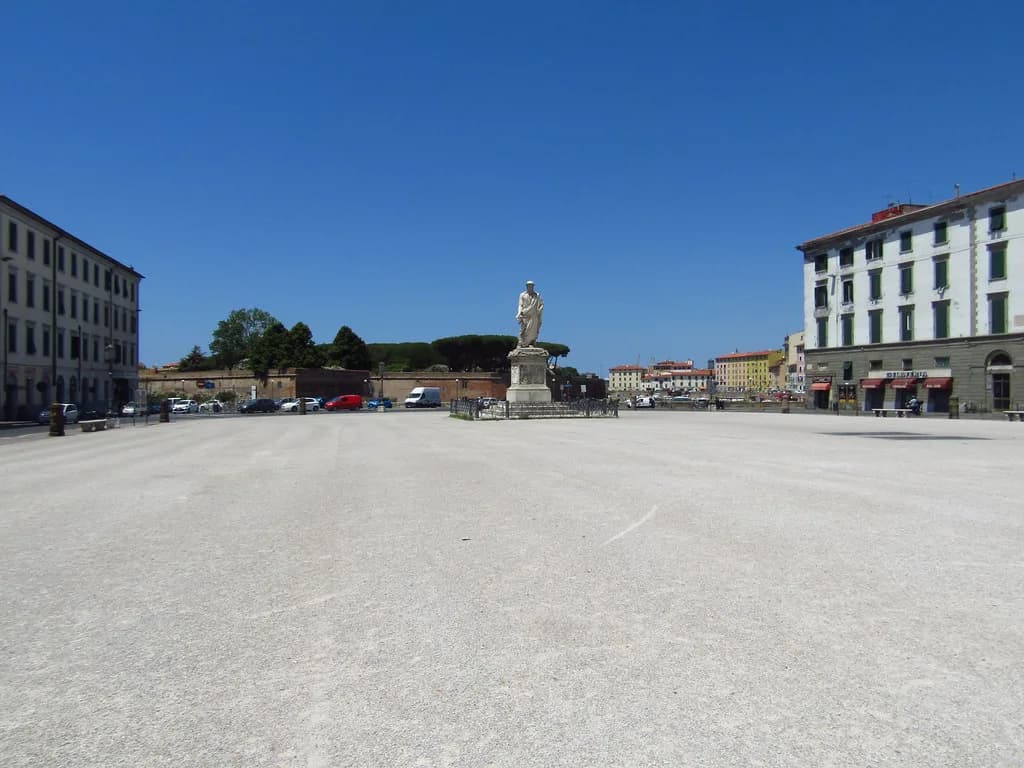
If you arrive by cruise ship, the city's tourism service and one blog describe shuttle arrangements and local buses toward the centre; use the ship's shuttle or the local connection rather than walking out through the industrial docks. The square of Piazza della Repubblica, described by the city tourism service as the widest bridge in Europe, carries the city over the Fosso Reale and makes a natural landmark for meeting points.
Driving into the centre brings two constraints worth knowing before you plan a food crawl: one guide notes restricted traffic zones in the historic centre and expensive street parking there. Leave the car at a supervised car park outside the core and finish on foot, which also makes that second glass of wine a non-issue.
Finally, check the city's own notices for disruptions such as weather alerts or major events, since these affect markets, transport and opening patterns more often than guidebooks admit. A quick look at the official municipal site before you leave is the cheapest insurance against a wasted food day.
Eat by the Season, Not the Ranking
Livorno rewards a curious eater more than a checklist chaser. Learn four or five local names, eat one proper seafood meal, take a market snack and leave an evening for the canals, and you will have the city's food culture better than any best-of list can deliver.
Before travelling, confirm opening arrangements with the individual venue or the tourist office, because the details that matter most to a food day change far more often than the dishes do.
Frequently Asked Questions
What is Livorno, Italy famous for?
Livorno is best known as Tuscany's largest port and second-largest city, and for its seafood cooking, above all the fish stew cacciucco. It is also known for the Medici-era free-port history, the canal district of Venezia Nuova and the seafront terrace of Terrazza Mascagni.
What is cacciucco and what is it made of?
Cacciucco is a spicy fish and seafood soup-stew built from the day's catch; one traveller's account describes it as made with the unsold fish left at the market. It is Livorno's signature dish and is often compared with Marseille's bouillabaisse. Ask what is in it on the day, because the mix changes with supply.
What should you eat in Livorno if you do not like seafood?
Look for meat, pasta and vegetable dishes on Tuscan menus, and check listings in advance because some restaurants publish vegetarian, vegan and gluten-free options. Bistecca alla fiorentina is a Florentine marker rather than a Livornese one, but you will find it in the region. Street snacks such as torta di ceci in bread are another non-fish option.
Is the Mercato Centrale worth visiting on a Livorno port day?
Yes, if you use it as an information tool rather than a shopping stop. Seeing the seasonal catch and produce helps you read menus later, and the surrounding streets offer quick snacks. Confirm current stall hours with the market or city before building a morning around it, as they change.
How does Livorno's food differ from Florence's?
Livorno's table is organised around the sea and the daily catch, while Florence is inland and associated with beef, wine bars and a different trattoria tradition. Livorno also has a strong snack culture, including the 5e5 chickpea sandwich and frati doughnuts, which suits a port day with limited time.
Sources
- Restaurants Near Port of Livorno | OpenTable
- Livorno travel guide | Tuscany Now & More
- Città di Livorno
- The Fortezza Nuova | Visit Livorno
- Fortezza Nuova, Livorno: Visitor Guide & Inside-the-Walls Tour 2026 — Castles & Palaces
- Livorno Tuscany Port City Guide for Canal Adventures | Designer Journeys
- Piazza della Repubblica | Visit Livorno
- What to do in Livorno, Tuscany's Port City - Alex Getting Lost
- My favourite things to do in Livorno - My Italian Diaries
- Livorno: A 24 Hour Stopover for Seafood Lovers
Continue exploring
More guides you'll find useful