Mercato Centrale di Livorno Guide: Stalls, Food and Visiting Tips
Plan a visit to Livorno's Mercato Centrale with this guide to its halls, Livornese food, street markets and suggested timing.
On this page
Livorno's Mercato Centrale, formally the Mercato delle Vettovaglie and often called simply the Coperto, is the covered food market at the edge of the city's canal district. It sits on the Fosso Reale, the canal that still separates the old center from the Venezia Nuova quarter, and it is an active place of daily shopping. Behind the stalls, the building itself is the attraction: an iron-and-glass hall from the late 1800s, modelled on the Paris halls, with a fish hall, a produce room and a grand central aisle. One dated cruise guide lists Monday to Saturday, 7:30 AM to 2:00 PM, but that is not an official 2026 schedule, so confirm before you travel. This guide covers what is sold there, what to eat around it, and how to plan a visit without relying on outdated timetables.
What the Mercato Centrale Is
The market is one of Europe's large covered markets, a description that fits better than the loose claim, repeated in some guides, that it is the biggest. It was built in the late 1800s on a design by the Livornese engineer and architect Angiolo Badaloni, following the model of the old Halles in Paris, and its iron, cast-iron and glass structure combines Neoclassicism with Art Nouveau touches. The marketplace itself is older than the building, having stood between the Old and New Fortresses before moving to its present site. Think of it as a shopping space with architectural value, not a tourist attraction with staged tastings.
Some guides describe the building's construction as starting in 1889 and finishing by 1904, while a U.S. Army feature from 2013 dates the finished market to 1894. Both accounts agree on the essentials: a long facade on the Fosso Reale, several side entrances, and a huge internal volume lit by arched windows and a double roof restored after World War II bombing. If architectural detail is what draws you, allow a few extra minutes to look up at the caryatids by the Livornese sculptor Lorenzo Gori and the painted lunettes, rather than rushing from stall to stall.
Orientation: Entrances, the Central Aisle and the Two Side Halls
The interior is best understood as three spaces rather than floors. There is the main central aisle, lined with shops selling Tuscan specialities, meats, cheeses, bread and prepared foods. Off it are two adjoining rooms: one given over to marble counters for fish, the other to vegetable stands. Any source that tells you cooked food is on one floor and produce on another is guessing, because nothing published by the market or the city confirms a floor-by-floor layout. Plan around the halls rather than a level number.
Approaching from the water side changes the experience. The most monumental entrance faces the canal, framed by large columns with iron shutters above the doors, and the walk along the Fosso Reale brings you past bridges and warehouse facades before you step inside. Coming from Piazza Grande instead, you walk east along Via Grande and then turn right into Via della Madonna, letting the street market grow livelier as you approach Piazza Cavallotti. Either approach pairs the market with the canal landscape that makes this part of Livorno distinctive.
What to Eat and Buy Inside
Start in the fish hall, where the catch is laid out on marble counters and is the reason many Livornesi shop here. The produce room supplies vegetables for the day, while the central aisle covers bread, schiacciata, cured meats, cheeses, eggs, spices and legumes. Visit Livorno singles out the salted rosettes of Jewish tradition and the freshly baked bread and schiacciata sold in small stores near the fruit and vegetable stands. The building itself is free to enter and needs no reservation, which makes it an easy morning stop even on a tight schedule.
A useful habit is to buy what looks good rather than arrive with a fixed list. The market has long spilled into the surrounding streets: Via Buontalenti, by the main entrance, carries clothing and household goods, and Piazza Cavallotti hosts an outdoor fruit and vegetable market in the mornings, both traditionally keeping similar hours or selling out early. The old Mercato Americano, once associated with Piazza XX Settembre, moved to the port area in 2009, so do not go searching for it in the square.
Livornese Specialities to Try Beyond the Market
The market's ingredients point toward the dishes Livorno is known for. Cacciucco, a rich fish and tomato stew, was traditionally made from the unsold catch left at the end of the day, which tells you something about how this port cooks. Risotto nero with squid ink and red mullet in tomato sauce are other seafood staples, and the local sandwich known as cinque e cinque, or 5e5, pairs a chickpea pancake with bread. The name comes from the old habit of buying five lire of bread and five lire of chickpea pancake, and it is still a cheap, filling lunch. Further visitor details appear in Livorno: Insider's Guide to the Vibrant Port City in Tuscany.
For a drink, keep an eye out for ponce livornese, a coffee with rum, cognac, aniseed liqueur, lemon and sugar that is the city's signature bar order. None of these dishes belongs to the market itself, so treat the market as research and eat them in the surrounding trattorias or bars. Restaurants close to the market are known for fresh fish and quick bites, including the lively spots around Piazza Cavallotti. If you want a single meal to remember, order cacciucco in a simple dining room rather than looking for it among the market stalls.
Opening Days and Hours: What to Confirm Before You Go
Published hours differ between third-party guides, which is your cue to check before building a morning around the market. One cruise guide lists Monday to Saturday from 7:30 AM to 2:00 PM, and a 2013 U.S. Army feature gives 8 a.m. to 1 p.m. Monday through Saturday. Neither is an official 2026 statement from the market or the city, and both date from before this year. Confirm current days and hours on the market's or the city's own channels, or by calling the number listed for the market, before you travel.
Both dated sources describe Sunday closure, and one adds that the street markets around it keep the same pattern, though it also says they close when sold out. Treat Sunday as a real risk rather than a certainty and plan the rest of your day around it if the market is the main reason for your visit. If you do go, aim for the morning: the trade is oriented toward daily shopping, and by early afternoon the halls are winding down. City news pages and the market's own information are the places to verify changes.
How Much Time to Allow
A quick browse takes 30 to 45 minutes if you walk the central aisle, look into the fish and vegetable halls, and stop for one coffee or a piece of schiacciata. That is a suggested pace, not an official duration, and it assumes you are content with a look rather than a full shop. The architecture alone can eat into that time if you stop to admire the iron trusses and the restored double roof. If you want to buy provisions for a picnic, allow closer to an hour.
A market-and-lunch visit is a half-day plan. Combine the halls with the street markets on Via Buontalenti and Piazza Cavallotti, then sit down for cacciucco or a quick sandwich nearby. If you are staying longer, use the market as the start of a walk into the canal district, which keeps the visit from feeling like a detour. Those in a hurry should prioritize the fish hall and the central aisle and leave the surrounding streets for another day.
The Neighbourhood Around the Market
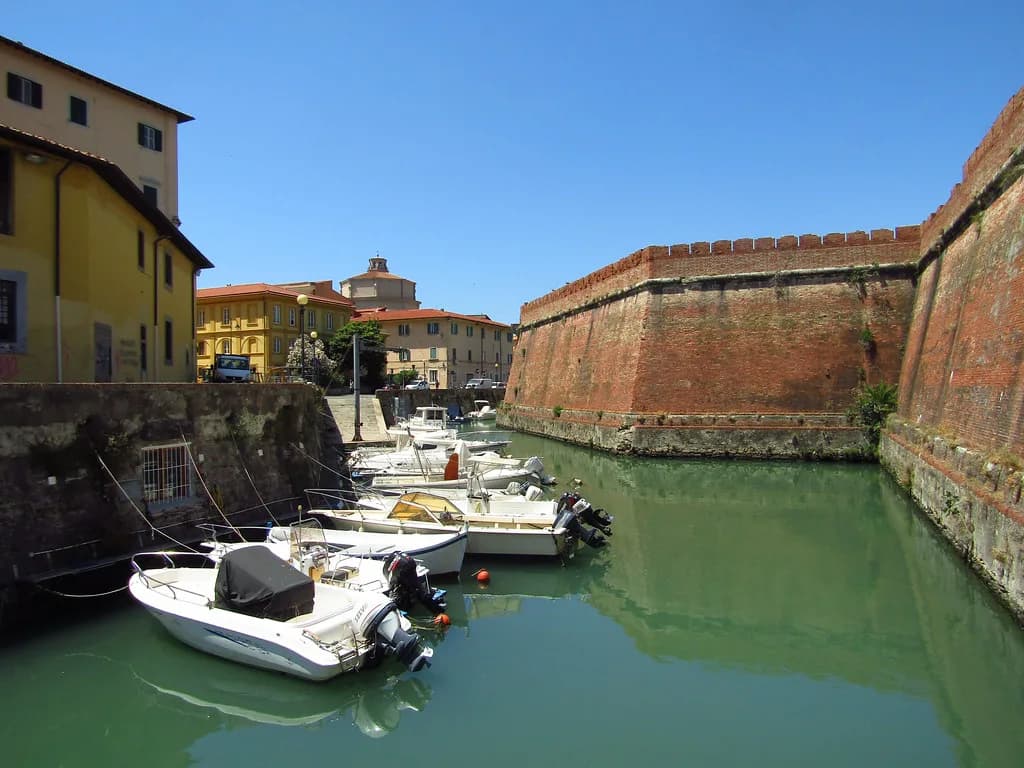
The market sits in the layers of Livorno that reward a slow walk. Piazza della Repubblica, known locally as the Voltone, is a vast elliptical bridge over the Fosso Reale that the city calls the widest in Europe, and from it you can see the Fortezza Nuova on its canal island. That fortress, commissioned by the Medici in 1590 and designed with input from Bernardo Buontalenti, is now a public park with two surviving bastions and is free to enter. A route linking the market, the Voltone and Fortezza Nuova makes a coherent loop for the hidden gems in Livorno that many visitors skip.
For a more structured version of that walk, the Livorno self-guided walk: canals, fortresses and the old harbour takes in the same waterside logic and helps you connect the market with the rest of the city on foot. The sight lines from the market's canal side toward the Fortezza Nuova and the dome of Santa Caterina give you a sense of how trade, water and defense shaped Livorno. Viewed this way, the market is not an isolated stop but a gateway to the canal district. You can also see how it fits among the wider Livorno Attractions before choosing your priorities.
Small Practical Decisions
Go in the morning, when the market is at its busiest and the fish counters are still full. This is not a secret among locals, and the busiest hours are the middle of the morning rather than first thing. If you are heading onward to Florence or Pisa, check your train times before committing to a long lunch near the market. For a quick visit, target the fish hall and the central aisle and leave the produce room for another trip.
Pair the market with a canal walk or a boat tour rather than with a visit to the beach. The waterside routes start close to the market and the full loop through Venezia Nuova is short enough to fit into a single morning. If you are visiting the Duomo or the Chiesa di Santa Caterina, note that these are free churches and separate from any ticketed attraction, so the market adds no entrance cost. Check current hours before combining them with a market visit.
Where to Slot the Market Into a Livorno Day
A natural full-day plan starts at the market in the morning, moves through the canal district, and finishes on the seafront. Terrazza Mascagni, the black-and-white checkerboard terrace on Viale Italia, is an easy taxi or bus ride from the center and gives a completely different view of the city. If you prefer a hilltop finish, the Sanctuary of Montenero is reachable by funicular and offers a sweeping view over the port. Both pair well with a morning at the market without turning the day into a checklist.
If you are on a cruise call, leave time to walk back to the shuttle or the port rather than cutting it fine. The city is compact, but the market's morning-only rhythm means a short visit is often better than a rushed one. For those staying overnight, come back in the evening for the canal district, when the lights on the water change the mood. Either way, the market works best as a morning anchor rather than a full day in itself.
Plan Your Visit
The Mercato Centrale di Livorno rewards realistic expectations. It is a working market with architectural quality and a strong sense of place, not a curated food hall with set tastings or tours. Check the current days and hours with the market or the city before building a Sunday or late-afternoon plan, since the published third-party schedules date from earlier years. Go in the morning, browse slowly, and eat the city's seafood dishes in the streets around it.
Frequently Asked Questions
Is the Mercato Centrale worth visiting in Livorno?
Yes, if you want to see how Livorno shops and to look at one of Europe's large iron-and-glass covered markets. The fish hall, the produce room and the central aisle give you a real slice of daily life, and the building itself is free to enter. It is less compelling if you expect a food hall with samples.
What is the best food to try at Livorno's central market?
Buy fresh fish from the marble counters, and try the schiacciata, salted rosettes and cheeses sold in the central aisle. For a meal, leave the market and order cacciucco or the 5e5 chickpea sandwich in the surrounding streets. These are Livornese specialities rather than market stalls, so plan for a sit-down or street-food stop nearby.
Is the market open on Sundays?
Dated third-party guides say the market closes on Sundays and that the street markets around it follow a similar pattern. No official 2026 statement is confirmed in the sources, so check with the market or the city before planning a Sunday visit. Treat morning hours as the safest window and verify ahead.
How long should I spend at the Mercato Centrale?
A suggested browse is 30 to 45 minutes if you walk the central aisle and look into the fish and vegetable halls. Allow closer to an hour if you want to buy picnic provisions, and a half-day if you add the street markets and a lunch of cacciucco nearby. These are suggestions, not official durations.
Where are the street markets around the covered market?
The indoor market spills onto Via Buontalenti, by the main entrance, and onto Piazza Cavallotti, where an outdoor fruit and vegetable market operates in the mornings. Both traditionally keep hours similar to the covered market or close when sold out. Modern revisions have moved the Mercato Americano to the port area, so it is no longer in Piazza XX Settembre.
How does Livorno's Mercato Centrale compare with Florence's Mercato Centrale?
Livorno's is a working food market with fish and produce halls, while Florence's is more of a food hall and tourist destination. If you want local shopping and architecture, Livorno's holds its own. If you want a cooked-food market with many vendors, you may find Florence's better suited, but check current details for both before you go.
Sources
- Città di Livorno
- Livorno's Mercato Centrale a cultural treat, more than mere provisions for adventurous shoppers | Article | The United States Army
- Livorno: Insider's Guide to the Vibrant Port City in Tuscany
- Mercato Centrale in Livorno: Cruise Port Guide (2024)
- Delle Vettovaglie Market | Visit Livorno
- The Fortezza Nuova | Visit Livorno
- Visit Livorno in Italy for Sea Light and Tuscan Soul | Designer Journeys
- Piazza della Repubblica | Visit Livorno
- Sanctuary of Montenero, Livorno, Tuscany, Italy - Landmark Review | Condé Nast Traveler
- My favourite things to do in Livorno - My Italian Diaries
Continue exploring
More guides you'll find useful