Città Alta Bergamo Neighbourhood Guide: Where to Stay
A practical guide to Bergamo's Città Alta: what the walled upper town feels like, how it connects to Città Bassa, and how to choose where to base yourself.
On this page
Bergamo is easiest to understand as two cities stacked on one site. The Città Alta sits high inside a ring of Venetian walls, while the Città Bassa spreads out below with shops, museums and cafés. Deciding where to sleep means choosing between those two atmospheres, not just two addresses. Related guide: Best Time to Visit Bergamo Avoiding Crowds: A Season Guide.
This guide is organised around that decision. It covers what the upper town feels like on foot, which sights are free to wander past and which are separate ticketed visits, how the funicular and walking fit together, and why a car complicates a stay inside the walls.
What Città Alta Actually Feels Like
The upper town is a compact historic core of cobbled lanes and stone buildings, enclosed by walls that now frame views over the plain. Its centrepiece is Piazza Vecchia, described in travel writing as the city's living room, overlooked by the Palazzo della Ragione, the Campanone civic tower and the Angelo Mai Library. Expect a place built for walking slowly rather than covering distance.
One ritual gives the square its rhythm. According to the Italo travel blog, the Campanone bell rings one hundred times each evening, a custom inherited from the Venetian period when it signalled the closing of the city gates. Whether or not you time your evening around it, it is a good reason to be in Piazza Vecchia after the day-trippers thin out.
The atmosphere is historic and dense rather than quiet and residential. Anyone promising empty lanes or a locals-only enclave is overselling it; what you can count on is steep topography, uneven paving and a very walkable core once you are inside. That combination rewards shoes with grip and a bag you can carry up steps.
Città Alta or Città Bassa: Matching the Base to Your Trip
Choose the Città Alta if the point of your trip is the walled town itself: early mornings on the stones, dinners near Piazza Vecchia and no commute to the sights. The trade-off is that every return to the lower town, the station or a wider museum day involves a descent and a climb back up.
Choose the Città Bassa if you want easier logistics, more restaurant and café choice at street level, and straightforward access to museums on the flat. The Italo blog frames the lower town as the modern, dynamic half, with the Accademia Carrara and GAMeC gallery along one of the main approach roads. It suits short breaks where you want to combine the upper town with broader city time.
A third option is basing yourself outside Bergamo entirely and treating the city as a day trip. The surrounding valleys and spa towns are within reach by road or rail, which appeals to travellers touring Lombardy rather than settling in one place. The cost is that you lose the evenings, which is when the upper town is at its most atmospheric.
The Anchor Sights, Free and Ticketed
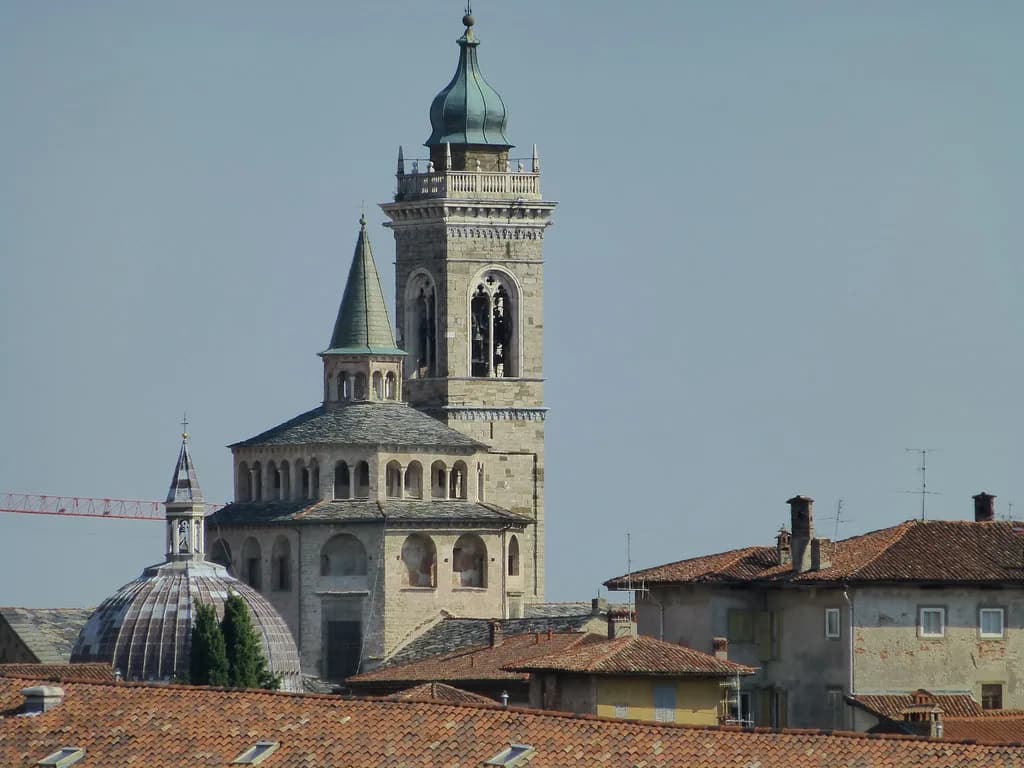
Piazza Vecchia, the exterior of Santa Maria Maggiore and the polychrome façade of the Colleoni Chapel can be seen as part of a walk through the centre; the chapel was built as a mausoleum for the condottiero Bartolomeo Colleoni. The basilica's richly decorated interior, with tapestries and gilded stucco, is the kind of visit that rewards a slower stop rather than a passing glance.
Higher up, La Rocca is a fourteenth-century fortress set in greenery with views that travel writing says reach towards Milan on clear days, and it houses a museum devoted to the nineteenth century. Treat the fortress grounds and the museum as separate questions and confirm current access arrangements before you build a day around them.
The Accademia Carrara and GAMeC sit across from each other, but they are two distinct museums with their own collections and their own admission. Carrara holds a large painting and drawings collection spanning the Renaissance to the nineteenth century, while GAMeC programs modern and contemporary exhibitions. Plan them as two decisions, not one combined ticket.
Green Breathing Room Above the Walls
The Lorenzo Rota Botanical Garden is a small terraced garden of roughly 2,400 square metres, planted with species from many regions and set against views of the walls and hills. The Italo blog describes it as free to enter and open from March to October, but hours vary by season, so confirm the current schedule before making it your main afternoon plan.
For longer walks, the San Vigilio funicular climbs from Largo Porta Sant'Alessandro towards San Vigilio Castle, and the surrounding Colli di Bergamo park covers more than 4,700 hectares of protected hillside. The blog dates the funicular's opening to 1912 and notes the castle bastions as a viewpoint; treat those details as travel-press information and check the operator's current service before relying on it.
Away from the main squares, the Astino Monastery sits among hills and vineyards and now hosts cultural events, while the Borgo di Pignolo has historic workshops and Renaissance palaces. These are ordinary parts of the city that see fewer visitors than Piazza Vecchia, which makes them good candidates for a half-day wander rather than a checklist stop.
Getting Up and Down: Funicular and Walking
The two reliable ways between the levels are the funicular and your own legs. The Italo blog treats the funicular as the city's symbol and describes the ride as offering views over the rooftops and towers during the ascent, which makes it more than pure transport. The same source mentions a second funicular continuing to San Vigilio.
Specific fares, departure intervals and operating hours are not something to take from a general travel article. The city's official tourism portal is the place to confirm how the funicular currently runs and what else is operating during your dates, and it also lists guided visits and experiences if you would rather have the climb interpreted.
Walking between the levels is steep and best done in daylight with time to spare; it is not a shortcut to attempt with heavy luggage on arrival day. A practical pattern is to walk up once to learn the geography, then use the funicular when carrying shopping, heading out for dinner or returning late.
Parking and Driving: Treat the Car as a Liability
A car is a burden in a walled hill town of narrow lanes and limited space, and the sources here do not establish the parking zones, costs, capacity or access rules inside the Città Alta. Do not assume you can drive to your accommodation door. Before booking anywhere inside the walls, ask the property directly, in writing, where guests may leave a car and whether any permit or registration is needed.
If you are touring the valleys and spa towns, the more workable arrangement is usually to leave the car at the foot of the hill or near your lower-town base and treat the upper town as a car-free zone. Confirm current restrictions with the Comune di Bergamo rather than relying on older forum posts, since local traffic rules can change seasonally.
Travellers arriving by train avoid the question entirely. Bergamo is served by rail and the Italo blog is built around reaching the city that way, which pairs naturally with the funicular and walking. If your itinerary is city-focused rather than valley-focused, skipping the rental car removes the single biggest logistical complication of staying up in the walls.
Where to Base Yourself: A Decision Framework
For a two-night city break centred on the upper town, stay inside the walls or immediately below them and accept that everything involves a slope. You gain the early and late hours, when Piazza Vecchia is at its most usable, and you lose nothing in dining choice, since trattorias cluster in the historic core.
For a longer stay mixing museums, day trips and everyday errands, the Città Bassa is more forgiving. The flat streets, larger choice of cafés and shops, and easier connections make a week feel less like a daily climb. The Italo blog explicitly describes the two halves as complementary, with the lower town modern and the upper town ancient, which supports splitting your time rather than picking a side.
For families or travellers with mobility limitations, look hard at what each property actually offers before booking. The sources do not provide verified step-free routes between the levels or inside the historic lanes, so ask the hotel or apartment about lift access and the final approach on foot. That single email will tell you more than any description of the view.
Eating in Città Alta
Bergamasque cooking is hearty and built for the climate. Casoncelli alla bergamasca, a stuffed pasta dressed with butter, sage and pancetta, is the dish to order at least once, and polenta taragna, made with buckwheat and served with melted cheese, suits the colder months. For dessert, polenta e osei is a sweet pastry-and-marzipan construction rather than the savoury dish its name suggests.
Lunch is the meal that fits the upper town best. A long trattoria lunch in the historic core lets you sit out the busiest hours and then continue wandering when the light softens, and it avoids committing to an expensive dinner before you know how the evening feels. Restaurant prices vary widely by kitchen and occasion, so compare current menus at the door rather than budgeting from older figures.
If you want structure, the tourism portal lists food and wine experiences in and around Bergamo, including cellar visits. Those are separate paid bookings with their own conditions, so check what each includes and where it departs from before you commit an evening to one.
Beyond the Walls: Day Excursions
The Bergamo valleys, with pastures, forests and mountain trails, are the natural counterweight to a few days of stone lanes. Clusone is known for its astronomical clock, and Lovere sits on the shore of Lake Iseo. Both work as day trips from the city rather than alternative bases for a first visit.
San Pellegrino Terme, roughly half an hour from the centre according to the Italo blog, offers Liberty-style interiors and panoramic pools among the Orobie foothills. Treat the journey time as an indication and check current transport and opening arrangements, since spa access and seasonal schedules are exactly the details that change.
For a shorter escape, the walking paths of the Colli di Bergamo park above San Vigilio give you hillside views without leaving the city. The tourism portal's events calendar and the Comune's events listing are worth a look in the week before you travel if you want a concert, exhibition or guided walk to anchor an evening.
Practical Tips for Staying Inside the Walls
Pack for cobbles: flat shoes with grip, a light layer for the wind on the walls, and a bag you can carry rather than wheel. Bring less than you think you need, because every extra kilo is felt on the climb from the funicular to a hotel above Piazza Vecchia.
Time your days around the slope rather than fighting it. Do the upper town in the morning and early evening, use the middle of the day for a long lunch or a lower-town museum, and keep one afternoon free for the garden or the San Vigilio paths. Anyone with a specific exhibition, church interior or event in mind should confirm dates and access directly with the venue, since the sources used here describe places in general terms, not current schedules.
Book sleeping arrangements early if you want the upper town specifically, because the choice inside the walls is smaller than in the lower city. Read the access description carefully, ask about luggage help and steps, and check the property's own current information rather than an old listing.
Choose Your Level of Bergamo
The honest summary is that Città Alta and Città Bassa offer genuinely different stays. Sleeping inside the walls buys atmosphere and proximity at the cost of a daily climb; sleeping below buys convenience and variety at the cost of one extra hop up the hill.
Whichever you pick, keep transport practical rather than romantic: confirm how the funicular is running, leave the car out of the equation if you can, and check current details with the tourism portal and the Comune before you book. Then give the upper town the hours it deserves, especially the evening bell and the walk back through the lanes. For related planning, see Città Alta Funicular Guide: Riding Up to Bergamo's Upper Town.
Frequently Asked Questions
Is Città Alta worth visiting?
Yes, if you want a dense historic centre you can walk in a few hours. The upper town holds Piazza Vecchia, the basilica of Santa Maria Maggiore, the Colleoni Chapel and the Rocca, all close together, and it is enclosed by Venetian walls. The trade-off is steep ground and cobbles, so wear suitable shoes and allow more time than the distances suggest.
How do you get from Città Bassa to Città Alta?
The two options supported by published descriptions are the funicular and walking. A second funicular continues higher towards San Vigilio. Fares, frequency and operating hours change, so confirm them with the city's official tourism portal or the operator on the day rather than relying on guidebooks.
Should you stay in Città Alta or Città Bassa?
Stay in the upper town for a short break focused on the historic centre and its evenings. Stay below for longer trips, more café and restaurant choice, and easier days mixing museums with errands. Families and travellers with mobility concerns should ask each property directly about steps and lift access before booking.
Can you drive and park in Città Alta?
Do not assume you can drive to your accommodation. The available sources do not set out parking zones, costs or access rules for the walled town, and the lanes are narrow. Ask your host in writing about parking before booking, and check current restrictions with the Comune di Bergamo.
What food should you try in Città Alta?
Look for casoncelli alla bergamasca, a stuffed pasta with butter, sage and pancetta, and polenta taragna with melted cheese in cooler months. Polenta e osei is the city's signature sweet. Prices differ widely by restaurant, so read current menus rather than budgeting from older guides.
What is there to see near Bergamo beyond the upper town?
Clusone with its astronomical clock, Lovere on Lake Iseo, the Bergamo valleys for walking, and San Pellegrino Terme for its spa and Liberty-style architecture are the usual excursions. Spa access and seasonal schedules change, so verify opening arrangements before you travel.
How many days do you need in Bergamo?
As an editorial suggestion, two full days covers the upper town and one lower-town museum comfortably, while three or four allows a valley or spa day. This is not an official figure. Anyone planning around a specific exhibition or event should check current dates with the venue first.
Sources
Continue exploring
More guides you'll find useful