Basilica di San Francesco in Siena: A Visitor Guide
A calm guide to the Basilica di San Francesco in Siena: the Lorenzetti frescoes, the Sodoma Nativity and the 1730 eucharistic host tradition, plus nearby streets.
On this page
The Basilica di San Francesco sits a short walk from Piazza del Campo, which makes it an easy add-on to a day already spent in Siena's historic centre. The church rewards a slower look than its brick exterior suggests: inside are frescoes by the Lorenzetti brothers, a Nativity by Sodoma, and a venerated group of consecrated hosts tied to an eighteenth-century theft. If you want one concrete reason to step in, start with the art and let the story unfold from there.
This guide treats the basilica as one named place rather than another line on a city checklist. It explains where the church sits, what to see in the nave and side spaces, and how the host tradition relates to Santa Maria in Provenzano. It also covers practical etiquette and a walking order that links the church with Via Banchi di Sopra and the centre, so you are not climbing the same hill twice.
Where the Basilica Sits in Central Siena
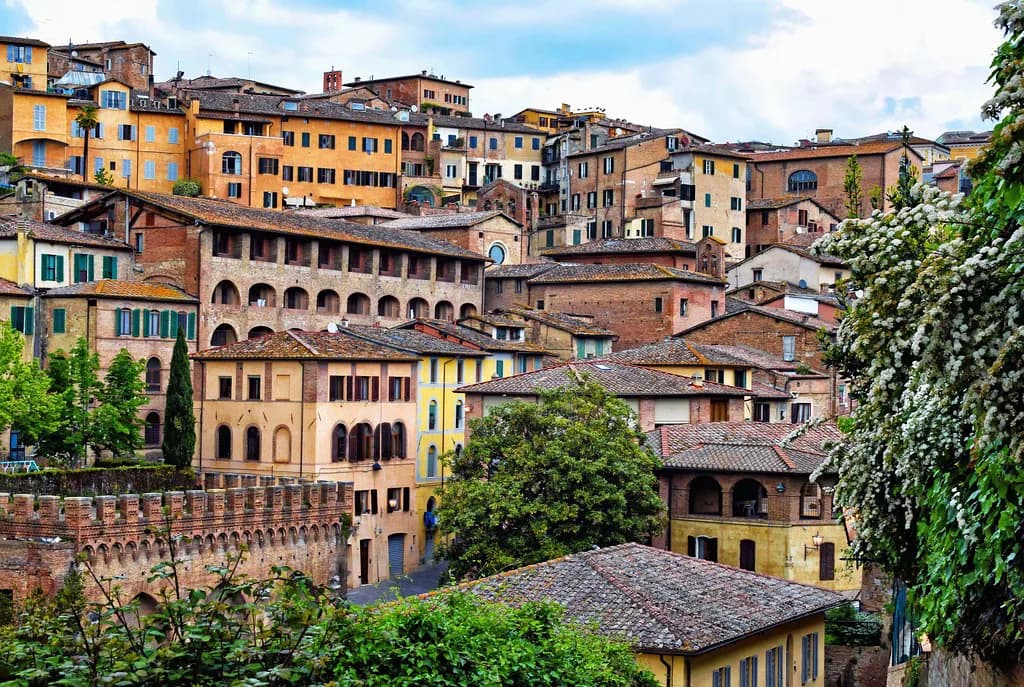
The basilica faces Piazza San Francesco, a small square in the western part of the historic centre. FeelFlorence, the official tourism site of the Comune di Firenze, lists the church address as Piazza S. Francesco, Siena, which is the simplest way to confirm you are at the right building before you go in. The setting is urban and lived-in rather than monumental, with the church rising directly from the square.
A workable walking order is to start at Piazza del Campo, follow Via di Città or the Banchi di Sopra axis north, and then work west toward San Francesco. That sequence keeps the uphill stretches spread out and leaves the basilica as a quieter pause after the busiest streets. It also pairs naturally with a wider Siena self-guided walk old town if you want to cover several sights in one loop.
Siena's best-known tradition is the Palio, run in the Campo on 2 July and 16 August each year, as the Comune di Siena sets out. Those dates shape crowds and traffic in the centre, but they do not define the basilica's own schedule. If you are in town around a race day, expect the streets, not the church calendar, to be the main variable.
What to See Inside the Basilica
The single work most often named is the Coronation of the Virgin, a collaborative panel associated with Il Sassetta and Sano di Pietro. Look for it as a focal point rather than rushing past the side chapels, because the church's art is spread through the interior rather than gathered in one room. Give yourself time to read the captions or a printed guide if one is available on site.
Two frescoes by Ambrogio Lorenzetti, a Crucifixion by Pietro Lorenzetti and a Nativity by Sodoma are also described inside the church. These are the works to hunt for if you have already seen the Lorenzetti cycle in the Palazzo Pubblico and want to compare how the same artistic family handled sacred subjects. A short list helps: Coronation panel, Ambrogio Lorenzetti frescoes, Pietro Lorenzetti Crucifixion, Sodoma Nativity.
If your interest is broader Sienese art, the basilica works well as a companion to the city's larger collections. The Palazzo Pubblico's civic frescoes and the Duomo complex cover different ground, so treat San Francesco as a focused stop rather than a substitute. For orientation across the city's main sights, the Siena Attractions hub is a useful place to compare before you commit your afternoon.
The Eucharistic Host Tradition
According to the account, 351 consecrated hosts were stolen from a tabernacle on 14 August 1730 and reappeared three days later in an alms box at the Sanctuary of Santa Maria in Provenzano. The hosts are said to have remained intact and fresh ever since, with periodic examinations cited as certification. Treat this as a tradition the church preserves, not as a physical claim you can independently verify on a visit.
The story explains why the basilica is also described as a church of miracle and spirituality, and why visitors often pause at the chapel associated with the hosts. If this is the main reason for your stop, go directly to that area first and then work back through the nave. It is a compact site, so the order matters less than allowing a few quiet minutes.
The Oratory, Cloisters and Crypt-Library
The complex includes more than the nave: the Oratory of San Bernardino, two large cloisters and a crypt used as a university library are all described as part of the site. These are separate spaces with their own character, so budget attention for each rather than treating them as corridors. If a door is closed or a space is in use, respect the sign and move on.
There is also a small playground beside the church, which makes the square a practical pause if you are visiting with children. It is a modest feature, not a destination, but it can turn a short art stop into a more comfortable break. Combine it with the shaded edges of the square rather than planning a long stay.
Practical Visiting and Church Etiquette
The parish and the Arcidiocesi di Siena do not publish current opening hours, admission arrangements or accessibility details for the basilica in the sources reviewed here, so do not plan around a remembered timetable. Check with the parish or the Arcidiocesi di Siena before you go, and confirm on the day whether the church is open for visitors or reserved for services. If you are combining the visit with the Duomo complex, note that the Opera del Duomo pass covers that complex's sites, not this Franciscan church.
Dress and behaviour should follow standard church etiquette: cover shoulders, keep voices low and avoid wandering into restricted areas. Photography rules vary by space, so ask if you are unsure rather than assuming. Because this is an active place of worship, a brief visit timed around a service can be more rewarding than a rushed checklist stop.
If you want to keep costs predictable, build the day around streets and squares rather than ticketed interiors. The free things to do in Siena guide is a good place to balance paid museum time with open-air wandering. That approach also leaves room to return to San Francesco when the church is open and you can stay longer.
Nearby Streets and Squares to Pair With the Visit
Via di Città and Via Banchi di Sopra are the two main streets of the historic centre, lined with artisan shops, boutiques and historic cafés. A stop for panforte or ricciarelli is a sensible way to break up the walk between the basilica and the Campo. These streets are also where you will feel the city's daily rhythm most clearly, so leave a little unstructured time.
The Basilica of San Domenico and the Sanctuary of Santa Caterina sit in another part of the centre and pair well with a Catherine-focused morning. If you are following the city's religious geography, the Basilica of San Domenico Siena visitor guide explains the relics and frescoes there. The hidden gems in Siena page is useful for quieter corners between the headline sights.
Fontebranda, the oldest surviving fountain in Siena, is tied to Catherine's daily life and her father's dyeing trade. It is a worthwhile detour if you are already in the San Domenico area, but it is not next door to San Francesco. Plan it as a separate leg rather than squeezing it into the same ten minutes.
A Short Walking Order That Avoids Backtracking
Start at Piazza del Campo before it fills, look at Fonte Gaia and the Palazzo Pubblico exterior, then head north through Via di Città or Banchi di Sopra. Work west to Piazza San Francesco for the basilica, then return east through the quieter lanes rather than retracing the same street. This keeps the climbs gradual and gives you a different view on the way back.
If you have only a couple of hours, choose either the basilica or the Duomo complex rather than both. San Francesco suits travellers who want a slower, more contemplative stop with specific artworks; the Duomo complex suits those who want monument scale and a ticketed itinerary. Mixing both in one short visit usually means doing neither well.
Who the Basilica Suits Best
This stop suits travellers interested in Sienese painting, Franciscan history or the city's religious traditions. It is less suited to anyone hoping for a grand, heavily interpreted monument with timed entries and audio guides. If you are travelling with children, the small playground and the compact interior make a short visit realistic.
Save the Pinacoteca Nazionale and the Duomo museum for another trip if you are short on time, since both demand more sustained attention. Use San Francesco as a focused supplement to the city's larger collections rather than a replacement. That framing keeps expectations honest and makes the visit more satisfying.
Plan Your Visit
The Basilica di San Francesco is a compact, art-rich stop that fits naturally into a central Siena walk. Go for the Coronation panel, the Lorenzetti frescoes and the Sodoma Nativity, and treat the host tradition as the church's living history rather than a spectacle. Confirm current opening arrangements through the parish before making it the anchor of your day.
Pair the visit with Piazza del Campo, Via Banchi di Sopra and, if time allows, the San Domenico and Fontebranda area. Keep the walking order simple and leave slack for a coffee or a pastry, because the streets between these sights are part of the experience. A slower pace suits this church better than a rushed circuit.
Frequently Asked Questions
Is the Basilica di San Francesco in Siena worth visiting?
It is worth visiting if you are interested in Sienese art and religious history. Inside you can look for the Coronation of the Virgin associated with Il Sassetta and Sano di Pietro, frescoes by Ambrogio and Pietro Lorenzetti, and a Nativity by Sodoma. The church is also known for the tradition of the 351 consecrated hosts said to have been stolen in 1730 and later found at Santa Maria in Provenzano.
What artworks can you see inside the Basilica di San Francesco?
The main works described are the Coronation of the Virgin, two frescoes by Ambrogio Lorenzetti, a Crucifixion by Pietro Lorenzetti and a Nativity by Sodoma. The interior is not organised as a single gallery, so it helps to know the names before you go in. Ask on site if a printed guide is available.
What is the story of the consecrated hosts in Siena?
According to the account, 351 consecrated hosts were stolen from a tabernacle on 14 August 1730 and reappeared three days later in an alms box at the Sanctuary of Santa Maria in Provenzano. They are said to have stayed intact and fresh since then, with periodic examinations cited as certification. Treat this as a tradition preserved by the church rather than a physical claim you can verify on a visit.
How do you get to the Basilica di San Francesco on foot from Piazza del Campo?
Walk north from Piazza del Campo along Via di Città or Via Banchi di Sopra, then work west toward Piazza San Francesco. The church faces the square, so the address is the simplest way to confirm you have arrived. The route is short but hilly, so comfortable shoes help.
Do you need tickets for the Basilica di San Francesco?
Check with the parish or the Arcidiocesi di Siena before you go, as current admission arrangements are not published in the sources reviewed here. The Opera del Duomo pass covers the Duomo complex, not this Franciscan church.
Sources
- Homepage | Comune di Siena
- What to See on Foot in Siena - Hotel Minerva Siena
- Quali Attrazioni Vedere a Siena? La Meravigliosa Basilica di San Francesco
- Fonte Gaia – Siena’s Historic Fountain of Beauty and Symbolism
- Opera Duomo Siena – Siena Opera della Metropolitana
- The Baptistery of San Giovanni: Extraordinary Mosaics and Frescoes - Hotel Minerva Siena
- Fontebranda - Santa Caterina
- Basilica di San Francesco | FeelFlorence
Continue exploring
More guides you'll find useful