Castello di San Vigilio Bergamo: Hilltop Viewpoint Guide
Plan a visit to Castello di San Vigilio above Bergamo: how to reach the hill by funicular or on foot, what remains of the castle, and where the views open up.
On this page
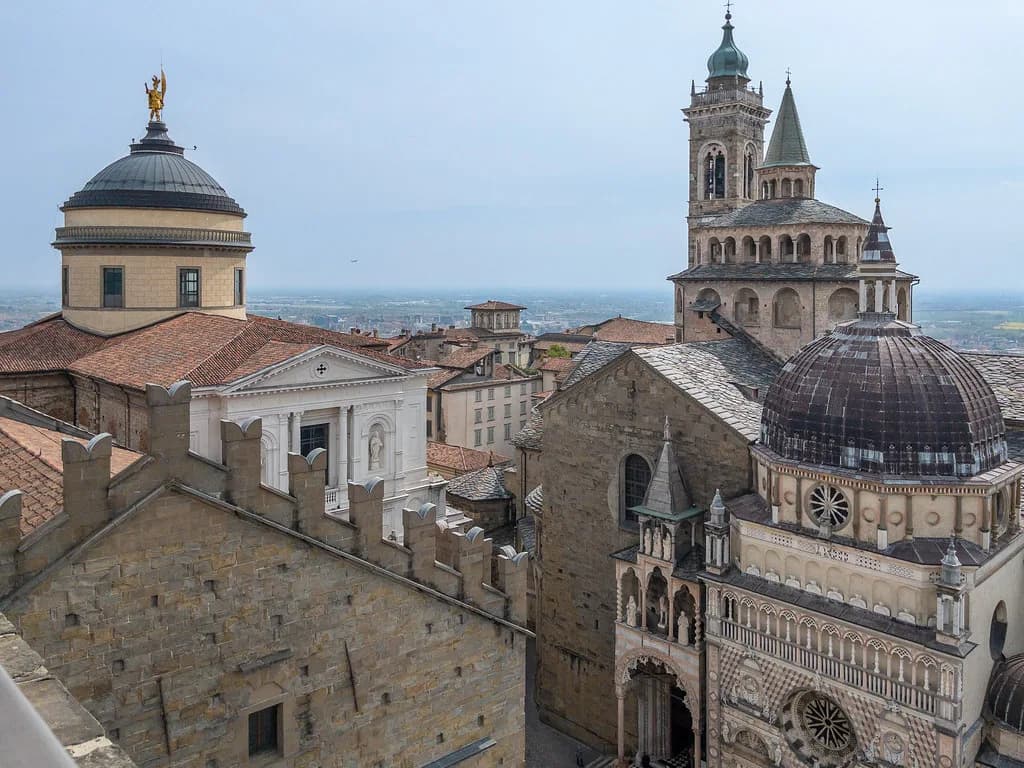
San Vigilio is the hill that closes the skyline above Bergamo's Città Alta, and the castle remnants on its summit give the city one of its broadest natural balconies. The climb is short in distance but vertical, which is why most visitors pair the upper-town funicular with a second, separate lift from Colle Aperto. The outdoor grounds are the main draw; the appeal is orientation and open air rather than a furnished castle interior. For a wider choice of overlooked corners in the same park and around the old town, see the guide to hidden gems in Bergamo.
A concrete anchor comes from the tourism board's viewpoint itinerary: it describes the San Vigilio hill as towering over Bergamo and the green Parco dei Colli, and notes that the castle garden holds a table-meridian pointing out the names of the mountains over which the gaze sweeps. That small detail is a useful thing to look for before you start photographing. The same itinerary places San Vigilio as the closing stage of a day that begins in the Lower Town — a sensible way to structure the visit.
Where San Vigilio Sits Above Città Alta
The hill rises immediately beyond the northern edge of Città Alta, past Piazza Mascheroni and Largo Colle Aperto, where the second funicular begins. Visit Bergamo's viewpoint itinerary describes the route from Piazza Vecchia along Via Colleoni, through Porta Sant'Alessandro, and on to the S. Vigilio funicular — a three-minute ascent between city, sky and terraced vegetable gardens. That sequence is worth borrowing even in part, because it treats the hill as the closing chapter rather than a standalone detour. For non-urgent city context, the Comune di Bergamo publishes local notices and events that can affect access around Città Alta and its gates. Bergamo Attractions lists the main sights if you want to plan the full day around this hill.
The whole area belongs to the Parco dei Colli di Bergamo, the green belt that wraps the upper town, so the walk up is a transition from stone lanes to gardens and wooded slopes. This hill guide stays within the San Vigilio area; for the lower-town squares, churches and museum choices, the hidden gems in Bergamo guide is the better companion. Plan the hill for the end of a Città Alta morning or the start of an evening, not the middle of a tight schedule.
Getting There: Two Funiculars or a Steep Walk
Reaching San Vigilio is a two-stage ascent. From the Lower Town, the historic funicular climbs to Piazza Mercato delle Scarpe in Città Alta; from there you walk through the centre to Largo Colle Aperto and take the San Vigilio funicular through Porta Sant'Alessandro. Visit Bergamo describes the second lift as a three-minute ascent between the city, sky and terraced vegetable gardens. Treat that as orientation, not a timetable: check the operator's current service information before relying on either lift. ATB Bergamo publishes the city's public transport network, ticket information and service notices, including changes affecting funicular stations and machines.
On foot, the route from Colle Aperto follows steep lanes and stairways, including Via della Ripa, which one local operator estimates at 20 to 25 minutes uphill. The same source notes that the funicular removes most of the effort, which is a fair reason to take it one way and walk the other. Cobblestones and gradients make supportive shoes the single most useful thing you can bring; do not count on step-free access, and ask the operator or the tourist office if you need specific accessibility details. Fares and schedules change, so confirm current prices and operating times through ATB Bergamo rather than relying on older trip reports.
What Remains of the Castle
The Castello di San Vigilio is a hilltop fortification with medieval origins rather than a museum with furnished rooms. One travel account traces a small fortress on the site to the sixth century, later enlarged by Milan and Venice, with a star-shaped plan and four towers whose names survive in local descriptions. Another account describes the strategic spot as hosting a fortress since the sixth century, strengthened between the 12th and 15th centuries with towers, a wall and a moat. What you see today is best understood as remnants, walls, a moat line and open ground, not a reconstructed interior. Several travel accounts describe the castle gardens as open to the public and the outdoor visit as free; because arrangements can change, confirm the current situation with the tourist office before making the hill the centrepiece of a day.
Free Grounds, Paid Sights Elsewhere
The practical distinction in Bergamo is between free outdoor ground and paid interiors. The San Vigilio hilltop gardens and the surrounding park paths are the browsing case, while the basilicas, towers and museums lower down have their own arrangements. Santa Maria Maggiore, for example, publishes separate prices and opening times, with reduced tickets for some age groups and free entry for residents and young children. Check those details on the basilica's own visitor page rather than assuming one ticket covers the old town. Do not assume that a ticket for a Bergamo museum or tower also covers San Vigilio; each site is managed separately.
Reading the View: Città Alta, the Plain and the Alps
From the summit, the view splits into three layers. To the east lies Città Alta, its towers and rooftops compressed inside the Venetian walls; to the south the plain stretches toward Milan and the Po Valley; to the north and west the Orobie and the wider Alpine arc rise when visibility allows. Visit Bergamo's viewpoint itinerary notes that from the walls below the gaze can reach the Alps and, on clear days, even the plain as far as Milan. Haze is the honest caveat: no source can promise a clear sky on your date, so treat any mountain view as weather-dependent rather than guaranteed.
Light, Timing and Crowds
Morning gives cleaner air and fewer people on the hill, while late afternoon brings warmer light on the old town and the chance of a sunset, though cloud can spoil it. The local operator recommends the early hours for photographs and tranquillity, and notes that the atmosphere in Città Alta shifts from quiet streets to busier squares as the day goes on. If you want the hill mostly to yourself, go up before the day-trippers reach the upper town. Evening options thin out at the top; a handful of restaurants sit near the castle, but the choice is limited compared with the centre, so have a backup plan in Città Alta or the Lower Town and check the last funicular back down.
Pairing San Vigilio With Città Alta
A sensible half-day starts in Piazza Vecchia, works through Piazza Duomo and the basilica, follows Via Colleoni to Colle Aperto and then takes the San Vigilio funicular. The local operator suggests that half a day is enough for the historic centre plus a short stretch of the walls, with the hill as an add-on of 30 to 45 minutes. That is a reasonable frame for most visitors; add more time if you plan to walk down through the park. Allow extra for the walk down if the weather is good, because the terraced gardens and the paths through the Parco dei Colli are part of the experience.
Practical Cautions Before You Go
The terrain is the main thing to plan for: cobblestones, slopes and stairways on the walking routes, and uneven ground around the castle remnants. Carry water in warm months, and avoid the steepest paths after rain. If you have mobility concerns, ask the funicular operator and the tourist office about current access before committing to the climb. Transport details are the second variable: funicular service patterns, ticket arrangements and any planned works can change, so check ATB Bergamo's notices and the Visit Bergamo site close to your visit rather than relying on a guide written months earlier. Finally, confirm whether the castle grounds are open on your date.
Plan Your Visit
San Vigilio rewards simple planning: take the two funiculars if you want the easy ascent, walk one way if you want the gardens and the workout, and leave room at the top to read the view rather than rush it. The outdoor hilltop is the affordable, flexible part of a Bergamo day; the paid interiors lower down can be added or dropped according to time and weather. Before you go, check current funicular service, castle-ground access and any ticket details through the official tourism and transport sources, and keep a fallback plan for an evening meal in the centre. For related planning, see Viewpoints in Bergamo: Campanone, San Vigilio and Wall Panoramas.
Frequently Asked Questions
Is the Castello di San Vigilio free to visit?
The hilltop grounds and castle remnants are generally described as open and free to explore, with no ticketed interior in the way a museum would have. Arrangements can change, so confirm with the tourist office before you go, and do not assume a ticket bought elsewhere in Bergamo covers San Vigilio.
How do you get to San Vigilio from Bergamo Città Alta?
Walk through Città Alta to Largo Colle Aperto and take the San Vigilio funicular through Porta Sant'Alessandro. The alternative is on foot via steep lanes and stairways such as Via della Ripa, which one local operator estimates at 20 to 25 minutes uphill. Check current service and access details before relying on either option.
How long should you spend at San Vigilio?
A local operator suggests 30 to 45 minutes is enough for the panorama and the hilltop atmosphere, with longer if you walk down through the park or linger in the gardens. Treat that as a suggested duration, not an official rule, and allow more time if you want to sit at one of the nearby restaurants.
What can you see from the San Vigilio viewpoint?
The view takes in Città Alta to the east, the Po Valley to the south, and the Orobie and wider Alps to the north and west when visibility allows. Haze can soften the distant peaks, so treat any mountain view as weather-dependent rather than guaranteed.
Sources
Continue exploring
More guides you'll find useful