Cappella Colleoni Bergamo: Visitor Guide to Città Alta's Marble Chapel
Plan a visit to the Cappella Colleoni in Bergamo: free entry, seasonal hours, Monday closure, the marble facade and what to look for inside.
On this page
The Cappella Colleoni is a compact Renaissance funerary chapel wedged into the corner of Piazza Duomo in Città Alta, Bergamo's walled upper town. It is easy to treat as a five-minute photo stop between the cathedral and the basilica, yet the interior rewards a slower look at one condottiero's bid for immortality. Entry is free according to Visit Bergamo's page for the chapel, which makes it one of the simplest cultural stops in the upper city.
The single most useful planning detail is the weekly closure: the chapel shuts on Mondays, and its opening hours change between the warmer and colder months. Hours and access can change, so treat any schedule as source-dated and check the organiser's page before you commit a morning to it. Build the visit around a Tuesday-to-Sunday trip and you avoid the most common disappointment.
Where the Chapel Sits in Città Alta
The chapel stands on Cathedral Square, known in Italian as Piazza Duomo, in the heart of Città Alta rather than in the modern lower town. That places it a few steps from the Basilica di Santa Maria Maggiore and the cathedral, so you can see all three without planning separate journeys. If you are working out how the upper town fits together, our guide to the hidden gems in Bergamo is a sensible place to start before you map a route.
A practical loop begins at Piazza Vecchia, the arcaded square that acts as Città Alta's living room, then passes through the short lane into Piazza Duomo. From there the chapel, the basilica and the cathedral sit within a minute of each other. The wider Bergamo Attractions hub lists the sights worth slotting into the same day, which helps you decide what to keep and what to skip.
Do not assume the churches share one ticket or one timetable. Each building has its own rules, and the chapel's free entry says nothing about the conditions at Santa Maria Maggiore or the cathedral next door. Check each site separately if you plan to go inside more than one.
Reading the Marble Facade Before You Go In
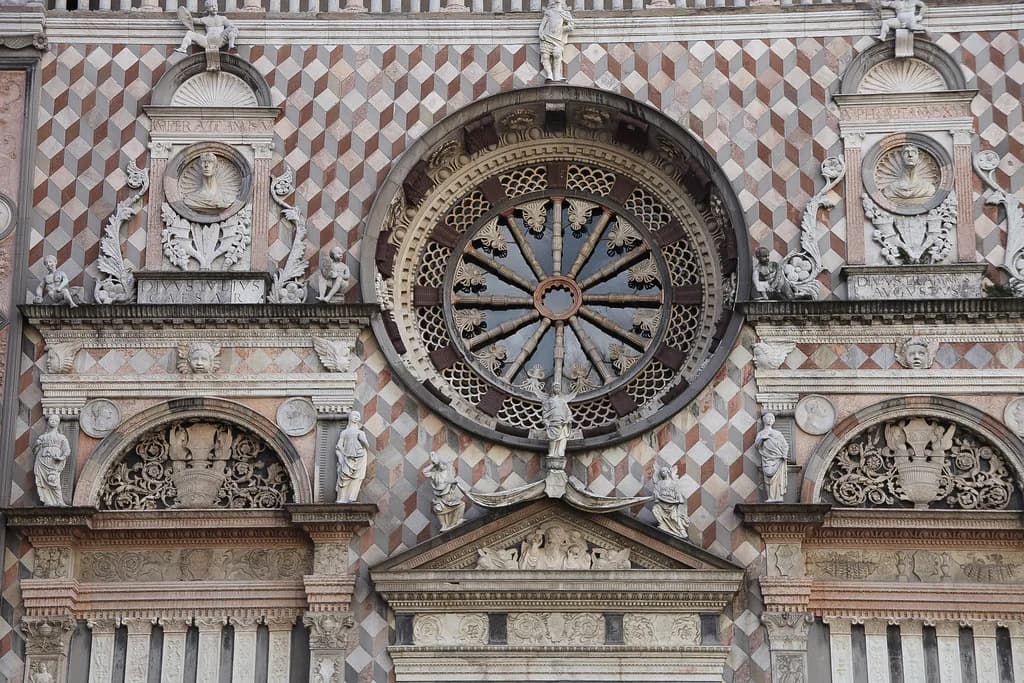
The exterior is the first thing that stops people: a facade built from contrasting white and red marble, covered in sculptures and bas-reliefs rather than left plain. Visit Bergamo describes it as a masterpiece of the Italian Renaissance, and the density of carving repays a couple of minutes of looking before you step through the door. Walk along the front rather than straight in, and you will notice details that are invisible from the entrance.
Look for the heraldic symbols worked into the decoration; they are the visual key to the man who paid for the building. Local tradition holds that touching the heraldic symbol on the entrance gate at midnight brings good luck, but that is a legend told about the chapel rather than a documented practice. Treat it as folklore and enjoy the story without rearranging your evening around it.
Because the facade faces a busy square, the light changes through the day and the marble reads differently in the morning and late afternoon. No source guarantees a quiet moment, so plan around your own schedule rather than chasing an empty piazza. A short pause to identify the main sculptural groups will make the interior far easier to follow.
What to See Inside: Colleoni's Tomb and Equestrian Statue
Inside, the funeral monument of Bartolomeo Colleoni dominates the space, crowned by an imposing equestrian statue of the condottiero himself. The sarcophagi are finely inlaid with marble, and the tomb of Medea, Colleoni's daughter, is a smaller, more delicate work that many visitors walk past. Give the interior enough time to see all three rather than photographing the horse and leaving.
Look up and along the walls for the carved wooden benches, whose intricate decoration adds a warmer, more domestic texture to an otherwise stone-and-marble interior. The chapel is small, which means the details are close enough to study without binoculars or a guidebook. This is the kind of place where a slow second circuit reveals more than the first.
Photography etiquette in active religious buildings is worth respecting, especially when services or worshippers are present. Keep voices low and be prepared to step aside, since the chapel's footprint is compact. If you want background on the art and architecture of the region before arriving, browse the visitor guides collected in our Bergamo Attractions section.
Who Bartolomeo Colleoni Was and Why He Built It
Bartolomeo Colleoni was one of the best-known mercenary captains of the fifteenth century, born and raised in Bergamo, who fought for several Italian lordships and later served the Republic of Venice. His career brought him wealth and influence, and he used both to leave a visible mark on his home city. The chapel was his funerary monument, designed to keep his name in front of visitors for centuries.
In Bergamo he also built castles, supported agriculture and commissioned works of art, which is why his name recurs across the upper town rather than only at this chapel. That context makes the monument read less as vanity and more as a statement about where power and patronage came from in Renaissance Italy. A little historical background turns a decorative stop into a legible one.
Tradition holds that the canons of Santa Maria Maggiore hesitated to give up the space for the chapel, and that Colleoni simply had the old sacristy demolished to make room. The story is told as an anecdote rather than documented fact, and Visit Bergamo itself frames it with a caveat. Repeat it as tradition, not as a settled chapter of local history.
Admission, Opening Hours and the Monday Closure
Admission is free, as stated on Visit Bergamo's chapel page, and there is no ticket to buy for the chapel itself. That does not extend to anything else you might visit nearby, so budget separately for the cathedral, the basilica or any museum on your list. Free entry also means demand can be steady, so arrive with a little patience.
The published pattern splits by season. According to Visit Bergamo, the chapel opens from 9:30 a.m. to 12:30 p.m. and again from 2 p.m. to 6:30 p.m. between March and October, moving to 9:30 a.m. to 12:30 p.m. and 2 p.m. to 4:30 p.m. from November to February, with Monday closure. The same page's useful-information panel shows slightly different afternoon closing times for individual weekdays, so treat the schedule as source-dated and confirm the day you plan to visit.
The long midday break matters more than it looks: a 12:30 closure means a late-morning arrival has only a short window before the doors shut for lunch. Plan to be there in the first hour or in the afternoon session rather than risking the handover. Opening on public holidays is not guaranteed either, so check with the chapel or the tourist office if your date falls on one.
For the most current information, use the city's own channels alongside the tourism site; the Comune di Bergamo publishes events and notices for residents and visitors. Neither source replaces the other, and neither lets you assume the chapel follows the cathedral's hours.
How Long to Allow and When to Go
A suggested duration of roughly one to two hours covers the chapel generously, including time on the facade and a careful second look inside. That is our recommendation, not an official visiting time, and the chapel itself is small enough that a quick stop of fifteen minutes is equally possible. Choose the longer figure only if you plan to read the sculpture properly or combine the visit with the basilica next door.
No source documents reliably quiet periods at the chapel, so avoid the assumption that early morning or evening is reliably empty. Instead, fit the visit around the opening windows: the first hour after the doors open and the start of the afternoon session leave the most margin before closing. If you are in Bergamo on a Monday, move the chapel to another day and use the time for the city walls or the lower town.
The chapel is one component of a larger upper-town day rather than a standalone outing, which is why the recommended timing is modest. Pairing it with the basilica and a walk through Piazza Vecchia gives a natural half-day without rushing. Read our broader Bergamo Attractions pages if you want to build a fuller itinerary around it.
Etiquette and Accessibility
This is a consecrated chapel, so dress respectfully with shoulders and knees covered, as you would in any Italian church. Keep phone calls outside and voices low inside, particularly if a service is under way. Photography is best kept brief and unobtrusive, and some areas may be restricted at busy moments.
Visit Bergamo's listing carries an accessibility panel noting contact for information rather than promising step-free or motor access, so do not assume the entrance is barrier-free. If you use a wheelchair or have limited mobility, contact the chapel or the tourist office before travelling to ask about the specific route and any assistance available. That call is more reliable than any general claim.
Città Alta itself is hilly and cobbled, which affects how you reach the square as much as the chapel interior. Build in extra time for the approach and ask at the tourist office about the easiest route for your needs.
Pairing the Chapel With Nearby Città Alta Stops
The most natural pairing is the Basilica di Santa Maria Maggiore and the cathedral on the same square, but each has its own admission arrangements and hours. Do not buy a ticket expecting it to cover the chapel, because the chapel is free and operates separately. Check the notice board or website of each building as you go.
Beyond the square, Piazza Vecchia, the Campanone tower and the walk along the Venetian walls fill out a day in the upper town. If your interest runs to the less obvious corners of the city, our hidden gems in Bergamo guide covers places to add around the core sights.
A sensible order is Piazza Vecchia first, then the chapel before or after the midday break, then the cathedral or basilica depending on their own opening times. Keep the chapel flexible in the plan, since a Monday closure or an early afternoon gap can reshuffle everything. Our Bergamo Attractions collection has guides for the other sights on that route.
Is the Cappella Colleoni Worth a Deliberate Stop?
Yes, within reason: it is free, it sits on the square you were already going to visit, and it offers a concentrated lesson in Renaissance patronage that most Italian cities would charge for. The trade-off is a short, crowded space with a Monday closure and a lunchtime break, so it suits a planned twenty minutes far better than a hopeful detour.
Check the chapel's current hours and access before you travel, especially if your trip falls in early November when the schedule changes. Then give it the attention its marble deserves rather than fitting it between two photographs.
Frequently Asked Questions
Is the Cappella Colleoni free to visit?
Yes. Visit Bergamo's page for the chapel lists admission as free, and no ticket is required for the chapel itself. That does not extend to other churches or museums in Città Alta, which set their own entry conditions, so check each one separately if you plan a multi-site day.
What are the chapel's opening hours and is it closed on Mondays?
Visit Bergamo publishes a seasonal schedule with a long midday break and a Monday closure: mornings from 9:30 to 12:30, then an afternoon session that ends later in the warmer months and earlier in winter. Because hours can change and the page's own weekday panel shows slightly different times, confirm the exact day before you travel.
Who was Bartolomeo Colleoni and why was the chapel built?
Colleoni was a fifteenth-century mercenary captain from Bergamo who fought for several Italian lordships and served the Republic of Venice, accumulating wealth and influence. He commissioned the chapel as his funerary monument, and it also holds the tomb of his daughter Medea. The story that he demolished the old sacristy to make room is told as tradition rather than documented fact.
How long should you spend at the Cappella Colleoni?
Allow roughly one to two hours if you want to study the facade and interior properly, though that is a suggestion rather than an official visiting time. A quick stop can be far shorter. The chapel closes for lunch, so budget your time around the morning or afternoon session rather than arriving at midday.
What should you see inside the Cappella Colleoni?
Look for Colleoni's funeral monument with its equestrian statue, the inlaid marble sarcophagi, the tomb of his daughter Medea, and the carved wooden benches. The exterior white-and-red marble facade with its bas-reliefs deserves time before you enter. Do not rely on the midnight heraldic-symbol legend as anything more than folklore.
Where is the Cappella Colleoni in Bergamo?
It stands on Cathedral Square, Piazza Duomo, in Città Alta, immediately beside the Basilica di Santa Maria Maggiore and the cathedral. Most visitors reach the square on foot from Piazza Vecchia. The approach through the upper town is hilly and cobbled, so allow extra time if you have limited mobility.
Sources
Continue exploring
More guides you'll find useful