Greek Theatre of Syracuse: Visitor Guide to the Ancient Amphitheatre
Plan a visit to the Greek Theatre of Syracuse: its 5th-century BC origins, rock-cut cavea, setting in Neapolis Park, the INDA season and nearby sights.
On this page
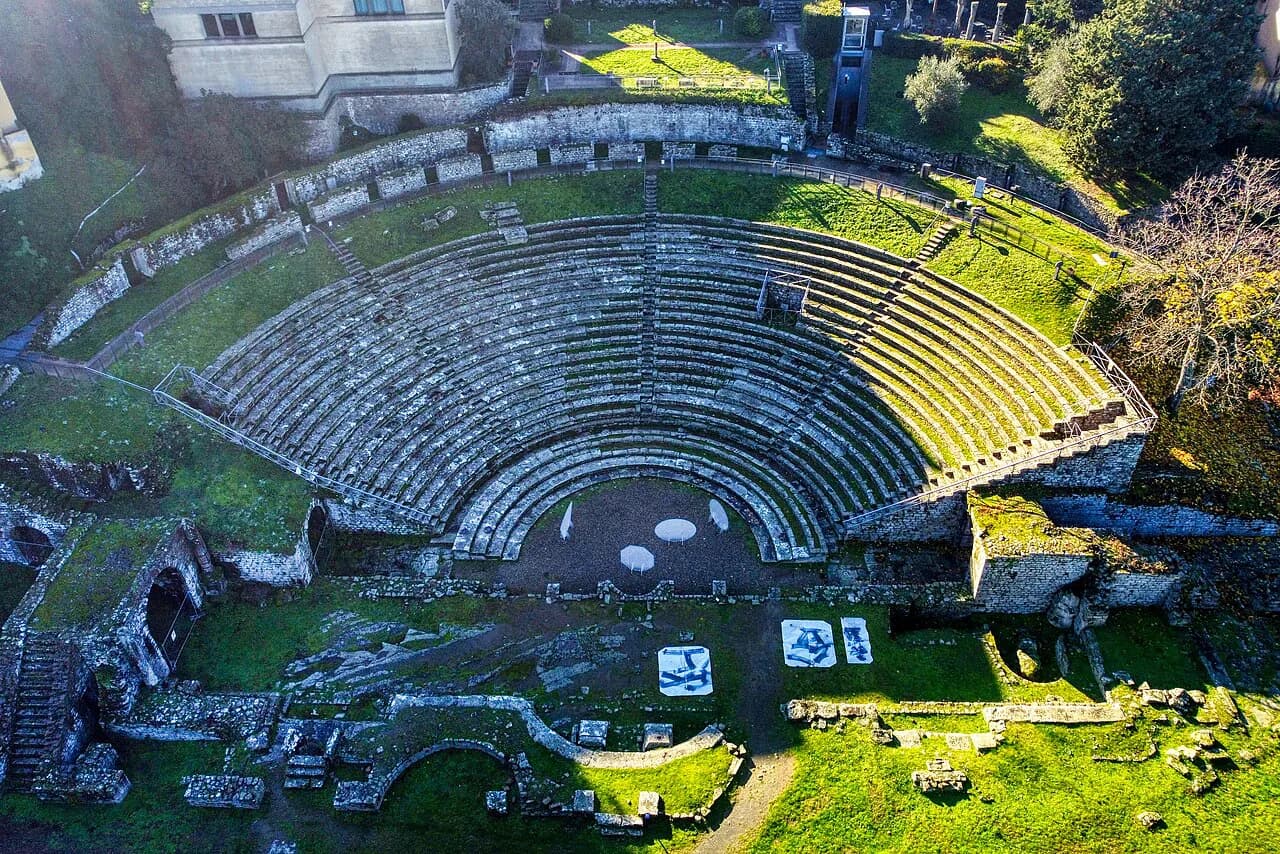
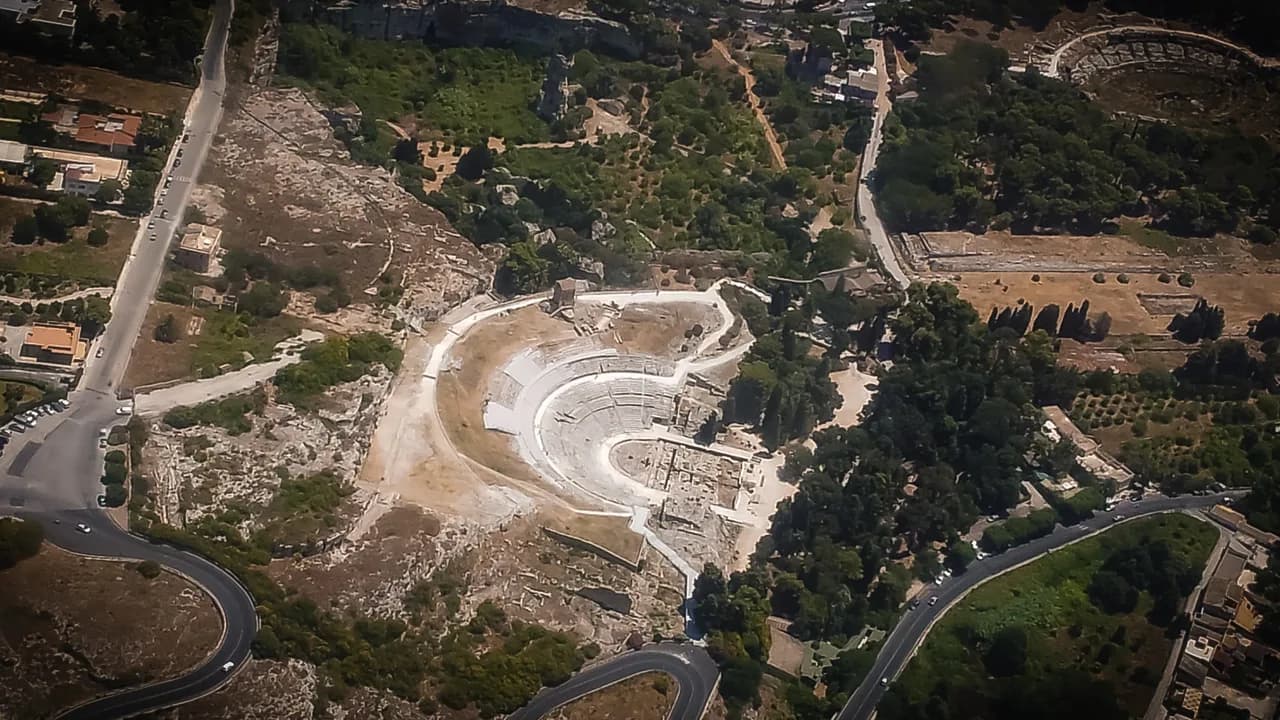
The Greek Theatre of Syracuse is cut into the southern slope of Temenite hill inside the Archaeological Park of Neapolis, and it is the monument most visitors come to the park for. It is distinct from Syracuse's Roman amphitheatre, a separate structure in the same grounds rather than another name for the Greek theatre.
One concrete way to gauge the scale before you arrive: the theatre was first constructed in the 5th century BC and, after a 3rd-century BC rebuilding, took a form with a theatron about 138.6 metres in diameter and 67 rows of seats cut into rock. Those figures come from a general history listing, so read them as archaeological description rather than park signage. As a rough, non-official planning suggestion, allow one to three hours for the theatre alone, more if you intend to walk the whole park.
Theatre, festival and monument: what you are actually visiting
A visit here means different things depending on the season. For most of the year the theatre is an archaeological monument you walk through and read; during the classical season it becomes a working venue for live drama. The two experiences have separate planning needs, so decide which one you want before you build a day around it.
The classical season is organised by the INDA Foundation, Istituto Nazionale del Dramma Antico, whose roots go back to 1914 and which stages ancient drama in the theatre. A Sicilian travel article reported that the 60th edition opened on 9 May and ran until 6 July with four new productions: Electra, Lysistrata, Oedipus at Colonus and The Iliad. That edition is past, so treat the titles and dates as recent history rather than an upcoming programme.
The research packet contains no confirmed dates for a current edition. Check the operator's page for the Neapolis park before building a trip around a performance, and confirm which year's programme you are reading. The same page is the reference to use for opening hours and visiting arrangements; do not rely on repeated dates from earlier seasons.
Reading the ruins: cavea, orchestra, euripos and the lost stage building
Start with the cavea, the semicircular seating area. The history listing describes 67 rows cut directly into the rock and divided into nine sections by stairways, which is why the slope reads as rows of steps when you look up from the orchestra. Those figures give you a mental map and save you hunting for a building that is no longer there.
In the centre is the orchestra, the circular space for the chorus, ringed by the euripos, a channel that served practical and decorative purposes. Behind it the skene, the stage building, has almost entirely disappeared, though surviving foundation traces mark where it stood. Look for those traces before climbing the cavea; once you are high in the seating, the rows are easier to understand with the stage area already fixed in your mind.
The theatre is one part of the Archaeological Park of Neapolis rather than the whole site. The Neapolis Archaeological Park Visitor Guide sets out the park's other monuments and how to approach them together, while a dedicated guide covers the Ear of Dionysius, the echoing cave elsewhere in the same park. Read them as separate stops with separate histories. For wider planning, see Ear of Dionysius, Syracuse.
A civic stage in ancient Syracuse
Ancient theatres were not only places of entertainment. According to the history listing, the theatre hosted Greek tragedies and comedies, and also political assemblies and religious ceremonies, which makes the venue closer to a civic square than a modern playhouse. Keep that in mind as you stand in the seating: the audience who filled these rows took part in public life as much as they watched drama.
The same listing notes that Aeschylus is said to have premiered The Persians here in 472 BC, and that Roman-era use added gladiatorial contests and other spectacles while keeping the venue prominent. The monument therefore carries layers of civic and cultural change in one stone setting. The point of the visit is to read those layers, not simply to photograph the rows from the top.
What else to see inside the Archaeological Park of Neapolis
The park holds more than the theatre. Among the sites named in descriptions of the complex are the Roman amphitheatre and the Ear of Dionysius, a limestone cave known for its acoustics. These are separate structures, not extensions of the Greek theatre, and their histories deserve distinct stops in the walk-through.
Because these monuments sit close together, one visit can cover several without a transfer. A sensible order is to begin with the Greek theatre for its scale and setting, then move to the cave and the Roman structure, and finish with the more open, scenic parts of the park. That sequence lets you meet the theatre's anatomy first and keeps the Roman arena from being mistaken for a Greek one.
Pairing the theatre with Paolo Orsi, Ortigia and Castello Maniace
The Paolo Orsi Regional Archaeological Museum, named among the city's sights in the history listing, is the natural next step after the park if you want objects and context to match what you saw. Ortigia holds Syracuse's cathedral square, coastal walls and a maze of lanes for an unhurried late afternoon. Plan the museum and the island as separate outings rather than squeezing all three into one afternoon.
Ortigia is where much of the city's slow travel belongs. For less obvious corners among the old town's lanes and coastline, use a guide to the hidden gems in Syracuse rather than trying to cover the whole island in one go. Spreading sights across several days suits the city better.
For an Ortigia day with a different texture, a guide to Castello Maniace covers the fortress at the island's tip. It pairs naturally with the waterfront rather than the archaeological park, and helps keep Ortigia's later history distinct from the Greek city in Neapolis.
Practical planning: where and how to visit
The theatre sits within the Archaeological Park of Neapolis. A third-party travel listing gives the address as Via Luigi Bernabò Brea, 96100 Siracusa; use it as a starting point for maps, but confirm the official park location and current entrance arrangements on the operator's page before travelling.
The only hours in the packet come from that same third-party listing, which showed an 08:30–18:30 window with tickets available until 17:00 on its October 2026 snapshot. Treat this as a dated third-party indication, not an official guarantee: seasonal and event-related changes are not captured here. Check the operator's own page shortly before you go.
The one-to-three-hour figure for the theatre is likewise a third-party suggestion, not an official duration, and the right answer depends on how much of the park you include. A quick stop for the cavea and the view from the seating fits into a morning; a fuller park walk with the other monuments and time for interpretation runs longer.
Two ways to spend the visit
On a short stop, focus on the theatre and the nearby cave, then use the rest of the day for Ortigia's lanes and a late lunch. This works best when the park is one stop in a wider itinerary rather than the centre of the day. A three-day itinerary for Syracuse with the theatre as one anchor is a workable structure if your time is tight.
On a half-day or longer, let the park be the main morning. Read the theatre from the orchestra outward, walk the level of the seating, then move through the other monuments before breaking for lunch. That slower order suits a site that rewards attention to the carved rows and the space where the stage once stood, rather than a quick photograph from the top.
Fitting the Greek Theatre into a Slow Syracuse Visit
The Greek Theatre of Syracuse anchors the Neapolis park because it ties two experiences together: a rock-cut monument large enough to register from across the seating, and a venue that returns to live drama each season. Give it a morning rather than a rushed photo stop, and leave the adjacent monuments for the hour after you have read the cavea and the orchestra.
Before you go, check the operator's page for opening arrangements and season dates, and treat any found times or programme details as something to verify rather than a promise. Then build the rest of the day around Ortigia, the museum and the island's quieter corners to turn one ancient stop into a full visit.
Frequently Asked Questions
How old is the Greek Theatre of Syracuse?
It was first built in the 5th century BC, and its surviving form dates largely from a rebuilding in the 3rd century BC, with further changes in the Roman era. That layered history is why you see features from different periods in one monument.
Where is the Greek Theatre of Syracuse located?
It is inside the Archaeological Park of Neapolis, built into the slope of Temenite hill, with a view towards the harbour and Ortigia. A third-party listing gives the address as Via Luigi Bernabò Brea in Siracusa; confirm arrangements on the operator's page before travelling.
Can you see a performance at the Greek Theatre of Syracuse?
The theatre hosts the INDA classical season, a regular programme of ancient drama staged in the ancient setting. The most recent season in the research was the 60th edition; check the operator's page for the current programme and dates rather than assuming a previous year's schedule carries over.
What is the difference between the Greek Theatre and the Roman amphitheatre in Syracuse?
They are separate monuments in the same archaeological park, built for different purposes and periods. The Greek theatre is a rock-cut semicircular theatre with a cavea, orchestra and traces of a stage building; the Roman amphitheatre is a later structure. Do not assume one ticket covers both unless the operator confirms it.
What else can you see in the Neapolis Archaeological Park?
Alongside the theatre the park includes the Ear of Dionysius, a limestone cave known for its acoustics, and the Roman amphitheatre. A separate guide covers the Ear of Dionysius and the park's other monuments so you can plan the order without rushing the theatre.
How long should you allow at the Greek Theatre?
A third-party listing suggests one to three hours for the theatre, but that is an excursion estimate rather than an official figure. A short stop covers the cavea and the view; a fuller park visit with the other monuments takes longer.
Do you need tickets to visit the Greek Theatre of Syracuse?
The theatre is part of the Archaeological Park of Neapolis, so the relevant question is the park's current admission arrangements. This guide gives no prices or combined-ticket rules because current verified pricing was not available; check the operator's page before you travel.
Sources
Continue exploring
More guides you'll find useful