Climbing Torre Grossa in San Gimignano: Tickets, Steps and Views
Climb Torre Grossa in San Gimignano: what the ticket covers, the step count, seasonal hours, closures and what you really see from the top of the tower.
On this page
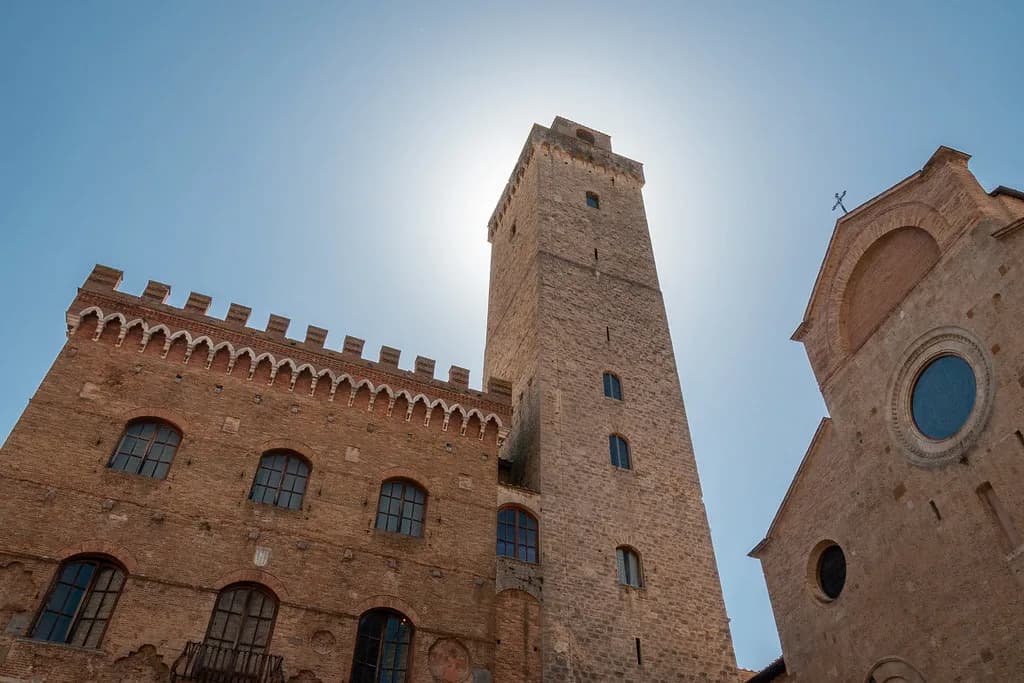
San Gimignano's skyline is thinner than it once was, and the Torre Grossa is both the tallest survivor and the only one travellers can climb. At roughly 54 metres and begun around 1300, it rises beside the Palazzo Comunale on Piazza Duomo, where the civic museums occupy the palace below. Understanding how the tower connects to that museum circuit is the single most useful thing to sort out before you arrive.
This guide covers ticket scope, seasonal hours, the physical climb, the view and how to sequence a visit so you are not queuing twice. Exact figures such as step counts vary between sources, so treat them as approximations and confirm current hours and entry rules with the operator in the week you travel.
Why the Torre Grossa Is the One You Can Climb
Medieval San Gimignano bristled with tower houses built by rival families to signal wealth and status, and the count is usually put in the seventies. Far fewer survive today, which is why the skyline reads as a cluster rather than a forest. The Torre Grossa was raised by the commune itself, a civic statement rather than a family one, and that public origin helps explain why it now has a visitor route.
Height was regulated: the Torre Rognosa long stood as the permitted ceiling before the Torre Grossa overtook it. Historical accounts note that the podestà fixed a limit and that families sometimes breached it, with exceeding portions sometimes demolished. Reading the towers this way turns a photo stop into a story about local politics, which is more interesting than the simple trophy-tower version.
Most of the town's other towers are exterior landmarks you admire from the street. The Torre Grossa is the exception because you enter through the palace and climb inside the civic museum route. Plan it as one visit rather than three separate errands, and allow time for the frescoed rooms on the way up.
Where It Sits: Palazzo Comunale on Piazza Duomo
The tower grows out of the Palazzo Comunale, the town hall built in 1288 and the historic seat of the civic museums. Inside, the route passes the Sala del Consiglio, also called the Sala di Dante, with frescoes by Azzo di Masetto and Lippo Memmi's Maestà, then the Camera del Podestà and the picture gallery before the tower stairs begin.
That order matters practically. School groups and tour parties often move through the frescoed rooms in bursts, so if the stairwell looks congested, lingering in the Pinacoteca for ten minutes is a legitimate strategy rather than a compromise. The art is genuinely worth the pause: the collection runs from thirteenth-century Sienese panels to Pinturicchio's altarpiece of 1511.
Piazza Duomo also holds the Collegiata and the Palazzo del Podestà with the Torre Rognosa, so the square is dense with things to see. Resist trying to do everything at once. If you want to add the church interior, the San Gimignano Collegiata guide explains its separate ticketing so you do not assume one purchase covers both.
Ticket Scope: What the Entry Actually Covers
Torre Grossa access is sold as part of the Palazzo Comunale, Pinacoteca and Torre Grossa ticket rather than as a standalone tower ticket. The single full-price ticket covers that civic complex, and a reserved time slot for the tower is offered at a slightly higher rate. Reduced rates for younger visitors and free admission categories apply, with proof required at the ticket desk.
Two things commonly trip people up. The Duomo and its Museum of Sacred Art belong to a different operator and are ticketed separately, so a civic museum ticket does not open those doors. And other town towers, such as Torre e Casa Campatelli, are distinct sites with their own arrangements. Budget and time accordingly if towers are your theme.
The San Gimignano Pass bundles the civic museums with the Collegiata complex and is valid across three days, which suits anyone staying overnight. The operator has flagged a future period when the pass cannot be purchased, so check the current status on the official museums site before relying on it for your dates.
Opening Hours, Last Admission and Closures
The civic museums follow a seasonal pattern: longer daily hours from April through October, shorter hours from November through March, and a brief extension over the Christmas period. Last admission is generally set some time before closing, so arriving at the door late in the day risks being turned away from the tower even if the palace is still open.
There are fixed closures during the year, including Christmas Day, and the museum complex also closes for parts of January and November. Because these dates shift slightly between published notices and third-party listings, verify against the official museums page for your week rather than trusting a travel blog's table. For wider planning, see Palazzo Comunale San Gimignano.
The town itself is free to enter and walkable at any hour, so a closed tower does not mean a wasted day. The comune's tourism section is a useful backup for local notices, temporary works and access changes in the historic centre, including traffic arrangements near the gates.
The Climb Itself: Steps, Effort and Vertigo
Sources put the ascent at roughly 200 to 218 steps, and the tower at about 54 metres. Those figures vary, so treat them as a fair description rather than a specification. The stairwell narrows and the final stretch opens out, which is manageable for most reasonably fit adults but slow going if you are carrying a child or a large bag.
The open, airy feel of the upper section is the detail to weigh honestly. Travellers who dislike heights often find the exposed stair and the view straight down more unsettling than the effort of climbing. If that sounds like you, the palace rooms and the terrace-level views from elsewhere in town deliver a great deal without the exposure.
No lift is documented for the tower, so assume stairs. Wear shoes with grip, leave bulky luggage at your accommodation, and carry water in summer. There is no published age restriction beyond the free admission category for young children, but parents should judge the stairwell and the open top for themselves.
The View: What You Can Pick Out
From the top, the historic centre lays itself out below: the two main squares, the surrounding tiled roofs, and the remaining tower houses at eye level rather than overhead. Beyond the walls the view runs over the Valdelsa countryside toward distant hills, and on clear days the horizon reaches far enough to include mountain outlines on the northern side.
Use the rooftop to orient yourself before walking the town. Spot the Rocca di Montestaffoli, the walls and gates, and the route between Piazza Duomo and Piazza della Cisterna; then descend and explore with a mental map. Our guide to San Gimignano viewpoints compares these elevated options if you want alternatives on a hot or hazy day.
Piazza della Cisterna, triangular and named for its thirteenth-century well, is the other anchor of the centre and is best seen at ground level. It was the medieval market and gathering space, ringed by towers and palazzi, and it still works as a meeting point. Save it for after the climb, when you have earned a slower pace.
Timing and Queues Without Guesswork
No official source names a quiet hour, so treat any claim about the perfect time as folklore. What you can control is your own order of operations: book the reserved tower slot where offered, then arrive for the palace rooms slightly ahead so the ticket queue and the stair queue do not stack up. The reserved-time tier exists precisely to smooth this.
San Gimignano fills with day-trippers arriving from Florence and Siena by mid-morning and thinning again in the late afternoon, a pattern that shapes most Tuscan hill towns. If you are staying overnight, the hours around opening and after the coach crowds leave are the most comfortable for the stairwell. If you are passing through, build slack into your schedule rather than racing a fixed departure.
Be realistic about combining the climb with a long lunch or a wine tasting. The ascent is short but the museum route rewards an hour or more, and heat makes both feel longer. A calm half-day in the centre beats a rushed circuit of three towns.
Practical Checks Before You Set Out
Confirm four things the week you travel: the seasonal opening hours, the last admission time, whether the tower is included in your chosen ticket, and whether the San Gimignano Pass is on sale for your dates. All four are published by the museums operator and can change with maintenance or special events, so a quick check beats a wasted trip to Piazza Duomo.
Central San Gimignano is pedestrian, so you will park outside the walls and walk in; the comune's parking page lists real-time spaces and tariffs. The nearest railway station is at Poggibonsi, connected by bus or taxi, which is worth knowing if you are coming without a car. Confirm timetables locally on the day.
The tourist information site for the destination publishes opening details and itineraries for the town's sites and is a sensible second check alongside the museums operator. Pair it with our broader San Gimignano Attractions hub when you start building the day around the tower.
Making the Climb Count
The Torre Grossa rewards a little planning: one combined visit to the palace, the gallery and the tower, a reserved slot if the timing matters, and a realistic sense of the stairs. Everything else, from the frescoed council room to the view over the Valdelsa, comes as part of the same ascent.
If you have a second day, use it for the quieter corners of the centre and the surrounding countryside; our hidden gems in San Gimignano guide picks up where the tower leaves off. Then check the operator's page the night before and go early enough to enjoy the top without watching the clock.
Frequently Asked Questions
Do you need a separate ticket to climb the Torre Grossa?
No separate tower ticket is needed: access is included in the Palazzo Comunale, Pinacoteca and Torre Grossa ticket, and a reserved time slot is offered at a higher rate. The Duomo and its sacred art museum are operated separately and are not covered by that civic ticket, so plan them as a distinct purchase.
How many steps are there to the top of the Torre Grossa?
Published figures range from roughly 200 to 218 steps, with the tower standing about 54 metres tall. The variation reflects different sources rather than a change on the ground, so treat the number as an indication of effort and check the operator's page if you need precision.
How long does the Torre Grossa climb take?
The stairs themselves take only a few minutes for most visitors, but the tower sits at the end of the Palazzo Comunale museum route, so allow an hour or more for the frescoed rooms, the gallery and the climb together. Crowds on the stairwell can extend that in busy periods.
Sources
Continue exploring
More guides you'll find useful