Piazza del Duomo San Gimignano: What to See & When to Go
Plan a visit to Piazza del Duomo in San Gimignano: what surrounds the square, how the Collegiata and sacred art museum fit together, and how to time it.
On this page
Piazza del Duomo is the compact stage on which San Gimignano plays both of its old roles at once: a religious centre around the Collegiata and a civic one around the Palazzo Comunale. The square is small enough to cross in a minute, yet it holds the town's most visited interiors, so the practical question is not whether to come but in what order and at what hour.
One concrete detail shapes any visit to the cathedral: the operator publishes separate seasonal opening windows for the Duomo and Museo d'Arte Sacra, with the last entry half an hour before the museums close. Those hours are seasonal and time-limited, so confirm them on the operator's own page for your dates rather than trusting a reposted timetable.
Orienting Yourself Around the Square
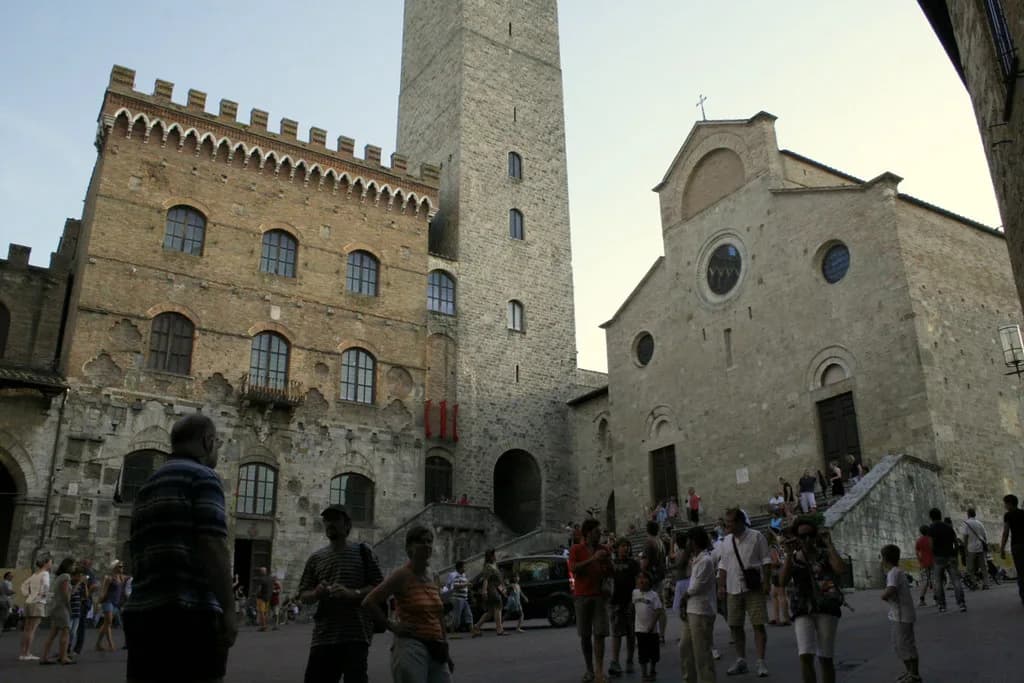
The square's main frontages are easy to read once you stand in it. The Collegiata, San Gimignano's collegiate church dedicated to Santa Maria Assunta, faces the open space, while the Palazzo Comunale and its tower form the civic backdrop.
Treat the piazza as three separate experiences rather than one sight: the open square, which costs nothing and is always part of the street scene; the church interior; and the sacred art museum that sits alongside it. Civic rooms and the tower are a further, separately organised visit.
If you are building a day around the centre, the attractions hub for San Gimignano Attractions is a sensible index to what else sits within a few minutes' walk, from the neighbouring piazza to smaller churches.
For a wider look at the town's overlooked corners, the guide to hidden gems in San Gimignano covers quieter ground away from the main square, useful when the centre feels tight.
The Collegiata and the Museo d'Arte Sacra
The Duomo and the Museo d'Arte Sacra are presented together by the operator as a single visiting complex with shared published hours, which makes them easy to plan as one block of time. That shared timetable does not by itself tell you how ticketing works, so treat the two as related but confirm the ticket scope on arrival or on the operator's booking pages.
The Collegiata is the reason most people stop here, and its interior rewards a slower pace than the square outside suggests. Give the church and museum a proper stretch of time rather than slotting them between two other stops.
Do not assume that one ticket covers the Duomo, the Museo d'Arte Sacra and Torre Grossa together; the operator's pages describe the church and sacred art museum as one complex, and the tower belongs to the civic side. Ask at the ticket desk what each ticket includes before you commit.
Palazzo Comunale and Torre Grossa as Civic Backdrop
The Palazzo Comunale gives the square its political half: this was the seat of town government, and its tower rises above the roofline as the tallest of the surviving family towers. You do not need to go inside to appreciate how the civic block closes the square's composition.
Civic museum hours and tower access are managed separately from the cathedral complex and are not covered here; check current arrangements with the town or at the entrance before planning your day around a climb.
The Torre Grossa is the obvious vertical landmark when you are trying to fix your position in town, and it appears repeatedly in views across the centre. For other vantage points and lesser-known corners, the hidden gems guide is the natural next read.
Seasonal Rhythm: Summer and Winter Opening Windows
The cathedral complex runs on two seasonal timetables rather than one fixed set of hours. The operator publishes a spring-to-autumn window and a winter window with different start and end times, and also notes a Sunday pattern that differs from weekdays.
Because those windows carry validity dates, the safest approach is to check the operator's page shortly before travelling and match your dates to the correct seasonal block. Published closures also apply within the year, so read the full notice rather than only the daily hours.
The last-entry rule matters more than it looks in a town where a long lunch can swallow an afternoon: entry to the museums stops half an hour before closing, so an arrival near the end of the window may mean viewing the square only.
Timing Your Visit: Light and Calmer Stretches
This guide offers orientation, not crowd data: no measured figures exist here for when the square fills. What can be said generally is that a small stone square with limited shade feels very different at opening time and in the softer late-afternoon light than in the middle of a warm day.
A practical approach is to book the church interior for the earliest slot you can manage, then use the brighter hours to walk the town walls and side streets, returning to the piazza when the light falls across the facades. This is a suggested shape, not an official schedule.
If your visit depends on seeing the interior, tie your timing to the operator's published hours and last entry rather than to a guess about crowds. In winter the shorter window leaves less margin for error, so plan the cathedral first.
Driving, ZTL and Parking Basics
San Gimignano's historic centre operates a limited traffic zone with video-controlled access points, administered by the Comune. The municipal site publishes a dedicated ZTL page with an access map and the rules for permits, which is the place to check before driving towards the centre.
For parking, the same municipal site carries a page showing available spaces in real time along with tariffs and subscription options. Checking it shortly before arrival gives you a current picture instead of a remembered one.
The safest assumption for a leisure visit is that you will leave the car outside the walls and walk in, since the centre's streets are narrow and access is controlled. Verify the current ZTL discipline and any permit requirements on the town's own pages rather than relying on general advice.
A Suggested Half Day Around the Square
A workable shape, and one that is a suggestion rather than an official itinerary, is to arrive in the morning, visit the Collegiata and Museo d'Arte Sacra while you are fresh, then linger on the square as the light changes. The operator's complex hours and last-entry rule are the only fixed constraints you need to respect.
From the square, a short walk leads to the town's other main open space, so pair the visit with Piazza della Cisterna San Gimignano, which sits at the heart of the old street grid and makes an easy second stop.
If you want one more interior without adding a long detour, the Chiesa di San Francesco is a modest, quieter counterpoint to the busy central square and fits neatly into a loop back towards the walls.
Plan Your Visit Around the Square
Piazza del Duomo is not a single attraction with one entrance fee; it is a free public square wrapped by a church complex, a sacred art museum and civic buildings that each keep their own arrangements. Decide in advance which interiors you want and confirm hours and ticket scope with the operator before you travel.
For the practical side, use the municipal site for the ZTL and live parking information, and the operator's page for seasonal cathedral hours and last entry. Build the rest of your day from the town's other squares and churches, and the pieces fall into place quickly.
Frequently Asked Questions
What is there to see around Piazza del Duomo in San Gimignano?
The square is framed by the Collegiata di Santa Maria Assunta, the adjacent Museo d'Arte Sacra, and the civic block of the Palazzo Comunale with its tower. The open piazza itself is public space, while the church, museum and civic interiors are organised separately.
Do I need one ticket for the Duomo, the Museo d'Arte Sacra and Torre Grossa?
Do not count on a single combined ticket covering all three. The operator presents the Duomo and the Museo d'Arte Sacra as a visiting complex with shared published hours, while the tower belongs to the civic side. Confirm exactly what a ticket includes at the desk or on the operator's booking pages.
What are the Duomo opening hours in summer and winter?
The operator publishes two seasonal windows with different times, plus a Sunday pattern that differs from weekdays, and notes that last entry is half an hour before the museums close. Because the timetable is seasonal and includes closures, check the current published hours for your travel dates rather than relying on an old copy.
When is the square least crowded?
No measured crowd data is published here, so any timing advice is general orientation. Early opening time and the softer late-afternoon hours usually feel calmer in a small walled town, but tie your cathedral visit to the official opening window and last entry rather than to an assumption about crowds.
Can I drive or park at Piazza del Duomo?
The historic centre is a limited traffic zone with video-controlled access, so plan to park outside and walk in. The Comune publishes a ZTL page with the access map and permit rules, plus a parking page showing availability in real time with tariffs, which is the reliable place to check before arriving.
How much time should I allow for the square and the cathedral?
As a suggestion rather than an official figure, allow a couple of hours if you want to see the church and sacred art museum without rushing, and more if you add another interior. Check the operator's last-entry rule first, since it sets the practical limit on how late you can start.
Sources
Continue exploring
More guides you'll find useful