Palazzo Ducale Mantua: Gonzaga Art Collections Guide
Plan a visit to Mantua's Palazzo Ducale and its Gonzaga art collections, from the Camera Picta to Flemish paintings and Raphael tapestries.
On this page
The Museo di Palazzo Ducale is not a single gallery with a single entrance queue; it is a layered Gonzaga residence on Piazza Sordello where painted apartments, a castle, churches and courtyards sit behind one name. That structure is the key to a good visit, because it explains why one room can hold a Mantegna masterpiece while the next is an imperial-era bedroom refitted centuries later. Reading the palace as a collection of connected buildings, rather than one uniform museum, is more useful than any checklist of room numbers.
The collection rewards attention to two threads that run through it: the Gonzaga taste for northern European painters and tapestries, and the Italian fresco cycles that gave the family its public image. The palace sits in Mantua, Lombardy, and the wider Mantua Attractions guide helps place it alongside Palazzo Te and the city's smaller museums so you can judge how much of a day it deserves.
How the Palace Complex Is Organised
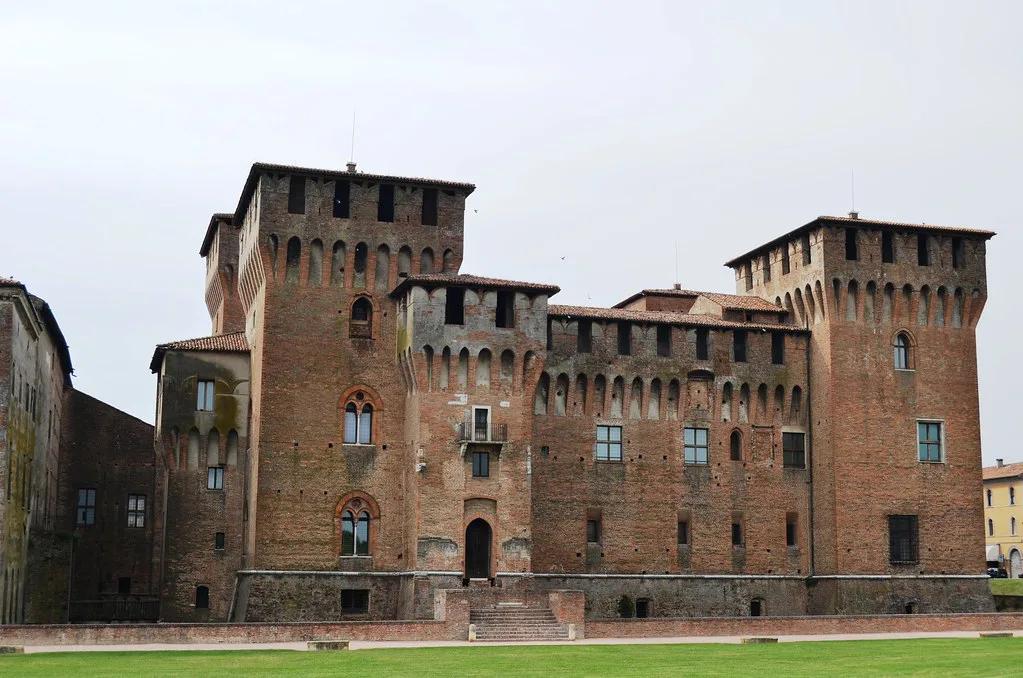
The Ducal Palace grew by accretion, and Duke Guglielmo Gonzaga later gave the scattered parts a more unified structure through connecting spaces, so movement between courtyards, corridors and galleries is part of the experience rather than dead time. Expect the route to move you between buildings with different characters: the older Corte Vecchia, the fortified Castello di San Giorgio, and the Palatine Basilica of Santa Barbara. Treat each as a separate stop with its own history, not as rooms in a single sequence.
Because the complex is a group of buildings sharing connective spaces, avoid assuming that everything you read about belongs to one continuous display. Some rooms have changed function repeatedly, and decorative schemes have been moved, restored or partially dispersed over the centuries. The practical consequence is simple: build your visit around a handful of named highlights rather than trying to see everything.
Start with the Camera Picta in the Castello di San Giorgio
Mantegna's painted room, the Camera Picta, is usually called the Camera degli Sposi in English; they are the same space, so do not plan two separate stops. Painted between 1465 and 1474, it wraps the Gonzaga family and court into illusionistic architecture, and the celebrated ceiling oculus of blue sky and putti is one of the earliest examples of looking up into painted space. Allow unhurried time here, since the room is small and the details take longer to read than photographs suggest.
The Castello di San Giorgio began as a military outpost with towers, moat and drawbridges before becoming a noble residence within a few decades of its construction, and it later housed Isabella d'Este's circle. That transition from fortress to courtly interior is visible in the route itself, so slow down as you cross from defensive architecture into painted rooms. If you only have time to see one thing, see this.
Isabella d'Este's Studiolo and What Is No Longer There
Isabella d'Este's Studiolo, her retreat for paintings, antiquities and books, still carries its dark blue walls with starry decoration, but the objects that made it famous have gone to museums elsewhere. Visit it as an architectural shell and a story about Renaissance collecting rather than as an intact cabinet of treasures. That framing makes the emptiness informative instead of disappointing.
The same lesson applies across the palace: the Gonzaga collections were dispersed, sold and relocated over centuries, so a room's fame often rests on what once stood in it. Check the current displays with the operator rather than assuming a specific painting or object is on view, and give priority to the frescoed cycles, which are fixed to the walls and cannot travel. If a particular work is your reason for coming, confirm it belongs to the Palazzo Ducale collection before booking travel.
The Flemish and Northern Thread
If Flemish painting is your priority, treat this as the thread to follow rather than a single room to tick off, and look for it in the palace's painted and tapestry-decorated interiors. The CODART museum entry on the Museo di Palazzo Ducale is the most reliable starting point for the northern holdings and the artists involved, describing paintings, tapestry commissions and the court's long engagement with northern European makers.
Tapestries: Raphael's Cartoons and a Mantuan Workshop
CODART records a cycle illustrating the Stories of Saints Peter and Paul, woven from cartoons after Raphael and bought in Brussels by Cardinal Ercole Gonzaga, now shown in the Apartment of the Tapestries. The same entry notes that a Brussels-born weaver, Nicolas Karcher, moved to Mantua in 1539 and ran a workshop here for several years, and that a Puttini tapestry after a Giulio Romano drawing survives in the palace. Search these out as objects tied to a specific Mantuan moment rather than generic wall decoration.
Tapestries are among the most fragile objects a museum shows, so their display can be rotated or rearranged for conservation. Ask at the ticket desk or check the operator's own information if the Raphael cycle is central to your trip, rather than counting on a specific room being open on a specific day.
Corte Vecchia and Pisanello's Arthurian Frescoes
In the older Corte Vecchia, Pisanello painted a cycle of Arthurian frescoes in the fifteenth century glorifying Gianfrancesco Gonzaga; fragments of the paintings and their preparatory drawings were rediscovered in the 1960s and can still be seen in the palace, according to European Waterways' account of the palace. Their survival is a reminder that much of what you see here is the result of twentieth-century restoration and rediscovery. That account is useful for piecing together these older rooms alongside the better-known apartments.
Santa Barbara and the Decorative Arts Rooms
The Palatine Basilica of Santa Barbara was built at the request of Duke Guglielmo Gonzaga and was originally linked directly to the palace; that link was closed in the nineteenth century and the church was reopened to the public in 2018, with its sixteenth-century organ still in place according to European Waterways. It is a separate space within the complex with its own story, so do not assume it is simply another room on the main route.
Later layers are equally tangible: the Sala dello Zodiaco reflects the palace's period as an imperial residence after the Gonzaga dynasty ended, and Napoleon's bed has returned there after restoration of its furnishings. Note too that the so-called Dwarves Apartments were reinterpreted by an art historian in the 1970s as a devotional reproduction of the Scala Santa in Rome rather than rooms built for court dwarves, a reminder that palace labels and legends do not always agree.
Mistakes to Avoid in the Palace
The first mistake is treating the palace as one ticket that covers every famous object you have read about. Because the complex mixes buildings, churches and collections that have changed hands and functions, confirm what your admission includes and which spaces are separate. The Gonzaga collections were partly dispersed, so a name in a guidebook does not guarantee a work is on view in Mantua.
The second error is assuming every room is always open. Temporary closures, rotations and conservation work affect historic interiors, and a famous name on a floor plan is not a guarantee of a view that day. Build in flexibility, keep a second-choice highlight, and accept that a shorter, focused visit usually beats an exhausted attempt at completeness.
Practical Planning and Confirming Details
The official Palazzo Ducale site is the place to verify what is open and how to book, and it should be your last check before leaving for Mantua. Because published information changes, confirm current hours, any booking arrangements and which ticket applies to the spaces you want to see on the operator's own pages rather than relying on older trip reports.
A sensible duration for the palace is around half a day if you concentrate on the Camera Picta, the Corte Vecchia and one or two further interiors, and longer if you add the basilica and the tapestry rooms at an unhurried pace. That is a suggested planning allowance, not an official figure, and group size, temporary exhibitions and your own tolerance for frescoes will change it. Go early in your stay so a second, shorter return is possible if a room is closed.
Pairing the Palace with Other Mantua Art Stops
Mantua packs a great deal into a compact centre surrounded by the Mincio River, and the hidden gems in Mantua guide is useful for the quieter corners between the headline sights. Once you leave Piazza Sordello, Piazza Erbe and the Rotonda di San Lorenzo are within walking distance, and the Teatro Scientifico Bibiena, where Mozart played in 1770, rewards a look if its programme allows.
For the Gonzaga's pleasure villa, Palazzo Te on the southern edge of the centre holds Giulio Romano's mannerist interiors, including the Sala dei Giganti, and a directory of Mantua's art venues describes it as reachable in around twenty minutes on foot from the central squares. Contemporary art is well served too: the Sonnabend Mantova Collection at the Palazzo della Ragione brings Warhol, Lichtenstein and Arte Povera into the historic centre, while commercial galleries along Via Nievo and Via Cavour show and sell work.
Sabbioneta, Suzzara and San Benedetto Po hold further Gonzaga and contemporary stops in the province, but they need a train, bus or car rather than a stroll. Decide before you arrive whether your trip is a palace-and-centre visit or a wider Mantuan circuit, because trying to do both in one day rarely works well.
Plan Your Visit
Treat the Museo di Palazzo Ducale as a collection of distinct buildings and a handful of unmissable rooms: Mantegna's Camera Picta first, then the Corte Vecchia, the tapestry rooms and the basilica as time and access allow. Accept that some of what made the Gonzaga collections famous now lives elsewhere, and let the frescoed walls carry the visit.
Before travelling, confirm hours, ticket scope and any room closures with the palace's own channels, then use the extra hours for Palazzo Te or a slow walk between Piazza Sordello and Piazza Erbe. A focused, well-verified day in Mantua is more rewarding than a rushed attempt to see everything the Gonzaga name once covered.
Frequently Asked Questions
What art can you see in the Gonzaga collections at the Palazzo Ducale?
Expect Mantegna's Camera Picta in the Castello di San Giorgio, Pisanello's Arthurian fresco fragments in the older Corte Vecchia, the Gonzaga tapestries including the Raphael-based cycle, and paintings tied to the court's Flemish connections. CODART's museum entry describes works by Rubens and Daniel van Dyck in these holdings. Display can change, so confirm specific pictures with the operator before travelling.
Is the Camera Picta the same as the Camera degli Sposi?
Yes. The two names refer to the same painted room in the Castello di San Giorgio, painted by Andrea Mantegna between 1465 and 1474. Plan it as one stop, and give it the largest share of your time inside the palace.
Are the Gonzaga collections still complete in the palace?
No. Objects from Isabella d'Este's Studiolo and other Gonzaga holdings were dispersed to museums elsewhere, and some rooms changed function over centuries. The Studiolo today is best understood through its surviving starry decoration and its history as a Renaissance collecting space.
How long should you allow for a Palazzo Ducale visit?
A half day is a reasonable allowance for the Camera Picta, the Corte Vecchia and one or two further interiors, with longer needed if you add the basilica and tapestry rooms. This is a planning suggestion, not an official duration, since access and your own pace will change it.
What should you confirm before travelling to Mantua?
Check the official Palazzo Ducale website for current opening hours, closed days, ticket prices and what each ticket covers, and ask directly about any room you particularly want to see. Also verify whether the Palatine Basilica of Santa Barbara is open to visitors on your dates.
Which other Mantua art stops pair well with the palace?
Palazzo Te for Giulio Romano's mannerist interiors, the Sonnabend Mantova Collection in the historic centre for post-1950 international art, and the Rotonda di San Lorenzo and Teatro Scientifico Bibiena for architecture. Sabbioneta and Suzzara are worthwhile but need transport beyond the centre.
Sources
Continue exploring
More guides you'll find useful