Mantua Cathedral (Duomo): A Visitor Guide
A slow guide to Mantua Cathedral, the Duomo di San Pietro: what kind of church it is, how it fits a city walk, and what to confirm before you go.
On this page
Mantua is a Lombard city known for Renaissance architecture, the Palazzo Ducale and its lakeside setting, and those palace-and-lake attractions tend to dominate the conversation. The cathedral at the centre of the old city offers a different kind of stop: a working church in an active diocese rather than a ticketed collection. That distinction shapes how you should plan a visit.
This guide deliberately avoids stating an entry price, opening hours, a dress code or an interior inventory for the Duomo di San Pietro, because the material reviewed does not confirm those details. Instead, it treats the cathedral as the Diocese of Mantua presents it: one church within a living network of parishes, shrines and pastoral offices. Use the suggestions here to pace your visit and to know which questions to settle locally before you build a day around it.
Where the Duomo Sits in Mantua's Historic Centre
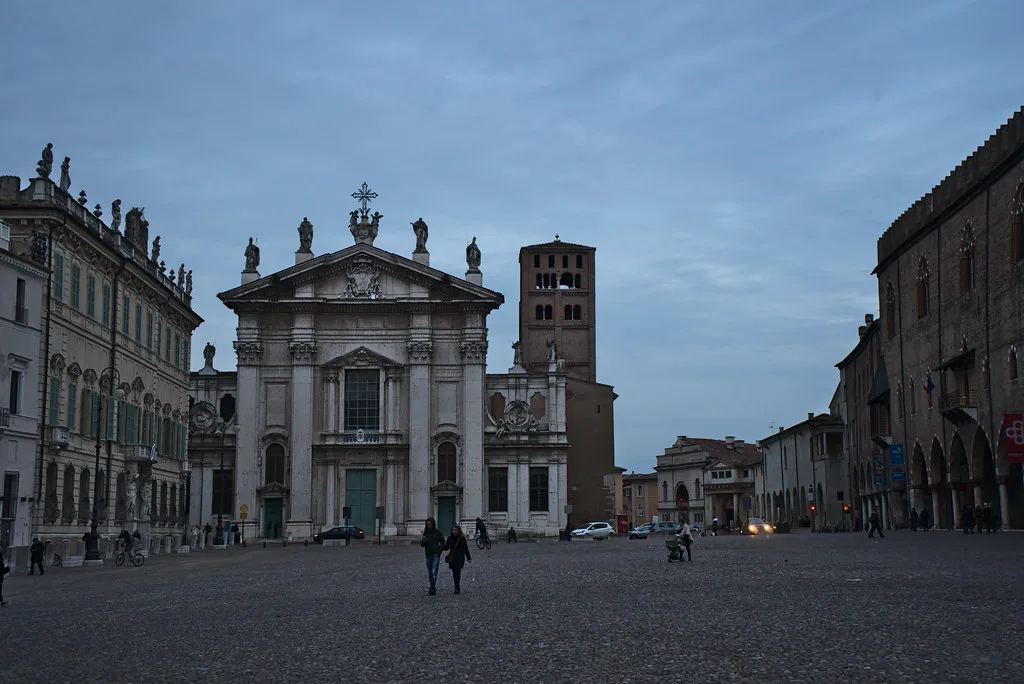
The Duomo di San Pietro belongs to the compact knot of squares and streets at the heart of Mantua, close to Piazza Sordello and the Palazzo Ducale. That proximity means you can fold it into a walking route rather than treat it as a separate excursion, and you may well pass it more than once in a day. A sensible loop starts at Piazza Sordello, continues to the cathedral, and then works toward Piazza Erbe, where La Rotonda di San Lorenzo stands.
Because the distances are short, the constraint is attention rather than transport: three religious buildings in an afternoon is plenty, and four starts to blur. If you want a broader map before you commit, the Mantua Attractions collection lays out the main sights with their relative positions.
A Working Church, Not a Museum
The Diocese of Mantua presents itself as a living institution with parishes, vicariates, shrines and pastoral offices, and the cathedral belongs to that structure rather than to a separate heritage authority. That matters for visitors: churches of this kind exist primarily for worship, and tourism is a guest in the building rather than its purpose. Expect the atmosphere to shift with the liturgical calendar, and plan to yield space when services or prayer are underway.
Treat any visit as conditional on what is happening inside on the day. If a Mass or a procession is in progress, the respectful choice is to wait outside or return later rather than walk the aisles. This is not a rule published by the diocese in the material reviewed here; it is ordinary courtesy that any working church asks of its visitors.
Approaching the Interior Respectfully
No dress code for Mantua Cathedral appears in the sources available, so this guide will not invent one. The safe assumption for any Italian church is modest, covered shoulders and knees, with a hat removed indoors; if you are visiting in high summer, carry a light layer for exactly this purpose. Where a specific requirement exists, it is normally signposted at the door, so read the entrance notices rather than relying on general travel advice.
Inside, keep voices low, avoid flash photography unless a sign permits it, and do not cross cordoned areas or approach the altar during prayer. Silence is the single most useful thing you can bring, because it lets you notice the building instead of narrating it. If you are travelling with children, explain the church setting before you go in so the visit stays short and calm.
Reading the Building as Layers of History
Mantua's architecture is often described through its Renaissance palaces and the Gonzaga legacy, and that framing tends to flatten churches into background. The cathedral, by contrast, is a place to look at how a building accumulates changes over centuries rather than as a single datable design. Without verified detail on its facade phases or interior decoration, the honest approach is to observe what is in front of you and let the fabric speak.
Practise reading the exterior first: the materials, the joints between sections and any difference in stone colour are clues that parts of the building were made or remade at different times. Then carry that habit inside, noting where surfaces, floor levels or lighting change. You do not need to assign dates to appreciate the layering; if chronology matters to you, ask locally or consult diocesan heritage material rather than guessing.
The Interior at a Slow Pace
Rather than treating the interior as a checklist of artworks, pick two or three things and stay with them: the direction of light, the sound of the space, the proportion of the nave. Sitting for ten quiet minutes usually reveals more than a hurried circuit of every chapel. This is a building designed for stillness, and it rewards visitors who give it time.
Because no verified inventory of interior features was available for this guide, arrive without a fixed expectation of specific frescoes or Baroque decoration. If interpretation panels or printed guides are available on site, they are the most reliable source for what you are looking at. Otherwise, let the visit be observational and leave the art-historical claims for a proper collection elsewhere.
Pairing the Duomo with La Rotonda di San Lorenzo
La Rotonda di San Lorenzo, on Piazza Erbe, is described as Mantua's oldest church and as a circular Romanesque building linked to Matilda of Canossa. According to a visitor-oriented account, it was concealed behind ordinary shopfronts for centuries and revealed again in the early twentieth century during urban works. That rediscovery story makes it one of the more quietly absorbing stops in the centre.
Its floor sits below the present street level, reached by descending steps, and the interior keeps original columns and a gallery above the central space. Treat it as a separate building with its own entrance and its own arrangements, not as an annex of the cathedral; there is no evidence of a shared ticket, and none should be assumed. Allow time to sit on the surrounding piazza afterwards, since the contrast between the busy square and the sunken interior is part of the experience.
Checking Practical Details Before You Travel
Before setting out, consult the Diocese of Mantua website, which carries the current calendar, parish listings, shrines and pastoral offices for the diocese. That is the appropriate place to confirm whether the cathedral is open to visitors on your dates, whether any works or closures are in progress, and whether special liturgies will limit access. Do not rely on a travel guide, including this one, for times that can change with the liturgical season.
If you need step-free access, seating or a quiet place to wait, ask the diocese or the parish directly rather than assuming arrangements; accessibility provisions are not documented in the sources reviewed here. Price is another question to settle locally, since no confirmed entry fee or free-entry policy for the cathedral was available. The honest position is that you should check both before building a day around the visit.
A Suggested Time Budget
Allow roughly thirty to forty-five minutes for the cathedral itself, and treat that figure as a recommendation rather than an official duration. Add another fifteen to twenty minutes for La Rotonda di San Lorenzo and the walk between the two. If you linger over the exterior or sit for a while in silence, the total grows naturally, which is the point.
Build the visit into a half-day route rather than a full day: cathedral, Piazza Sordello, a coffee, then Piazza Erbe and the rotunda. Save the Palazzo Ducale for a separate block, because it deserves more than the tail end of an afternoon. That structure keeps the religious sites from becoming a rushed sequence of doorways.
Fitting the Duomo Into Your Mantua Plan
The Duomo di San Pietro is worth an unhurried hour not because it holds a famous single treasure, but because it is the working heart of a diocesan city and a counterweight to Mantua's palace-heavy itinerary. Pair it with La Rotonda di San Lorenzo and you have two very different religious spaces within a short walk of each other.
Confirm the volatile details, meaning current access, any restrictions and whether an entrance charge applies, with the Diocese of Mantua before you go. Then give the building the thing it asks for most: time, quiet and a little curiosity about how it came to look the way it does.
Frequently Asked Questions
Is Mantua Cathedral the same as the Duomo di San Pietro?
Yes. The cathedral of Mantua is dedicated to Saint Peter and is known as the Duomo di San Pietro. It is the seat of the Diocese of Mantua, which lists it among the city's churches and pastoral structures.
Do you need tickets for Mantua Cathedral?
No confirmed ticket information for the cathedral was available in the sources reviewed, so this guide does not state an entry price or promise free admission. Check with the Diocese of Mantua or the parish before travelling, and look for any notices at the entrance on the day.
How long should you spend at Mantua Cathedral?
Thirty to forty-five minutes is a reasonable suggestion for the cathedral alone, and it is a recommendation rather than an official duration. Add fifteen to twenty minutes if you continue to La Rotonda di San Lorenzo on Piazza Erbe.
Is La Rotonda di San Lorenzo part of the cathedral?
No. La Rotonda di San Lorenzo is a separate circular Romanesque church on Piazza Erbe, described as the city's oldest church and rediscovered in the early twentieth century after being hidden behind other structures. There is no evidence that it shares a ticket or entrance with the cathedral.
What should I know before visiting a working diocesan church in Mantua?
The cathedral is an active church rather than a museum, so services and prayer take priority over sightseeing. Dress modestly, keep quiet, avoid flash photography unless permitted, and step outside if a liturgy is underway.
Where can I confirm current opening times for Mantua Cathedral?
The Diocese of Mantua website publishes the current calendar, parish information and diocesan notices, and is the right place to confirm access on your dates. Avoid relying on third-party guides for times that change with the liturgical season.
Sources
Continue exploring
More guides you'll find useful