Museo di Santa Giulia Brescia: A Practical Visitor Guide
Plan a visit to Brescia's Santa Giulia city museum: the Domus dell'Ortaglia, San Salvatore, the Cross of Desiderius, the nuns' choir and the Winged Victory.
On this page
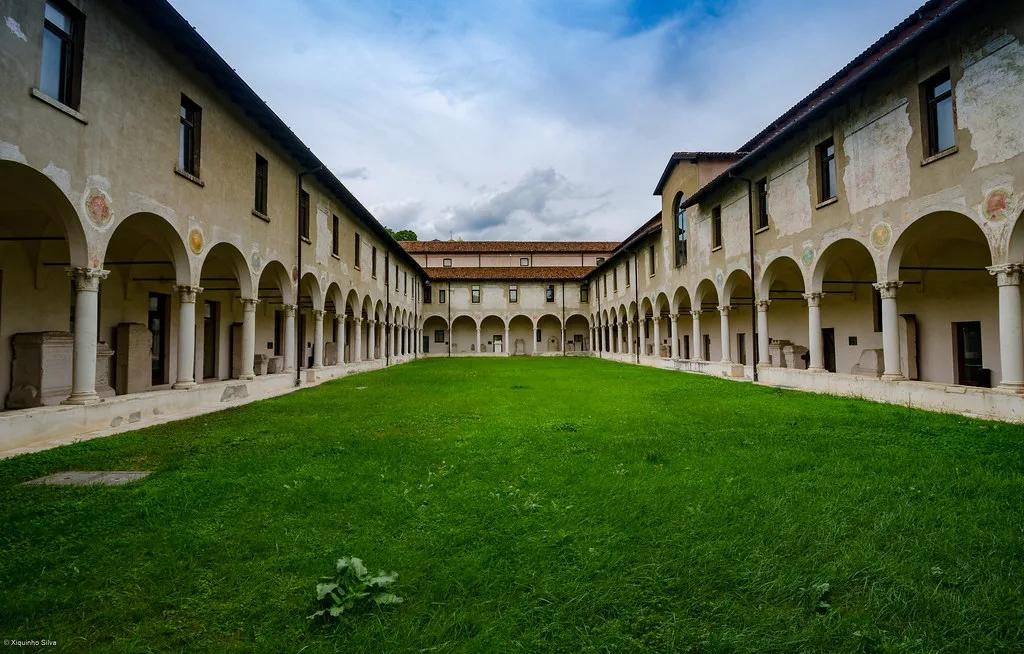
Santa Giulia is Brescia's city museum, housed in a former Lombard Benedictine monastery on Via dei Musei, and it is the one stop where the city's whole story sits in a single complex. The building absorbs Roman houses, an eighth-century church and a Renaissance nuns' choir, so the key planning decision is sequence rather than speed. Decide before you arrive whether you are giving it a short focused visit or a proper half-day, because the two produce very different experiences.
Treat the museum as the anchor of a walkable day along Via dei Musei rather than as a rainy-day filler between the piazzas. The Roman archaeological park sits a few steps away, which makes a combined route easy on foot but also means you need to reserve energy for both. For orientation on the area around it, see the wider Brescia Attractions hub before you build the day.
What Santa Giulia Actually Is
The museum occupies a monastery founded in the Lombard period and expanded over centuries, and it functions as Brescia's museum of the city. Its collections run from prehistory through the Roman era, the medieval period and on toward the nineteenth century, with more than 11,000 works of art and artefacts in the display. Because the building itself is part of the exhibit, the route passes through cloisters, churches and excavated domestic rooms rather than neutral galleries.
Santa Giulia forms part of Brescia's UNESCO World Heritage listing, which the city received in 2011 as part of the Longobards in Italy series. The monastery complex, the Capitolium archaeological area and the San Salvatore monastic complex are grouped as one site, which is why the museum and the Roman park are usually discussed together. That shared listing does not by itself tell you anything about ticket scope, so check the operator's current offer rather than assuming one admission covers everything.
The address is Via dei Musei 81/b, in the historic centre, and the surrounding streets are inside a restricted traffic zone.
Getting Your Bearings on Via dei Musei
Visit Brescia notes that the museum sits in a restricted traffic zone, so drivers should plan to leave the car at Parcheggio Arnaldo and continue on foot, while metro users can arrive at the Vittoria stop. That makes Santa Giulia a natural walking stop rather than a drive-up attraction, and it puts the entrance within reach of the city's central squares. Wear shoes you can spend hours in, because the route crosses cobbles, cloisters and stone floors.
A free pedestrian corridor now links the museum with the nearby archaeological park of Roman Brescia, creating a single monumental walk through the UNESCO area. The same source describes the route as open freely and free of charge to the public, which is a useful distinction: walking the corridor costs nothing, while entering the museum's exhibition spaces is a separate matter. Plan your approach so you walk the corridor in one direction and end at whichever site you want to finish in.
If you want to break up the monument-going with quieter corners of the city, the hidden gems in Brescia guide covers options that fit around a Via dei Musei itinerary.
Start With the Roman Layer: the Domus dell'Ortaglia
The monastery absorbed two Roman houses that stood on the site, and they survived in what became the monks' garden, the Ortaglia. Known as the Domus dell'Ortaglia, they are viewed from raised walkways, so you look down onto mosaic floors and painted walls rather than walking across them. Lonely Planet identifies the Domus di Dioniso, named for a mosaic of the wine god, and the Domus delle Fontane, named for two marble fountains, as the pair to look for.
This is the section most often skimmed by visitors hurrying toward the churches, and it is worth slowing down for. The mosaics and frescoes are the reason the monastery footprint reads as a Roman site as much as a religious one, and they set up everything that follows. Give the walkways ten or fifteen unhurried minutes before moving on.
Because the Roman houses sit inside the museum's chronological route, seeing them first makes the later Lombard and Renaissance rooms easier to place. The overall sequence runs from prehistory upward, so following the numbered path instead of room-hopping saves backtracking.
The Winged Victory and the Roman Bronzes
The Vittoria Alata, or Winged Victory, is a bronze statue found near the Capitolium in 1826 and now one of the museum's signature pieces. Guide LagodiGarda describes it as an intact bronze and treats it as the symbol of Brescia, which explains why it anchors the Roman section rather than sitting in a corner. Seeing it here, after the domus floors, connects the domestic and civic sides of Roman Brixia.
The museum's Roman galleries have been reworked in recent years, with a section devoted to late antiquity and to votive objects such as jewellery, engraved glass and decorated ceramics found in the Capitolium area. Many of these pieces had not been fully displayed before, and multimedia installations now carry part of the interpretation. If you care about Roman small finds as much as sculpture, budget extra time here.
The Capitolium itself, built in AD 73 and dedicated to Jupiter, Juno and Minerva, stands in the adjacent archaeological park with its columns and reconstructed chambers.
San Salvatore and Santa Maria in Solario
The Basilica di San Salvatore is the eighth-century Lombard church inside the complex, decorated with Byzantine-influenced art, and it remains one of the most historically significant spaces on the route. Martha's Italy notes that the interior now also displays Gothic to Renaissance material drawn from city monuments. Because it is a consecrated former church rather than a gallery, the scale and light change abruptly from the museum halls.
Santa Maria in Solario, built as the monastery chapel in the twelfth century, holds the treasury of the nuns, including the gemmed Cross of Desiderius, a ninth-century piece described by Visit Brescia as one of the most important known works of jewellery.
The Cross of Desiderius is the single object most often missed by visitors who run out of time, so place it deliberately rather than hoping to stumble on it. Check the room's arrangement on arrival, since display positions inside a working museum can change with exhibitions. If you only have an hour, this and the domus mosaics are the two stops to protect.
The Coro delle Monache
The Coro delle Monache, or nuns' choir, is a two-storey chamber completed in the sixteenth century and covered in frescoes, and Lonely Planet singles it out as a highlight of the monastic range. Guide LagodiGarda goes further and calls it the first Renaissance evidence in Brescia, which is a strong claim but useful context for what you are looking at. After the Roman and Lombard rooms, it delivers a clean change of era and mood.
Treat this room as the point where a short visit and a long visit genuinely diverge. If you are rushing, it is the first thing people cut, and it is also the room that best explains how the monastery kept evolving after its founding. Arriving here with time left is a good test of whether your pacing worked.
How Long to Allow
A half-day is a realistic allowance for the museum alone if you follow the chronological route and read as you go, and guided itineraries commonly devote roughly two hours to the Santa Giulia portion before adding the city walk. For a tighter schedule, a focused hour can cover the Domus dell'Ortaglia, the Winged Victory and the Cross of Desiderius if you move directly between them. That shorter version is a choice with a cost: you will skip the nuns' choir and most of the medieval collections.
If you add the archaeological park and the Capitolium, treat that as a separate block rather than squeezing it into the same hour. A guided itinerary from a local operator runs about five hours in total when it combines a city walk, an aperitif and a two-hour museum visit, which gives a sense of how the pieces stack up. Anyone building a full day should plan the museum for the cooler part of the day and leave the hilltop castle for later.
The museum lends itself to slow travel precisely because the building is immersive rather than efficient, so a two-night stay in the city makes more sense than a dashed half-day between trains.
Booking, Tickets and What Is Free
Entry to the Museo di Santa Giulia and to the archaeological park should be booked, and local guides state that they can reserve both on a visitor's behalf. That wording is about booking entries, not about a single combined ticket, so read the operator's current offer carefully before you assume one purchase covers both sites. Availability, opening days and any reductions change through the year, so confirm them on the official Fondazione Brescia Musei site close to your date.
Some parts of the experience cost nothing. The UNESCO corridor between the museum and the Roman park is free to walk, and the Viridarium sculpture park at Santa Giulia is open at no charge, with Emilio Isgrò's four-metre steel globe installed on the lawn. In summer the Viridarium also hosts an open-air cinema programme with food and drink, which is an evening rather than a museum-hours activity.
The museum provides a free multimedia guide called EasyGuide, used on your own phone by scanning a QR code issued with the ticket, and bringing headphones is recommended. That is a practical alternative to hiring equipment or joining a group, and it lets you take the rooms at your own pace. Ask at the ticket desk if the code is not offered automatically.
Pairing Santa Giulia With the Capitolium and Theatre
The Roman archaeological park next door holds the Capitolium, the Republican sanctuary with first-century BC wall paintings, and the Roman theatre, all within a short walk of the museum entrance. A sensible walking order is the park first in the morning light, then the museum, then the squares, which keeps the heaviest indoor stretch for the middle of the day. The two sites are minutes apart on Via dei Musei, so no transport is needed between them.
Piazza della Loggia, with its Renaissance palazzo and astronomical clock tower, is a short walk southeast and makes an easy end point for a coffee.
If your legs hold out, the castle on Cidneo hill gives the panoramic view back over everything you have just walked through, and the climb is uphill on foot from the centre. Save it for a clear afternoon rather than a rushed morning.
Common Mistakes to Avoid
The most frequent error is treating Santa Giulia as a filler for a wet hour and then discovering that the complex spans an entire monastery. The second is skipping the subterranean and domestic layers, the domus floors and the crypt-level remains, in favour of the grand churches at the end. Reading a short history of Brescia before you go makes those layers far easier to interpret on site.
Another trap is over-packing the day: museum, park, castle and three piazzas is more than most people enjoy on foot, and the old centre has plenty of cobbles. Choose two anchor sights and let the squares fill the gaps between them.
Plan Your Visit
Santa Giulia rewards a decision made in advance: a focused hour on the domus mosaics, the Winged Victory and the Cross of Desiderius, or a half-day that includes the nuns' choir and the Lombard basilica. Either way, check current opening arrangements and ticket scope on the official museum site before you travel, because both change with the season and with exhibitions.
Build the rest of the day around the walk along Via dei Musei, with the archaeological park on one side and the piazzas on the other, and leave the uphill castle for a clear afternoon. The city works best at a slow pace, and the museum is the place where that pace pays off most. For related planning, see Chiesa di San Salvatore Brescia: Visitor Guide.
Frequently Asked Questions
How long does it take to visit the Museo di Santa Giulia?
Allow about half a day for the museum alone if you follow the full chronological route and read the displays. A focused hour is enough for the Domus dell'Ortaglia, the Winged Victory and the Cross of Desiderius, but you will miss the nuns' choir and most medieval rooms. Adding the Roman archaeological park next door needs a separate block of time.
What are the must-see highlights of the Santa Giulia Museum?
The Domus dell'Ortaglia, two Roman houses with mosaic floors and frescoes viewed from raised walkways, come first, followed by the bronze Winged Victory. Then look for the Basilica di San Salvatore, the gemmed Cross of Desiderius in Santa Maria in Solario, and the two-storey Coro delle Monache with its frescoes.
Do I need to book tickets for Santa Giulia and the Roman archaeological park in advance?
Local guides state that entry to both the museum and the archaeological park should be booked, and they can reserve places for visitors. Bookings are not the same as a combined ticket, so check the operator's current offer for what each admission includes and which days it applies to before you commit.
Is the Santa Giulia Museum included in the same visit as the Capitolium?
The museum and the Capitolium belong to the same UNESCO listing and sit minutes apart on Via dei Musei, but that does not establish a shared ticket. Treat them as two bookings and confirm the current admission arrangements with the operator. The free pedestrian corridor connecting them can be walked without a ticket.
Is the museum suitable if you only have an hour in Brescia?
Yes, with a planned route rather than a wander. Go straight to the Roman domus walkways, then the Winged Victory, then the Cross of Desiderius, and accept that you will skip the nuns' choir and the later collections. If one hour is all you have in the city, the Roman archaeological park may be the better single stop.
What is the Cross of Desiderius and where can you see it?
It is a ninth-century gem-studded processional cross, described as one of the most important known works of jewellery, and it belongs to the treasury of the nuns at Santa Giulia. It is displayed in Santa Maria in Solario, the twelfth-century monastery chapel inside the museum complex. Check the room's arrangement on arrival, since displays can shift with exhibitions.
Sources
Continue exploring
More guides you'll find useful