Hidden Gems in Vicenza: Quiet Corners and Lesser-Known Sights
A practical guide to lesser-visited corners of Vicenza, from the Valletta del Silenzio to Lake Fimon, with honest notes on what each place asks of you.
On this page
Most visitors come to Vicenza for the Basilica Palladiana and the Teatro Olimpico, then move on. That is a shame, because the city and its fringe hold a second layer of places that reward a slower pace: a quiet green valley next to Palladio's most famous villa, a spring-fed pond in a residential suburb, and a handful of small lakes within easy reach of the centre.
One concrete starting detail: the Oasi della Valletta del Silenzio is an expansive green space just outside Vicenza's historic centre, where people relax, sun themselves and have family picnics, according to Rossi Writes. It sits immediately next to Villa Capra, better known as La Rotonda, so the tourist crowds head for the villa's symmetrical facades while the adjacent valley stays calm. That contrast is the pattern this guide follows throughout — famous name on one side of the hedge, quieter ground on the other.
How to Use This Guide
The places gathered here share a quality rather than a category. Some are open green space inside the city, some are small nature reserves a short drive out, and some are cultural collections in the historic centre that visitors routinely skip in favour of the obvious highlights. What unites them is that none requires a full day, so they slot around the main sights rather than replacing them.
A practical rhythm works well: give the morning to the city's architecture on a self-guided walk, then take the afternoon slowly outdoors. Distances quoted below come from published travel writing and are rough orientation only, not current timetables — check driving times and any seasonal access on the day you travel rather than planning to the minute.
If architecture is your priority, the core route through the centre covers the big names efficiently. A Palladian architecture walk keeps the famous villas and palaces in a logical sequence, leaving the quieter corners for the hours when you want to slow down. Pair the two rather than treating them as competing itineraries.
The Valletta del Silenzio: Quiet Ground Beside La Rotonda
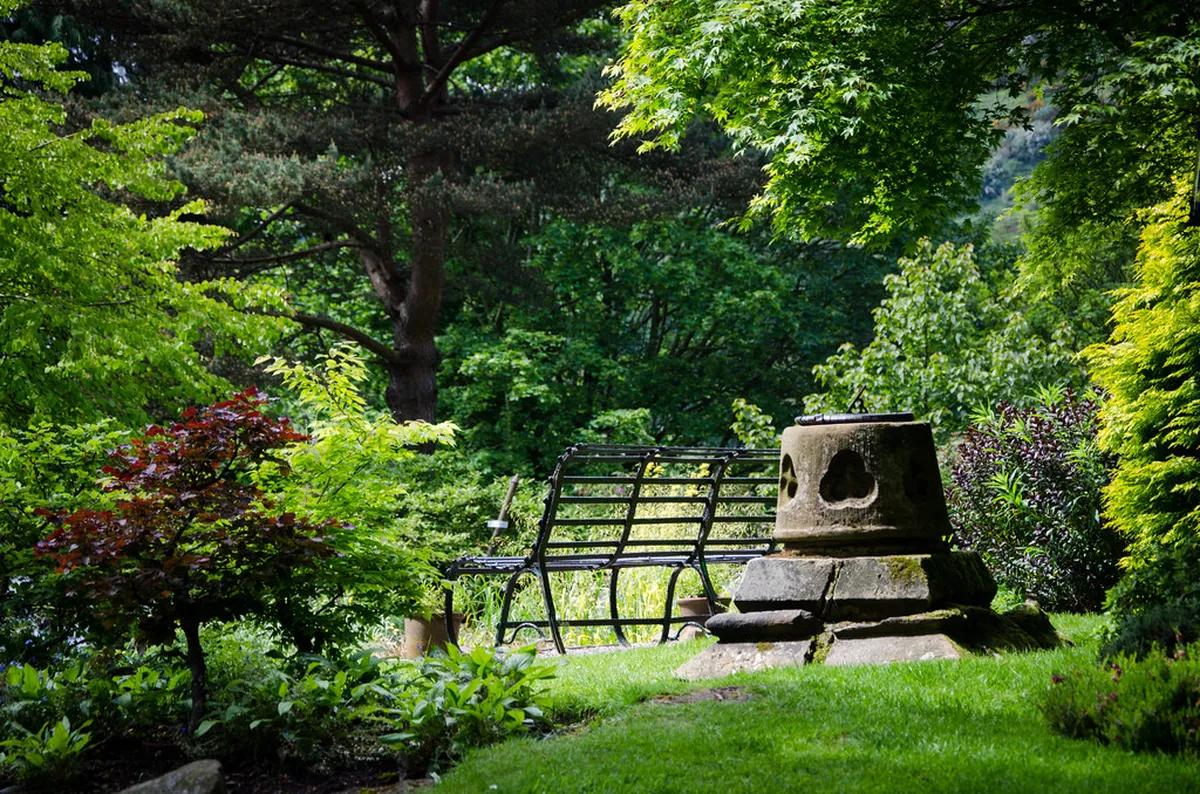
The Oasi della Valletta del Silenzio is an expansive green space just outside Vicenza's historic centre, and its appeal is its ordinariness: short nature paths, some wet areas, and room for a picnic. It sits next door to La Rotonda, so you get the odd pleasure of standing in near-silence while one of Italy's most photographed villas stands a hedge away. Bring a blanket and water rather than expecting facilities. Further visitor details appear in Vicenza, Italy - 6 Hidden Corners to Quickly Get in Touch with Nature.
La Rotonda itself is the crowning Palladian sight outside the centre, a hilltop design celebrated for the harmony between its symmetrical plan and the surrounding landscape. If you want to understand that relationship, arrive on foot through the valley rather than by car; the approach is part of the point. Check current visiting arrangements for the villa interior separately, since grounds and interiors are not the same proposition.
A Circular Walk via Monte Berico and Villa Valmarana ai Nani
The most satisfying way to link these scattered pins is one continuous loop. From the Valletta del Silenzio, walk up to the large park of Villa Guiccioli, continue to the Church of St. Mary of Monte Berico, and take in the panorama from the adjacent Piazzale alla Vittoria, which offers some of the best views over Vicenza and the Veneto, according to Tuscany Now & More. On a clear day that source reports it is possible to see as far as the Dolomites and the Venetian Lagoon.
Descend by following the path toward Villa Valmarana ai Nani, a neoclassical villa set in historic gardens guarded by seventeen dwarf sculptures, with frescoes by Giambattista and Giandomenico Tiepolo inside. From there the route returns easily to your starting point. Treat the whole circuit as a half-day on foot, not a quick detour, and wear shoes with grip for the downhill sections.
Risorgive di Maddalene: Springs and a Field Path
In the suburb of Maddalene, a small pond fed by underwater springs sends a canal called the Seriola out into the fields. A little bridge gives the best view of the water emerging, and a straight path bordered by farmland invites a short walk with a wooded stretch further along. It is a modest place, best suited to a half-hour stroll combined with something else nearby. Further visitor details appear in Vicenza, Italy - 6 Hidden Corners to Quickly Get in Touch with Nature.
The suburb holds one seasonal curiosity worth knowing about: in winter, local families display nativity scenes in front gardens, churches and along the springs, according to Rossi Writes. That source dates from 2022, so treat the tradition as reported rather than confirmed for your dates, and ask locally or check current notices before building an evening around it.
Wetlands at Casale: Check Before You Go
Between the city's two main shopping centres lies the WWF Oasi Stagni di Casale, a former clay quarry reclaimed by water and reeds. Boardwalks cross the ponds, birdwatching hides let you watch herons and turtles, and a small visitor centre explains the work of the biologists who manage it. It is a genuinely urban nature stop rather than a wilderness hike. Further visitor details appear in Vicenza, Italy - 6 Hidden Corners to Quickly Get in Touch with Nature.
Two caveats matter here, both reported by the same 2022 source and neither guaranteed to still apply. Visitors were expected to pay an entrance fee, and the oasis was closed during the winter period. Do not travel on assumption: check the WWF oasis listing for current opening and entry arrangements before setting out, especially outside late spring and summer.
Pack mosquito repellent if you visit in late spring or summer, when the source warns the insects can be numerous and persistent near the water. Binoculars are worth the weight for the hides. This is one of the few spots in this guide where a small fee and seasonal access are the norm rather than the exception, so plan around it rather than squeezing it in.
Lakes Beneath the Berici Hills
Lake Fimon sits in the Colli Berici south of the city, ringed by hills and circled by a roughly four-kilometre path that suits walkers and cyclists. The route passes close to the water, where swans, coots and herons nest, and a boardwalk over the water lilies offers the most photogenic view in summer bloom. Allow an hour or so at an easy pace. Further visitor details appear in Vicenza, Italy - 6 Hidden Corners to Quickly Get in Touch with Nature.
Lake Camazzole is quieter again: a small lake with striking blue water, a raised path along its shore, and, if you are lucky, horses from a nearby farm being exercised. The path forms part of a longer cycling and hiking route along the Brenta river, so expect some bike traffic. Neither lake should be treated as a swimming spot — respect any restrictions posted at the water.
Both lakes are reached most easily by car; published indications put each about 25 minutes' drive from the Teatro Olimpico, though that figure dates from 2022 and should be read as orientation. For a broader menu of places to reach from the city by car or train, this collection of day trips from Vicenza is a useful starting point.
Rubano Ethnographic Park and the Colli Euganei
At the foot of the volcanic Euganean Hills, about thirty minutes' drive from the centre on the same 2022 indications, the Rubano Ethnographic Park combines a wooded park, a ten-hectare lake, a working garden and a traditional casone — the straw-roofed rural house type once common across the Veneto. The casone functions as an ethnographic museum, furnished from kitchen to cellar. Further visitor details appear in Vicenza, Italy - 6 Hidden Corners to Quickly Get in Touch with Nature.
It is the most family-friendly of the out-of-town options: there is a large playground with a small zipline, goats and other domestic animals, and a restaurant with a coffee bar on site. The trade-off is that it feels less like a hidden corner and more like a small attraction, so go for the casone and the lake rather than expecting solitude.
Under-Visited Cultural Stops in the Centre
The Museo del Gioiello occupies part of the Basilica Palladiana and is described as the only museum in Italy entirely dedicated to jewellery, fitting for a city that has been a gold-working centre since its medieval guild. Designers from Versace to Valentino sit alongside local makers. It is a compact, focused collection rather than an all-day museum, and it is ticketed separately from the building around it.
Nearby, the Palladio Museum at Palazzo Barbaran rewards anyone who wants the architect's drawings and context rather than just his buildings, while the civic art museum at Palazzo Chiericati holds Palladio sketches alongside works by Tintoretto, Tiepolo and Van Dyck. Palazzo Leoni Montanari adds Greek ceramics, Russian icons and Venetian paintings by Canaletto and Longhi. These are four separate collections with four separate arrangements — do not assume one ticket opens all of them.
For the Palladio story told in sequence on foot, the central Palladian architecture walk makes a sensible spine before you branch into individual museums. Squares, church exteriors and public parks cost nothing to wander; interiors and collections are where you should check current prices and hours with each site directly, since details change and nothing in this guide should be read as a current tariff.
Practical Notes: Car, Footwear and Daylight
The city centre is walkable and best done on foot, but the springs, lakes and park all sit beyond comfortable walking distance for most visitors. A car gives flexibility; the alternative is to pick one out-of-town target per day and treat the rest of the day as city time. Verify any bus or rail option locally rather than relying on older route descriptions.
Footwear matters more than it sounds. Paths around the lakes are pebbly and uneven, the descent from Monte Berico can be slippery, and the field path at Maddalene turns muddy after rain. Carry water and snacks, since catering is sparse at most of these sites outside Rubano, and plan to leave before dusk — several spots have little or no lighting. These are sensible precautions, not official rules, so judge conditions on the day.
Where to Base Yourself and How to Split a Day
Staying in the historic centre removes the need for a car for the architecture, and puts the Teatro Olimpico, the Piazza dei Signori and the museums within a stroll. Then dedicate one full day to the countryside loop — valley, Monte Berico, Villa Valmarana — and a second to a lake or the wetlands, depending on the season and what you have confirmed is open.
If you only have one day, choose the circular walk over the lakes: it delivers a viewpoint, a famous villa seen from quiet ground, and Tiepolo frescoes without any driving. If you have three days, add Bassano del Grappa, whose wooden bridge, originally designed by Palladio, makes a natural companion excursion, as suggested by Rossi Writes. Check the current season's conditions before committing either way.
Plan Your Visit
Vicenza rewards the visitor who treats the famous sights as a beginning rather than a checklist. A green valley beside La Rotonda, a spring-fed pond in a suburb, two small lakes under the Berici Hills and a cluster of focused museums give the city a second, slower personality that most day-trippers never see. None of it is secret; it is simply easy to miss.
Confirm opening arrangements for the wetlands and any museum interior directly before you go, treat published drive times as orientation, and carry more water than you think you need. Then leave the afternoon loose and let the quieter corners of the city do the rest.
More Vicenza guides
- A Palladian Architecture Walk Through Central Vicenza
- A Self-Guided Walk Through Vicenza's Centre
- A Two-Day Vicenza Itinerary
- Best Time to Visit Vicenza
- One Day in Vicenza
- Vicenza Market Guide
- Vicenza Rainy Day Activities
- Vicenza Viewpoints
- Vicenza with Kids
- Basilica Palladiana Vicenza Guide
- Chiesa di Santa Corona, Vicenza
- Museo Civico Palazzo Chiericati in Vicenza
- Palazzo Barbaran da Porto and the Palladio Museum
- Palazzo Leoni Montanari in Vicenza
- Santuario di Monte Berico, Vicenza
- Teatro Olimpico Vicenza
- Vicenza Cathedral (Duomo di Santa Maria Annunciata)
- Villa Valmarana ai Nani, Vicenza
Frequently Asked Questions
What are the hidden gems in Vicenza?
The strongest lesser-visited options combine city and countryside. In the centre, the Museo del Gioiello, the Palladio Museum and the civic art museum at Palazzo Chiericati are often skipped. Just outside, the Valletta del Silenzio green space beside La Rotonda, the springs at Maddalene, the WWF wetlands at Casale and the lakes at Fimon and Camazzole offer quiet alternatives to the main squares.
Is Vicenza worth visiting?
Yes, particularly for travellers who want Palladian architecture without the pressure of a major tourist city. The historic centre holds a dense group of palaces, a theatre and museums within walking distance, and the surrounding hills and lakes add a nature layer that few visitors plan for. Two days gives a comfortable balance between the two.
What quiet nature spots are near Vicenza?
The Valletta del Silenzio is the closest to the centre, walkable in about half an hour from the Teatro Olimpico. Further out, the springs at Maddalene, Lake Fimon and Lake Camazzole are short drives. The WWF oasis at Casale reported an entrance fee and a winter closure, so confirm its current status before travelling.
Do you need a car to reach Lake Fimon and the Berici Hills?
Realistically, yes, or a combination of local transport and taxi. The lakes sit beyond comfortable walking distance and paths are uneven. If you prefer not to drive, pick a single out-of-town target, confirm local connections on arrival, and spend the rest of the day in the walkable centre.
Which Vicenza sights are free and which need tickets?
Public squares, the parks and church exteriors cost nothing to visit. Inside, the Museo del Gioiello, the Palladio Museum and the civic art museum at Palazzo Chiericati are separate ticketed collections with no shared ticket. Check entry arrangements with each site directly rather than assuming a combined pass exists.
How many days do you need in Vicenza?
Two days covers the centre plus the circular walk up to Monte Berico and back via Villa Valmarana ai Nani. Three days adds an excursion, such as Bassano del Grappa or one of the lakes. If you only have a single day, prioritise the architecture and the viewpoint and leave the countryside for next time.
Sources
Continue exploring
More guides you'll find useful