Santuario di Monte Berico Vicenza Guide: Basilica & Portico Walk
Plan a visit to the Santuario di Monte Berico in Vicenza: the basilica, the two walking routes up the hill, the views over the city and what to expect inside.
On this page
The Santuario di Monte Berico is the Marian shrine that looks down on Vicenza from its hill, and it works on two levels at once: an active place of worship with daily liturgy, and a destination for anyone who wants the city spread out below them. Treat the church as the reason to climb and the terrace as the reward, rather than the other way round. The official sanctuary site publishes the current calendar and contact details, and gives the address as Viale X Giugno 87.
As a rough editorial suggestion, set aside about half a day rather than a quick photo stop, mainly because the approach is part of the visit. You can walk up under the portico arcades or take the more direct stairway route from the Arco delle Scalette, and each choice gives a different climb. That timing is our recommendation, not an official figure.
What the Sanctuary Is and Where It Sits
Santa Maria di Monte Berico is a Roman Catholic church and Marian shrine on the hill of the same name, standing above Vicenza in the Veneto. Its position is what shapes a visit: you arrive by climbing, and the building opens onto views rather than onto a street. The sanctuary presents itself as a place of faith, art and hospitality, with a worshipping community behind the liturgy rather than a monument kept only for tourists.
The church is a minor basilica, and its interior holds frescoes, altars and religious art that repay a slower look than the exterior usually gets. The sanctuary's own account ties its foundation to the Madonna appearing to a peasant woman in the fifteenth century, at a time when Vicenza was afflicted by plague, and links the shrine's completion to the city's release from it; read that as devotional history as the sanctuary narrates it rather than as independent documented fact.
Walking Up: Portico Arcades or the Scalette
Two pedestrian routes lead to the sanctuary, and the choice is really about shelter versus directness. The portico route climbs through a long sequence of arcades, which keeps you shaded in summer and out of the rain, and gives the climb a rhythm of arches and framed views. It is the better option if you are carrying a bag, travelling with someone who prefers steady ground, or visiting on a changeable day.
The stairway alternative starts at the Arco delle Scalette and goes up in steps rather than arcades, so it suits anyone who wants the climb finished efficiently. Route notes on Komoot describe the Scalette as 192 steps; take that as a route description from a third-party source rather than a survey. Whichever way you go, wear shoes you would happily take up and down stairs.
Climbing times vary with pace, heat and how often you stop, so plan a generous window instead of a precise one and let the ascent set the tone. If the weather turns, the covered arcades are the obvious fallback, while the open stairway is one to save for a dry day.
Arriving by Car, Bus or on Foot from Town
The sanctuary's address is Viale X Giugno 87 in Vicenza, the road that runs along the hill below the church, and it is the reference point to give a driver or to look for on a map. The official site lists this address with a telephone number and email for the sanctuary, which is the sensible place to ask about group visits or specific arrangements.
Vicenza railway station lies about 800 metres northwest of the sanctuary as the map measures it, but that is straight-line distance on a hillside, not a flat stroll, and the climb still applies. Rather than trust any single figure for a bus or a walking route, check locally what is running on the day you travel.
Inside the Basilica
The interior is where the shrine's double identity is clearest: a working church with Masses, adoration, confession and rosary during the week, and a gallery of frescoes and sculpture accumulated over centuries of devotion. Near the entrance visitors see the venerated effigy of the Madonna di Monte Berico, framed by a composition of eight figures beneath her cloak.
The sanctuary notes that celebration times shift between winter (standard time) and summer (daylight saving) schedules, so a timetable picked up in one season may mislead you in another. Check the current orari page on the official site the week you go, and again if you are relying on a schedule saved weeks earlier.
Moving through the church quietly is the practical courtesy here: step out of the way of anyone entering for prayer, keep voices low near the front, and save photographs for moments that do not interrupt a service. A third-party listing suggests early morning or late afternoon for lighter crowds, which is a visitor tip rather than an official rule.
The Terrace and the Views over Vicenza
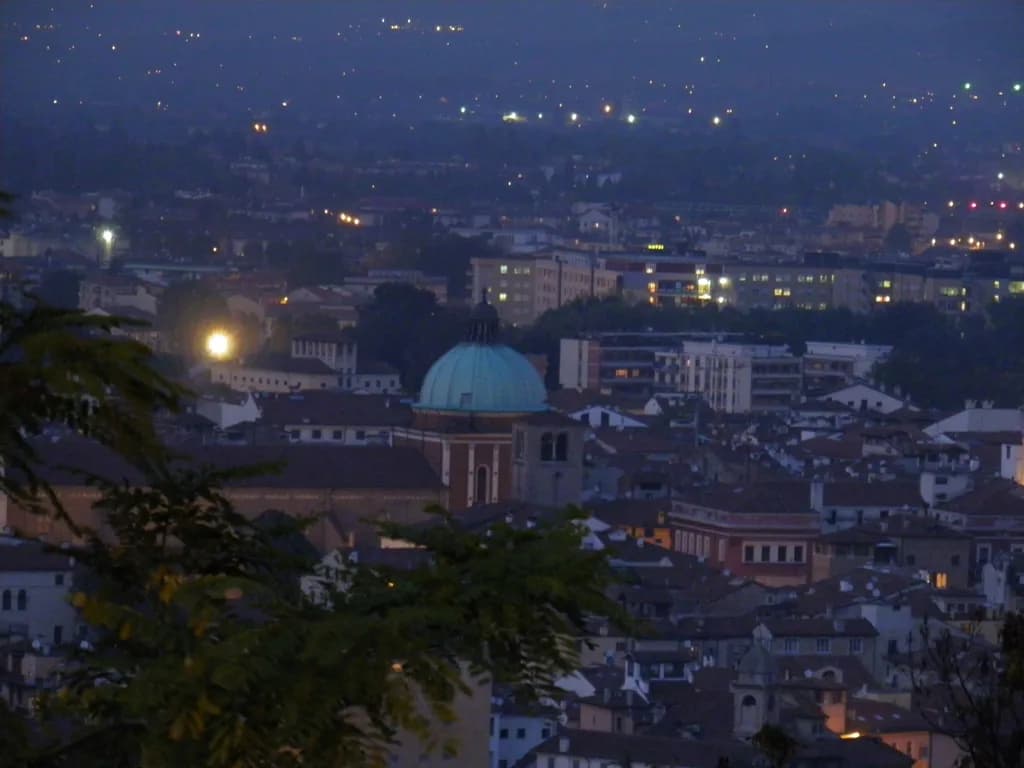
The terrace in front of the sanctuary is the classic vantage point over Vicenza, and it is what turns the climb into a proper outing rather than a church visit alone. Look for the basilica in the city below and the line of hills beyond; third-party visitor descriptions also note views over the villas and countryside on the edge of town.
For a wider choice of elevated spots in the city, including terraces and squares that show Vicenza from a different angle, it is worth comparing this hill with the viewpoints closer to the centre. A short list helps you decide whether to repeat a climb or spread your viewing across the day.
The Sacred-Art Museum and Cultural Spaces
The Museo d'arte sacra di Monte Berico sits by the sanctuary and holds sacred art that explains the shrine's long devotional history, while the Biblioteca Berica and the Schola Poliphonica round out the site's cultural side. Third-party visitor sources report that general admission to the sanctuary is free, but no source confirms a single shared ticket covering the museum as well, and no reliable figure for museum entry appears here. Check each separately before you plan around it.
Whether the museum earns its place in your day depends on your appetite for liturgical objects and local church history; it is a natural add-on for anyone already interested in the basilica's art, and skippable if you came mainly for the view. Confirm the opening arrangements and any charge on the official site, since the museum keeps its own rhythm apart from the church.
Practical Checks Before You Go
Opening times, Mass schedules and any special closures should come from the sanctuary's own site, which publishes orari alongside its events and contact pages. Aggregator listings are useful for orientation but can lag behind seasonal changes, especially around the switch between summer and winter time.
For anything that matters to your trip, such as bringing a group, asking about museum access or confirming a celebration, the sanctuary lists a telephone number and email address and invites enquiries. A quick call removes the guesswork that a directory listing cannot.
Best Time of Day and Season
Mornings tend to be cooler for the climb and calmer inside the church, while late afternoon rewards you with softer light over the city and the chance to linger on the terrace. Both are suggestions, not rules, and the sanctuary's own liturgical calendar takes precedence if you want to attend a service rather than simply look around.
Summer heat makes the covered portico the kinder ascent, and winter daylight is short enough that an afternoon visit can end in dusk, which is atmospheric but limits the view. Rain does not close the church, and the arcades give you a sheltered route, so wet weather mostly affects the stairway option.
Nearby: Villa La Rotonda and the Hill's Other Sights
Villa La Rotonda, Palladio's celebrated villa, stands about 1.25 km east of the sanctuary, which makes it a natural second stop on the same half-day. The Museo del Risorgimento e della Resistenza is nearby, and the Giardino della Vittoria, a public park, sits beside the church.
If you have time to go beyond the obvious, the city's less-visited corners make a good counterweight to a hilltop landmark. Build a loop that mixes one headline sight with a couple of quieter stops, and the day feels less like a checklist. For wider planning, see Hidden Gems in Vicenza.
Back in the centre, the Basilica Palladiana on Piazza dei Signori is the obvious counterpart to Monte Berico: a secular monument to the same city, best paired with a coffee in the square. It also gives you a central reference point for planning the walk back down.
Visiting Respectfully
This is an active shrine with a resident community, so dress modestly, keep phone calls outside, and avoid wandering into areas set aside for prayer while a service is running. If a celebration is under way, wait or return later rather than treating the nave as a thoroughfare.
Families should think about the climb more than the church itself: the arcades make a manageable ascent, and the terrace offers space to pause. Plan the descent before everyone is tired, and treat the visit as a short, calm outing rather than a full afternoon.
Plan Your Visit
Monte Berico rewards a bit of preparation: pick your route up, check the day's Mass times on the sanctuary's own site, and leave room for the terrace and the museum. The official pages are the reliable source for schedules and contact, while map and route sources help with orientation and the two approaches.
For a wider look at what else the city offers, from the Basilica Palladiana to quieter corners, it helps to see the sanctuary as one stop in a day built around walking. For wider planning, see Basilica Palladiana Vicenza Guide.
Frequently Asked Questions
Is the Santuario di Monte Berico free to visit?
Third-party visitor sources report that general admission to the sanctuary is free, but this is not confirmed as a current official policy, and it does not necessarily cover the sacred-art museum. Check the sanctuary's own website or ask on arrival before planning around it.
How do you walk up to Monte Berico from Vicenza?
There are two pedestrian routes: the covered portico arcades, which give shelter and a gentler rhythm, and the stairway from the Arco delle Scalette. Route notes attribute a figure of 192 steps to the stairway. Both climb a hill, so allow generous time and wear comfortable shoes.
What are the sanctuary and Mass times, and do they change in summer and winter?
The sanctuary says celebration times differ between winter and summer time, so printed or saved timetables can mislead across seasons. Check the official site's orari page close to your visit, or call the number listed there for confirmation.
What else is near Monte Berico in Vicenza?
Villa La Rotonda is roughly 1.25 km east of the sanctuary, the Museo del Risorgimento e della Resistenza is nearby, and the Giardino della Vittoria park sits beside the church. The Basilica Palladiana in the centre makes a natural pairing for the rest of the day.
Can you visit on a rainy day?
Yes, the church stays open for worship, and the covered portico arcades give you a sheltered way up. The open stairway from the Arco delle Scalette is less appealing in rain, and the terrace view is best saved for clearer weather.
Is the Museo d'arte sacra di Monte Berico worth visiting?
It suits anyone interested in sacred art and the shrine's history, and is easy to skip if you came mainly for the basilica and the view. Confirm its opening arrangements and whether there is an entry charge on the official site, since it operates separately from the church.
Sources
- Home - Santuario Santa Maria di Monte Berico
- Santuario della Madonna di Monte Berico, Vicenza, Italy - Reviews, Ratings, Tips and Why You Should Go – Wanderlog
- Santuario della Madonna di Monte Berico Map - Church - Vicenza, Veneto, Italy
- Santuario di Monte Berico – διαδρομές για πεζοπορία & ποδηλασία | komoot
Continue exploring
More guides you'll find useful