Where to Stay in Trapani: Old Town, Market Square or Seafront
Compare Trapani's old town, fish market square and Tramontana seafront for atmosphere, walkability, night noise and budget before you choose a base.
On this page
Trapani occupies a narrow, sickle-shaped peninsula between two seas, with the historic centre clustered on the tip, so most of what you walk to sits within a compact area rather than spread across a large city. That shape is good news for travellers without a car, but it also means the choice of base is less about distance and more about atmosphere. The old town, the fish market square and the sea-facing strip along the Tramontana walls each deliver a different version of the same small city.
This comparison treats each area as a trade-off: evening life and convenience in the centre against quieter sea air on the edge, and the pull of walking distance against the modest character of the city's own beaches. Figures and hours that change, such as museum admission or tower access, should be confirmed with the site or the city's tourism office rather than assumed from older write-ups.
How to Read Trapani's Geography
Picture the city as a strip of land squeezed between two seas, with the historic core at the tip and the rest of town trailing back toward the salt pans and the airport. The compact centre makes a central room practical for short stays, since several key sights and the evening passeggiata sit within a short walk of each other. Travellers relying on foot should plan around this core first and treat anything outside it as a short excursion rather than a stroll.
Orientation is simpler than in most Sicilian cities because the main spine, the Corso Vittorio Emanuele, threads through the old town and gives you an easy line to follow when you arrive. Lanes spilling off it toward the fish market, the walls and the promenade at the western end make the area feel dense but legible. Our companion guide on getting to and around Trapani: transport covers arrival by air, bus and boat if you are still deciding how to reach the city.
If you want to explore the smaller corners rather than just the headline sights, the wider hidden gems in Trapani guide is a useful companion for planning which side of the peninsula to prioritise for a day on foot.
Historic Centre Around Corso Vittorio Emanuele
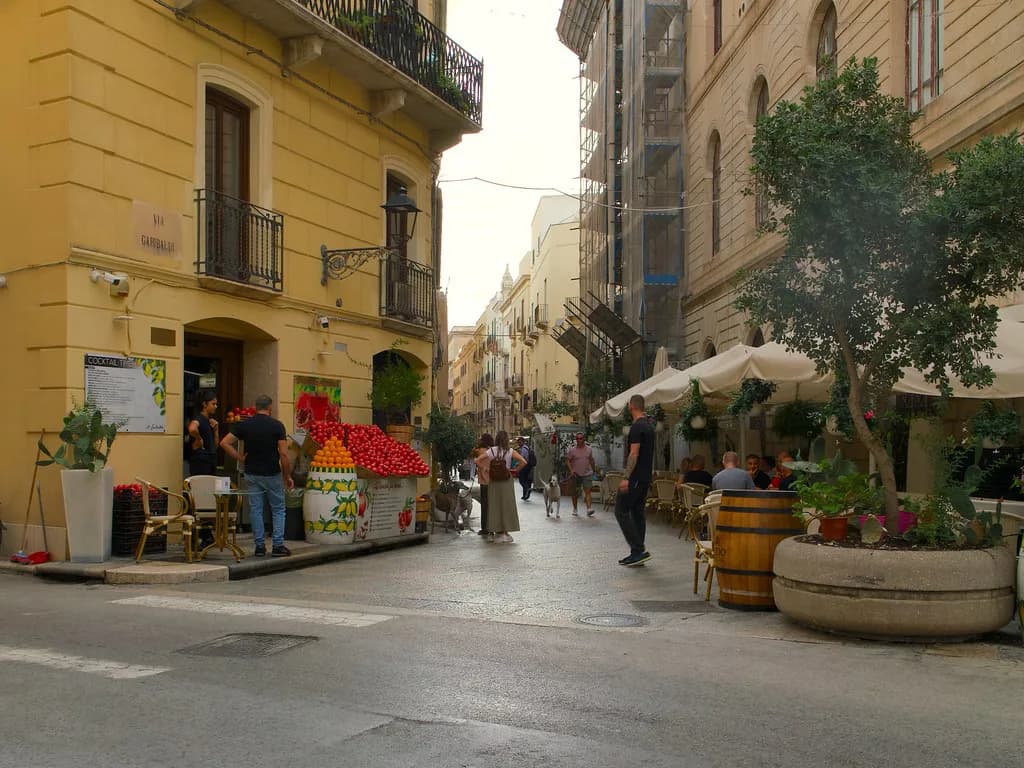
The old town is the natural base for a first visit to Trapani because the city's daily life, shops, churches and evening street scene all run through it. Rather than a single museum block, the appeal is the strolling itself: pastel palazzi, narrow traffic-free lanes and a lively evening crowd. The Cattedrale di San Lorenzo sits on the main street and, according to a travel account, is free to enter, which makes it an easy first stop while you orient yourself.
Staying here suits anyone who wants to step out of the door into the evening atmosphere and eat without planning transport. The trade-off is buzz: the same central lanes that feel sociable at aperitivo hour can stay animated well into the night, though how much you notice depends on the exact street and the time of year. Travellers who sleep lightly may prefer a side lane or a room set back from the busiest stretch.
The centre is also where you will find the most straightforward walking plan, since the main sights cluster close enough to cover on foot in an afternoon. The historic centre self-guided walk is a good way to map the streets before you commit to a base, and it doubles as a practical introduction on arrival day.
Piazza Mercato del Pesce and the Market Square Area
Piazza Mercato del Pesce changed from a working fish market into a scenic square with arcades arranged around a fountain, and its current form dates to an 1874 project by the Venetian architect Giambattista Talotti, according to local tourism writing on the square. Today it serves as a stage for cultural displays and events rather than only as a market, which makes it a pleasant backdrop for a walk rather than a sight you tick off.
As a base, the market square sits between the heart of the old town and the sea, so you get a short walk to the walls and a short walk back to restaurants and bars. The trade-off is that it feels more like everyday Trapani than a polished hotel quarter. One travel account suggests the nearby fish market is livelier early in the morning, but treat any specific timing as anecdotal and check locally before you plan a dawn visit.
That everyday character is part of the appeal for slow travellers who would rather wake up near a working harbour than in a hotel corridor. Because the square is the setting for events, expect occasional activity rather than guaranteed quiet, and ask before booking if a festival or evening event is scheduled during your stay.
Mura di Tramontana and Porta Oscura Edge
The sea-facing edge along the Mura di Tramontana is the most scenic stretch of the city for a morning or evening walk, and the surviving walls run for roughly a kilometre along the water. The city's defensive story is visible here, including the medieval Porta Oscura, which remains beneath its clock tower, and the Renaissance-era walls strengthened with bastions to guard against pirate raids. Staying near this strip puts that view on your doorstep.
There is a small city beach directly below the Tramontana walls, so you can swim without leaving the old town, though the travel account behind that detail is plainly unglamorous about it: convenient for a quick dip rather than a destination in itself. Families and anyone expecting a long sandy shoreline should weigh a short drive out of town instead.
For nights, this edge usually feels calmer than the main Corso, since the strip is more residential in feel and the sea draws people out rather than into bars. Treat that as a general observation about the layout rather than a promise, and check whether your specific street faces a busy evening route. Rooms with a sea-facing balcony here trade a little convenience for fresh air and views.
Torre di Ligny End: Sunsets and the Far-West Feel
The Torre di Ligny anchors the far western tip of the peninsula, a massive quadrangular tower begun in 1671 under the viceroy whose name it bears and designed to guard the coast from Turkish pirates. Its position makes it the natural end point of an evening walk, and the promenade leading to it is where many people stop for sunset.
As a base, the Ligny end feels like the outermost edge of the old town, which means quieter evenings but also a longer walk back to the main dining streets. The rocky coves here are popular for a swim in the warmer months, and travel writing places them near the tower without promising facilities. If you plan to visit the tower itself, confirm current access and any museum arrangements on site, since published details can change.
Travellers who value a sunset view over proximity to restaurants will find this the most atmospheric corner to stay, provided they are happy walking. Those with early ferry departures or heavy luggage may prefer somewhere closer to the middle of the old town.
Free Versus Ticketed: What Costs Money
Trapani is generous with free public space: the fish market square, the Tramontana walls and walkways, the promenade and the city coves cost nothing to enjoy, and a self-guided stroll covers a lot of ground. Paid visits begin with the museums and the sanctuary complex, which are separate from the outdoor sights. Keeping that split in mind makes it easier to plan a budget-friendly day around one paid stop.
The Museo Regionale Agostino Pepoli occupies a former Carmelite convent beside the Sanctuary of the Annunciation and holds collections spanning archaeology, painting and Trapani's famous coral craftsmanship. Sources publishing its opening hours and ticket prices may be out of date, so confirm current hours and admission directly with the museum before you go.
The Sanctuary of Maria Santissima Annunziata, known locally as the Madonna of Trapani, houses a marble Madonna and Child dated to the mid-fourteenth century and a treasury of ex-votos. It sits in a complex shared with the museum, but check whether the church and the collections are separately ticketed rather than assuming one entry covers everything.
Outdoor walkways along the walls are free to use, while interiors and collections may charge or keep different hours. Treat any published fee as provisional and ask at the door or check the official site.
Beaches: City Coves Versus San Giuliano
Trapani's in-town beaches are convenient rather than spectacular: the cove near the former fish market square, the beach below Porta Ossuna and the rocky stretch at Torre di Ligny are all close to the centre but lack full bathing facilities. That makes them good for a quick swim between sights, not for a full beach day. Travellers whose holiday revolves around the sea should weigh staying near San Giuliano instead.
San Giuliano is described as the longest and most developed city beach, with a long sandy strip and nearby restaurants, and several sources put it outside the historic centre rather than within strolling distance of the old town. If beach comfort matters more than evening street life, a base nearer San Giuliano makes sense, even though you then need transport for the historic centre.
Walkability Realities
If you stay in the historic centre, most of the headline sights, the fish market square, the walls and the promenade sit within an easy walking radius of each other. That makes a car unnecessary for a short city break and often more of a nuisance, given the narrow lanes. A self-guided walk through the historic centre is the most efficient way to cover the core on foot.
A car starts to pay off for beaches outside town, for the salt pans and for day trips inland to Erice or Segesta. Even so, note that reaching the Nubia salt museum on foot along the main road is described as unpleasant, and a travel account recommends driving there instead. If you are weighing a day trip, our guide to day trips from Trapani: Erice, Segesta and Mozia covers the logistics. For wider planning, see Day Trips from Trapani.
Boats to the Egadi Islands leave from the harbour, which makes a central or harbour-side base convenient for an early crossing to Favignana or Levanzo. Pick a room near the port if island hopping is the priority, and keep luggage light for the walk to the boarding point.
Budget Without Invented Numbers
Room rates vary with the season and the exact street, so this guide avoids quoting figures and instead explains what drives cost. Central addresses close to the Corso tend to command a premium for convenience, while rooms at the edge of the old town or near San Giuliano may offer more space for the same money. The quieter the street, the less you usually pay for the view.
Food and drink costs depend more on where you eat than where you sleep, since the old town concentrates restaurants and bars within walking distance. Sicilian dining rhythms matter here: many places close between lunch and an evening reopening, and locals tend to eat later, so an aperitivo often fills the gap. That pattern spreads spending across the evening rather than concentrating it at dinner.
To keep costs predictable, book a room with breakfast if you like an early start, and plan one paid museum visit rather than several. Free walks along the walls and around the fish market square supply plenty of atmosphere without an entry fee.
Night Noise and Quiet: How to Decide
Noise in Trapani is less about defined nightlife districts and more about which street you are on and when the evening crowd passes through. The central Corso and the lanes around the fish market square see the most foot traffic after aperitivo hour, while the sea-facing edge and the Ligny end tend to be calmer after dark. Rather than ranking areas, ask your host which side of the building your room faces.
Practical steps help more than generalisations: request a room set back from the street, check whether a bar or restaurant sits below, and confirm whether the building has double glazing. If you are sensitive to sound, aim for the edge of the old town or the western end near the tower. If you want the buzz, stay central and accept the trade-off.
Matching the Area to Your Trip
First-time visitors who want to walk everywhere, eat out and see the main sights should start with the historic centre, accepting a little evening noise in exchange for convenience. Slow travellers and couples who value sunsets and sea air may prefer the Tramontana edge or the Torre di Ligny end, where the walk into town is short but the evenings are calmer.
Families with young children often do better near San Giuliano for easier beach days, planning a short drive into the centre. Ferry-hoppers heading to the Egadi Islands should favour a harbour-side room so an early crossing does not mean a long walk with bags. The guide to the Egadi Islands day trip from Trapani: Favignana and Levanzo explains what to expect on the water.
Anyone with limited mobility should note that the walls and some lanes involve steps and uneven surfaces; confirm access with your accommodation rather than relying on general descriptions. The city is compact, but not every street is level.
Practical Orientation: Dawn, Aperitivo and Dinner
Trapani's day has a rhythm worth planning around: the streets fill for a late-afternoon stroll, and aperitivo stretches into the evening before dinner. Restaurants commonly close between lunch and a later reopening, so plan a light afternoon rather than expecting a full meal at four. A travel account describes the city coming alive in the evening, which is when the Corso feels at its best.
For a first evening, walk the walls at sunset, then head toward the centre for aperitivo and a late dinner, trying couscous alla Trapanese if you want a local dish. Ask your host about current restaurant hours, since they shift with the season.
Choosing Your Trapani Base
The simplest way to choose is to decide what you want from the evening: street life and easy dining in the old town, a quiet sea-facing walk near the Tramontana walls, or sunsets at the Ligny end. None of these is a single best answer; each trades a little convenience for a different atmosphere.
If you cannot decide, consider splitting a short stay between a central room and one on the seaward edge, since the city is compact enough to make a two-base strategy practical. Check current museum and tower details directly before you go, and confirm transport arrangements using the Getting to and around Trapani: transport guide.
Frequently Asked Questions
Which part of Trapani is best for a first visit?
The historic centre around the Corso Vittorio Emanuele is the easiest first base, because shops, churches, restaurants and the evening stroll are all within walking distance. It is livelier at night than the sea edge, so light sleepers should ask for a room set back from the street.
Can you swim in Trapani's historic centre?
Yes, there are small city coves near the fish market square, below Porta Ossuna and around Torre di Ligny. They are convenient but modest, with few facilities, so travellers wanting a long beach day should consider San Giuliano outside the old town.
Is Trapani old town walkable?
The old town is compact and best explored on foot, with the main sights, the fish market square and the walls close together. Once you leave the centre for beaches, salt pans or day trips, a car or public transport becomes more useful.
Where should you stay for the ferry to Favignana?
A room near the harbour keeps the walk to the ferry boarding area short, which helps on an early crossing to the Egadi Islands. Confirm sailing times with the operator, since schedules change by season.
Is the fish market square worth visiting if you are not buying fish?
Yes, the square is a pleasant place to walk, with its arcades and fountain, and it hosts cultural events. It is free public space rather than a ticketed sight, so it fits easily into an evening stroll.
Sources
- Services - Fish market square - Trapani
- Services - Fortifications, City Doors, Walls and Bastions - Trapani
- Attractions and Places To See around Riserva naturale integrale Saline di Trapani e Paceco - Top 6 | Komoot
- Trapani Beaches: The Most Beautiful in the City and the Wildest
- Trapani, Sicily: 12 best things to do | Trip Unlocked
- Most Holy Mary of Trapani – Santuari e Miracoli
- Services - Tower of Ligny - Trapani
- Services - The Agostino Pepoli Regional Museum - Trapani
Continue exploring
More guides you'll find useful