Free Things to Do in San Gimignano: Lanes, Churches and Views
See San Gimignano without spending a euro: free lanes, viewpoints and church visits, plus clear notes on which sights need a paid museum ticket.
On this page
San Gimignano has no entry gate and no town ticket: you walk in through a medieval gate and the lanes, squares and skyline are yours. That makes it an unusually generous Tuscan stop for a tight budget, provided you know which doors are open to everyone and which lead to a ticket desk. The famous climb up the Torre Grossa, for instance, runs to 218 steps and belongs to the paid museum circuit, not to the free stroll.
This guide sticks to what you can do without paying and is honest about the rest. It treats the town's two best-known churches as free-standing places of worship rather than museum sites, which means access can depend on parish timetables and services, so check locally before you count on them. It also flags the gelato counters, wine tastings and guided tours that look casual but are paid.
Start With the Gates and the Two Main Squares
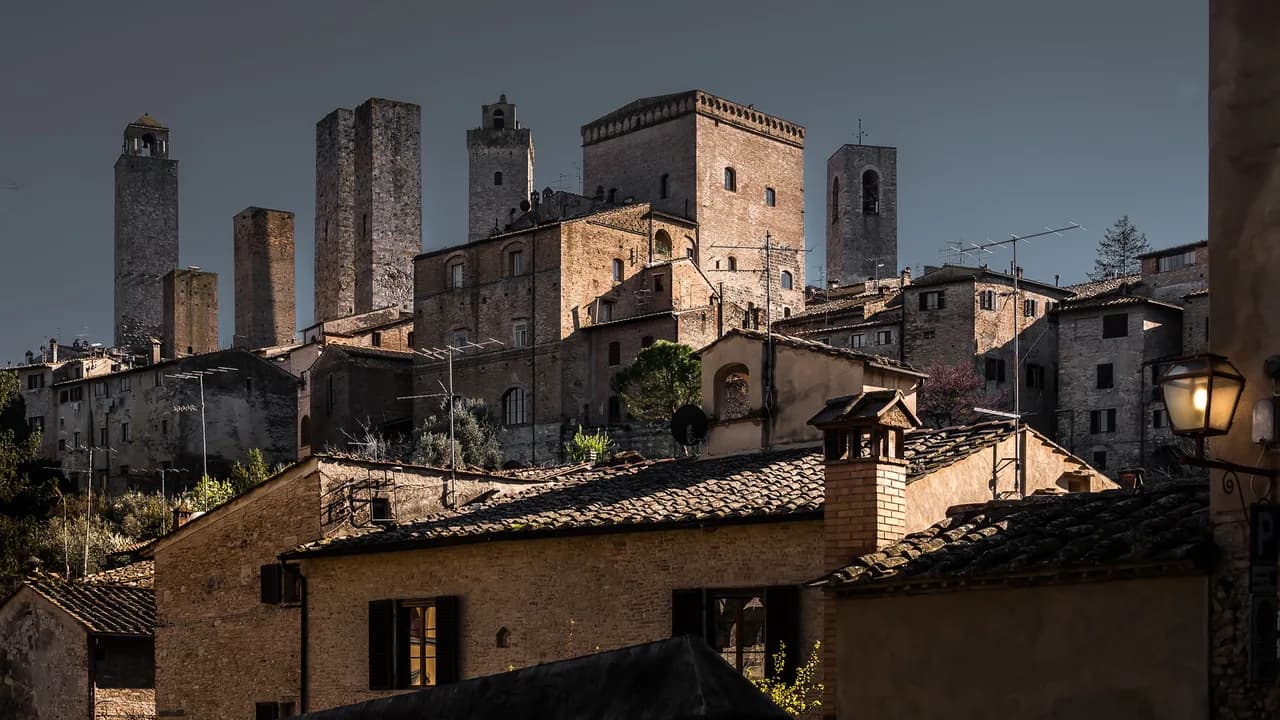
Most visitors arrive through Porta San Giovanni at the southern end of town, where the bus stop and outer car parks sit, and walk uphill along Via San Giovanni. That street funnels you past shops and cafes into Piazza della Cisterna, named for the old well at its centre, and then around the corner into Piazza del Duomo. The route costs nothing and delivers the town's signature ensemble of towers and stone facades in twenty minutes or so.
The catch is company. Blog accounts repeatedly note that the main street and the two principal piazzas absorb nearly all of the foot traffic, so the free experience improves sharply the moment you step sideways. Take a side alley off Piazza della Cisterna or Piazza del Duomo, and the same medieval fabric continues with far fewer people and no admission anywhere.
For a structured route through those lanes and the quieter edges of the centre, follow a self-guided walk that strings the gates, squares and wall views together in one continuous loop. It keeps you oriented without a guide's fee and lets you decide where to linger.
Free Viewpoints: the Rocca and the Edges of Town
The Rocca di Montestaffoli, the ruined fourteenth-century fortress above town, is a public park and one of the best free vantage points in San Gimignano. Olive trees give shade, the walls give you the classic view back over the towers and the Tuscan hills, and there is no gate to pass. It also holds the wine experience centre, which is a separate paid proposition, so enjoy the grounds without feeling obliged to buy anything.
Other free sightlines come from the quiet lanes: several authors describe a panorama point near the walls and unobstructed countryside views where the streets open up, such as Via Bonda. These spots cost nothing and often reward you more than a paid terrace. If you want to plan around light and crowds, our guide to San Gimignano viewpoints maps the free angles against the ticketed ones.
The one view you cannot get free is from the top of Torre Grossa. The tower opens with the Civic Museum and Pinacoteca on a combined ticket, and access to it runs through the museum galleries, so budget separately if the 54-metre panorama matters to you.
Churches You Can Walk Into
The Church of Sant'Agostino, in the north-western part of town near Porta San Matteo, is the second-largest church in San Gimignano and holds Benozzo Gozzoli's fresco cycle on the life of Saint Augustine, painted between 1463 and 1467. It is a working church rather than a museum, so treat entry as a visit to a place of worship and check the door and any posted restrictions on the day. The reward is major Renaissance art without a turnstile.
The smaller Church of San Francesco and the lanes around it belong to the same free-walking fabric of the town, and one Tuscany-based writer singles out San Lorenzo in Ponte as a church that is almost always empty and holds recovered frescoes. Neither point should be read as a promise that doors are open at every hour: parishes set their own access, so confirm before making a special trip.
Do not confuse these visits with the Collegiata di Santa Maria Assunta on Piazza del Duomo, the town's main church and part of the separate San Gimignano Pass circuit, with its own seasonal hours and winter closure periods. Its interior and sacred art museum are managed as a ticketed site, so plan it as a paid stop rather than a free one.
Walk the Outside of the Walls
You cannot stroll along the top of the ramparts, but you can walk the outside of the medieval walls, a route that connects Porta delle Fonti to Porta Quercecchio and gives you the town from below. It costs nothing, takes you away from the shop-lined spine, and shows how abruptly the buildings stop and the vineyards begin.
The circuit is a good low-crowd option in the middle of the day, when the centre is at its busiest, and it works well as a loop back to wherever you parked. The town publishes live parking information and tariffs through its own portal, so check there for lot locations and current rates rather than trusting older figures.
The town is a UNESCO World Heritage site precisely because of this medieval street plan and walled outline, so the free walking is not a consolation prize; it is the main event. Slow itineraries here tend to beat tick-list ones.
What Is Ticketed, and What a Ticket Covers
The paid core is the Palazzo Comunale complex: the Civic Museum, the Pinacoteca picture gallery and the Torre Grossa climb share one admission, with different prices for adults and reduced categories. The museum operator publishes current hours, rates and closing dates, and those figures are the ones to trust rather than older trip reports.
A separate San Gimignano Pass bundles several complexes, including the Civic Museums, the Santa Chiara complex, San Lorenzo in Ponte and the Collegiata with its sacred art museum, and it carries a validity period of several days from issue. It does not make every site in town free, and the operator notes a window in early 2027 when the pass will not be sold, so check the dates before you build a plan around it.
Smaller attractions follow their own rules: the San Gimignano 1300 model museum charges admission, while the miniature town display near the tower is described in one blog as free with donations welcome. Ticket prices quoted in blogs and older guides drift, so confirm at the desk or on the operator's site before you commit your budget.
If you only have a day, our San Gimignano one day itinerary shows how to sequence a paid interior or tower climb alongside the free walking so the ticket adds to the day instead of eating it.
A Free Half-Day on Foot
Begin early at Porta San Giovanni, walk up Via San Giovanni before the shops fully open, and cross Piazza della Cisterna to Piazza del Duomo while the light is still soft. Continue north to Sant'Agostino for the Gozzoli frescoes, then double back through side lanes to the Rocca di Montestaffoli for the view. The whole loop costs nothing and keeps you ahead of the midday crowds.
Finish with the exterior wall walk or a bench on the Rocca, then spend only where it matters to you: a coffee, a glass of Vernaccia, or a tower ticket. One visitor account notes that crowds peak around the middle of the day, so an early or late start stretches the free hours.
If you are choosing when to come, our guide to the best time to visit San Gimignano weighs season, weather and crowd patterns so the free version of the town stays pleasant. Further visitor details appear in 8 Wonderful Things To Do In San Gimignano, Italy.
Free-Adjacent Pleasures That Are Actually Paid
The famous gelato counter on Piazza della Cisterna draws a queue for a reason, but it is a purchase, and so is every wine tasting in the enotecas and hill wineries around town. Cooking classes, Vespa and tuk-tuk tours, truffle hunts and day trips to Siena, Volterra or Florence are all organised, priced activities, usually best booked in advance. None of them belong in a free-day plan, though one scoop or one glass can be a reasonable splurge.
Tastings of Vernaccia di San Gimignano, the local white, range from a glass at a bar to a structured winery visit with food, and organised experiences elsewhere quote per-person rates that change by season. Ask for the current price at the counter or check the operator page rather than relying on figures in older articles.
Practical Notes for a No-Ticket Day
San Gimignano has no train station, so most travellers arrive by bus, often changing at Poggibonsi, or by car and park outside the walls. Timetables and parking arrangements change, so confirm the current bus connection and lot details on the operator or town site on the day you travel.
The town is compact and walkable, with steep gradients and cobbles, so a free day here is really a walking day. Carry water, wear proper shoes, and keep small change for a coffee or a bus rather than for entry fees you will not need.
Plan Your Free Day
San Gimignano rewards the traveller who spends time rather than money: the gates, the lanes, the Rocca and the churches cost nothing, and the skyline is visible from the street. Decide in advance whether a tower climb or a museum interior earns your budget, then let the rest of the day be walking.
Check current opening times for the churches, the museum circuit and the pass directly with the operators before you go, since hours and sales windows shift by season. With those confirmed, the free half of San Gimignano is ready whenever you are.
Frequently Asked Questions
Is San Gimignano free to visit?
Yes. There is no entry ticket for the town or its historic centre. You can walk the lanes, cross both main squares, visit the Rocca park and look at the towers from outside without paying. Individual museums, the tower climb, the Collegiata interior and organised tours are separate paid visits.
Which churches in San Gimignano are free to enter?
Sant'Agostino and San Francesco are working churches rather than ticketed museums, and San Lorenzo in Ponte is often described as quiet and open. Access depends on parish timetables and services, so check the door or ask locally. The Collegiata on Piazza del Duomo is managed as a paid site with its own hours and closures.
Can you see the towers without paying?
You can see all the standing towers from the streets, the squares and the Rocca, and photograph the skyline from several lanes without a ticket. Climbing Torre Grossa is the paid part: access runs through the Civic Museum and Pinacoteca on a combined ticket bought from the museum operator.
What does the San Gimignano Pass include?
The pass bundles the Civic Museums, including the Palazzo Comunale, Pinacoteca and Torre Grossa, with the Santa Chiara complex, San Lorenzo in Ponte and the Collegiata with its sacred art museum, and stays valid for several days from issue. It does not cover every attraction in town, and the operator lists a period in early 2027 when it is not sold.
How long do you need for the free sights?
A half day on foot covers the gates, both main squares, the Rocca viewpoint and a church or two at an easy pace. Add the exterior wall walk or a long lunch and you can fill a full day without a single ticket. Starting early helps, because the main street and squares get busy by midday.
Are the viewpoints in San Gimignano free?
The Rocca di Montestaffoli park and the various lane viewpoints are free and open to walkers. The panorama from the top of Torre Grossa is not: it comes with the museum ticket. If your budget is tight, choose the Rocca and the wall-side lanes and skip the climb.
Sources
- Comune di San Gimignano
- Is it worth visiting San Gimignano? A guide to this Tuscan gem - San Gimignano Experience
- Best Things to Do in San Gimignano (Tips from Two Visits)
- 10 Things to Do in San Gimignano - Luxe Adventure Traveler
- 8 Wonderful Things To Do In San Gimignano, Italy
- Civic Museum and Town Hall - Fondazione Musei Senesi
- Home - Musei San Gimignano
- THINGS TO DO IN SAN GIMIGNANO – Tried & Tested! – The Tuscan Mom
- Insider's Guide to San Gimignano | Tuscany’s Medieval Manhattan
Continue exploring
More guides you'll find useful