San Gimignano in One Day: A Realistic Walking Itinerary
A slow, practical San Gimignano day plan: early tower climb, frescoed church, quiet lanes and lunch one street off the main squares, with crowd timing.
On this page
San Gimignano works well as a single day because the historic centre is small enough to cross on foot in minutes. The planning problem is crowd timing: coach groups tend to arrive mid-morning, so the first hours of the day are when the main squares are most usable. This itinerary is a suggestion, not an official schedule, built around one firm decision: see the tower and civic rooms before the day-trippers land.
Everything below sits inside the walls, so you can reorder stops without adding transport. Check your return connection before you set out, because the town empties in the late afternoon and a missed last bus is the easiest way for a good day to end badly.
Why One Day Is the Right Dose
The historic centre is short and narrow, with the two main squares almost touching and the gates within a few minutes' walk of each other. Distance is never the constraint; what limits your day is how many ticketed interiors you commit to and how well you avoid the busiest hours. One day gives you the tower, one great church interior, a proper lunch and a quiet late afternoon without rushing.
If you have a second day, spend it on the surrounding countryside rather than more town sights. Staying overnight changes the character of the visit more than adding hours does, because evening and early morning belong to a much thinner crowd. Our guide to hidden gems in San Gimignano covers the corners that reward that extra time.
Getting There and Back: Bus, Car or Tour
Without a car, the usual approach from Florence is a bus with a change at Poggibonsi before continuing to San Gimignano. A third-party travel blog reports roughly one and a half to two hours and a fare in the region of nine to ten euros each way, but treat those as reported rather than current: check timetables and fares with the bus operator before you commit. The transfer matters most on the way home, so note the last practical return connection the same morning.
Driving gives you flexibility but not access: vehicles stay outside the walls, so you park near a gate and walk in. The same blog reports hourly parking charges of about one and a half to two euros, which is an order of magnitude rather than a confirmed rate. The Comune di San Gimignano publishes live parking availability, tariffs and season-ticket information, which is the page to check before a summer visit.
The town also operates a controlled-traffic zone in the historic centre with camera-monitored access, so never point a car at the gates on the assumption that you can drive to your hotel. Guided day tours from Florence combine San Gimignano with other Tuscan stops and remove the transport question entirely, at the cost of a fixed schedule and less freedom to linger.
Arrive Early: The First Hour Is Your Best Hour
Aim to be through Porta San Giovanni well before the morning coach wave, which the third-party guide places from around half past ten. The climb from the gate up Via San Giovanni is the classic first view of the towers, and at that hour you can stop in the middle of the street to look.
The early start also solves a practical problem: ticketed sites have limited capacity and single ticket desks, and the queue for the tower staircase builds through the morning. Collect your entry or pass as soon as the ticket office opens, then go straight up. If you are visiting in high summer, our guide to the best time to visit San Gimignano explains how heat and crowds shift across the seasons.
Stop 1: Piazza del Duomo and the Civic Complex
Start in Piazza del Duomo, where the Palazzo Comunale, the collegiate church and the tower crowd into one small space. This is the moment to decide how you are paying: a combined pass covering several civic and religious sites, or single entries for the two or three things you actually want. The third-party guide reports a combined ticket priced at fifteen euros for adults and twelve for children aged six to seventeen, valid two consecutive days, but that is a reported figure rather than confirmed current pricing, so check at the ticket office or on the official sites before budgeting.
For a single day, a combined pass only pays off if you intend to see the tower, the civic rooms and the collegiate church and still have appetite for the smaller museums. If your plan is a tower climb and one church interior, singles may suit you better. Read the ticket scope carefully: a combined pass does not mean every site in town is included.
Stop 2: Torre Grossa, Climb First or Save Your Legs
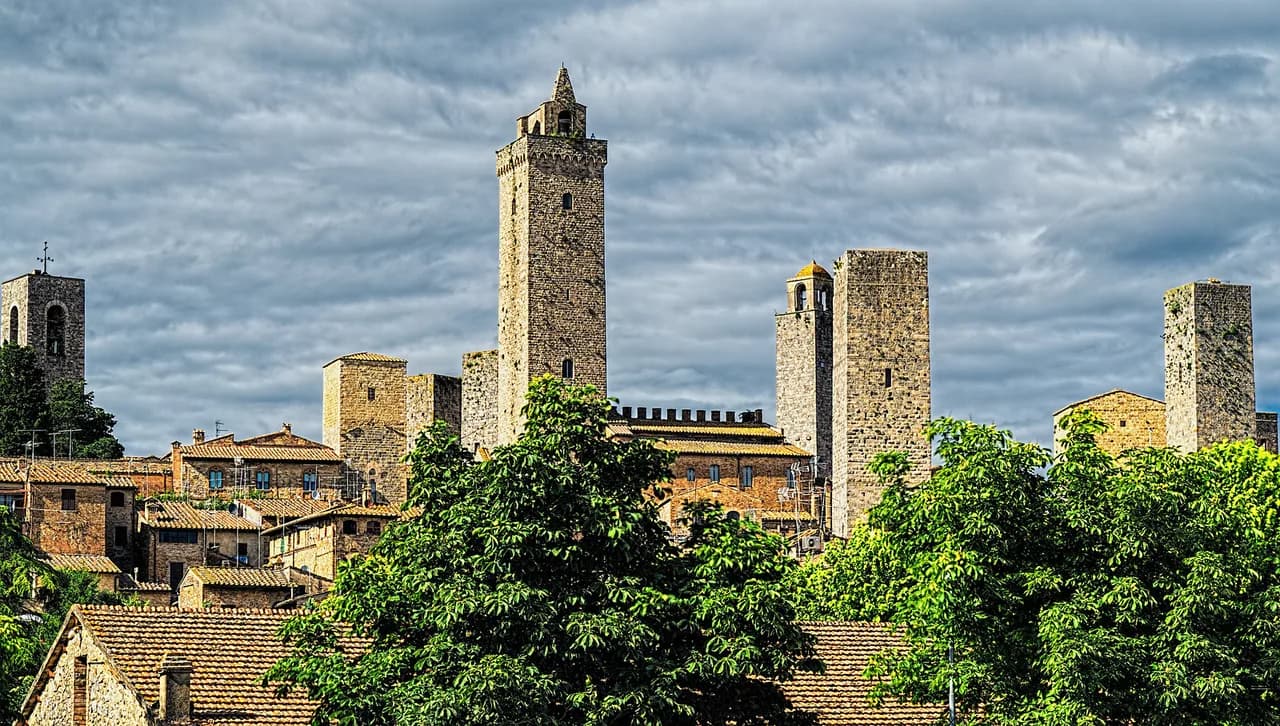
Torre Grossa is the tallest surviving tower in town and the climb most visitors remember. The third-party guide counts 218 steps to the top, a reported figure rather than an official one, but it conveys the effort: a steep, enclosed staircase with traffic in both directions. Go early for the view, cooler air and a shorter wait at the base.
The reward is a rooftop panorama over terracotta roofs, the remaining towers and the vineyards beyond the walls. Opening hours are seasonal and have been published differently over time, so confirm the current schedule at the ticket desk rather than relying on a blog, ours included. If you have knee trouble or limited time, this is the stop to trade against a longer lunch.
Stop 3: The Collegiate Church
The Collegiate Church of Santa Maria Assunta is the interior not to cut. Its plain Romanesque exterior gives away nothing about the frescoed walls inside, where Old and New Testament cycles face each other and the Santa Fina Chapel gathers sculpture and painting in one small space. Set aside real time here; this is where a rushed itinerary shows.
This is a paid interior and a separate visit from the free churches you will see later in the day, so do not assume one ticket covers both. Closing periods are published periodically and the third-party guide lists autumn and winter closures, but dates of that kind change, so check the parish or municipal website for your travel dates rather than trusting a secondary source.
Piazza della Cisterna: Well, Gelato and a First Glass
From the cathedral square, a short lane leads to Piazza della Cisterna, named for the old well at its centre and ringed by cafés. The gelato shop on this square draws a persistent queue and is widely rated among Italy's best, which means the line is longest in the middle of the day. Buy early or late, and choose the unusual seasonal flavours over the standard ones.
This is also the place for a first glass of Vernaccia di San Gimignano, the local white wine with its own protected designation. Sitting on the square with a glass is a pleasure in itself, but if you want to understand what you are drinking, our Vernaccia di San Gimignano background and food guide are worth reading before you order.
Lunch Strategy: One Street Off the Squares
Restaurants fronting the two main piazzas charge for the view, and the food is often aimed squarely at day visitors. Walk a street or two away and value improves immediately, with the same regional cooking at calmer prices. The third-party guide names Via Capassi and Via delle Romite among the quieter alternatives; treat the specific names as leads to check rather than recommendations to follow blindly.
Order what this part of Tuscany does well: wild boar in ragù or stewed, ribollita, pecorino from the surrounding hills and a glass of the local white. Our San Gimignano food guide goes deeper on dishes and wine, including how to read a menu that mixes tourist standards with genuinely local cooking.
Afternoon: Sant'Agostino and the Rocca
The afternoon belongs to the free half of the town. The Church of Sant'Agostino at the northern end holds a large fresco cycle in a space that most visitors never enter, and entry costs nothing. Hours are limited and split across the day, so check the posted times at the door rather than guessing.
On the western edge, the Rocca di Montestaffoli keeps the remains of the old fortress, an open area with an elevated view back over the towers and a small wine museum. Both are good places to slow down when the main squares are at their busiest. Our list of free things to do in San Gimignano puts these alongside other no-ticket stops.
Slow Walking: Via San Giovanni and Via San Matteo
The two spine streets, Via San Giovanni running south from the main gate and Via San Matteo heading north, are the town's best walking. Via San Giovanni is the commercial one, lined with shops and wine merchants; Via San Matteo is quieter and more residential in feel, ending at the northern gate. Walk both slowly and look into open doorways, because the courtyards behind them are often the most memorable thing you will see.
If you prefer a route with a little structure, A Self-Guided Walk Through San Gimignano stitches these lanes into a sequence you can follow without a guide. The point is not to tick off sights but to leave gaps between them, which is when the town stops feeling like a checklist.
Late Afternoon, Evening and the Return Bus
From late afternoon the coach groups leave and the streets empty, and the light on the stone turns warm. If you are staying the night, this is the hour to wander without a destination and to eat dinner away from the piazzas. For a broader picture of how the town changes across the year, the guide to the best time to visit is a useful companion.
If you are returning the same day, confirm the last workable connection to Poggibonsi or Florence before you sit down to dinner, and leave a margin for the walk to the gate. Missing that bus is the one mistake that turns a good day into an expensive one.
What to Drop When You Are Behind Schedule
Running late, cut in this order: the smaller civic museums, then the tower climb, then the fortress. Keep the collegiate church and one long walk through the lanes, because those two give you the town's character rather than its viewpoints. A late start is not a reason to sprint; the centre is small enough that a trimmed itinerary still feels complete.
If you only have half a day, choose either the tower and civic complex or the churches and lanes, not both. The official event and tourism site for the town is a sensible place to check what else is on during your dates before you finalise the cut list.
Plan Your Visit
Treat every price, hour and closure in this guide as something to verify rather than something fixed. The Comune di San Gimignano publishes parking, traffic-zone and tourist information, and ticket desks in town can confirm current opening times and what each ticket actually covers.
Build the day around the early hours, one committed interior, a lunch street off the squares and a slow afternoon, and San Gimignano will feel like more than a stop on a coach route. Start with the San Gimignano Attractions hub if you want to plan individual visits in more detail.
Frequently Asked Questions
How many hours do you need in San Gimignano?
A full day is enough to see the main squares, climb the tower, visit the collegiate church and walk both spine streets at an unhurried pace. Half a day works only if you choose between the civic complex and the churches. The walled centre is small, so the limit is your appetite for ticketed interiors rather than walking distance.
Is San Gimignano doable as a day trip from Florence without a car?
Yes. The usual route is a bus from Florence with a change at Poggibonsi, and the connection on the return leg is the part to check before you leave in the morning. Confirm current timetables and fares with the bus operator, since these change by season.
Should you climb Torre Grossa first thing in the morning?
Climbing early is the better choice: the staircase is narrow, queues build through the morning and the light on the roofs is clearer. Check the current opening time at the ticket desk, because hours vary by season and are published differently from year to year.
Is the combined pass worth it for a single day?
It depends on how many ticketed sites you actually plan to enter. If you want the tower, the civic rooms and the collegiate church, a combined ticket can make sense, but read what it covers rather than assuming every site in town is included. Ask at the ticket office for current scope and validity.
What should you skip if you only have half a day?
Drop the smaller museums first, then the tower climb, then the fortress. Keep one church interior and a walk along Via San Giovanni and Via San Matteo, which give you the town's character more efficiently than any viewpoint.
Is San Gimignano better as a day trip or an overnight stay?
A day trip covers the essentials. Staying overnight gives you the empty evening streets and early mornings, when the town is at its calmest, and is the better choice if you want slow walking rather than a checklist.
Sources
Continue exploring
More guides you'll find useful