Noto Centro Storico vs Collina: A Neighbourhoods Guide
Compare Noto's flat Baroque centro storico with the higher modern town on the collina, weighing walk time, parking and evening life before you book.
On this page
Noto asks you to make one geographic choice before you book anything: do you stay down among the pale Baroque palaces and cathedral, or up in the modern town that sits on the hill above? The lower historic centre is compact and easily absorbed on foot, making it the natural choice for travellers who want the architecture close at hand. The higher town, which locals know as the collina, serves everyday needs with a different rhythm. For wider planning, see Noto Attractions: Visitor Guides to 7 Sights.
A realistic visit to the historic centre focuses on a single walking axis. Enter through Porta Reale, the ceremonial gateway, then follow Corso Vittorio Emanuele past churches and civic squares. This route is straightforward and walkable, but it bears little resemblance to the modern town above. Understanding that split before you arrive saves the confusion of expecting one place to function like two.
Two Levels, One Clear Decision
Think of the historic centre as the stage and the higher town as backstage. The centro storico occupies lower, flatter ground where the ceremonial gateway and main axis begin. Above it, modern Noto spreads across the rise, with Piazza Marconi as the main reference point for that area. The two zones serve different functions and reward different priorities.
For a short break, the question is practical. Almost all the architecture and atmosphere visitors come for sits in the lower centre. The collina has its own daily life, but it is a working town rather than a tourist setting. If your main interest is Baroque architecture and evening strolls, the choice is straightforward. If you have a specific practical reason to be in the upper town, plan around that.
The Centro Storico: Flat, Walkable and Visually Coherent
What makes the historic centre easy is its clarity. You enter through Porta Reale and follow Corso Vittorio Emanuele eastward. The route passes churches, squares and palaces in sequence, so you see the town's headline architecture without navigating side streets. For a first visit, this one clear axis is the most efficient way to understand Noto. For wider planning, see Hidden Gems in Noto.
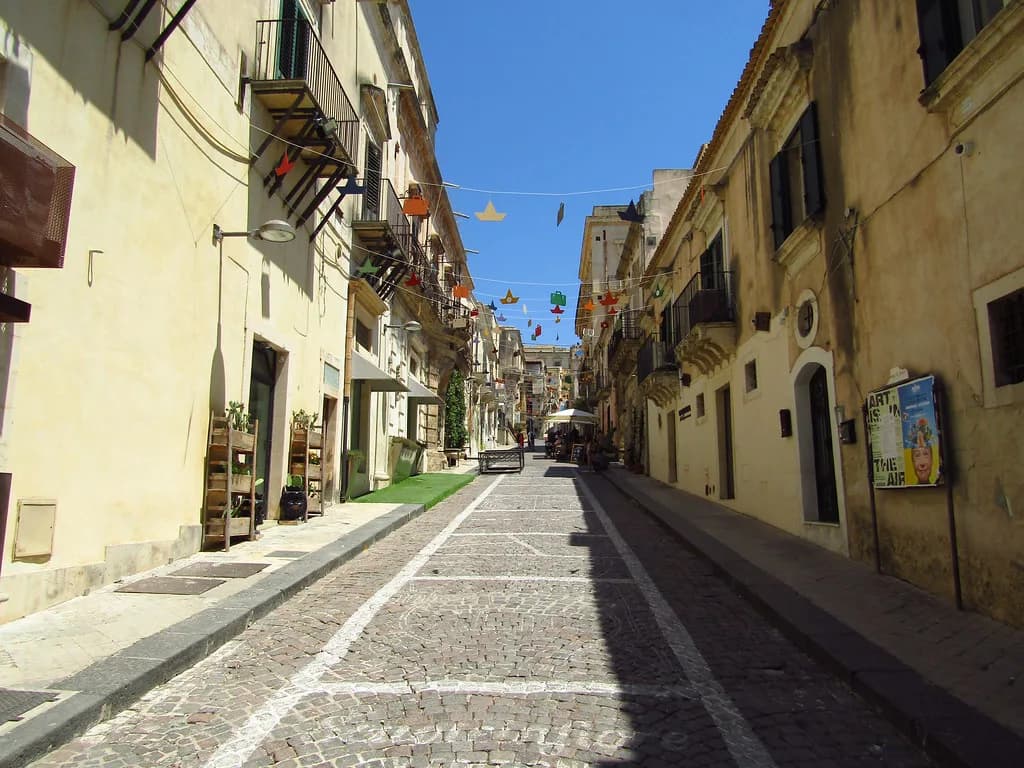
The ground is flat along this route, which makes it forgiving for slow walkers and for anyone carrying a day bag. The sequence is visual rather than strenuous: pale limestone facades, long sightlines and set pieces that unfold in order. If your interest is the townscape itself, you will spend nearly all your time here.
What You Will See Along the Corso
Past Porta Reale, the Church of San Francesco all'Immacolata rises from a broad staircase on Piazza Immacolata. Further along, Piazza Municipio opens out where the cathedral faces Palazzo Ducezio across the civic square. The cathedral's staircase is what gives the facade its force, so pause there rather than photographing from the street. Opposite, Palazzo Ducezio shows the town's administrative and ceremonial side. For wider planning, see Noto Attractions: Visitor Guides to 7 Sights.
A short detour to Via Nicolaci brings you to Palazzo Nicolaci, whose carved balconies and exaggerated supports make Sicilian Baroque feel playful rather than solemn. Beyond it, Santa Chiara offers an elevated terrace, the one viewpoint worth choosing if you only take one. The theatre district around San Domenico and the Teatro Tina di Lorenzo shows the town's civic culture beyond churches and palaces.
Treat ticketed interiors as separate decisions rather than assuming one ticket covers a street. Admission arrangements for Palazzo Nicolaci, Santa Chiara and the theatre should be confirmed with each site before you build a budget, since the Comune di Noto publishes current information and linked sources may be out of date. The churches and squares themselves are generally free to approach from the street.
How Much Time the Centro Storico Needs
As an editorial suggestion rather than official guidance, allow two to three hours to cover Porta Reale, Piazza Municipio, Via Nicolaci and one terrace view at a slow pace. Half a day lets you add a relaxed meal break and a slower walk. The centre is compact enough that architecture, food and the nearby coast can be combined without long transfers: this guide to Noto describes it as one of the easiest historic towns in eastern Sicily to enjoy in a single day.
The practical variable is heat and light rather than distance. Walking the same axis in the middle of a summer afternoon feels very different from doing it in the late afternoon. Build your day around comfortable hours instead of checking off stops. Our guide to the best time to visit Noto and avoid crowds goes deeper on seasonal pacing.
The Collina: Modern Noto on the Rise
The collina is the modern town spread across the hill above the historic centre. It has its own daily life, shops and services but is not an extension of the Baroque core. The best approach is to treat it as practical rather than scenic: go up if you need something specific, but do not expect a second historic quarter. Public transport and parking arrangements in either area should be confirmed before you go.
For accommodation, the choice depends on how you will spend your time. If your days revolve around walking the Corso and returning to the centre in the evening, staying low puts the architecture on your doorstep. If Noto is one stop on a driving tour of south-east Sicily, the collina may offer easier daily access by car. Neither is wrong; they suit different itineraries.
Moving Between the Two Levels
There is a gradient between the low centre and the upper town. This guide does not provide fixed times or distances, because those vary by route and by you. Instead, decide by fitness, luggage and heat. If you are carrying bags or visiting in high summer, arrange a lift or drive up rather than hauling suitcases. If you are lightly packed and walking in the morning, the climb is simply part of the day.
Timing matters more than gradient. Do the centre first and save any ascent for after you have finished, so you are not walking back down to resume sightseeing. Our Noto getting around and arriving guide covers arrival logistics in more depth.
Parking and Driving: Confirm Before You Go
Parking and driving rules in Noto are set locally and can change. The responsible approach is to check the Comune di Noto's official pages and ask your accommodation directly about parking zones and access restrictions. Do not assume you can drive to your door inside the old town; confirm access with your host in advance.
As a rule of thumb rather than a guarantee, the historic centre is usually harder for keeping a car, while the upper town is more forgiving for comings and goings. That trade-off, not price, is usually what decides the question for drivers.
Evenings in the Centre
The centro storico is at its most atmospheric after the main daytime crowds thin out, when the facades are lit and the main street fills for the evening passeggiata. One travel writer's description notes that the lit facades and gradual filling of the main street shift the town from sightseeing to evening atmosphere. This is the strongest practical argument for sleeping low: you can step out after dinner rather than driving down and hunting for a space.
If you can choose between a quick midday look and a visit that stretches into late afternoon and evening, the later option usually gives more. That does not mean the upper town is quiet at night, only that the centre is where Noto's evening character lives for visitors. Plan your longest walk for that window and keep the middle of the day for a slow lunch.
Food Rhythm in a Compact Town
Rather than chasing specific addresses, think in terms of rhythm. A late breakfast or mid-afternoon stop for something cold and sweet slots naturally between monuments. A light lunch fits before the hottest hours, and an aperitivo bridges into the evening passeggiata. Noto rewards timing more than it rewards a long restaurant list.
Specific venues and their opening days change. This guide does not certify any named bar or restaurant as a current address. Pick your stop when you are there by looking at what is open and busy, and treat any recommendation you find, including in older guides, as a starting point rather than a fixed plan. For wider planning, see Noto food guide: what to eat.
Pairing the Centre With the Coast and Nearby Towns
Noto's advantage is that the coast is close enough to combine with a morning of architecture. Vendicari, Lido di Noto and Marzamemi all work as add-ons, but treat them as separate outings with their own access arrangements rather than assuming facilities from a town guide. Our collection of Noto day trips to the Baroque south-east of Sicily helps you choose one companion town instead of squeezing three into a single day.
The common mistake is overloading. Trying to combine Noto with several inland Baroque towns in one day turns a compact, readable place into a transfer-heavy slog. Choose one coastal or one inland pairing, leave the rest for another trip, and give the Corso enough time to unfold.
Choosing a Base: Walker or Driver
Walkers should base themselves low. The centre is compact and walkable, the evening is best there, and you can reach the main axis without planning transport. Drivers should weigh the convenience of the upper town against the fact that every visit to the monuments then involves a descent and an ascent, plus a decision about the car.
For a one-night stop, prioritise proximity to the low centre, because you will not have time to shuttle between levels. For a longer stay, the upper town becomes more viable if you plan to explore the wider south-east by car each day. If you already know your days will be full, our Noto one day itinerary can help you test which base actually fits your schedule.
Common Mistakes and Quick Decisions
The most frequent errors are wandering sideways too early and never experiencing the Corso as a sequence, and overstuffing a single day with towns. A third is assuming the upper level is a second historic quarter and spending an afternoon there expecting comparable monuments.
As a quick guide: first-timers and photographers should stay low and walk the axis late. Drivers should confirm parking and access before booking. Day-trippers should keep to the centre and add at most one coastal stop. Larger groups and anyone with limited mobility should decide on the level before booking rooms, not after arriving.
Plan Your Visit
Noto's geography is simple once you name it: a low, walkable Baroque centre and a higher modern town that serves everyday needs. Most visitors should treat the centre as their stage and the collina as a convenience, unless a car or a practical errand pulls them upward. Choosing a base by how you will spend your evenings is the fastest way to get the decision right.
Before you book, confirm the things that change: parking rules and access, ticketed interiors, and any current arrangements for the sites you want to see, using the Comune di Noto and the individual operators as your sources. Everything else, from Porta Reale to the theatre district, you can plan around a single unhurried walk.
Frequently Asked Questions
Is it better to stay in Noto's centro storico or on the collina?
Stay in the centro storico if you want to walk to the Baroque monuments and enjoy the evening passeggiata without driving. Consider the higher modern town if car access and everyday convenience matter more, accepting that each visit to the monuments then involves a descent and a climb.
How long does it take to walk the centro storico?
As an editorial suggestion, not official guidance, allow two to three hours for Porta Reale, Piazza Municipio, Via Nicolaci and one terrace view. Half a day adds a relaxed meal, and a full day only makes sense if you also add a coastal or inland stop.
Can you walk from the centro storico to the higher part of Noto?
Yes, there is a gradient between the levels, but this guide gives no fixed times or distances because those vary by route and by you. Decide by fitness, luggage and heat, and avoid hauling suitcases uphill in summer.
Sources
Continue exploring
More guides you'll find useful