Palazzo Nicolaci Noto Guide: Balconies, Rooms and Infiorata
Plan a visit to Palazzo Nicolaci in Noto: see the carved balconies on Via Corrado Nicolaci and learn how the frescoed rooms and May Infiorata fit a short stop.
On this page
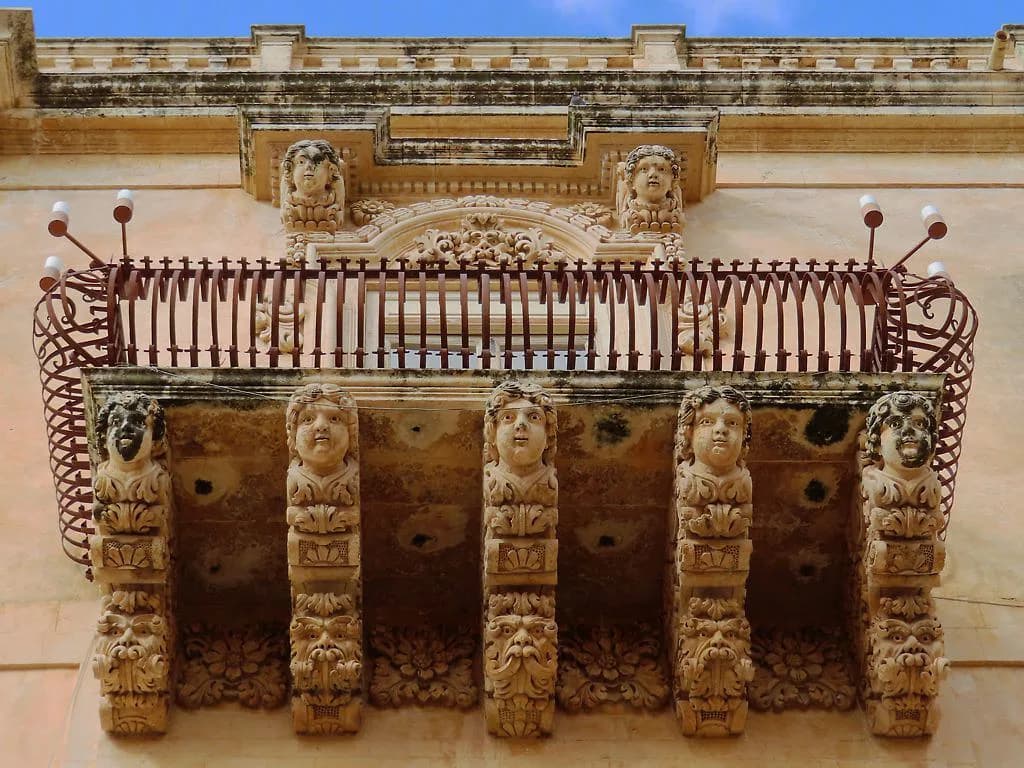
Palazzo Nicolaci di Villadorata anchors one short, steep street just off Noto's main Corso, and its façade repays a slow look rather than a quick snapshot. The six balconies along Via Corrado Nicolaci carry some of the most elaborate carved corbels in Iblean Baroque architecture, depicting winged horses, sirens, sphinxes and grotesque figures. Each bracket reads like a different entry in a stone bestiary, which is why the street draws more lingering glances than most in the city. Related guide: Noto Baroque Self-Guided Walk.
The distinction that shapes any visit is simple: what you see from the pavement costs nothing and takes minutes, while the noble rooms behind the façade depend on a guided tour product or a special event. That makes the palace a duration-flexible stop within a half-day Noto itinerary rather than a standalone destination. Read the street first, then decide whether the interior deserves a booked slot.
Where Palazzo Nicolaci Sits and How to Reach It
The palace stands on Via Corrado Nicolaci, a side street that climbs from the Corso in the heart of Noto's rebuilt Baroque centre. Approach it from the Corso and the street reveals itself as a theatrical corridor, framed by palaces and closed off at the top by the Church of San Nicolò. Plan the palace as a pause on a walk between the cathedral square and the lower squares rather than a separate trip.
Most visitors reach Noto by car or by public transport via Syracuse, and the historic centre is compact enough to walk once you have parked on the outskirts. Because the palace sits inside a pedestrian-friendly core, there is no need for a vehicle between the cathedral staircase, the Corso and Via Nicolaci. Set aside the driving question for the day as a whole and treat the palace as a short walk from the cathedral steps.
The exact day and month of the May Infiorata are worth checking before you build a route. The municipality publishes a rolling events calendar, and the palace's own official site is the second place to look for arrangements on Via Nicolaci.
The Balconies: What You Can See from the Street
Look up. The façade's six balconies are supported by corbels carved as winged horses, sirens, sphinxes, grotesque masks and mythological monsters, each one distinct from its neighbours. They are usually described as the richest such corbels in Iblean Baroque architecture, and they reward close inspection rather than a passing glance from the pavement.
The material helps. Noto's buildings share a warm honey-coloured limestone, so the deep shadows under the balconies and the soft afternoon light do much of the work. Morning light on the cathedral end of the street and late afternoon light further down are different photographs, which is a good argument for walking the street twice.
The façade sits in public space, but temporary fencing, restoration work or event installations can change what is visible on any given day. If your visit depends on photographing the balconies up close, confirm the situation locally or through the palace's official channels before you travel.
Inside: The Frescoed Gallery, Ballroom and Chapel
Behind the façade, sources describe a suite of noble rooms including a frescoed gallery, a ballroom and a private chapel, with gilded detail and painted ceilings. A scheduled two-hour guided tour of Noto's historic centre advertises visits to palaces such as Palazzo Nicolaci and Palazzo Ducezio, covering interiors and the history of the noble families. That product is one practical way to see inside, but it should not be read as confirmed access on any given date.
Other descriptions present the noble rooms as visitable by reservation on weekdays or during special events. With two slightly different accounts in circulation, the sensible approach is to ask the palace directly which rooms are open on your dates rather than assume a fixed offer.
Do not assume one ticket covers everything. The cathedral nave, the crypt and the bell tower are separate arrangements entirely, and the palace interior is another product again. Keep the two visits budgeted and booked independently, and use the cathedral's own visitor information rather than the palace's for church details. For wider planning, see Cattedrale di San Nicolò in Noto.
How Long to Allow, as a Suggestion
For the exterior alone, allow ten to fifteen minutes: read the balconies, step back to the cathedral end of the street and photograph the façade in context. This suggested timing is a planning aid, not an official rule. Visitors with only half a day in Noto can comfortably fold the street into a cathedral-to-Corso walk without rearranging their schedule. For wider planning, see Noto Baroque Self-Guided Walk.
If you join an interior tour, plan around a two-hour guided experience in the historic centre, though that time covers the wider walk rather than the palace alone. Add a buffer before and after for meeting points and for the slow, warm walk back to the Corso. Anyone with limited mobility or a tight train connection should confirm the route and timing with the operator in advance.
A sensible split is exterior first, inside second. Look at the street before committing to a slot, because the corbels are the part everyone remembers and they cost no time at all. If you are pressed, the pavement view is the essential stop and the noble rooms are the optional upgrade.
The May Infiorata on Via Corrado Nicolaci
The Infiorata is staged on Via Corrado Nicolaci itself, where flower petals are arranged on the paving to form large images that fill the street. Descriptions place it on the third weekend of May, but that is an approximate pattern rather than a confirmed date for any given year. Check the current edition's dates with the organiser before booking flights or accommodation around it.
Preparation traditionally begins on the Friday evening, and the finished carpet is meant to last only a couple of days before visitors are invited to walk over it. Because the work happens in the open street, the palace façade becomes a backdrop rather than the main event. For a photographer, the balconies and the flower carpet in one frame is the reason to come.
Expect heavy crowding on the Saturday and Sunday of that weekend, and book accommodation well ahead if you intend to stay in Noto. Outside the festival window, the same street is calm enough to read the corbels without obstruction. That contrast is worth planning around rather than discovering on arrival.
Practical Framing: Check Before You Go
The operator and city sources do not publish firm opening hours, closure days or ticket prices for the palace interior, so quote none and verify at the point of contact. Confirm the current situation with the municipality and with the palace's own website, and treat any figure you see elsewhere as needing verification. Prices, in particular, should be checked at the point of booking rather than taken from third-party guides.
Claims about the building's founding date or which institutional occupant sits inside it today circulate in different versions, and none of it should shape your decision to visit. The parts that genuinely matter, the balconies and the street, are visible whatever the paperwork says.
If you need step-free access, written confirmation of the route or a language-specific tour, ask the operator before paying. The street itself is a slope climbing to a church, and nothing published settles these questions. Never assume a historic palace has a lift or a level entrance on the strength of a marketing page.
Three Short Ways to Combine the Palace With Noto
Palace plus cathedral staircase is the classic pairing. Walk up Via Nicolaci, read the corbels, then continue to the cathedral square for the city's most photographed steps. Use the cathedral guide for the church itself and keep the two bookings separate. It fills an unhurried morning.
Palace plus Corso stroll suits a half-day visit or a late afternoon. Walk the three squares along Corso Vittorio Emanuele, pause for almond granita and a brioche, and finish at the palace street as the light softens. Exploring the back lanes beyond the main axis is where Noto stops feeling like a stage set. For wider planning, see Hidden Gems in Noto.
Palace plus Infiorata weekend is the busiest option and needs the most forward planning. Book beds early, arrive for the Friday evening preparation rather than the Sunday crowds, and accept that the flower carpet will be gone within days. If you want to see the street calm, come another month instead.
Plan Your Visit
Palazzo Nicolaci works best as a ten-minute street-level stop with an optional interior upgrade. The carved balconies cost nothing but attention, and the noble rooms are a separate arrangement to confirm with the palace or a guide. Build the visit around the façade first and treat everything else as a bonus.
Before travelling, check the Infiorata dates with the municipality, ask about interior access on your chosen day, and confirm any price directly rather than trusting old figures. Noto rewards a slower pace: the Corso, the quieter churches and the coast near Vendicari can fill the rest of the day around a very short stop on Via Nicolaci. Keep the palace in proportion and the city opens up around it.
Frequently Asked Questions
Can you see Palazzo Nicolaci's balconies without buying a ticket?
The balconies and carved corbels face the public street, so the exterior can be read from Via Corrado Nicolaci without entering the building. Temporary installations or restoration work can affect what is visible. Check the street situation locally on the day you visit.
Do you need a guided tour to visit the noble rooms of Palazzo Nicolaci?
Access to the frescoed gallery, ballroom and chapel runs through guided tour products or special events rather than a walk-in ticket. A scheduled two-hour guided tour of Noto's historic centre advertises palace interiors among its stops. Confirm which rooms are open, and on what dates, directly with the palace or the operator before booking.
When is the Infiorata in Noto and how does it affect a visit to the palace?
The flower display is traditionally staged on the third weekend of May along Via Corrado Nicolaci, but that is a pattern rather than a confirmed date for a given year. During the festival the street is extremely crowded and the palace façade becomes part of a much larger event. Book accommodation early and verify the current dates with the town before travelling.
How long should you allow for Palazzo Nicolaci?
Ten to fifteen minutes is enough to read the balconies and photograph the façade, though that is a suggested timing rather than an official figure. Add around two hours if you join a guided walk that includes palace interiors and other sites in the centre. Leave a buffer for meeting points and the walk back to the Corso.
Is Palazzo Nicolaci worth visiting on a half-day trip to Noto?
Yes, as a stop within a wider walk rather than the reason for the trip. The carved corbels are among the finest details in Noto's Baroque centre, and they sit directly on the route between the cathedral and the Corso. Visitors interested in frescoed rooms and noble family history should check interior access in advance so the visit is not a disappointment.
Sources
Continue exploring
More guides you'll find useful