Noto Day Trips: Baroque Towns, Vendicari & Ortigia
Plan day trips from Noto to Ragusa Ibla, Modica, Syracuse and the Vendicari coast, with honest trade-offs on drive times, half-days and slower pacing.
On this page
Noto is small enough that the historic centre rarely needs more than half a day, which is precisely why it makes such a good base for the south-east corner of Sicily. Travellers who have walked the town report that a few hours covers the main axis, leaving the rest of your stay free for excursions. That is a suggestion about pacing, not an official rule, but it reframes Noto as a place to sleep and return to rather than a destination to exhaust.
The surrounding region is the late Baroque Val di Noto, a group of towns rebuilt after the 1693 earthquake and recognised by UNESCO in 2002, as noted in a detailed guide to the Baroque towns of the area. Noto, Modica, Ragusa, Scicli and others sit within reasonable drives of each other, while the coast at Vendicari and the island of Ortigia add a completely different kind of day. The real decision is not which sights exist, but how much ground you want to cover at what speed.
Why Noto Works as a Base
Start with the geography: Noto sits inland from the coast, between Syracuse to the north-east and Modica and Ragusa to the west. That position makes it a natural hinge for both the inland Baroque circuit and the beaches of the Vendicari reserve. If you are deciding where to sleep for several nights, the town gives you a compact, walkable centre and a quieter evening than Syracuse.
The town itself rewards wandering more than ticking off monuments. A long, elegant main street runs through the centre, lined with churches, palaces and cafés, and it is the spine of any short visit. If you want to go beyond the obvious façades, there are quieter corners worth seeking out, and our guide to the hidden gems in Noto covers the side streets and smaller sights that most short stops miss.
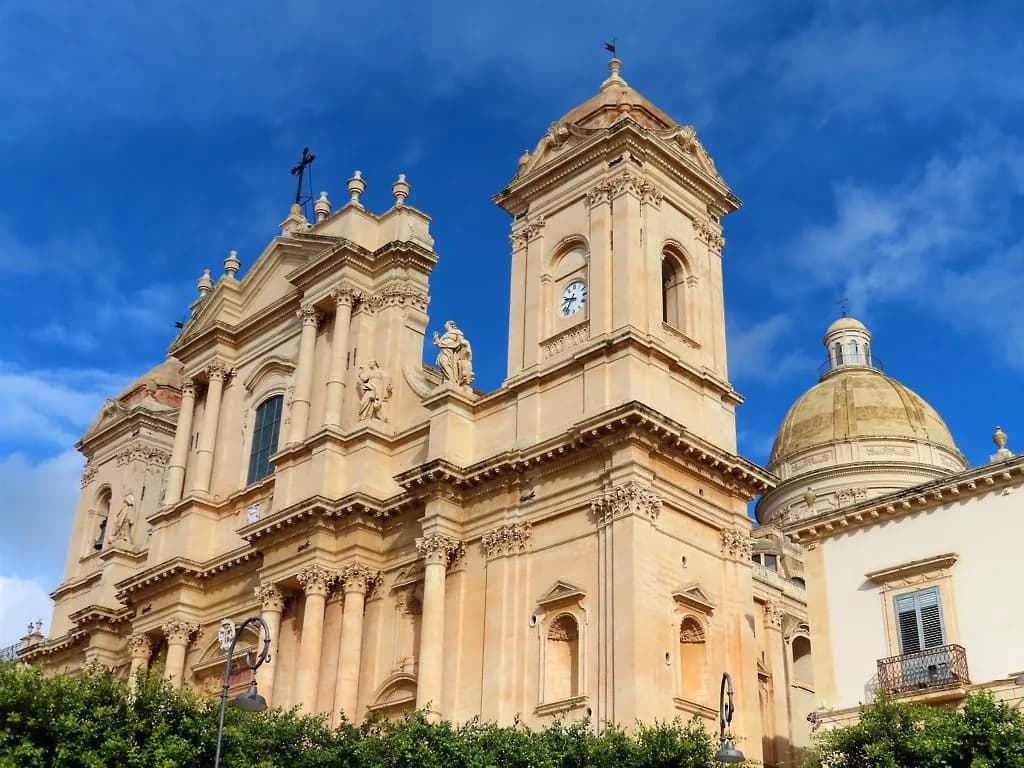
One practical detail shapes the whole town: buildings use a soft local limestone that turns honey-gold in low light. That means late afternoon and early evening are the most rewarding hours to be on foot, which conveniently leaves the middle of the day free for a day trip. The official city portal is the place to check for local events and notices before you fix your dates.
Setting the Scene: The Val di Noto
The towns you will be visiting share a single origin story. A catastrophic earthquake in 1693 destroyed much of south-eastern Sicily, and the rebuilding that followed produced a coherent Baroque idiom in golden stone across the region. Noto is unusual because it was rebuilt on an entirely new site rather than on its medieval foundations, which gives its street plan an unusual uniformity.
That shared history is why the inland towns can start to feel similar if you visit them back to back. The differences are in the terrain and the mood: Noto is elegant and relatively flat along its main axis, Modica climbs steeply in layers, and Ragusa is split between a lower old town and an upper modern one. Choose by the kind of day you want rather than by a ranking.
Regional tourism information is another useful cross-check when you are planning around a specific period, since local festivals and seasonal services can affect how a town feels on a given weekend. The regional portal publishes news and visitor information for the island as a whole.
How to Choose Your Excursions
Think in terms of energy budgets rather than distances. A half-day excursion means you leave after breakfast, arrive before the heat peaks, walk for a couple of hours and are back in Noto for a late lunch or a swim. A full day means you commit to a proper meal out, an afternoon of wandering and an evening return, and you should not plan more than one of those back to back.
As a rough guide, treat published drive times in travel blogs as approximations and re-check them on a mapping service the day before, because road works and summer traffic change the picture. A widely cited figure puts Modica about 45 minutes from Noto by car, while Ragusa is roughly an hour, and Syracuse is typically described as around half an hour. None of these are operator-published schedules, so build in slack.
A simple rule: pick one inland Baroque town and one coastal outing for a two-night stay, and resist adding a third town to either day. Attempting Noto, Modica and Ragusa in a single day is possible on paper, but the same source that mentions it also warns that you will be moving extremely quickly and relying on two to three hours per town. That is a long, tiring day that leaves little room for the thing these towns do best, which is aimless strolling.
Ragusa Ibla: Hills, Stairs and Slow Wandering
Ragusa is really two towns: Ragusa Superiore on the plateau and Ragusa Ibla on the lower hill, connected by long flights of steps and winding lanes. The old town is the reason to come, and it rewards a slow half-day of walking uphill, pausing in piazzas and looking back over the valley. Expect significant stair climbing, so wear proper shoes and travel light.
Because Ibla is compact but vertical, a checklist approach burns energy fast. Better to pick one or two anchor points, such as the main church square, and let the alleys fill the rest of your time. If you are combining Ragusa with Modica, note they are close together, which makes them a natural pair for travellers staying west of Noto rather than for a rushed loop from the coast.
Modica: Chocolate, Levels and a Long Lunch
Modica is the town that most resists being treated as a photo stop. It clings to the sides of a gorge, so moving between its lower and upper streets means climbing, and the reward is a dense web of churches, palazzi and food shops. The town is known for its traditional chocolate, made without the conching process, which gives it a distinctive grainy texture.
Give Modica a full afternoon rather than an hour. A sensible pattern is an early lunch, a slow climb through the old streets, and a stop for chocolate or a granita before the drive back. In warm months the heat makes the vertical streets harder work, so start earlier than you think you need to. If food is the point of your trip, pair this day with our Noto food guide: what to eat, which covers the almonds, granita and pastries you will meet across the region.
A practical note on entry: many churches in this part of Sicily are free to enter, while optional extras such as bell tower climbs or crypts may be separately ticketed. One widely read account describes church entry generally as free with small charges for the add-ons, but check signage at each door rather than assuming any shared ticket applies.
Syracuse and Ortigia: Ruins and an Evening Passeggiata
Syracuse splits neatly into two experiences. On the mainland, the archaeological park holds the Greek theatre and the quarries, and it deserves a proper morning if ancient history is why you came. Across the bridge, the island of Ortigia is a dense Baroque quarter where the pleasure is in the evening, when the streets fill and the waterfront turns gold.
You can combine both in one long day, but it is more pleasant to choose. For a half-day, take Ortigia alone and arrive late in the afternoon, staying for dinner before the drive back. For the archaeology, go early, carry water and expect sun exposure with limited shade. This is the one excursion where an overnight stay in Syracuse genuinely improves the experience.
Practical arrangements matter here more than in the smaller towns. The Noto getting around and arriving guide explains how the local rail and road links work, which is worth reading before you decide whether to drive or use public transport for the Syracuse leg.
Vendicari Nature Reserve: A Coastal Half-Day
South and east of Noto, the Vendicari reserve protects a stretch of lagoons, dunes and beaches that is entirely different from the Baroque towns. It is a bird migration stopover in spring and autumn, and the beaches at Calamosche, Marianelli and San Lorenzo are the usual targets. Plan it as a nature half-day, not a town hop, and bring what you need because facilities are limited.
The trade-off is straightforward: fewer monuments, more walking and beach time. A morning in Noto followed by an afternoon at the reserve works well, since the light softens and the heat eases towards evening. Parking areas near the popular entrances fill quickly in summer, so arriving early is the simplest strategy.
If you only have time for one coastal outing and you also want the town of Noto itself, our Noto one day itinerary shows how to fit the centre into a compact morning so the coast gets your afternoon.
Marzamemi: A Small Seaside Pause
Marzamemi is a former fishing village with a single photogenic piazza and a harbour, and it works best as a stop on the way to or from the reserve rather than a destination in its own right. It takes little time to see, so pairing it with Vendicari gives a coastal day structure without overloading it. On a hot afternoon, a long lunch by the water is a reasonable use of the hours you would otherwise spend in a car.
Check seasonal opening patterns before you build the day around a specific restaurant, since small coastal places vary considerably between winter and high summer. The town portal and regional tourism pages are more reliable than memory for events and services.
Noto Antica: The Optional History Detour
About eight kilometres north of the modern town lie the ruins of the medieval settlement abandoned after the 1693 earthquake. It is an atmospheric, overgrown site with no ticket office or marked trails, so treat it as a detour for the historically curious rather than a headline sight. Wear sturdy shoes and watch your footing.
One honest caveat from travellers who have been: the remains are limited and poorly signposted, and the visit takes about an hour if you walk the accessible area near the parking. If your time in Sicily is short, the Baroque towns and the coast will give you more for the same hours. If you do go, combine it with a slow morning in Noto rather than a separate half-day.
A Sample Two-Day Pattern
Day one: stay inland. Leave Noto mid-morning for Modica, eat a proper lunch, climb through the old streets and return via Ragusa Ibla if you still have energy for a shorter wander. If that feels like too much, drop Ragusa and give Modica your full afternoon. The point is one Baroque town done well, not three done badly.
Day two: head for the coast. Spend the morning in Noto's centre while it is quiet, then drive to the Vendicari reserve for a beach afternoon with a stop at Marzamemi on the way. This keeps the driving short and the pace gentle, and it leaves the evening free for the passeggiata back in Noto. If you want to know how the seasons change these plans, the best time to visit Noto and avoid crowds is worth reading before you book.
If you have a third day, give it to Syracuse and Ortigia, ideally staying into the evening. Our overview of Noto Attractions can help you slot the town's own sights into whatever remains of your mornings.
Practical Realities and Common Mistakes
Park on the edge of historic centres rather than trying to drive into them. In Noto, travellers recommend the gated paid car parks a short walk from the centre, and warn that the machines may not accept cards, so carry coins. The same advice applies in Modica and Ragusa, where the old towns are pedestrian and steep.
Carry cash for small extras such as a bell tower climb or a coffee, and never assume a card will work in a small bar. Also assume stairs: Noto, Modica and Ragusa all involve flights of steps, and even Noto's gentle main street is punctuated by them. Pack light and wear shoes you can walk in for hours.
The most common mistake is stacking too much into one day. The second most common is treating every church as a ticketed attraction when many are free to enter, with paid options only for specific extras. The third is forgetting that the towns shut down in the middle of the afternoon in the hottest months, which can leave you with an awkward gap if you planned a tight schedule.
Plan Your Visit
Noto is not the kind of place that keeps you busy for days, and that is the point. Use it as a calm base, spend your mornings on the town's honey-coloured streets and your afternoons on one excursion at a time, whether that is a vertical Baroque town or a wild stretch of coast. Two well-chosen days will give you more than five rushed ones.
Before you go, confirm any seasonal opening times, reserve access rules and event dates directly with the relevant town or reserve rather than relying on older guides. The city portal is the starting point for local notices, and regional pages cover island-wide services. Then leave room in the plan for the thing south-eastern Sicily does best, which is an unhurried evening in a piazza.
Frequently Asked Questions
Is Noto worth visiting on its own or only as a base?
Both. The historic centre is small enough to cover in a half-day of walking, but it is also an excellent base for the surrounding Baroque towns and the Vendicari coast. Treat the town as your anchor and plan excursions around it rather than trying to spend a full day inside it.
Can you visit Noto, Modica and Ragusa in one day?
It is possible but not advisable. The three towns are within a reasonable drive of each other, yet doing all of them in one day means rushing through each and spending much of the day in the car. Pick one inland town per day and spend your time walking instead.
How long do you need in Noto's historic centre?
Most visitors find a few hours is enough for the main street, the cathedral and a couple of churches. Add time for a gelato or a granita stop, and return in the evening when the limestone turns golden. If you want to climb a bell tower or visit a palace interior, allow a little longer.
Is Noto Antica worth the detour?
Only if you are interested in the pre-earthquake history and do not mind an unkempt site. There are no facilities or marked routes, the ruins are fragmentary and the signage is poor. If your trip is short, the Baroque towns and the coast are a better use of your time.
Which is better for a half-day, Modica or Ragusa Ibla?
Modica suits a slower half-day with a lunch and a chocolate stop, while Ragusa Ibla is better for stair climbing and viewpoints. Neither is a quick photo stop. Choose Modica if food matters to you and Ragusa if you want the drama of a town split across two levels.
What can you combine with a morning in Noto?
An afternoon at the Vendicari reserve works well, since it is a short drive and the light improves later in the day. Alternatively, drive to Marzamemi for a late lunch by the harbour. Both keep the day gentle and avoid a second town visit that would double your walking.
Sources
Continue exploring
More guides you'll find useful