Getting Around Noto: Arrival, Walking and When You Need a Car
Plan how to arrive in Noto and move around: walking the historic centre, using a car for the coast and Noto Antica, and where a car stops being useful.
On this page
Noto rewards a split strategy rather than a single answer. The rebuilt Baroque centre is compact, flat along its main axis and easy to cover on foot, while the coast, the Vendicari reserve and the old hill town lie well outside it. A sensible starting point is to give the centre one full day and two nights if your schedule allows. For wider planning, see Noto Attractions: Visitor Guides to 7 Sights.
That split matters because the town's layout is not accidental. The Val di Noto towns were rebuilt after the 1693 earthquake, and Noto's straight avenues and wide stone streets are a product of that planned reconstruction, which is exactly why walking works so well here. The travel guide describes Noto as a UNESCO World Heritage Site and the crown jewel of Sicilian Baroque, best treated as a one-to-two night stop or a base for south-eastern Sicily.
What follows separates the decisions you actually have to make: how to arrive, where the car helps, where it becomes a liability, and which logistics facts no reliable source confirms, so you know what to verify yourself before you travel.
Where Noto Sits in South-East Sicily
Noto lies in south-eastern Sicily, roughly 40 minutes south of Syracuse by car according to the travel guide, with Catania Airport about 1.5 hours away by road. That geography makes Noto an easy add-on to a Syracuse stay and a practical base for the wider south-east. It also explains why the arrival decision is really a question about what else you plan to see.
The municipal site confirms the spread of recognised points of interest around the town: churches and palaces in the centre, Villa Romana, Noto Antica and the beaches at Eloro, Marianelli and the Vendicari reserve. That list is useful for planning, because it shows how far the sights fan out beyond the walkable core. It does not publish transport rules, so treat it as a map of what exists rather than a routing guide.
The practical consequence is that you should decide early whether Noto is a single overnight stop or a multi-day base. If it is a base, the car question answers itself; if it is a stop, you can probably leave the car parked for your whole stay.
Arriving by Train from Syracuse
Trains connect Syracuse and Noto and take about 40 minutes, though the travel guide notes they are less frequent than road options. That frequency is the key caveat: a rail arrival works if you build your day around a specific departure, and badly if you assume a turn-up-and-go service. Check the current timetable with the operator before committing, since no schedule detail is published in the sources here.
Expect the station to sit outside the Baroque centre rather than at its edge. Noto's historic core is a dense grid of pedestrian-scale streets, and rail infrastructure naturally lands beyond it, so plan a final leg on foot, by taxi or by local bus. Confirm locally how that last stretch works and what it costs, because no source in this packet gives station-to-centre distances, times or fares.
Travelling car-free to Noto is therefore realistic for the town itself but constraining for everything around it. If your trip is trains plus a Noto overnight, you will see the centre well and the coast not at all.
Arriving by Car from Catania or Syracuse
A car is the most flexible way to reach Noto and the only straightforward way to combine it with the coast or the interior in one trip. The trade-off is that you then have to deal with parking near a historic centre that was never designed for it. Deciding where to leave the car before you arrive is worth more planning time than the drive itself.
Driving from Catania Airport takes roughly 1.5 hours, and Syracuse is about 40 minutes away, both figures from the travel guide rather than from an official transport source. Treat them as planning estimates, not promises, and allow slack for traffic and for finding parking. Further visitor details appear in Noto, Sicily Travel Guide: What to Do, Where to Stay, & Eat.
The practical rule is to arrive, park once, and walk for the rest of your stay. Moving the car between short hops inside Noto costs more time than it saves.
Buses and Organised Transfers: What Is Not Confirmed
Bus services and private transfers exist in this part of Sicily, but no source in this packet names operators, routes, frequencies, stops or fares for Noto. Rather than guess, ask your accommodation what guests actually use, and confirm directly with the operator before relying on a connection for an onward booking.
If a bus or transfer is the only way you will reach Noto, build the rest of the day around the centre alone. Do not schedule a beach or Noto Antica on the same day without a confirmed onward connection.
The city's own tourism pages are the safer starting point for what exists around Noto, since they gather the area's listed places of interest without claiming to set transport rules. Further visitor details appear in Città di Noto.
Parking and the Collina Decision
Noto's urban fabric splits broadly into the lower historic centre and the newer town above it, and where you park fundamentally shapes your visit. To weigh up staying in the lower streets against the upper town, the Noto centro storico vs collina: neighbourhoods guide sets out the trade-off between walking convenience and easier driving. Sources here give no parking locations, zones, tariffs, permit rules or walking times between the two, so confirm arrangements through your accommodation or the comune before arrival rather than improvising at dusk. For wider planning, see Noto Centro Storico vs Collina.
Frame it as a question about your day: do you want to step out of the door into the Baroque streets, or accept a short approach in exchange for easier driving and parking? Staying in the centre favours the first, and the travel guide recommends the historic centre for exactly that reason, since it lets you walk everywhere and enjoy Noto in early morning and evening.
Whichever you choose, photograph your parking spot and note the street name. Noto's lanes look similar after dark, and a misplaced car turns an evening passeggiata into a search operation.
Walking the Centro Storico
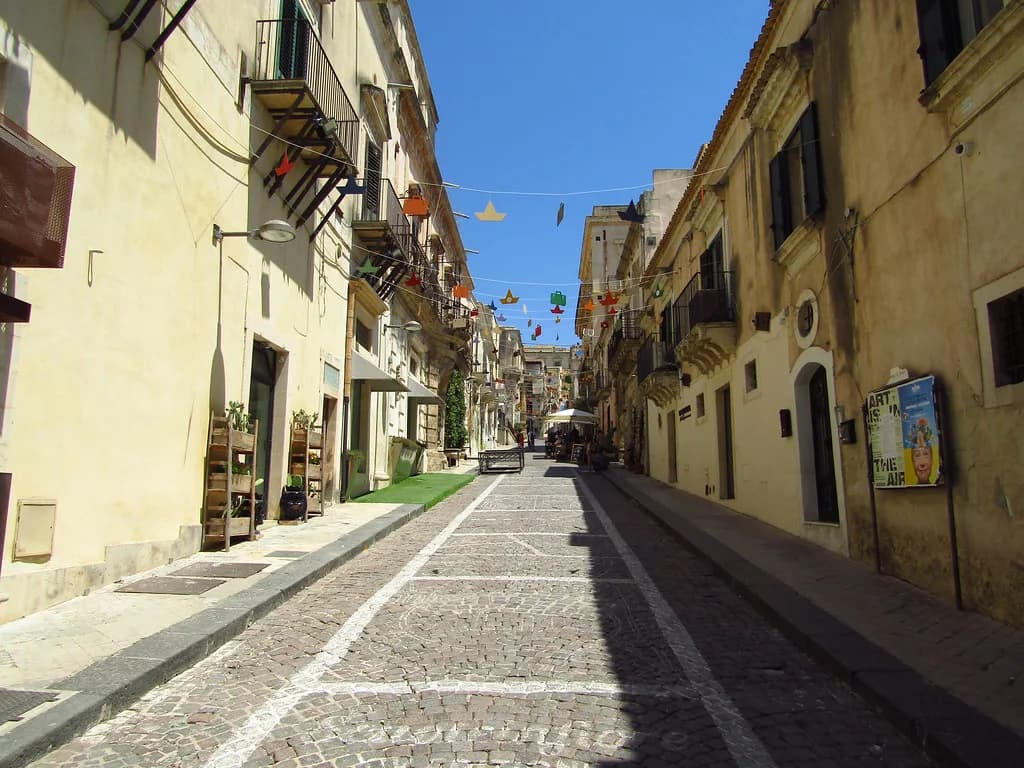
Once you are in the centre, walking is the whole method. Corso Vittorio Emanuele is the spine of the historic core, and nearly every major Baroque building sits along or just off it, including the cathedral and Palazzo Nicolaci with its carved balconies. San Carlo Church rewards the climb for a rooftop view across the stone roofs.
The side streets are where the centre stops feeling like a set piece, and the travel guide singles out wandering without a plan as one of the best things to do. Build in unstructured time rather than treating the town as a checklist. The light also shapes the walk: midday is harsh on the pale stone, while evening turns it golden, which is why the aperitivo hour is the most rewarding stretch to be outside.
None of this requires transport, tickets or advance planning beyond comfortable shoes. It does require giving the centre more than a rushed hour, which is why the one day itinerary works best as a loose frame around the cathedral and the main corso. For wider planning, see Noto One Day Itinerary.
Getting to Noto Antica
The ruins of the original town lie outside modern Noto and show the settlement as it stood before the 1693 earthquake, which is the historical thread that makes the rebuilt centre legible. The travel guide treats Noto Antica as an optional extra rather than a core stop, and that framing is fair given the time it takes.
Reaching it means leaving the centre, so it fits naturally on a day when you already have the car out. Access arrangements, paths and any site facilities are not documented in the sources here, so confirm conditions and entry details locally before setting off.
Skip it if your Noto time is a single afternoon. The centre itself absorbs that comfortably, and the ruins deserve a trip with slack in it.
Coast Excursions: Vendicari, Calamosche and San Lorenzo
The beaches near Noto are the strongest argument for keeping a car. The travel guide names Calamosche for clear water and a natural setting, the Vendicari Nature Reserve for protected beaches, paths and wildlife, and San Lorenzo for a long sandy classic beach day. All of them sit outside the town and are impractical to reach on foot from the centre.
The municipal site lists the beaches at Eloro and Marianelli alongside the Vendicari reserve among the area's recognised places of interest, which confirms they are part of the local visitor landscape. It publishes no reserve entry fees, parking rules, facility details or seasonal opening arrangements, so check those with the reserve or the comune before you go.
Treat a beach day as a half-day minimum once driving, parking and walking to the sand are counted. Pair it with a slow evening back in Noto rather than a second excursion.
When You Do Not Need a Car
If your plan is the Baroque centre, overnight, and a departure the next morning, you can leave the car question entirely alone. Noto's historic centre is very walkable, and the travel guide is explicit that you do not need a car to explore it.
The car only earns its place when you add the coast, the nature reserve or other towns in the south-east. The honest framing is conditional: a car is helpful rather than compulsory, and it becomes a liability if you use it for short hops inside the town.
Staying overnight also changes what you see, not just how you move. The guide flags not staying overnight as one of the common mistakes, because the town's character shows itself in the quiet morning and evening hours that day-trippers miss.
Suggested Pacing and Common Mistakes
As a suggestion rather than an official rule, one day covers the centre's highlights, while two days let you slow down and add a beach or reserve visit. That structure comes from the travel guide's own itinerary advice, and it matches the walking-plus-driving split described above. Further visitor details appear in Noto, Sicily Travel Guide: What to Do, Where to Stay, & Eat.
The mistakes are predictable: rushing the centre in a few hours, arriving only at midday when the light is harsh, skipping the side streets, and leaving the same evening. Each one turns a town built for lingering into a photo stop.
Spring and early autumn are the guide's preferred windows, with April, May and September offering warm weather, fewer crowds and better light. Summer is hot at midday, which is precisely when walking the exposed stone streets is least pleasant.
Putting Arrival and Movement Together
The cleanest plan is to arrive by car if the coast and countryside are on your list, park once near your accommodation, and walk the centre for the rest of your stay. If you are coming by train from Syracuse, plan around a confirmed departure and accept that the beaches and hill ruins will wait for another trip.
Either way, give Noto at least one night and one unhurried evening, and treat the wider south-east as a separate day. Syracuse, Modica and Ragusa pair naturally with the town, and the Baroque towns of the Val di Noto reward the same slow approach.
Confirm the volatile details before you travel: train times, parking arrangements and reserve access are all things that change, and none of them are settled by the sources summarised here.
Frequently Asked Questions
Do you need a car in Noto?
Not for the town. The historic centre is compact and very walkable, and you can cover the cathedral, the main corso and the side streets entirely on foot. A car becomes useful when you want the beaches, the Vendicari reserve or the ruins of Noto Antica, all of which sit outside the centre. Think of it as a countryside tool rather than a town necessity.
How do you get to Noto from Syracuse or Catania?
Trains run between Syracuse and Noto, and the travel guide gives the journey as about 40 minutes while noting services are less frequent. By road, Syracuse is roughly 40 minutes away and Catania Airport about 1.5 hours, both estimates from the same guide. Confirm current timetables and services with the operator before booking onward travel, since no schedule details are published here.
Can you visit the beaches near Noto without a car?
It is not practical for the main coastal spots. Calamosche, the Vendicari reserve and San Lorenzo all lie outside the town, and no source here documents a bus route, shuttle or transfer service to them. If you want a beach day, plan on a car or ask your accommodation about locally arranged transport, then verify it directly with the provider.
How many days do you need in Noto?
As a suggestion, one day covers the centre's highlights and two days let you slow down and add a beach or nature reserve. The travel guide recommends treating Noto as a one-to-two night stop or as a base for the wider south-east. Staying overnight is what lets you see the town in the quiet early morning and evening light.
Where should you park in Noto?
The sources here do not confirm parking locations, zones, tariffs or permit rules, and they give no walking times between the newer town and the historic centre. Ask your accommodation for the arrangement they recommend for guests, and check with the comune before relying on any specific car park. Then leave the car where it is and walk.
What is the best time of year to visit Noto?
Spring and early autumn are the most comfortable, with April, May and September offering warm weather, fewer crowds and good light on the Baroque stone. Summer is beautiful but hot at midday, which makes exposed walking tiring. Winter is quiet and atmospheric with far fewer visitors, so the trade-off is atmosphere against warmth.
Sources
Continue exploring
More guides you'll find useful