Catania City Centre Guide: Baroque Squares and Lava Streets
Walk Catania's historic core: Piazza del Duomo, the lava elephant fountain, Porta Uzeda, the fish market and the grey Baroque streets built from Etna stone.
On this page
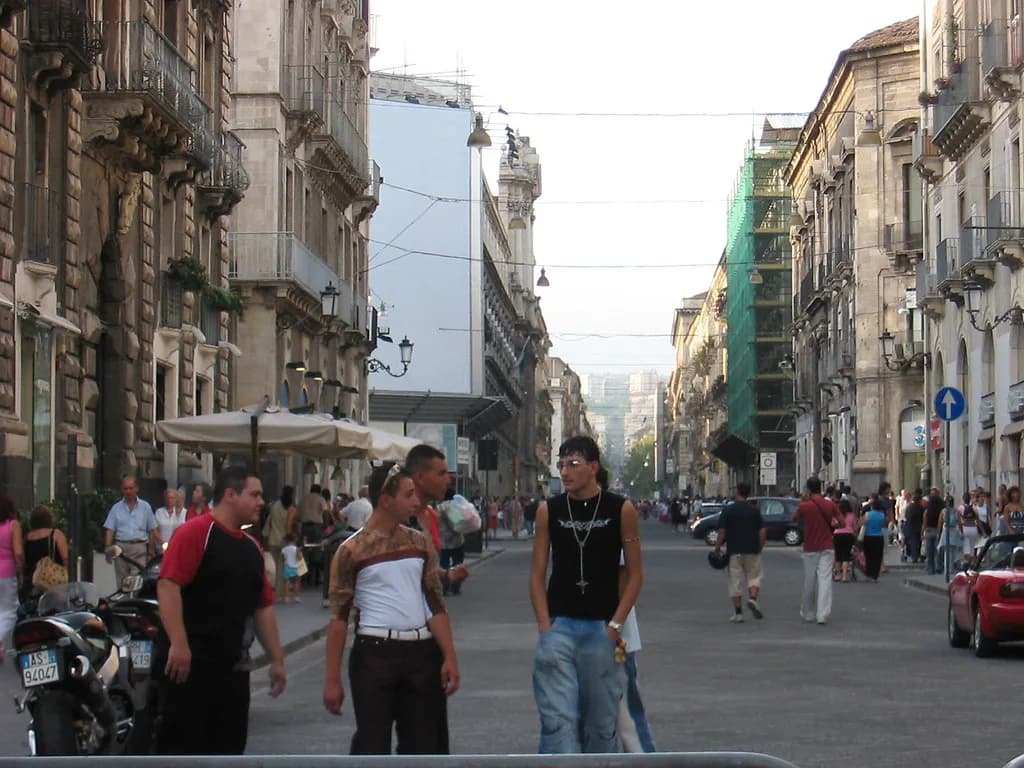
Catania's centre does not look like the honey-coloured Sicily of postcards. Much of it is grey, because the old town was rebuilt in the 17th century in Baroque style using lava stone from Mount Etna, and that single fact explains more about the historic core's atmosphere than any list of monuments. Expect wide avenues, grand squares and a dense, walkable old town rather than a museum-like quarter.
One timing detail shapes everything else: the fish market is open on weekday mornings, following an old tradition. Build your route so you reach it before lunch rather than after. Everything else in the centre can be shuffled around that anchor. Further visitor details appear in Visit Old Town Catania: 2026 Old Town Catania, Catania Travel Guide | Expedia.
Quick Orientation: A Compact Core Built for Walking
The old town centre is relatively small, and that changes how you should plan. You do not need transport to link the main squares, the cathedral, the markets and the castle; attractions and hotels sit within easy walking distance of one another. Public transport matters mainly for arriving from the airport or the ferry port. Further visitor details appear in Visit Old Town Catania: 2026 Old Town Catania, Catania Travel Guide | Expedia.
Treat the centre as one continuous wander rather than a series of separate excursions. A sensible logic runs from Piazza del Duomo south through Porta Uzeda to the fish market, then back north towards the Roman remains and the Bellini sites. If you want a structured route, our Catania Self-Guided Walking Tour lays out an order you can follow or break.
Keep Mount Etna in a separate mental box. The volcano shapes the city's history and its skyline, but the historic core is its own half-day to full-day territory, and over-scheduling the centre around a volcano trip usually means rushing the streets that make it distinctive.
Piazza del Duomo: The Heart of the Baroque Core
Piazza del Duomo is the central square and the clearest showcase of the old town's Baroque architecture. The marble facade of Catania Cathedral, also called the Cathedral of Saint Agatha, faces the square, and inside it holds the tomb of the Catanian opera composer Vincenzo Bellini. Around the piazza you will also find the Diocesano Museum.
The square's signature piece is the lava elephant fountain, a symbol of the city's strength and resilience, standing alongside ornate buildings such as the Palace of the Seminary of the Clerics. The white Carrara marble Amenano Fountain is another easy photograph. For more on what to look for here and what sits just beyond, our hidden gems in Catania guide and the wider set of Catania Attractions visitor guides go deeper on individual sights.
Plan for loose change of purpose here rather than a checklist. Sit with a coffee, walk the perimeter, look up at the facades, then move on: the piazza works best as a place to slow down before the noise of the market.
Porta Uzeda and the Fish Market: A Threshold Worth Timing
Walking south from Piazza del Duomo, you pass under the 17th-century Porta Uzeda arch, which marks the transition from the monumental square towards the port. Immediately beyond, a quick right turn leads into Catania's fish market, one of Italy's largest and a working place rather than a themed attraction.
Timing is the whole game. The market is open on weekday mornings following an ancient tradition, so arrive before lunch to see it in full voice; by afternoon the atmosphere you came for has largely drained away. Get there early and you will enter a world that has remained virtually unchanged for hundreds of years, with vendors selling sardines, clams and mussels. Further visitor details appear in Visit Old Town Catania: 2026 Old Town Catania, Catania Travel Guide | Expedia.
Porta Uzeda is not merely a photo stop between two sights; it is the point where the city changes register. Notice the shift as you cross under the arch and the streets narrow towards trade, noise and fish scales rather than marble and fountains.
Why Catania Is Called the Grey City
Catania has been repeatedly reshaped by nature. Volcanic eruptions destroyed the city on several occasions, most devastatingly in the 17th century, and the result is that the entire old part of town was rebuilt in Baroque style with lava-stone buildings. That choice of material gives the centre its grey personality, and it is genuinely unusual among European cities.
Understanding this helps you read the streets correctly. The uniformity of tone is not decay; it is a building tradition, and the architecture you see is a testament to a city that rebuilt itself after catastrophe. Wide avenues and grand squares are part of that same renewal, laid out with a confidence that still shapes how the centre feels today.
Castello Ursino: A Fortress Now Inland
Castello Ursino is a formidable 13th-century fortress from the reign of Frederick II, and it now houses a collection of art and historical artefacts. What makes it striking is its position: Etna's eruptions pushed the coastline out, so a castle once built by the sea now stands inland. Further visitor details appear in Guide to Catania, Sicily.
Treat the castle as its own entity with its own visiting arrangements rather than assuming it shares entry with other sites. The same applies to the Roman theatres and the Bellini museums: they are distinct places, and there is no basis for assuming a single combined ticket covers them.
On the ground, the castle is an easy addition to a northern leg of your walk, and the contrast between its heavy stone and the bright piazza is part of the day's texture. Check the city's official pages for current visiting arrangements before you build the castle into a fixed timetable.
Roman Remains: Three Theatres That Survived
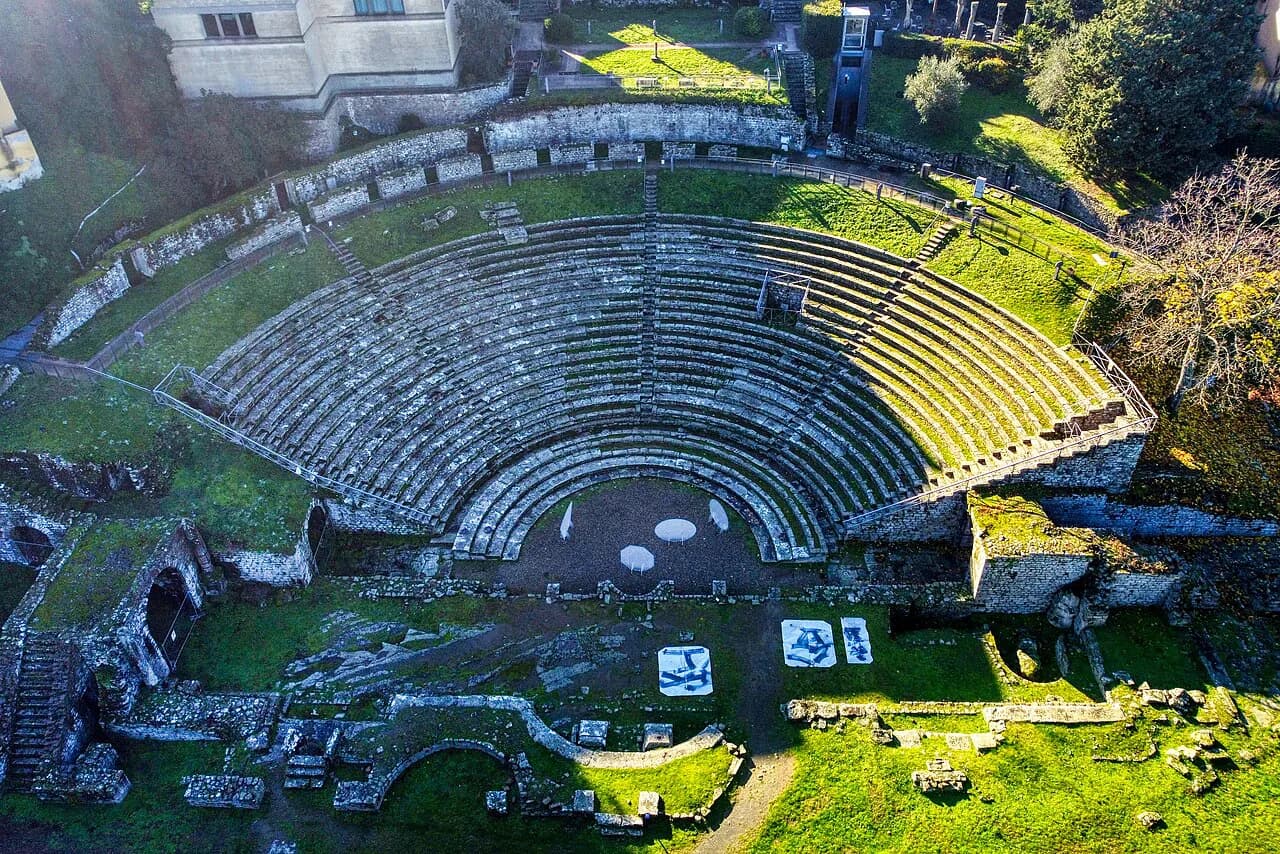
Catania was founded by Greeks from Chalcis in the 8th century BC and later became a Roman city. Remarkably, given the eruptions and earthquakes that have battered the area, three theatres have survived from the Roman period, and remnants of the ancient Roman amphitheatre are still visible.
These remains sit within a living centre rather than behind a single gate, which makes them easy to encounter on foot but also easy to misjudge. Book any modern performance at a city venue separately from viewing ancient fabric, and do not assume that access to one theatre implies access to another or that the surviving structures are open on the same terms.
Bellini's Catania: Museums and the Opera House
Vincenzo Bellini is Catania's most famous son, and the city honours him in several places. The Museo Belliniano is dedicated to the composer, while the Bellini Civic Museum explores his life. A short walk northeast leads to another building dedicated to his memory, the Teatro Massimo Bellini on Piazza Vincenzo Bellini.
The opera season generally runs from around October to June, which is worth knowing if a performance would be a highlight of your trip, but do not treat that window as a guarantee. Confirm any specific performance, programme and ticketing with the theatre itself rather than relying on general season descriptions. Further visitor details appear in Guide to Catania, Sicily.
Beyond Bellini, the city's cultural spread is broad. The Giovanni Verga House Museum shows where the writer grew up, and the Museum of Contemporary Art in Sicily holds glass-blown sculptures and avant-garde paintings, so a rainy afternoon has options that are not all Baroque churches. Further visitor details appear in Visit Old Town Catania: 2026 Old Town Catania, Catania Travel Guide | Expedia.
Food and People-Watching
Catania's signature dish is pasta alla Norma, dedicated, like so much here, to Bellini: fried aubergine, a rich tomato sauce and salty ricotta. Arancini, the stuffed rice balls, are the other reliable order, and both turn up in the many restaurants around the theatre and the centre's lanes.
The old town is full of atmospheric spots for long pasta lunches and people-watching, and the streets around the piazza and the market do the job better than anywhere purpose-built for visitors. Build one slow meal into your day rather than eating on the move; it is the closest the centre comes to offering a formal itinerary.
Practical Tips: Pacing a Half-Day or Full-Day Wander
As a suggestion rather than an official rule, a half-day covers Piazza del Duomo, Porta Uzeda and the fish market on a weekday morning, plus a short loop back through the lanes for lunch. A full day adds Castello Ursino, the Roman remains and at least one Bellini site without turning the walk into a forced march.
Start early if the market matters to you, and keep the afternoon flexible for churches, museums and coffee. If you are pressed for time, skip the interiors of sites you were never going to linger in and spend that hour on the streets instead: the centre's atmosphere is the main attraction, not any single ticket.
If the weather turns, shift indoors to the museums and galleries rather than waiting out the rain under the arches. And if you want to see the coast as well, keep that as a separate outing: our guide to a Cyclops Coast Day Trip from Catania treats the riviera as its own day, not an add-on to the centre.
Plan Your Visit
Catania's historic core rewards a simple approach: base yourself in the old town, walk everywhere, and let the clock set by the fish market organise your morning. The grey Baroque streets, the lava elephant, the arch of Porta Uzeda and the market beyond it form a coherent day without a single transport ticket.
Use each venue's own listing to confirm current visiting arrangements for the castle, theatres and museums before you fix a schedule, since these are separate sites with separate conditions. Then leave room to get lost, because the centre is compact enough that a wrong turn costs you minutes, not an afternoon.
Frequently Asked Questions
What should you not miss in Catania's historic centre?
Piazza del Duomo, with the Cathedral of Saint Agatha and the lava elephant fountain, is the obvious anchor, and the fish market beyond Porta Uzeda is the experience most visitors remember. Castello Ursino and the surviving Roman theatres add depth if you have more time, and the Bellini sites suit opera lovers. The market operates on weekday mornings, so build your day around reaching it before lunch.
Why is Catania called the grey city?
Because the historic centre was rebuilt after devastating 17th-century eruptions using lava stone from Mount Etna. That material gives the Baroque streets their distinctive dark grey tone, which is unlike the warm-coloured stone of most Sicilian and Italian cities. It is a building tradition rather than a sign of neglect, and it shapes how the whole old town reads.
Is Catania's old town walkable?
Yes. The old town centre is relatively small, and the main attractions and hotels sit within easy walking distance of one another, so you do not need transport to link the squares, cathedral, market and castle. Public transport is mainly useful for arriving from the airport or the ferry port. Comfortable shoes matter more than any timetable.
How long do you need in Catania's historic core?
As a suggestion, half a day covers Piazza del Duomo, Porta Uzeda and a weekday-morning fish market visit plus lunch. A full day lets you add Castello Ursino, the Roman remains and one Bellini site without rushing. Treat these as planning suggestions rather than official durations, and keep the afternoon loose.
What can you do in Catania city centre when it rains?
Shift to the museums and galleries: the Bellini Civic Museum, Giovanni Verga's House Museum and the Museum of Contemporary Art in Sicily all offer indoor time, and the cathedral and Diocesano Museum sit right on the main square. Catania's cultural spread means a wet afternoon does not have to be spent in cafes, though the pasta is a reasonable fallback.
Where can I check opening times and tickets for Catania's sites?
The castle, theatres, museums and churches are separate places with separate arrangements, and there is no basis for assuming a single combined ticket. Check each venue's own listing for current visiting conditions before fixing a schedule. Confirm any opera performance directly with the theatre rather than relying on general season descriptions.
Sources
Continue exploring
More guides you'll find useful