Brescia in One Day: Roman Brixia, Santa Giulia & Castle
Plan one day in Brescia with a realistic order for Roman Brixia, Santa Giulia, the twin cathedrals and the castle, plus what to drop when time runs short.
On this page
Brescia packs an unusual amount into a walkable centre: a hilltop castle, a substantial Roman archaeological park, a vast museum in a former monastic complex, and two cathedrals facing each other across a single square. The city sits between Milan and Verona, was Italian Capital of Culture in 2023, and its Roman remains are UNESCO-listed, so a single day can feel like three cities stacked on top of each other.
The trick is sequence, not stamina. Starting high at the castle gives you orientation and views, then gravity carries you down through the Roman park, past Santa Giulia, and into the squares. Treat the time blocks below as suggestions built around that geography rather than official guidance, and check current opening days and ticket prices on the official museum sites before you commit.
Why Brescia Rewards a Single Well-Sequenced Day
The core sights cluster tightly. The castle crowns Colle Cidneo beside the historic centre, the Capitolium and Roman theatre sit below it, and Santa Giulia and Piazza Paolo VI are a short walk further into the grid of lanes. Because nothing requires a bus or a taxi, the real cost of a day here is not transport but the order in which you spend your energy.
Brescia is also easy to reach, which makes it a practical day trip rather than a commitment. Italia.it notes hourly regional trains from Milan and more frequent high-speed services, plus a high-speed connection from Rome taking roughly three and a half hours, so you can arrive fresh and still have a full day in the city.
What Brescia does not reward is a checklist. The Roman park, Santa Giulia, the cathedrals and the castle each have enough substance to absorb an hour or more, and pretending otherwise turns the day into a corridor of doorways. Pick a primary interest, build the day around it, and let the rest be a bonus.
Choosing Your Shortlist Before You Leave
A realistic full day fits the castle grounds, the Roman archaeological park, Santa Giulia and the two cathedrals, with the squares folded in between stops. That is already an ambitious four-part day, and it assumes you move briskly and do not linger over every display case.
If you must cut something, drop Santa Giulia first. It is the largest single time commitment, covering thousands of works across roughly 14,000 square metres in a former monastic complex, and attempting it in a rushed hour is worse than skipping it. The castle grounds and the outdoor squares are the cheapest things to trim because they can be revisited without a ticket.
The second thing to drop is the Roman park's interior visit if you are short on time, since the Capitolium columns and the theatre are partly visible from outside. What you should not drop is the walk itself: the lanes between these sights are part of the appeal, and some of the city's quieter corners sit between the headline stops.
Morning: Start at the Castle for Orientation
Begin at Brescia Castle on Colle Cidneo. The medieval fortress is reached through a sixteenth-century portal flanked by the San Faustino and San Marco bastions, and the terrace inside gives you a view across the whole historic centre, which makes every later walk easier to picture. An old steam locomotive sits on the grounds and is an unexpectedly photogenic landmark.
Treat the castle as a viewpoint and a park first, and its museums as an optional extra. The grounds contain a large municipal park with shade and benches, so this is a good place to let a jet-lagged morning settle before the walking starts. Italia.it describes the climb as involving steps, and cobblestones continue all the way down, so wear shoes with a thick flat sole.
Walk down through the lanes rather than retracing your route. The descent through Piazzetta Tito Speri and Contrada Sant'Urbano gives you rooftops and small courtyards on the way, and it lands you near the Roman park without needing a map. Budget an hour or so here, longer if you plan to go inside the castle's museums.
Late Morning: Roman Brixia and the Capitolium
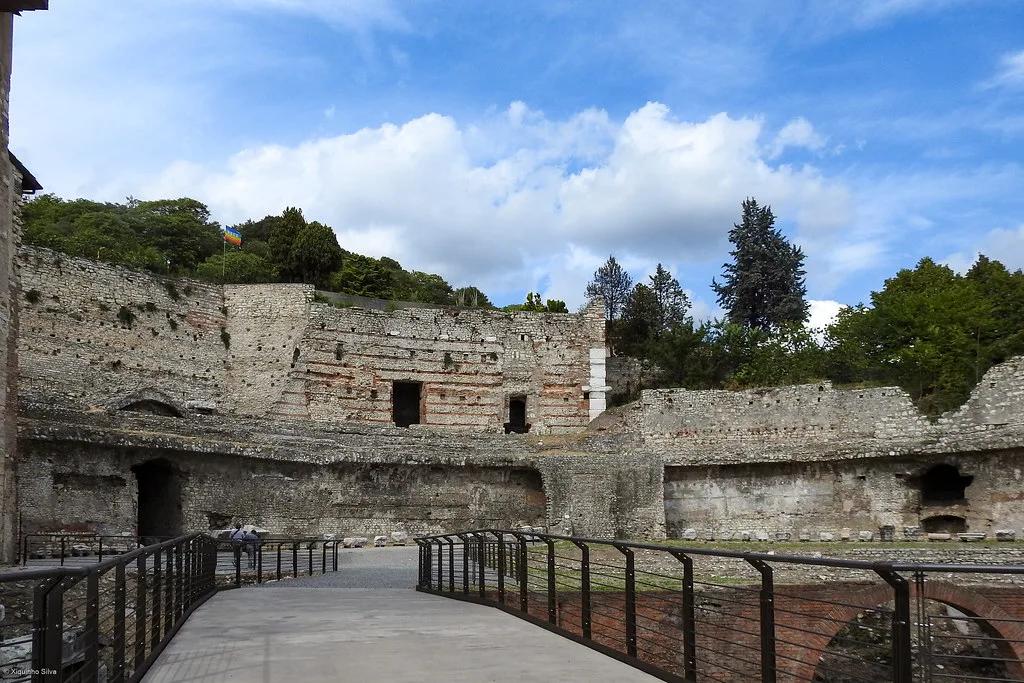
The Archaeological Park of Roman Brescia is the city's headline act and a UNESCO World Heritage Site. Its centrepiece is the Capitolium, a Capitoline temple dating to AD 73 dedicated to Jupiter, Juno and Minerva, and beneath it survive structures of an earlier sanctuary from the first century BC. Next door, the Roman theatre's cavea faces the same open ground.
Italia.it lists the park as closed on Mondays, with holidays and weekdays running from 10:00 to 18:00. Treat those hours as a guide rather than gospel, since schedules change by season, and confirm the day's opening on the official museum site before you travel. The same applies to ticketing: admission is separate from Santa Giulia and the castle's museums, so do not assume a single joint pass.
Allow roughly 60 to 90 minutes if you read the panels and climb the theatre, or 30 minutes if you are content with the columns and the outdoor view. One traveller's account describes an augmented-reality tour inside the complex using special glasses, an add-on worth asking about at the desk if the technology appeals. Verify its availability and price on arrival rather than counting on it.
Lunch: What to Order, Not Just Where
Brescian food is hearty and specific, so order by dish rather than by restaurant. Casoncelli are the local filled pasta, served with meat or vegetable filling; the Brescian skewer mixes meats and potatoes; and rabbit alla bresciana is a Christmas-season dish heavy with spices. For something sweet, look for bossolà, a tall soft doughnut, or persicata, a dense fruit paste.
Keep lunch near the centre and keep it short. Sitting down for a full multi-course meal is a pleasure, but it eats the afternoon you have set aside for Santa Giulia. A plate of casoncelli and a coffee is a good middle path, and it leaves you walking distance from the museum entrance.
Italia.it singles out Pasticceria Veneto, Iginio Massari's workshop, as a Brescian institution worth a detour for pastry. Blog accounts name other venues such as Osteria del Savio and Trattoria Urbana Mangiafuoco, but treat those as examples rather than endorsements; check current opening days and book ahead if you want a proper sit-down meal.
Afternoon: Santa Giulia Without Museum Fatigue
Santa Giulia occupies a monastic complex of Lombard origin and is a UNESCO site in its own right. Inside, the Museo della Città runs chronologically and thematically from the fourth millennium BC to the eighteenth century, so it works best as a structured walk through time rather than a room-by-room survey. Highlights include Roman mosaics, the Nun's Choir frescoes and the jewelled Cross of King Desiderius.
Italia.it lists the museum open on Thursday and Friday evenings from 18:00 to 22:00 and at weekends from 10:00 to 21:30, with access preferably by appointment. Those hours are a starting point only, so check the official site for the day you plan to visit. If a full survey feels daunting, choose two or three sections in advance, such as the mosaics and the Longobard material, and give yourself permission to leave.
Plan for 90 minutes to two hours and resist the urge to see everything. Museum fatigue is real in a complex this size, and a focused visit leaves you with energy for the cathedrals and squares. If you are travelling with children or on a tight schedule, this is the stop to shorten rather than the Roman park.
Late Afternoon: Two Cathedrals and Three Squares
Piazza Paolo VI, also called the Square of the Two Cathedrals, holds the Duomo Nuovo with its Baroque facade and the round Romanesque Duomo Vecchio. Italia.it lists the Old Cathedral as closed on Mondays and Tuesdays and open in two daily windows on other days, while the New Cathedral keeps separate hours. Both are working churches, so dress respectfully and check the times before you rely on them.
From there, three squares unfold within a few minutes' walk. Piazza della Loggia carries Venetian influence and is dominated by the Palazzo della Loggia; Piazza Vittoria is the modern counterpoint with its post office and tower; and Piazza Mercato has hosted a market since the fifteenth century and now fills with cafes. A slow loop through all three is one of the best free things to do in the city.
If you still have daylight, wander the lanes south of Piazza della Loggia. Small courtyards, pastel facades and glimpses into residential blocks are the texture of Brescia, and this is where a rushed day slows down into something more memorable. Keep an eye on the time if your train back to Milan is booked.
Evening: A Pirlo and a Slow Walk
Brescia's local aperitivo is the pirlo, a spritz-like drink served in the bars around Piazza della Loggia and Piazza Paolo VI. Order one and sit outside if the weather allows, because the squares are at their best in the early evening when the day-trippers have gone and the locals come out.
Finish with a slow walk back through the lanes rather than a final museum. If you are staying overnight, this is the moment to notice how compact the centre is and how much you have covered on foot. If you are catching a train, allow time to reach the station and buy a ticket before the evening peak.
Half-Day Version: What to Skip
With only half a day, choose either the Roman park or Santa Giulia and build the rest around the squares. The Roman park plus the cathedrals is the classic half-day circuit, because they sit close together and the outdoor archaeology is quick to absorb. Santa Giulia plus the squares suits travellers who prefer art and interiors to ruins.
Drop the castle first if time is tight, since the climb and the grounds take longer than the map suggests. Keep lunch short or grab a slice of pizza, and accept that a half-day is a taste rather than a complete visit. Brescia is easy enough to reach from Milan that a return trip is a realistic option.
More Time: Mille Miglia and Teatro Grande
If you have a second day, add the Mille Miglia Museum, housed in the former Monastery of Sant'Eufemia about four kilometres from the centre. It holds cars that raced between 1927 and 1957, and Brescia remains the starting point for the historic Mille Miglia rally each spring. Check the museum's current opening days before making the trip out.
The Teatro Grande is another optional add-on, a sixteenth-century theatre where Puccini's Madame Butterfly found success after a difficult debut in Milan. Its foyer is impressive even on a short visit, but access depends on the performance schedule. Ask at the box office or check the theatre's website for guided visits.
Practicalities: Trains, Parking and Cobblestones
Trains from Milan are frequent, with regional services departing roughly hourly and high-speed trains more often. From Rome, the high-speed connection takes about three and a half hours. Buy tickets in advance for the high-speed services and allow extra time at Brescia station if you are unfamiliar with the layout.
Drivers can use the A35 from Milan, a distance of about 90 kilometres, but parking in the centre is limited. Italia.it mentions parking in the Castello area, though the details may have changed, so check signs and payment machines on arrival. Cobblestones are uneven throughout the historic centre, and comfortable shoes with thick soles make a genuine difference.
Budget Framing: Ticketed Interiors vs Free Spaces
The Roman park, Santa Giulia and the castle museums are separate ticketed attractions, and each has its own admission and opening arrangements. Do not assume one ticket covers all three. Check current prices and hours on the official Brescia Musei website, which publishes the authoritative details for the city's civic museums.
The public squares, the cathedral exteriors and the castle grounds are free to walk through, which is why a day here can be as cheap or as costly as you choose. An older blog post gives sample prices for the Capitolium and Santa Giulia, but those figures are from an earlier visit and should not be treated as current. Budget loosely and verify before you pay.
Common Mistakes to Avoid
The most common mistake is overfilling the day. Four major sights plus lunch plus squares is already a full schedule, and adding the Mille Miglia Museum or a theatre visit turns it into a sprint. Choose your priorities and accept that Brescia rewards a return trip.
The second mistake is assuming everything shares one ticket or one opening day. The Roman park closes on Mondays, the Old Cathedral closes on Mondays and Tuesdays, and Santa Giulia keeps evening and weekend hours, so a Monday visit needs a different plan from a Saturday one. Check each site's official hours before you build the sequence.
The third mistake is treating Brescia as a stopover between Milan and Verona rather than a destination. It was Italian Capital of Culture in 2023 and holds UNESCO listings for both its Roman remains and Santa Giulia, and a day spent here is not a compromise. Give it the time it deserves.
Plan Your Visit
A good Brescia day starts high and ends slow: castle views in the morning, Roman Brixia before lunch, Santa Giulia in the afternoon, and the cathedrals and squares as the light fades. Adjust the order to your interests, but keep the geography in mind so you are not walking uphill at the end of the day.
Before you travel, confirm opening days and ticket prices on the official Brescia Musei site, and check train times if you are coming from Milan or Rome. Then pack comfortable shoes, leave room for casoncelli and a pirlo, and let Brescia unfold at walking pace. For related planning, see Brescia Arriving and Getting Around: Trains, Metro and Walking. For related planning, see Free Things to Do in Brescia: Castles, Squares and Churches.
Frequently Asked Questions
Is Brescia worth visiting for a day?
Yes, if you plan around a shortlist. Brescia has a UNESCO Roman archaeological park, a UNESCO monastic museum complex, two cathedrals facing each other and a hilltop castle, all within walking distance of each other. A single day is enough for the highlights but not for everything.
Can you see Brescia in one day?
You can see the core sights in one day if you start early and accept that Santa Giulia cannot be fully explored. A realistic plan covers the castle grounds, the Roman park, Santa Giulia and the cathedrals, with the squares folded in between stops. Anything beyond that is a bonus.
What should you not miss on a one-day Brescia itinerary?
The Capitolium and Roman theatre in the Archaeological Park are the city's signature sight, and Piazza Paolo VI with its two cathedrals is the most distinctive square. Santa Giulia is worth at least a focused visit, and the view from the castle grounds gives the whole day its shape.
Do you need to book Santa Giulia or the Roman park in advance?
Italia.it notes that access to Santa Giulia is preferably by appointment, so booking ahead is sensible. For the Roman park, check the official Brescia Musei site for current booking requirements and opening days before you travel.
What food is Brescia famous for?
Look for casoncelli, the local filled pasta; the Brescian skewer of mixed meats and potatoes; and rabbit alla bresciana in the Christmas season. For sweets, bossolà and persicata are traditional, and the local aperitivo is the pirlo, a spritz-like drink served in the squares.
How do you get to Brescia from Milan?
Trains run frequently from Milan, with regional services departing roughly hourly and high-speed trains more often. The drive via the A35 is about 90 kilometres. Check current timetables and ticket prices before you travel, and allow extra time at Brescia station if you are unfamiliar with it.
Sources
Continue exploring
More guides you'll find useful