Lucca in a Day: A Walkable One-Day Itinerary Through Tuscany
Plan one day in Lucca with a compact walking route: Renaissance walls, Duomo complex, a tower climb, and lunch at Piazza dell'Anfiteatro.
On this page
Lucca rewards a single day better than most Tuscan cities because its best sights cluster inside a compact historic centre where cars are largely absent. You can walk from a Renaissance wall to a Roman-shaped piazza to a medieval tower without ever needing a bus. The catch is choice: several towers, churches and gardens compete for the same hours, and some are paid interiors while others are free to enter.
This itinerary sequences the day as a series of decisions rather than a checklist. It assumes a full day on foot, sketches what to cut if you only have half a day, and flags where tickets, timed slots or opening hours need checking with the operator before you travel. For a broader look at the city's quieter corners, our guide to hidden gems in Lucca pairs well with this route.
How the Day Fits Together
The useful starting point is scale. Travel writers who have covered Lucca suggest that doing everything on the standard sight list can fill one day, and that a half day means picking one or two tower climbs, the cathedral, a stretch of the walls and lunch in Piazza dell'Anfiteatro. Treat that as a planning benchmark, not an official timetable, and build in slack for queues at the towers.
A comfortable full day runs roughly like this: walls in the morning light, the Duomo complex before midday crowds, a wander past San Michele in Foro and along Via Fillungo, one tower climb, lunch on the elliptical piazza, then a garden or church in the afternoon. The order is a suggestion; what matters is grouping the paid interiors so you are not criss-crossing the centre.
Lucca's official tourism portal is the place to confirm which sites are open on your dates and whether any require advance booking, since schedules shift by season. Do that check the week before you go rather than trusting any third-party summary, including this one.
Morning: Walk or Bike the Renaissance Walls
Start on the Mura di Lucca, the tree-lined fortifications that ring the historic centre. Construction began in 1504 and finished in 1648, according to one travel account, and the walls run more than four kilometres around the city, with wide paved paths and greenery on top. Walking the full circuit takes a long time; cycling it is the more efficient way to see the whole ring.
You do not need to complete the loop. Pick a stretch near where you plan to enter the centre, note one of the gates such as Porta San Donato or Porta Elisa as a landmark, and use the staircases that lead on and off the walls throughout town. This is also a free way to start the day before any ticket desks open.
Bikes can be rented near the train station at the tourist information point, which suits travellers arriving by rail. If you would rather follow a fixed sequence through the streets, a Lucca self-guided walk: a 3-hour route through the historic centre covers the core on foot.
The Duomo and Its Neighbouring Sites
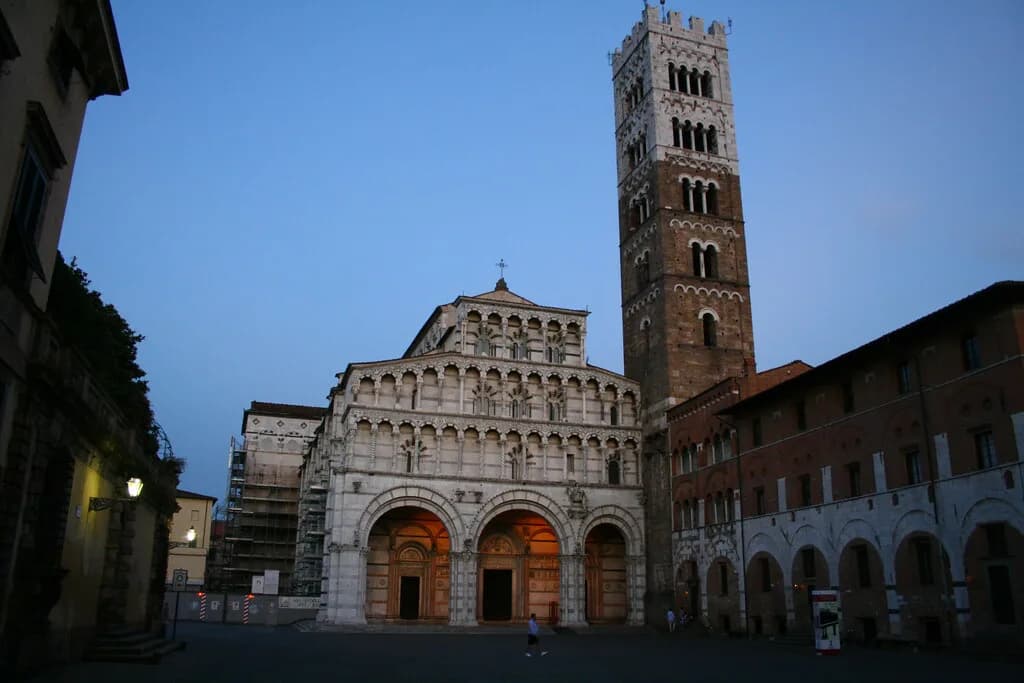
The cathedral, also called Duomo di Lucca or San Martino, anchors the centre. Inside, look for the Volo Santo wooden crucifix, Tintoretto's Last Supper and the Ilaria del Carretto funerary monument; the bell tower adds a further climb of 217 steps to a rooftop viewpoint. These are separate ticketed elements, not one all-inclusive entry.
A combined ticket has been reported to bundle the cathedral, its museum and bell tower with the nearby Church of Saints Giovanni and Reparata, which sits on excavated Roman and medieval layers and has its own 119-step tower. Treat the bundle's scope as reported rather than confirmed for your dates, and confirm current inclusions and prices at the ticket office or official site before committing.
If stairs are the theme of your day, be selective here. Climbing both the cathedral tower and the San Giovanni tower plus a civic tower is a lot of steps; most visitors get the same wide view of terracotta rooftops from one or two climbs. Our Lucca Attractions hub collects individual guides if you want to compare them in detail.
San Michele in Foro and Via Fillungo
Continue to San Michele in Foro on Piazza San Michele, a church first built in the 8th century and later rebuilt, with a detailed facade and a lively square in front. One travel account rates it above the cathedral for visual impact, which is an opinion rather than a fact, but it is genuinely worth a look even if you skip the interior.
From there, Via Fillungo threads through the shopping heart of the centre and passes Torre delle Ore. It mixes chain stores with smaller boutiques, so it works as a gentle transition between sights rather than a destination in itself. Keep an eye on the clock here; this is where a leisurely morning can quietly eat your tower slot.
Choosing a Tower: Torre Guinigi or Torre delle Ore
Torre Guinigi is the signature climb: a 45-metre medieval tower topped with oak trees, reached by 230 steps that shift from wide brick to narrow metal. Because capacity at the top is limited, tickets are sold for timed entry slots and advance reservations are advised in high season. Queues build during the day, so going early is the practical move.
Torre delle Ore, the clock tower, stands slightly taller at about 50 metres and takes roughly 200 steps on wooden stairs. It draws noticeably fewer visitors, and from the top you get the bonus of looking across at Torre Guinigi with its rooftop garden. If you want one climb with the better story, take the trees; if you want breathing room on the stairs, take the clock.
A combination ticket covering both towers and the Botanical Garden has been sold at Torre Guinigi, which makes doing both more sensible than paying twice. Confirm current pricing, opening hours and whether Torre delle Ore is operating during your visit, since one guide notes it may close in winter. Buy or reserve through the official ticketing channel rather than assuming slots are available on the day.
Lunch at Piazza dell'Anfiteatro
Piazza dell'Anfiteatro is the natural lunch stop: an elliptical square whose ring of buildings follows the outline of a Roman amphitheatre, lined with cafes, restaurants and small shops. It is one of the most photogenic spots in the city and, unsurprisingly, one of the busiest at midday. Arriving slightly before or after the peak gives you a better chance of a table without waiting.
Set expectations on food. One account notes that many restaurants facing the square get mediocre reviews, with the notable exception of Trattoria L'Angolo Tondo, which it rates highly. That reflects reviewers' experience at the time of writing, not a guarantee, so glance at current reviews and check opening days before building your day around any single kitchen.
For the local specialty, look for tordelli lucchese, a meat-stuffed fresh pasta served with a rich ragu, and finish with buccellato, the anise-flavoured sweet bread sold in bakeries around town. Ordering these two gives you a distinctly Lucchese lunch without chasing a specific restaurant.
Afternoon: A Garden, a Mosaic, or Puccini
With the afternoon free, choose between Palazzo Pfanner and the western churches rather than trying to do both properly. Palazzo Pfanner pairs aristocratic rooms with a baroque garden of sculptures, flowers, fruit trees and a fountain, and it has appeared as a filming location in productions including Portrait of a Lady. Check the palace's own site for hours and admission before you go.
The alternative is Basilica di San Frediano, recognisable by the large golden mosaic across its facade and home to the body of Saint Zita. One writer considers it worth a detour rather than a must-see, so treat it as a pleasant add-on if you are nearby. Opera fans can pair it with the Puccini Museum, housed in the composer's childhood home, for a compact cultural afternoon.
If you still have energy and daylight, Piazza Napoleone is a central square with the ducal palace and occasional live music, useful as a final pause before dinner rather than a sight in its own right. Both this square and the smaller churches are free to wander, which keeps the afternoon budget-friendly after paid morning entries.
Optional Add-On: the Nottolini Aqueduct
The Acquedotto Nottolini lies outside the walls, roughly a 15 to 20 minute walk behind the main train station, and stretches over three kilometres through the countryside. It was built in the 1820s rather than in Roman times, despite appearances, and is popular with walkers and cyclists. Our Acquedotto Nottolini Lucca excursion guide covers the route in more detail.
Skip it on a tight one-day schedule. One traveller's assessment is that it is a nice walk but not something you miss much by leaving out. Save it for a longer stay, when a slow cycle along the arches makes more sense than squeezing it between a tower and dinner.
Pacing and Common Pitfalls
The main risk is overbooking. Timed entries at the towers create fixed anchors in your day, and stair fatigue is real: 230 steps at Torre Guinigi, around 200 at Torre delle Ore, 217 at the cathedral tower and 119 at San Giovanni add up quickly. Choose two climbs at most and leave the rest of the day flat.
Book or reserve tower slots ahead where the operator allows it, especially in high season, and keep a paper or offline copy of confirmations since signal in narrow stone streets can be patchy. Check opening days for paid interiors the week before travelling, because seasonal hours change and a closed museum can reshape an afternoon.
If one day leaves you wanting more, a Lucca two-day itinerary spreads the same sights over a gentler pace with room for a day trip toward Pisa or the surrounding countryside. If you are planning a longer Tuscan base, the three-day itinerary adds wine tasting and countryside time without repeating this route.
Getting There and Getting Around
Lucca's train station sits just outside the walls on the south side, about a ten-minute walk from the centre, which makes the city easy to combine with Florence or Pisa as a day trip. Exact timetables and frequencies change, so check the operator's current schedule rather than relying on remembered journey times. Buses take longer, so trains are the simpler choice for most visitors.
By car, park in one of the lots outside the centre, such as those near Via del Pallone, Cittadella or Palatucci, and walk in. Inside the walls, everything on this route is reachable on foot, and the historic centre is largely free of cars, which is precisely why a single day works so well here.
Where to Stay if the Day Becomes a Night
Staying overnight changes the city's character: evening streets thin out and you get the walls to yourself at sunset. Options range from the Grand Universe Lucca beside Piazza Napoleone to Hotel San Marco north of the centre, and budget choices inside the walls such as La Gemma di Elena. Compare current rates and availability directly, since prices move with season.
Plan Your Visit
A single day in Lucca works when you accept that you cannot climb every tower, enter every church and cycle the full wall circuit without rushing. Pick one or two climbs, treat the Duomo complex as separately ticketed sites rather than one entry, and protect lunch as a proper pause on the elliptical piazza.
Before you travel, confirm hours, ticket inclusions and any winter closures through the official tourism portal and each site's own ticket desk. Build the day around fixed time slots, keep the rest flexible, and the compact centre will do most of the work for you.
Frequently Asked Questions
Can you see Lucca in one day?
Yes, if you prioritise. The historic centre is compact and largely car-free, so a full day on foot covers a stretch of the walls, the cathedral area, San Michele in Foro, one tower climb and lunch on Piazza dell'Anfiteatro without rushing. Expect to skip either the second tower or the afternoon garden.
Is Lucca a good day trip from Florence?
It works well by train, with the station a short walk outside the walls. Rather than trusting any published journey time, check the current timetable from your departure station for your travel date, since schedules vary by season and service.
Should you climb Torre Guinigi or Torre delle Ore?
Choose Torre Guinigi for the tree-topped summit and the more distinctive experience, accepting timed entry and busier stairs. Choose Torre delle Ore for a slightly higher viewpoint, fewer people and a look back at Torre Guinigi itself. A combination ticket has covered both towers and the Botanical Garden, so confirm current pricing and inclusions at the ticket office.
What is the signature dish to try in Lucca?
Look for tordelli lucchese, a meat-filled fresh pasta with a rich ragu, followed by buccellato, an anise-flavoured sweet bread found in local bakeries. Both give you a sense of the city's cooking without depending on one particular restaurant being open.
Do you need to book tower tickets in advance?
Both towers use timed entry slots, and advance reservation is recommended in high season and at busy periods. Check the current booking channel and whether Torre delle Ore is operating on your dates, as it may close during winter.
Is the Nottolini aqueduct worth adding to a one-day visit?
Only if you have spare time. It sits outside the walls, a 15 to 20 minute walk behind the station, and makes a pleasant walk or cycle, but it is not essential when the day is already full of towers and churches.
Sources
Continue exploring
More guides you'll find useful