Lucca Cycling Guide: Riding the Walls and Beyond
Plan a slow bike day in Lucca: ride the tree-lined Renaissance walls, roll through the historic center, then head out toward countryside villas.
On this page
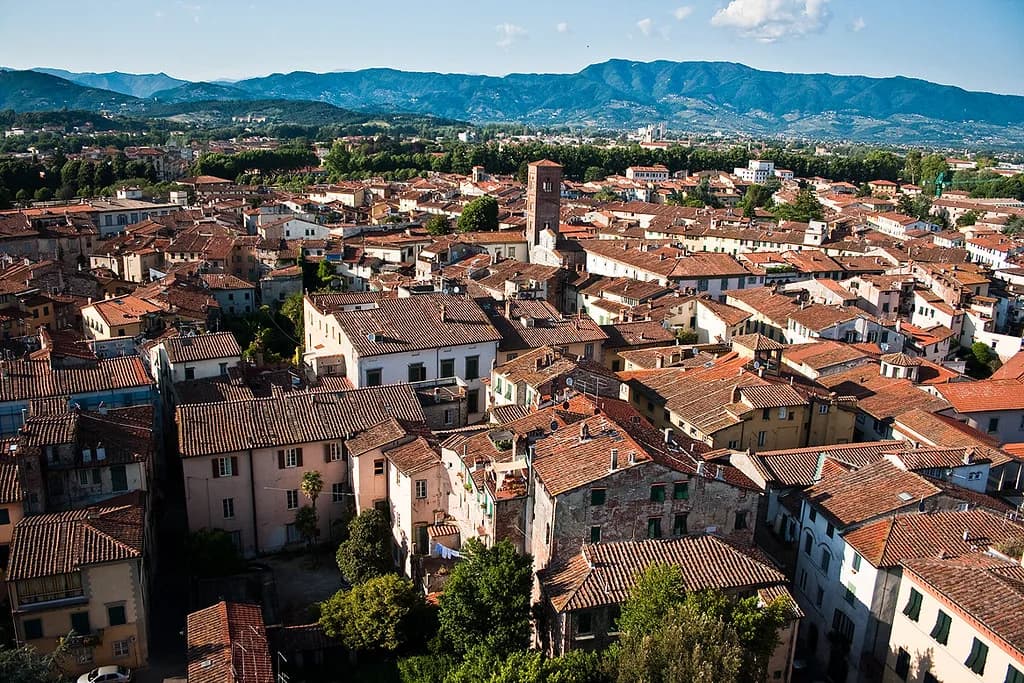
Lucca is one of those Italian cities where a bicycle makes more sense than a car. The historic center sits inside a ring of Renaissance walls that now function as a raised, tree-lined park, with the city's landmarks packed tightly within. That layout lets you combine three very different rides in a single day: the walltop promenade, the lanes of the old town, and the flatter countryside beyond.
This guide treats cycling here as a slow activity rather than a sport. It covers what to expect on each zone, how to decide between a standard bike and an e-bike, what a guided tour actually includes, and where the routes head once you leave the walls. Concrete details such as hire prices, departure times and current access rules are things you should confirm directly, because operators change them and no single listing stays accurate forever.
The Walls as a Raised Park, Not a Road
The most distinctive ride in Lucca happens on top of the walls themselves. A guided tour listing describes the fortifications as a genuine raised park circling the city, and it also notes that Lucca is largely a pedestrian and bicycle city. That description sets the right expectation: you pedal at strolling pace among walkers, not as traffic on a ring road.
The ramparts are substantial. One account puts them at roughly twelve metres high and thirty metres wide at the base, complete with bastions, which makes the top feel like a broad promenade rather than a narrow ledge. Riders share that surface with families, joggers and people simply walking, so ringing a bell and slowing at blind corners matters more than covering distance.
One obvious question has no published answer: whether cycling is permitted along the whole circuit at all hours. Lucca's official tourism site is the sensible place to check current rules before you set out, and rental staff or your guide will know local practice. Treat any advice you read online, this guide included, as a prompt to verify rather than a guarantee.
Bike or E-Bike: Matching the Machine to the Ride
For the walls and the historic center alone, a standard city bike is plenty. The terrain inside Lucca is essentially flat, the distances between Piazza dell'Anfiteatro, San Michele and the cathedral are short, and a simple geared bike keeps the ride light. The case for electric assistance arrives with the countryside and the heat, not with the center.
A rider's account of an e-bike tour around the walls and Renaissance villas makes the trade-off plain. The hills outside the city can be demanding on a normal bike, especially under strong sun, while electric assistance lets riders of different fitness levels stay together and still reach the villas. The same account warns that some cycle-path sections are narrow and multi-use, so courtesy near families matters as much as power.
Another review of the same style of e-bike route frames the choice as a fitness equaliser rather than an upgrade. The reviewer notes that assisted bikes let you cover more ground without draining your energy, which matters if you want to combine the walls, the center and a villa road in one outing. If you are comfortable on a regular bike and plan to stay inside the walls, save the e-bike for another day.
Guided Tour or Going It Alone
A guided bike tour removes most of the planning friction. One operator's listing for a walls-and-center ride describes a two-and-a-half-hour experience with a local guide, a bicycle and a helmet included, food and drinks excluded, and confirmation that English and Italian are available. It departs from Piazzale Ricasoli, asks participants to bring identification and comfortable shoes, and states a full refund for cancellations made at least twenty-four hours before the start.
Those terms belong to that particular listing and that provider, so check your own booking's language options, inclusions and cancellation window before paying. Going independently, by contrast, gives you the freedom to stop for a coffee or linger at a church facade, but leaves you to work out bike hire, a route and the current walltop rules yourself. Neither approach is better; they suit different appetites for admin.
Rolling Through the Historic Center
Inside the walls, the classic loop strings together the city's signature squares. Piazza dell'Anfiteatro is the showstopper: its elliptical shape echoes a Roman amphitheatre that could hold around ten thousand spectators, and the ring of buildings now housing cafes and shops traces that ancient outline. Ride through, lock up, and walk a circuit of the piazza rather than trying to appreciate it from the saddle.
From there, the lanes lead easily to San Michele in Foro and on to Piazza San Martino, where the cathedral stands. Add a detour to Via Fillungo if you want shops and a glimpse of the clock tower. These are not quiet corners of the city, so early morning gives the most comfortable riding and the clearest photographs.
If you want to climb something rather than ride past it, park the bike for the Torre Guinigi, the brick tower topped with holm oaks. It is one of the most recognisable sights in the city and appears in our guide to the hidden gems in Lucca alongside quieter corners worth folding into a slow day. Just do not plan to cycle up; the approach is by foot.
Bastions, Gates and the Underground Side
The walls are not only a surface to ride on. Nineteenth-century and Renaissance engineering left tunnels, casemates and cannon chambers inside the bastions, and guided itineraries exist that take visitors down into some of those normally closed spaces. If military engineering interests you more than another church interior, this is the unusual half-day in Lucca, and it can be paired with a shorter walltop ride.
There are six main city gates, and some bastion posterns once used by soldiers now serve as pedestrian ways. Baluardo San Paolino and Baluardo San Colombano are among the named bastions on the circuit, which makes them useful landmarks when you are navigating. Consult the Lucca City Walls Guide before planning a route that depends on a particular gate being passable on your day.
Beyond the Walls: Serchio Path and the Via delle Ville
The ride that most rewards leaving town follows the Serchio river cycle path before joining secondary roads known as the Via delle Ville. One tour description sets out exactly this shape: the route winds along the river, then crosses the villa road toward prestigious estates on the edge of the countryside. This is gentle riding by Tuscan standards, but it is open country, so carry water and a charged phone.
The Acquadotto Nottolini, the long nineteenth-century aqueduct outside the walls, is a natural extension for confident riders who want a longer run. What the available sources do not give is a precise mapped route or distance from the walls to the aqueduct, so do not rely on a figure you read anywhere without confirming it with a hire shop or a current map. Distances that sound tidy online often are not.
Which Villas to Aim For
Villa Reale di Marlia, Villa Oliva and Villa Torrigiani are the names that recur on villa cycling routes, and Villa Grabau is sometimes added to the list. The ride itself is the point: avenues of cypresses, stone gates and white facades rising out of flat farmland. Treat each stop as a pause, not a full visit, unless you have checked separately what is open.
Interiors are a separate decision from the ride. A rider's account notes that villa interiors are sometimes limited by seasonal opening or private access, so much of the Renaissance impression comes from exteriors and parkland. In other words, do not assume a single bike tour grants entry to the decorated rooms; check each villa's own published visiting information if interiors matter to you.
If you would rather stay inside the city for a garden stop, the Orto Botanico di Lucca, founded in 1820, sits on the eastern side of the walls near the San Regolo bastion's entrance. Palazzo Pfanner, with its eighteenth-century garden attributed to Filippo Juvarra, has its own published opening arrangements, which currently run from mid-March to the end of December. Both are pleasant off-bike breaks, so confirm current details before you set out.
Season, Heat and Timing
Late morning sun is the practical constraint most riders underrate. One account suggests starting early to avoid crowds in the old town and to spare yourself heat on the rural stretches, while a hat and water are described as necessities rather than optional extras. That advice applies equally to a short walltop loop and a long villa ride; the walls offer shade in places, the open roads do not.
Spring brings another reason to linger in the city: camellias, wild peonies and the handkerchief tree are at their best in the botanical garden during March and April. That is also when the walls draw garden visitors for shows and markets, so the promenade gets busier. Shoulder seasons give you comfortable riding temperatures without the summer glare.
What to Verify Before You Book
Bike hire is the biggest practical unknown. Fees, deposits, helmet policies, opening hours and whether child seats or smaller frames are available vary from shop to shop, and no single source here documents any of them reliably. Contact providers directly, or ask your accommodation, and confirm what a quoted price includes before you commit.
Walltop access rules are the second thing to confirm. Whether the promenade is open to cyclists throughout the evening, and exactly which gates you may use, is a question for Lucca's official tourism site or your rental shop. Italian cities sometimes adjust circulation rules seasonally, so a blog post from last year, this one included, is a weak authority on today's rules.
Finally, read the terms of any guided tour carefully. Inclusions, language options and cancellation conditions differ between operators, and some listings bundle a helmet and bicycle while others do not. The sample listing cited here is one provider's offer, not a standard for the city.
A Suggested Half Day and a Suggested Full Day
These are suggestions, not official itineraries. For a half day, start early on the walls, ride a full circuit at a relaxed pace, then drop into the center to see Piazza dell'Anfiteatro, San Michele and the cathedral exterior, finishing with a coffee. Lock the bike for each stop rather than pushing it through crowded lanes.
For a full day, add the countryside after lunch. Head out along the river path and the villa road, aiming for two or three estates, then return with enough daylight to spare. If you have children with you, our guide to Lucca with kids: family-friendly activities is worth reading before fixing a distance they will enjoy rather than endure.
Plan Your Visit
Lucca rewards riders who treat the bicycle as a way of slowing down rather than covering ground. The walls give you a raised park, the center gives you tight lanes and squares, and the countryside gives you flat roads out toward the villas. Pick one zone or combine all three, but build in time to stop.
Confirm three things before you go: bike hire terms, current walltop rules, and what any villa or tour actually includes. Everything else, from pace to route to where you pause for lunch, can be decided on the day. That is the advantage of a city this compact.
Frequently Asked Questions
Can you cycle on top of Lucca's walls?
The walls are widely used by cyclists as a raised park around the city, but access rules and permitted hours are not published consistently. Check Lucca's official tourism site or ask your bike provider for the current situation on the day you plan to ride.
Is Lucca flat enough to explore by bike?
The historic center and the walltop circuit are essentially flat, and one guided tour listing describes Lucca as largely a pedestrian and bicycle city. The hills begin on the roads out toward the villas, where electric assistance becomes more useful.
Should you choose a regular bike or an e-bike?
For the walls and the old town, a normal city bike is sufficient and easier to park. An e-bike pays off on villa routes with hills and sun exposure, where assistance lets mixed-ability groups stay together over longer distances.
What can you see on a guided bike tour of Lucca?
A typical walls-and-center ride takes in the promenade, secret passages inside the walls and the main squares, with a local guide. One listing describes a two-and-a-half-hour format including bicycle and helmet, departing from Piazzale Ricasoli, with food and drinks excluded.
How do you reach the Renaissance villas outside Lucca by bike?
Routes generally follow the Serchio river cycle path and then the secondary roads known as the Via delle Ville. Names that recur include Villa Reale di Marlia, Villa Oliva and Villa Torrigiani. Confirm the route and distances locally rather than relying on figures published online.
Where can you hire a bike in Lucca?
Bike hire is available in the city, but shop names, addresses, prices and deposit rules change and are not documented here. Ask your accommodation for a recommendation, contact providers directly, and confirm what the rate includes before committing.
Is cycling in Lucca suitable for families?
Yes, with care. The walltop promenade and the flat center suit families, but some countryside cycle-path sections are narrow and shared, so keep children close. Read up on family-friendly options before choosing a route length.
Are villa interiors included on a bike tour?
Not necessarily. Villa interiors are sometimes limited by seasonal opening or private access, so much of the experience comes from exteriors and gardens. Check each villa's own visiting information if you want to go inside.
Sources
- Lucca and The Walls Guided Bike Tour | musement
- Lucca E-Bike Tour Review: Walls & Renaissance Villas Explored – wanderframe.water.blog
- Traveler's Guide to LUCCA E-BIKE -the cycle path and the rinassance villas - Is It Worth It? | Listen to the Podcast on Spotify
- Official event website
- Orto Botanico di Lucca, Il giardino più prezioso di Lucca, fondato nel 1820
- SPRING TREASURES: DISCOVER LUCCA’S BOTANICAL GARDEN IN FULL BLOOM - Paola Moschini
- Palazzo Pfanner - Lucca
- Squares - Piazza Anfiteatro (Amphitheatre Square in Lucca) - Piazza dell'Anfiteatro, Lucca, ,
- Visit Piazza dell' Anfiteatro, Lucca in Lucca | Live the World
- Beneath the Walls of Lucca and Inside the Grotta del Vento
Continue exploring
More guides you'll find useful