Bergamo Two Day Itinerary: Città Alta and Lower Town
A slow two day Bergamo plan: Venetian Walls and Piazza Vecchia on day one, then the Rocca, San Vigilio and lower-town streets on day two.
On this page
Bergamo is often treated as an airport name rather than a destination, and that is exactly why two days reward you more than a rushed layover. The city divides into Città Alta, the walled historic centre on its hills, and Città Bassa, the modern lower town where many visitors only pass through. This plan gives the upper town a full day and hands the second to museums, the San Vigilio heights and slower lower-town wandering.
Every duration and route here is a suggestion, not official guidance from the tourism board. The core idea is sequencing: make the climb once, then let the rest of day one run downhill, and use day two for the fortress and the second funicular. That rhythm keeps tired legs out of the equation without cutting anything essential.
Orientation: Città Alta Above, Città Bassa Below
Città Alta sits inside defensive walls commissioned by the Republic of Venice in the sixteenth century, and those walls form the natural border with the lower town. The climb on foot from Città Bassa is steep, so the vintage city funicular is the sensible alternative and has linked the two levels since 1887. Plan your day around a single ascent, then walk between sights up top rather than descending and re-climbing.
A second, separate funicular continues from the upper town to San Vigilio hill, which is why the two cable cars work better as two distinct experiences than as one transport note. The official tourism site is the place to confirm current operating arrangements before you rely on either, since service details change. Tickets and any tourist transport passes should be checked at the infopoint or ticket machines on the day.
Day 1 Morning: Enter Through Porta San Giacomo and Walk the Walls
Start at Porta San Giacomo, the most impressive of the four gates into the upper town, built of local white marble and once the entrance for travellers arriving from Milan. Walking up through the gate and along Viale delle Mura gives you the plain-facing views without wasting the morning on a second uphill slog. The walls run more than five kilometres around the old centre and hold UNESCO World Heritage status as part of a wider group of Venetian fortifications; a partial circuit is plenty for day one, as this walkalong itinerary guide describes.
Treat the walls as a slow, free start rather than a ticketed attraction. The path is exposed, so carry water and wear shoes that handle cobbles and stone steps. If you want more of the overlooked corners around the fortifications, our guide to the hidden gems in Bergamo pairs naturally with this stretch.
Day 1 Midday: Piazza Vecchia, the Campanone and Piazza Duomo
Piazza Vecchia is the heart of the upper town, framed by the Palazzo della Ragione, the white Palazzo Nuovo and a central fountain, with cafés spreading around it. The Campanone, the civic tower, offers the broadest panorama and can be reached by lift rather than stairs. One traveller account puts the tower at around 56 metres with a small entry charge covering a combined ticket; confirm the current price and lift status at the ticket desk before committing.
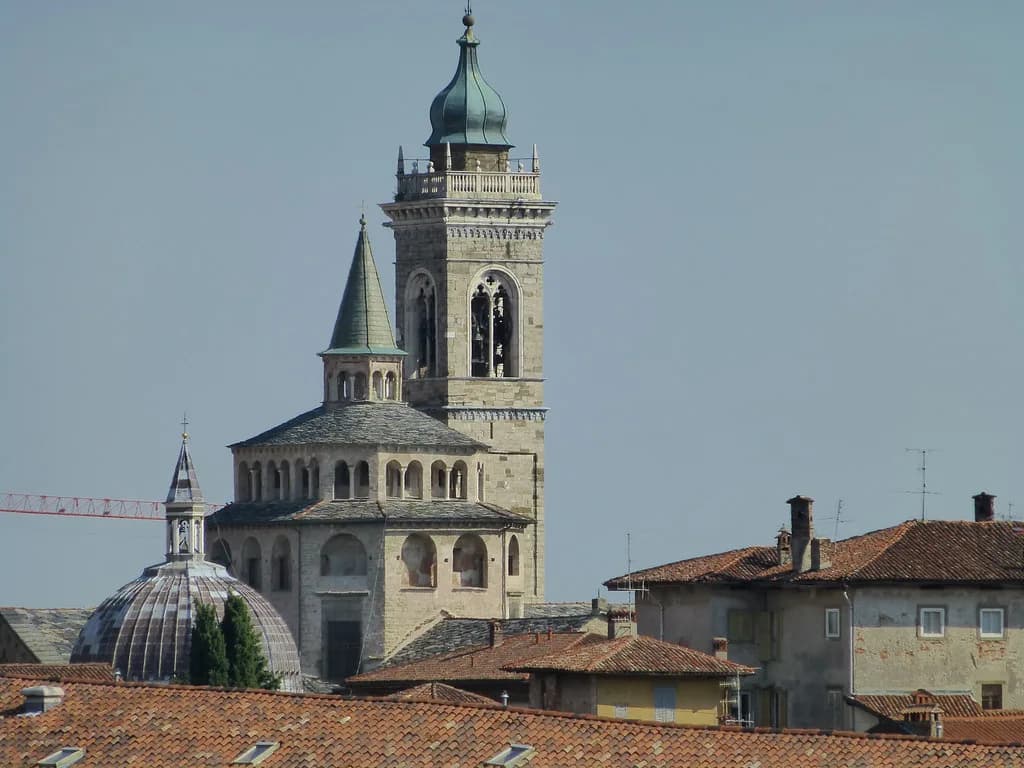
Next door, the Piazza Duomo cluster is where you separate free entry from paid interiors. The Cathedral and the Colleoni chapel are free to enter, and the chapel's red-and-white marble facade is among the city's finest Renaissance exteriors. Santa Maria Maggiore is the exception: the same account reports a small admission fee for the basilica interior, so budget attention and money separately rather than assuming one ticket covers the cluster.
Day 1 Afternoon: Via Gombito, Via Corsarola and a Stracciatella Stop
Spend the afternoon without a checklist. Via Gombito, watched over by its tall medieval tower, and Via Corsarola, the upper town's main street, are the two arteries worth wandering slowly, with medieval buildings keeping much of the route in shadow. This is also the moment for stracciatella: the flavour was invented at La Marianna, just outside the old citadel walls, in 1961, and it remains the city's signature scoop.
If you would rather have a guide unpack the history and food than read plaques, local walking tours are widely bookable, though availability and languages change by season. Our collection of Città Alta corners and quieter passages suits anyone who wants to extend the afternoon away from the busiest lanes.
Day 1 Evening: Aperitivo, Polenta e Osei and the Night Bells
Aperitivo is a northern Italian institution, and the upper town's cafés make an easy base for it after a day on your feet. Follow it with polenta e osei, the city's marzipan dessert decorated with small chocolate birds, which is more souvenir than dinner. If you are still in the square late, the Campanone's bell is reported to ring a hundred times at ten each evening, a custom once tied to the closing of the city gates; treat it as a reported tradition and check locally rather than planning your night around it.
Staying overnight in the upper town changes the atmosphere once the day-trippers leave, with lit alleys and quiet piazzas replacing the afternoon crowds. That is the strongest argument for booking a room uphill rather than near the station, even if the lower town offers more choice.
Day 2 Morning: Rocca di Bergamo and the Tempietto
Day two belongs to the Rocca di Bergamo, the fortress on Sant'Eufemia hill with green grounds, a museum and 360-degree views that reach the Alps and, on a clear day, Milan's skyline. One account gives a small entry fee for the fortress and museum, with tickets and opening times published by the site itself; verify both before you go, since hours shift by season. Walk the patrol walkway if it is open and leave time for the terraces.
Then look for the Tempietto di Santa Croce, a small Romanesque chapel tucked between much larger buildings of the upper city. Its interior may be closed when you arrive, and the same account notes exactly that during a visit, so treat the exterior as the reliable reward and the frescoes as a bonus. This is the kind of modest stop that fills a second day better than padding day one.
If you want more of these tucked-away places, the hidden gems in Bergamo guide covers the quieter corners worth folding into a slow morning.
Day 2 Midday: A Slower Lunch and the Lower Town
Descend for lunch and give Città Bassa an honest couple of hours. The lower town is the modern city, with wider streets and everyday commerce, and it is where you see how Bergamo lives once the postcard views are out of frame. Casoncelli, the stuffed pasta served with butter and bacon, and risotto alla Milanese both appear on local menus, so pick a trattoria away from the main tourist lanes and eat properly.
The lower town is also where practical errands get done, from luggage storage to tourist information. The official visitor site lists info points, baggage storage and museum opening information in one place, which is worth a look before you arrive rather than hunting for it on the day.
Day 2 Afternoon: The San Vigilio Funicular at Sunset
Ride the second funicular from the upper town to San Vigilio, the highest point of the visit and the place where Bergamo's position in the Alpine foothills reads most clearly. From the Belvedere San Vigilio viewpoint you get both districts at once, and the walk around the castle ruins is a pleasant way to end the afternoon, with the light improving as the evening comes. The account describing that view rates it for sunset, which is the sensible timing.
Restaurants near the upper funicular station sit at the edge of the rocks and are priced for the view, which is a fair trade once rather than a habit. Check the last funicular descent before you settle in for dinner, because the alternative is a long walk down in the dark.
Day 2 Evening: Dinner, from Casoncelli to Lower-Town Tables
For a final dinner, choose between atmosphere and convenience. The upper town's streets around Via Corsarola hold the traditional trattorias, while the lower town has more room and easier access to transport for an early start. Neither is a compromise; the trade-off is simply whether you want cobbles and candlelight or a short walk to your bed or bus.
Book ahead for anything that matters, particularly at weekends, and confirm opening days directly with the restaurant, because kitchen hours vary by season. A final gelato or a glass of something local is a better use of the last hour than squeezing in one more museum.
Where to Stay: Upper Town Atmosphere or Lower Town Convenience
Città Alta rewards anyone who wants the medieval centre to themselves in the evening and the morning, and the hotel choices there lean towards characterful conversions. The trade-off is price, stairs and luggage hauling up the hill. Città Bassa offers more rooms, easier parking and quicker links to the airport, station and onward trains to Milan or Brescia.
For a two-day trip the split matters less than the single ascent principle: book uphill if the evening atmosphere is the point of the trip, and stay below if you plan day trips or an early flight. Either way, keep the funicular or a short taxi ride in mind for arrival day with bags.
Getting Around and Arriving
Bergamo's airport sits only about five kilometres from the city, with public buses connecting it to the centre, and the lower town is compact enough to cross on foot. From the station, trains run to Milan and Brescia, which is why many travellers treat Bergamo as a stopover. The city's own transport and arrival information is the place to confirm current connections, because routes and timetables are not fixed from season to season.
Within the city, walking plus the two funiculars covers nearly everything in this plan. A day or multi-day tourist transport ticket can be worth it if you also use the airport bus, but check what it covers before buying, as not every ticket type includes every service.
Common Mistakes to Avoid
The first mistake is overloading day one with the fortress and the walls, which leaves no reason to stay a second night. The second is skipping the Venetian Walls in favour of the funicular alone, since the walk gives you the plain-facing view that defines the city. The third is treating Bergamo as a Milan add-on and giving it three hours between flights.
Finally, do not assume that one ticket or one pass covers the Cathedral, Santa Maria Maggiore, the Colleoni chapel, the Campanone and the Rocca. They are separate sites with separate arrangements, some free and some paid, so check each at its own ticket desk.
Plan Your Visit
Two days in Bergamo works because the city splits so cleanly: one day on the hill for the walls, the squares and the evening atmosphere, and one for the fortress, the San Vigilio heights and the everyday lower town. Make the climb once, keep the second funicular for sunset, and leave room for stracciatella and a proper plate of casoncelli.
Confirm current opening hours, ticket prices and funicular service directly with the official tourism site or the sites themselves before you travel, since those details change. For the individual sights in detail, browse our Bergamo Attractions hub before you build your own version of this plan. For related planning, see Bergamo Three-Day Itinerary: Città Alta, Food and a Day Trip.
Frequently Asked Questions
Is two days enough for Bergamo?
Two days lets you give Città Alta a full day and still see the Rocca, San Vigilio and part of the lower town. It is a suggested pace rather than an official recommendation, and travellers with more time often add a day trip or a slower afternoon. If you only have one day, prioritise the walls, Piazza Vecchia and one viewpoint.
What should I do on day one in Bergamo?
Enter through Porta San Giacomo, walk a stretch of the Venetian Walls for the plain-facing views, then spend midday around Piazza Vecchia and the Piazza Duomo cluster. In the afternoon wander Via Gombito and Via Corsarola, and in the evening try an aperitivo and, if you stay in the upper town, listen for the Campanone bell.
What can I see in Bergamo on a second day?
Day two suits the Rocca di Bergamo with its grounds, museum and views, then the small Tempietto di Santa Croce nearby. Have a slow lunch in the lower town and ride the second funicular to San Vigilio for the belvedere and castle ruins towards sunset.
Should I stay in Città Alta or Città Bassa?
Città Alta gives you the medieval lanes once the day-trippers leave, at the cost of stairs, luggage hauling and fewer rooms. Città Bassa is more convenient for the station, airport buses and day trips. For two nights, the atmosphere uphill is often worth the climb, but convenience wins if you have an early flight.
Do I need the funicular to reach Città Alta?
No, but the vintage funicular saves the steep walk from the lower town and has run since 1887. A second, separate funicular continues to San Vigilio hill. Check current service and ticket arrangements locally before relying on either, and keep a walking plan in reserve in case of disruption.
What food should I try in Bergamo?
Look for casoncelli, the stuffed pasta served with butter and bacon, and risotto alla Milanese on local menus. For dessert, try stracciatella gelato, invented at La Marianna in 1961, or polenta e osei, the marzipan cake with chocolate birds. Aperitivo is a good way to end the day in Città Alta.
Sources
Continue exploring
More guides you'll find useful