Villa Rufolo Ravello Guide: Gardens, Cloister and Views
Plan a visit to Villa Rufolo in Ravello: the Moorish cloister, Klingsor Garden, Belvedere views and practical hours, admission and timing for one landmark.
On this page
Villa Rufolo sits beside Piazza Vescovado, opposite Ravello Cathedral, so you can walk in from the town's historic centre without any transport. The operator currently posts daily opening from 09:00 to 19:00, last entry at 18:30, and a standard admission price of eight euros; because these are published values that can change with season and events, confirm them on the official site before you go.
The property is less a single monument than a sequence of parts: an entrance tower, a cloister, the shell of the Knights' Hall, and gardens that climb and turn on several levels toward the sea. Knowing that order helps you pace the visit and decide where to linger, because the grounds reward slow walking far more than the built structures do.
Quick Orientation: Where the Villa Sits
The villa fronts onto the small square that serves as Ravello's living room, with the cathedral a few steps away and cafés and lanes radiating from the same space. In practical terms, you can arrive, tour the villa and step back out into the historic centre without any transport in between, which is useful for a site with gardens this extensive.
If you are planning a broader sweep of the town, treat the villa as one substantial stop rather than a quick photo. The Ravello Attractions hub lists the other sights nearby so you can build a route on foot, and it helps to check the villa's own notices before fixing a day.
History in Brief: Merchants, Disgrace and Arab-Norman Style
The complex takes its name from the Rufolo family, wealthy merchants who first owned it, and their fortunes collapsed in 1285 before the property passed to other prominent local families. That merchant origin explains the ambition of the architecture: this was a statement of wealth as much as a residence.
What visitors see today is predominantly Arab-Norman in style, a blend most obvious in the cloister's paired columns and in the tower that guards the entrance. Reading the site as a layered palimpsest, rather than a single-period building, makes the mix of Sicilian, Norman and later nineteenth-century elements easier to follow as you walk through.
The Moorish Cloister and Its Columns
The cloister is the architectural centrepiece for many visitors, built with a double order of columns in an Arab-Sicilian idiom that gives the small space a calm, patterned rhythm. Look up as well as across: the arrangement of the two colonnades is what distinguishes this courtyard from plainer religious cloisters elsewhere on the Amalfi Coast.
Because the cloister is compact, it tends to fill quickly when a group arrives, so it pays to visit it before or after the main garden wave rather than in the middle of your walk. If you want the space calmer, go early in the day, close to the posted opening time.
Main Tower and the Knights' Hall
The Main Tower is the oldest element of the complex, rising about thirty metres over three floors, and the mullioned windows on its second floor frame one of the property's views. The Knights' Hall, with its large arched openings, was probably once connected to the tower and topped by a dome, though what remains today is the skeleton rather than a furnished interior.
Set expectations accordingly: these are architectural spaces to read rather than rooms to browse, and there is little furniture to see. Budget ten to fifteen minutes for both, then give the gardens the bulk of your time.
The Gardens: Layers, Plants and Nevile Reid
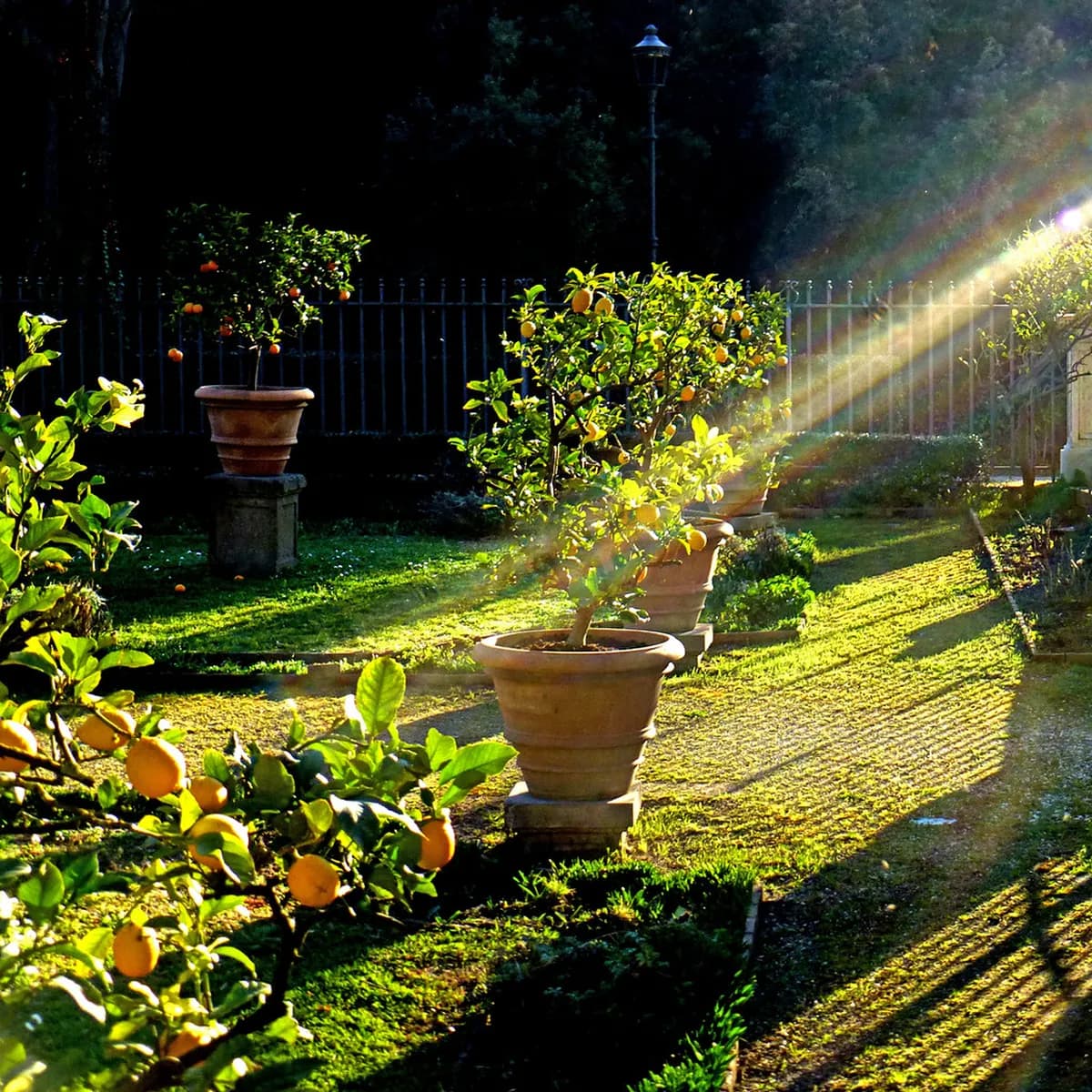
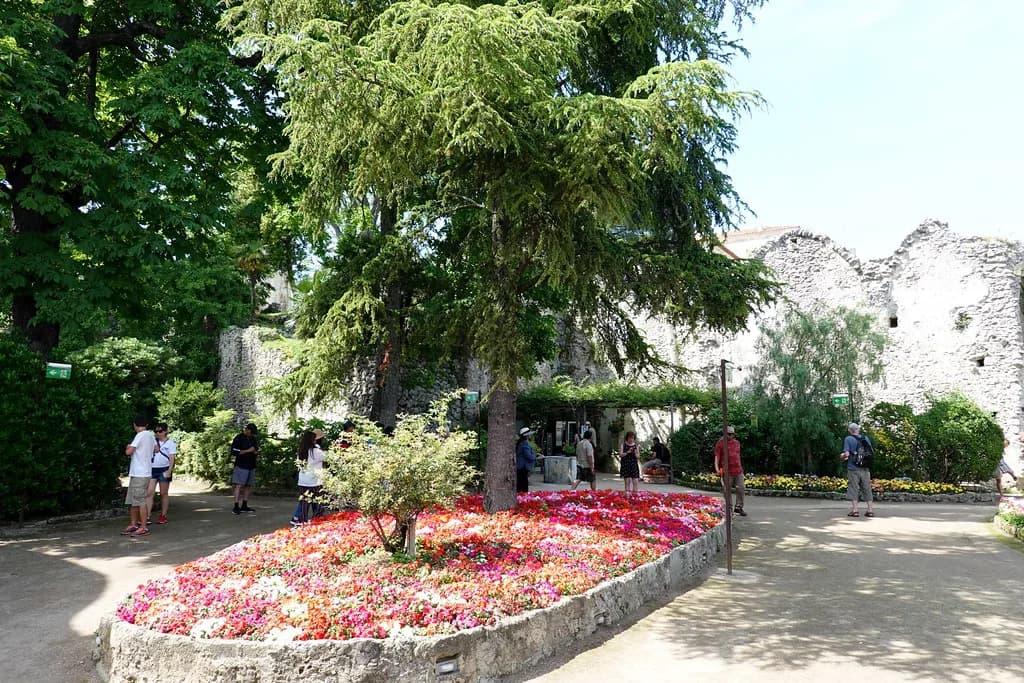
The gardens are arranged on several levels and hold a mix of native and exotic plants, the result of restoration work by Francis Nevile Reid, who bought the property in the mid-nineteenth century. Reid also paid for an irrigation system fed from the aqueduct that supplied water to the villa and to Piazza Vescovado, an engineering detail that explains how such lush planting survives on a dry ridge.
Walking the levels takes longer than a quick glance suggests, because paths bend and views open without warning. Wear shoes that cope with steps and uneven paving, and carry water in warm months; the terraces offer little shade on a bright afternoon.
Klingsor Garden and the Belvedere Terrace
Reid's nineteenth-century romantic taste shaped the Klingsor Garden, and the Belvedere is the viewing terrace planted with several rose varieties, some of them rare. The name Klingsor ties the planting to Wagner's Parsifal, which gives the garden a literary layer on top of its horticulture.
The Belvedere is where most visitors slow down, since the terrace looks out over the coast and is the natural endpoint of a walk through the property. Time your arrival for late afternoon if you want softer light, but remember the last entry is 18:30 under the operator's current hours.
Wagner, Parsifal and the Ravello Festival
Richard Wagner stayed at the villa in 1880 and was so taken with the gardens that they are said to have inspired the second act of Parsifal. In memory of that visit the Ravello Festival is held here each year, and the association is why the town is known as the City of Music.
The festival is recurring context rather than a fixed promise: the operator page carries its own news items about set-up and dismantling of festival structures, which can affect how much of the gardens you can walk. Check the villa's news notices and the festival's own programme before booking travel around a concert.
Practical Visiting: Hours and Admission
The operator lists daily opening from 09:00 to 19:00 with last entry at 18:30 and an admission price of eight euros. These are the figures to plan around, but they are published values that can change with season and events, so verify them on the official site before you set out.
Some third-party pages still show older hours closing at 18:00, which is one reason to trust the operator's own notice over aggregator snippets. The ticket covers admission to the villa as described by the operator; do not assume it extends to the separate tower-museum or to other Ravello sites.
How Long to Allow Inside the Property
A reasonable suggested pace, and this is a recommendation rather than an official figure, is about ninety minutes: roughly forty for the cloister, tower and hall, and the rest for the gardens and Belvedere. Photographers and garden lovers will want closer to two hours, while a brisk walk-through can be done in under an hour.
Pacing matters because the town around the villa is compact and easy to exhaust if you rush. Pair the visit with the surrounding lanes and a look at the hidden gems in Ravello to spread a half-day across the centre rather than cramming everything into one push.
Villa Rufolo or Villa Cimbrone?
The two villas offer different pleasures. Rufolo is central, architectural and tied to music history, with a cloister and tower that reward close looking; Cimbrone is reached by a longer walk from the centre and is known for its own gardens and terrace views. If time is short, choose based on whether you want the historic core or a longer garden excursion.
Visitors with a full day can manage both, doing Rufolo in the morning when the centre is calmer and walking out to Cimbrone afterward. Read the Villa Cimbrone Ravello visitor guide before deciding, since each property has its own ticket and opening arrangements.
Common Mistakes and Trade-offs
The most common misstep is assuming the gardens are free public ground. They are part of a ticketed property, so budget for admission and check the current price and hours rather than relying on memory or a blog post.
The second is ignoring the event calendar. Festival set-up and dismantling can alter parts of the gardens, and the operator posts notices about exactly this, so a quick look at the news page before you go saves disappointment.
If you are building a wider Amalfi Coast itinerary, treat Ravello as a place to slow down rather than tick off. A short visit to the Chiesa di San Giovanni del Toro in Ravello, with its odd, beautiful pulpits, adds a quieter counterpoint nearby.
Plan Your Visit
A simple sequence works well: arrive at Piazza Vescovado early, take in the cloister and tower while it is calm, then drift through the gardens to the Belvedere. Finish with the cathedral and a slow walk through the lanes, and check the operator's page once more the day before for hours or event notices.
If you have a second day, consider Villa Episcopio in Ravello or the town's smaller churches to round out the picture without repeating the same experience.
Frequently Asked Questions
How much does it cost to enter Villa Rufolo?
The operator publishes an admission price on its own site, so check villarufolo.com for the current figure before you travel. Prices can change, and third-party listings are not always up to date.
What are the opening hours and last entry at Villa Rufolo?
The official site currently shows daily opening from morning until early evening, with a last entry about half an hour before closing. Always confirm on the operator's page on the day, since hours vary around events.
What is there to see inside Villa Rufolo?
Expect a Moorish cloister with double colonnades, the Main Tower with its mullioned windows, the arched shell of the Knights' Hall and multi-level gardens culminating in the Belvedere terrace. The gardens, shaped by nineteenth-century restoration, take the most time.
Why is Villa Rufolo linked to Wagner and the Ravello Festival?
Wagner visited in 1880 and the gardens are said to have inspired part of Parsifal. The Ravello Festival grew from that association and now uses the gardens for concerts, which can affect access at certain times.
Is Villa Rufolo or Villa Cimbrone the better choice?
Rufolo is central and architectural, with a cloister, tower and music history; Cimbrone sits further out and is known for its gardens and terrace. Choose Rufolo for convenience and Cimbrone for a longer garden walk, or do both over a full day.
How long should you spend at Villa Rufolo?
About ninety minutes is a sensible suggestion, split between the built structures and the gardens. Add time if you photograph or garden seriously, and less if you only want the highlights.
Sources
Continue exploring
More guides you'll find useful