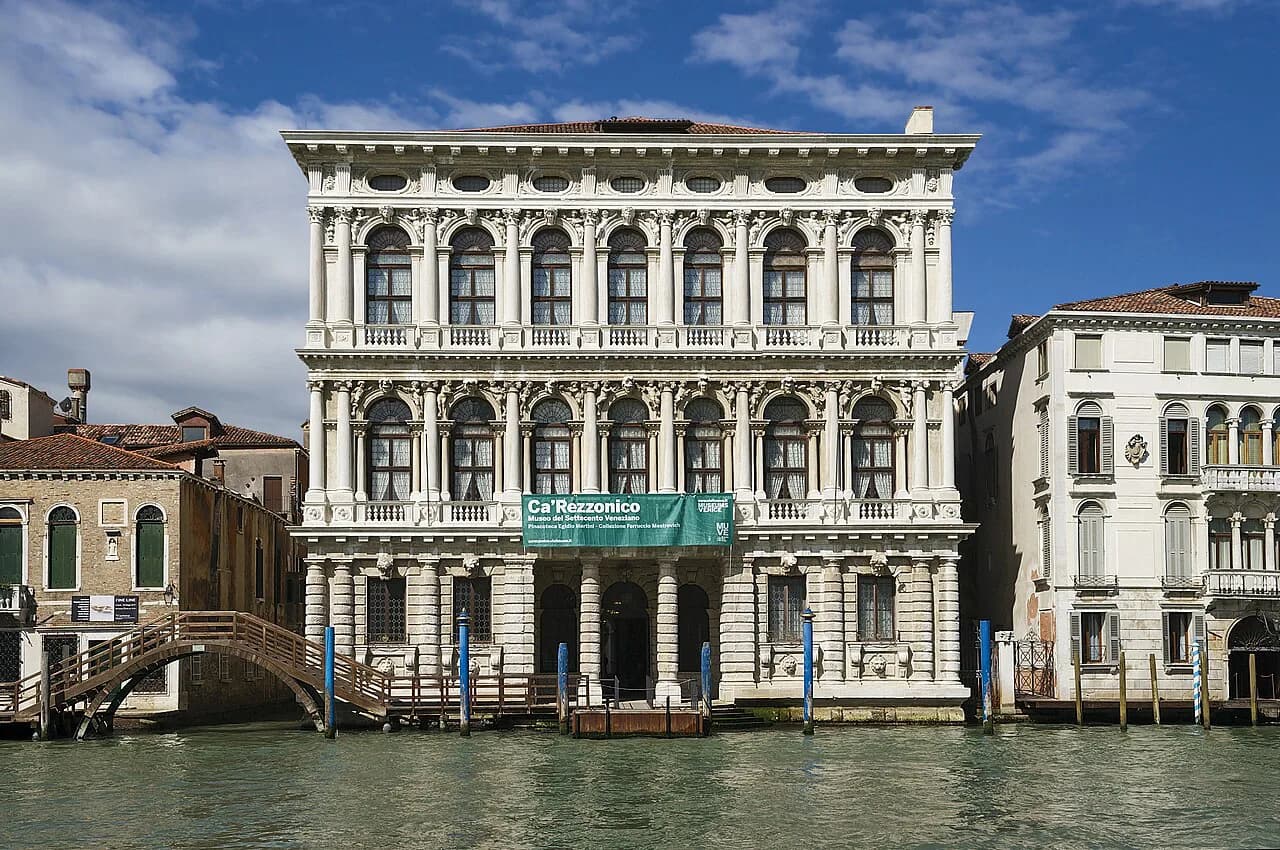
Palazzo La Rocca in Ragusa Ibla: What to See Outside
A practical guide to Palazzo La Rocca in Ragusa Ibla, covering its 1765 facade, carved corbels and shifting interior access. Check details before you go.
On this page
Stand on Via Capitano Bocchieri and look up at the balconies of Palazzo La Rocca: beneath each one sits a trio of carved figures cut from dark pitchstone, and at street level you can see their expressions clearly. The palazzo was built in 1765 for Don Saverio La Rocca, Baron of S. Ippolito, and it sits just behind the Cathedral of San Giorgio in Ragusa Ibla.
This is a facade-first sight rather than a museum with a fixed timetable. The interiors have been used as exhibition space, so what you find inside depends on what is scheduled, and there is no standing guarantee that rooms will be open on the day of your visit. Treat the street-level view as the dependable part of the stop and check current access separately, ideally the day before.
The Setting Behind the Duomo di San Giorgio
The palazzo occupies a position on what was once called the Ciancata, the main artery of Ragusa Ibla, described as the only street in the old town paved with limestone slabs. That location explains why so many visitors pass it without planning to: the Duomo di San Giorgio draws the crowd, and the palazzo is a few steps away on the same walking route through the historic centre.
If you are building a walk, use the Duomo as your anchor. A detailed guide to the Duomo di San Giorgio, Ragusa: Visiting the Baroque Masterpiece covers the facade, the staircase and the interior, and positions the church as the natural starting point for the streets around it. From there, circle behind the cathedral and you reach the palazzo without needing a map.
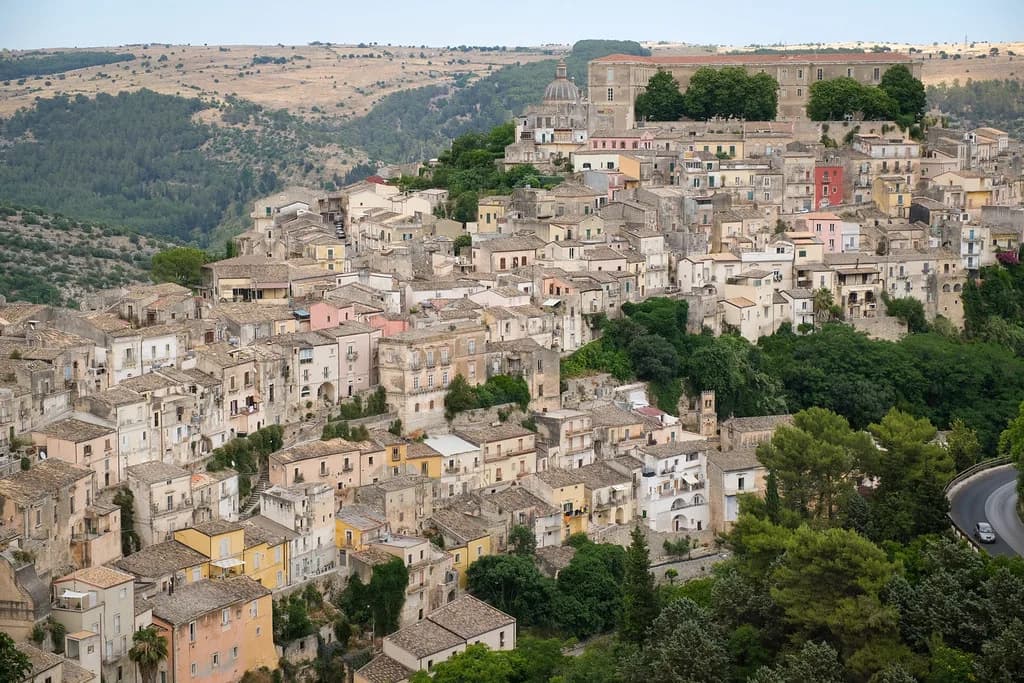
Ragusa itself is a split city: Ragusa Superiore on the plateau and Ragusa Ibla down in the older valley, a division that dates to the aftermath of the 1693 earthquake. The two districts were rebuilt separately, and a city history survey notes they lived almost as two separate cities until they were united in 1926, which is why a walk between them feels like moving between two towns rather than two neighbourhoods.
Where the Palace Fits in the Post-1693 Rebuilding
The Val di Noto earthquake of 1693 destroyed much of south-eastern Sicily, and the rebuilding that followed produced the Late Baroque towns now recognised as a UNESCO World Heritage serial site. Ragusa's historic centre is part of that listing, and Palazzo La Rocca is counted among the eighteen monuments recognised in the city's historic centre.
What makes the Ragusa case distinctive is that the rebuilding happened twice over, in two locations. A summary of the city's history notes that part of the population rebuilt on the original site in the valley while another group chose the higher plateau, creating the Ibla and Superiore split that still defines the city's shape today.
Read the palazzo as a product of that confident post-earthquake generation rather than an isolated curiosity. Its 1765 date places it roughly a lifetime after the disaster, when Ragusa's noble families were commissioning stonework that showed off both wealth and taste. The carved corbels are part of that display, and they borrow from a tradition of late-Baroque stone carving found across the Val di Noto.
History: The 1765 Commission and the Older Houses Beneath It
Don Saverio La Rocca demolished several older family houses to build the palazzo in 1765, and traces of those earlier structures survive in the basement. The source describes pointed arches characteristic of an earlier architectural moment still legible down there, which means the building sits on top of the family's own architectural history rather than replacing a blank plot.
The La Rocca family had been part of Ragusa's social fabric since Norman times, which gives the 1765 commission a longer backstory than the facade alone suggests. The result was an irregular rectangle with a long Baroque front, fitted to the street rather than to a symmetrical ideal. That irregularity is worth noticing when you stand across from it, because the facade reads as a single sweep only from certain angles.
The architect is not the headline here, and the building is usually discussed through its patron and its carving rather than through a named designer. That distinguishes it from nearby churches by Rosario Gagliardi, whose name dominates the Baroque architecture of this part of Sicily.
What to Read on the Facade: Seven Sets of Pitchstone Figures
The signature detail is the carved corbels beneath the balconies: seven sets of three figures each, cut from dark pitchstone, depicting musicians, grinning faces and caricatures. They sit close enough to street level that the guide suggests you could reach up and touch a chin, and crouching slightly brings them to eye level so the expressions read differently than they do from a standing position.
Give the carving ten or fifteen minutes rather than a glance. The figures run along the facade in sequence, and comparing one trio to the next is the pleasure of the stop: the faces are not repeats, and the mood shifts as you move down the street. A camera with a longer lens helps if you want detail without craning your neck.
Pair the facade with the Chiesa di San Giuseppe, Ragusa: Baroque Church Guide, which covers another Gagliardi-attributed building a short walk away in Ibla. Seeing the two in one outing makes the range of local stonework clearer than either does alone.
The Interior as Described: Staircase, Ceramics and Chandelier
When the rooms are in use for an exhibition, descriptions mention a double-flight staircase carved entirely from pitchstone, floors laid with Caltagirone ceramics, frescoed and stuccoed walls, and doors gilded in the Pompeian manner. A large blue-and-white Murano glass chandelier hangs overhead. Whether you see any of this depends on the current exhibition programme, not on a published public timetable.
Visitors who have been inside describe both delight and disappointment, and the gap between the two is instructive. One recent reviewer found a small photography exhibition open on a Monday lunchtime and called the building an unexpectedly beautiful find, while another reported empty white rooms with nothing on display. Both accounts are individual Google reviews rather than a consensus, and both explain why checking ahead matters more than usual here.
The staircase is the element most consistently singled out when the building is open, and the pitchstone steps are said to have a weight and coolness that photographs do not capture. If the interior is closed, that is the one piece you will miss. The exterior corbels compensate better than most consolation views do.
Access Reality: Interiors Tied to Temporary Exhibitions
Access to the interior depends entirely on whatever exhibition is scheduled, so there are no standing public visiting hours to rely on. The practical advice is to check the palazzo's social media or local listings shortly before you go, rather than assuming a fixed daily window. A building that opens for a photography show one week may be shut the next.
Do not treat the street view as a consolation prize you settle for. The facade, the corbels and the position behind the cathedral are the reason to come, and they are visible on any day and at any hour without a ticket. Build the stop around those, then treat an open interior as a bonus.
If you want a guaranteed interior visit nearby, look to the churches instead. The city's official tourism pages list churches, museums and monuments across Ragusa Ibla and Superiore, and it is worth scanning the events calendar there for current cultural programming before you lock your day.
How to Check Before Travelling and Plan Alternatives
Check two things the day before: whether an exhibition is running, and whether the surrounding street is accessible. Ragusa's municipal site publishes notices on temporary road closures and events, and those posts are the most reliable signal of anything disrupting a walk through the historic centre.
Plan a fallback so a closed door does not derail the morning. The Giardino Ibleo, the Church of the Most Holy Souls in Purgatory and the cathedral itself are all within walking distance and have their own opening patterns. If the palazzo is shut, you have lost a few minutes, not the day.
Anyone assembling a longer list of stops should browse the Ragusa Attractions hub, which gathers visitor guides to the city's main sights in one place. That makes it easier to slot the palazzo into a sequence built around opening times rather than the other way around.
Nearby: Cathedral, Gardens and the Purgatory Church
The Duomo di San Giorgio is the obvious companion stop, and one third-party visitor guide lists morning and afternoon visiting windows while advising travellers to confirm schedules directly with the church before going. Treat any published times you find online as third-party information that may be out of date, and confirm with the parish if the interior matters to your plan.
The Church of the Most Holy Souls in Purgatory, known locally as the Santissime Anime, was built in 1690 and remodelled in Baroque style in 1724. It sits close to the palazzo's end of Ibla and makes a natural second stop on a short circuit. The interior holds seventeenth-century frescoes and a wooden crucifix donated by a local merchant in 1722.
The Giardino Ibleo anchors the eastern end of the historic centre and sits on a rocky outcrop overlooking the valley. A walk from the cathedral through the palazzo's street and on to the gardens takes in most of what Ibla offers at street level, without a single ticket.
Getting Between Ibla and Superiore on Foot
The two halves of Ragusa are connected by long staircases, and walking down from Superiore into Ibla is the classic approach. The descent is steep and the return is steeper, so plan the direction of your day around your energy rather than around a map's straight line. Comfortable shoes with grip matter more here than in most Italian historic centres.
If you are coming from Ragusa Superiore, allow the walk its own slot rather than folding it into a fifteen-minute transfer. The route passes churches and viewpoints, and the Chiesa di Santa Maria delle Scale is a recognised stopping point between the levels. Arriving in Ibla already tired defeats the point of the descent.
Local transport options change, and timetables are not something to plan around from an old blog post. The municipal site carries current service notices, and asking at a tourist information point on arrival is more reliable than assuming a route still runs as described in older guides.
Visitor Etiquette and Practical Notes for a Short Stop
This is a residential street in a working historic centre, so keep your voice low and your camera pointed at the building rather than through windows. Step to the side when photographing so you are not blocking the pavement for people going about their day. The corbels reward patience, not a crowd.
The palazzo has also served as an informal information point at times, though visitor reports are mixed on how useful that has been, with one reviewer noting limited English and little practical help. Do not rely on it as your first stop for orientation. Load a map and a shortlist before you arrive.
For context on the wider district, the Ragusa Ibla: Complete Guide to the Baroque Historic District covers the layout, the main sights and how the neighbourhood connects. It is worth reading before you decide how much time to give the palazzo relative to everything else nearby.
Plan Your Visit
Palazzo La Rocca works best as a ten-minute pause inside a longer Ibla walk: the facade, the seven trios of carved figures and the position behind the cathedral are the reliable pleasures. If an exhibition happens to be running, the staircase and frescoed rooms justify a longer stay, but do not build a day around them.
Check the exhibition programme and local notices shortly before you go, keep the cathedral and gardens as fallbacks, and wear shoes that handle stairs. For more ideas on quieter corners of the city, browse the hidden gems guide to Ragusa before finalising your route.
Frequently Asked Questions
Is Palazzo La Rocca free to visit?
Looking at the facade from Via Capitano Bocchieri costs nothing and is available at any hour, since it is a public street. Access to the interior depends on whether an exhibition is running, and any conditions attached to that visit are set by whoever is staging the show. Check the palazzo's social media or local listings before you travel rather than assuming a free or ticketed entry.
Can you go inside Palazzo La Rocca?
Sometimes, but not on a standing public timetable. The rooms have been used as exhibition space, so whether the doors are open depends on what is currently scheduled. Recent visitor reviews describe both an open photography show and empty rooms with nothing on display, which is why checking ahead on the day is the sensible approach. If the interior is closed, the carved corbels and the Baroque facade remain fully visible from the street.
What are the carved figures under the balconies of Palazzo La Rocca?
They are seven sets of three figures each, carved from dark pitchstone and set beneath the balconies as corbels. The carvings depict musicians, grinning faces and caricatures, and they sit close enough to street level that crouching slightly brings them to eye level. They belong to a tradition of late-Baroque stone carving found across the Val di Noto region.
How do I get to Palazzo La Rocca from Ragusa Superiore?
The historic centre of Ibla is reached on foot from Superiore via long staircases, and the walk passes churches and viewpoints along the way. Local transport options and timetables change, so check current service notices on the municipal website or ask at a tourist information point rather than relying on older guides. Allow the descent its own time slot rather than treating it as a quick transfer.
What else is worth seeing near Palazzo La Rocca in Ragusa Ibla?
The Duomo di San Giorgio is the immediate neighbour and the natural anchor for a walk. The Church of the Most Holy Souls in Purgatory and the Chiesa di San Giuseppe are both close by, and the Giardino Ibleo at the eastern end of the district makes a good finish. All are within walking distance of the palazzo.
Is Palazzo La Rocca part of the UNESCO site in Ragusa?
Yes. It has been part of the UNESCO World Heritage serial listing of the Late Baroque Towns of the Val di Noto since 2002, alongside other monuments across Ragusa's historic centre. The listing recognises the rebuilding that followed the 1693 earthquake rather than the palazzo in isolation.
Sources
- Palazzo La Rocca, Ragusa | Baroque Palace — Yeppa
- The Duomo of San Giorgio in Ragusa Ibla: A Masterpiece of Sicilian Baroque - Slow Sicily
- Comune di Ragusa
- Stunning Ragusa: Must See UNESCO Baroque Town
- Complete Tourist Guide to Ragusa and Ragusa Ibla
- What to do and see in Ragusa Ibla - Sicily | Consigli in viaggio
- Travel Guide to Ragusa, Sicily
Continue exploring
More guides you'll find useful