Piazza del Duomo Parma: Cathedral, Baptistery & Museum Guide
Plan a visit to Parma's Piazza del Duomo: how the cathedral, baptistery and diocesan museum relate, what is free, and how to sequence the interiors.
On this page
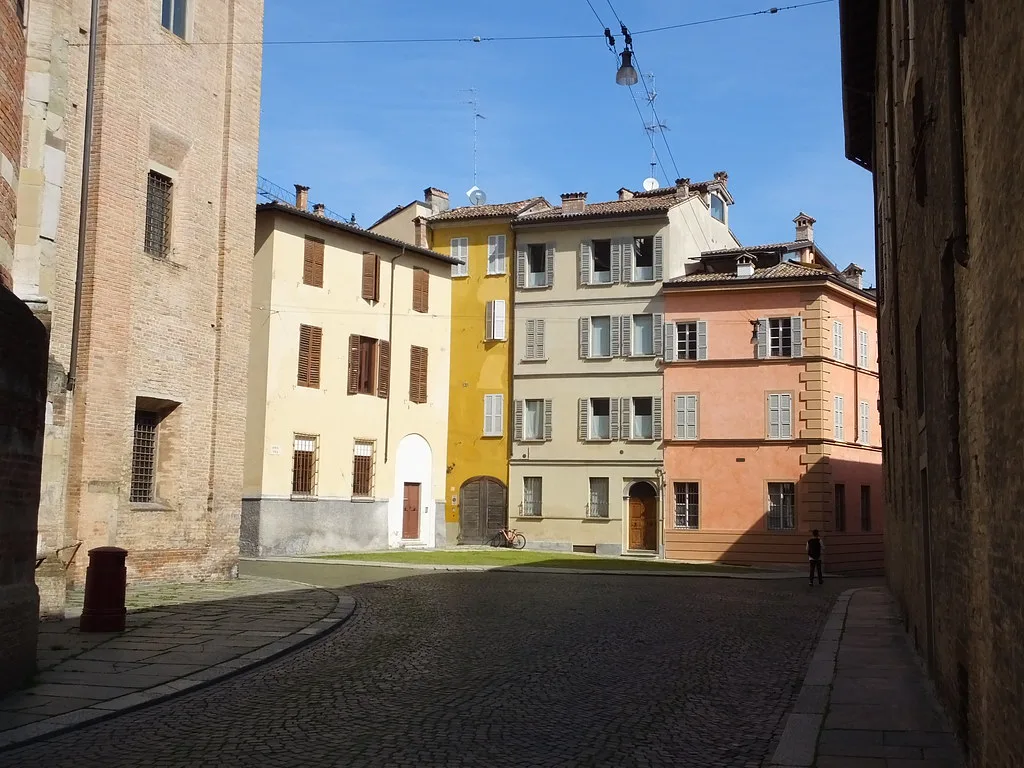
Piazza del Duomo is not a single sight but a tight group of buildings sharing one paved square in the historic centre of Parma. The cathedral, its bell tower, the octagonal baptistery and the bishop's palace sit close enough that you can read them as one ensemble rather than three separate stops. The payoff for planning them together is that you spend less time walking between them and more time noticing the details that connect them.
The most useful thing to know before you arrive is that the buildings are not run as a single attraction. The cathedral is a working church, while the baptistery and the diocesan museum are separately managed interiors with their own access arrangements. That distinction shapes everything from how you budget to how you order the visit, so treat any single ticket or timetable you see online as something to confirm rather than assume.
What Piazza del Duomo Actually Is
The cathedral, dedicated to Santa Maria Assunta, faces the square with a gabled facade of pale stone. Immediately beside it stands the tall bell tower, and close by is the Baptistery of San Giovanni Battista, an octagon of pink Verona marble with open loggias and turrets. Together with the bishop's palace, this group forms the architectural set that gives the square its character.
Because the buildings stand shoulder to shoulder, the square rewards a slow pass before you enter anything. Look at how the baptistery's marble catches light against the cathedral's stone, and note where the entrances sit so you are not circling later. If you want to place the square within the rest of the city's sights, start with an overview of the visitor guides to Parma Attractions.
The Cathedral: Romanesque Shell and Correggio's Dome
The present cathedral was built after a fire destroyed an earlier church, with construction beginning in the 11th century and consecration in 1106, according to a detailed architectural account of the building. An earthquake in 1117 caused serious damage, and rebuilding continued into the mid-12th century. Those dates explain why the interior reads as a Romanesque space with rounded arches and massive piers rather than a Gothic one.
The reason many travellers come is the crossing dome, painted by Correggio with the Assumption of the Virgin in a spiralling composition that dissolves the dome's architecture. The same source places the commission in 1522 and the execution in the 1520s to early 1530s. Stand near the centre of the crossing to see the figures rise, and allow a few minutes for your eyes to adjust to the dim interior.
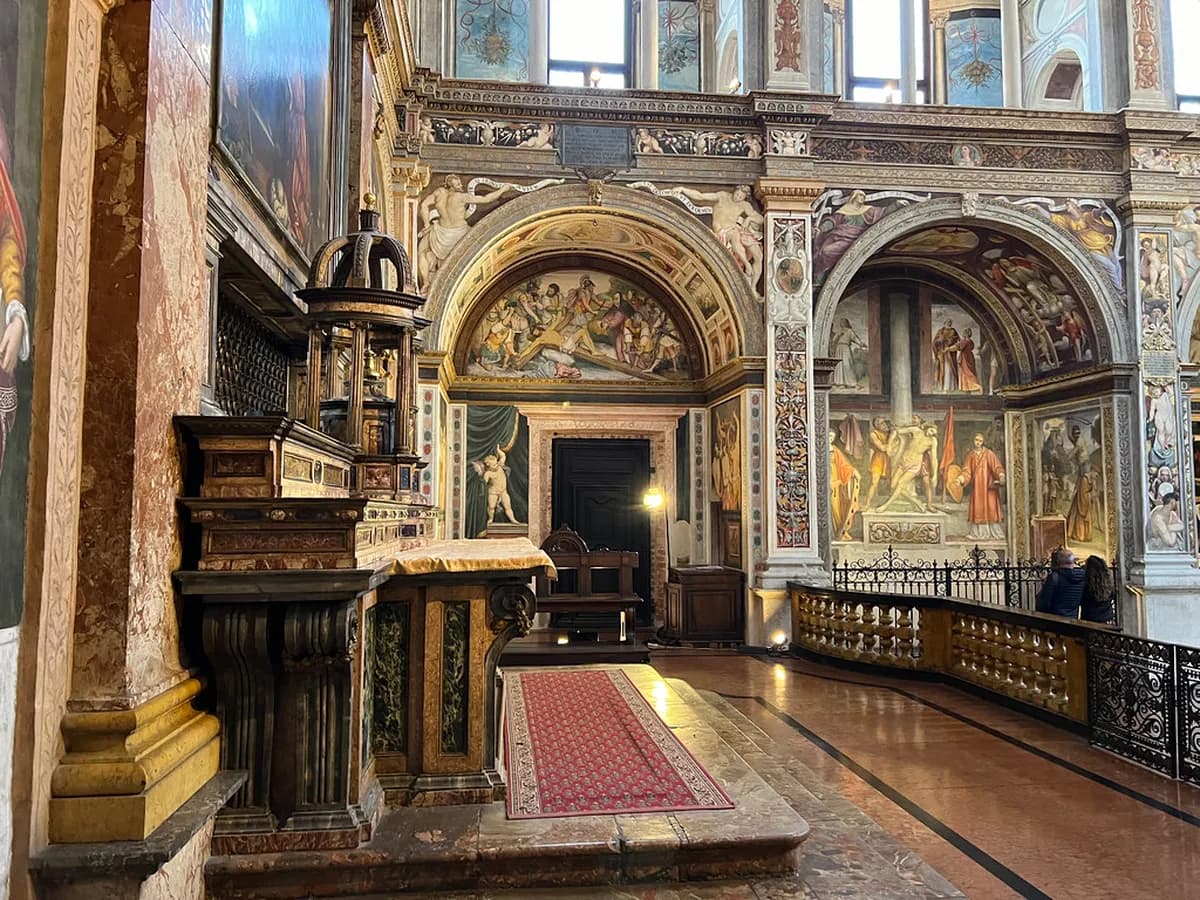
Below the dome, the cathedral holds sculpture associated with Benedetto Antelami, one of the defining sculptors of the Italian Middle Ages. The nave also carries 16th-century fresco cycles that overlay the originally austere Romanesque interior. Italia.it notes both the Antelami bas-reliefs and Correggio's dome fresco, which is a useful cross-check on what to prioritise if your time is short.
Entry to the cathedral is free, which makes it the low-risk part of any visit to the square. It is also a place of worship, so visits pause during services and the doors may close at short notice. Check the current arrangements with the square's administration before you build a tight schedule around the cathedral.
The Baptistery: Pink Marble and a Separate Ticket
The baptistery is the square's most photogenic building: an octagonal structure in pink Verona marble, with four levels of open loggias and eight turrets rising around a central dome. It marks the transition from Romanesque to Gothic, and the exterior reliefs reward a slow walk around the base. Its construction is commonly dated to the years around 1196 to 1216, though published sources vary slightly on the span.
Inside, look up at the painted vaults and the arrangement of the frescoes rather than rushing to the exit. Access to the baptistery is not covered by the cathedral's free entry; it is a ticketed interior with its own management. Check the current ticket scope and opening arrangements with the Piazza Duomo administration rather than relying on an old blog post.
The Diocesan Museum and the Bishop's Palace
The Diocesan Museum, named for Benedetto Antelami, occupies part of the bishop's palace group and holds the collection that explains the square's medieval sculpture in depth. It is worth knowing that the ticket counter and information desk sit here rather than in the cathedral, so this is the place to ask about combined access. Confirm what a ticket covers on the day, since the museum and baptistery are managed together but the cathedral is not part of that arrangement.
If you only have time for one paid interior, choose between the baptistery's architecture and the museum's sculpture rather than trying to squeeze both. The museum pays off most for travellers who want context for the reliefs they have just seen on the cathedral and baptistery exteriors. A third-party guide has reported a combined ticket for the baptistery and museum in the region of twelve euros, but treat that as a rough indicator and verify the current price and scope at the desk.
Free Versus Paid: Getting the Budget Right
The simplest way to think about Piazza del Duomo is in two layers. The square itself and the cathedral are free to enter, while the baptistery and the diocesan museum are separately ticketed interiors. Budgeting for one paid ticket rather than assuming everything is included avoids an awkward moment at the door.
Do not extend the cathedral's free entry to the other buildings, and do not assume a single ticket covers all three. Ask at the museum desk what is currently included and whether any reduction applies to you. The city's own website lists tourism information that can help with orientation, though specific opening hours belong with the square's administration.
Suggested Sequencing: Baptistery Exterior, Cathedral, Then Museum
Start with the baptistery exterior, then the cathedral, then the museum if you are taking a paid interior. Seeing the baptismal space first sets up the medieval sculpture before you meet Antelami's work inside the church, and finishing in the museum gives context to what you have just seen. Allow roughly half a morning for the cathedral and square alone, and add more if you take in one or both paid interiors; that is a suggested pace, not an official one.
If you can, walk the square once without entering anything to get your bearings. Note where the cathedral's main door sits, where the baptistery entrance is, and where the museum desk is, so you are not retracing steps later. A short orientation loop costs five minutes and saves confusion.
Best Time of Day and Handling Services
Mornings are generally the most comfortable time to look at facades, since the light is softer and the square is quieter before the day's visitors arrive. Midday heat and tour groups make the paved square less pleasant, and church interiors can be busy around services. Plan the cathedral for a slot when you can sit quietly rather than shuffle through.
Because the cathedral is an active place of worship, visits stop during services, which can reshape a midday plan. Build a buffer and be prepared to swap the order of your visit if you arrive mid-service. Check current hours and any service-related closures with the square's administration before you travel, since these change through the year.
Mistakes to Avoid
The most common error is assuming one ticket covers everything, which leads to wasted time at the wrong door. The second is arriving mid-service and being turned away from the cathedral. The third is skipping the nave frescoes on the way to the dome, which means missing the 16th-century cycles that transform the Romanesque interior.
A fourth mistake is treating the square as a quick photo stop. The buildings repay an hour even if you enter only the free cathedral, and the exterior sculpture alone is worth a slow circuit. Give yourself permission to sit on the steps and look rather than ticking off each door in ten minutes.
Nearby Add-Ons for the Same Morning
Directly behind the cathedral stands San Giovanni Evangelista, which holds the other Correggio dome. That dome was painted in the early 1520s, a few years before the cathedral's Assumption, so seeing it first or after the cathedral changes how you read both. The church also carries frescoes by Parmigianino in the chapels of the left aisle, and entry to the church itself is free.
At the end of one of the monastery cloisters sits the Spezieria di San Giovanni, a historic Benedictine pharmacy preserved with its shelving, majolica jars and mortars. Access to the cloisters and pharmacy is managed separately from the church and hours vary, so ask inside rather than assuming you can walk in. It is a good reason to keep twenty spare minutes in your morning.
Practical Notes: Address and Checking Hours
The cathedral's address is Piazza Duomo 7 in central Parma, and the square sits within easy walking distance of the historic centre's other sights. The city's official website lists tourism and events information that can help you plan around other openings. Use it for orientation, then confirm the square's own hours and ticket rules with the administration before you go.
Published timetables for the cathedral, baptistery and museum change through the year, and third-party pages go stale. If you are travelling a long way, check the square's own site in the week before you arrive. The same applies to any combined ticket, which is best confirmed at the museum desk on the day.
Plan Your Visit
Piazza del Duomo works best as one unhurried visit rather than three rushed ones. See the square first, take the free cathedral at your own pace, then choose one paid interior depending on whether architecture or sculpture interests you more. Build in a buffer for services and check the current arrangements before you travel.
If you have a full morning, add San Giovanni Evangelista and its pharmacy, which sit a two-minute walk behind the cathedral. That turns a quick photo stop into a proper introduction to Parma's medieval and Renaissance art. For more ideas beyond the square, the hidden gems in Parma guide covers quieter corners of the city. For related planning, see Parma Baptistery Visitor Guide: What to See and How Tickets Work.
Frequently Asked Questions
Is Parma Cathedral free to enter?
Yes. The cathedral itself is free to enter, and it is a working church rather than a ticketed monument. Visits pause during services, and opening arrangements change through the year, so check with the square's administration before you go. The free entry does not extend to the baptistery or the diocesan museum.
Do you need a ticket for the Baptistery of Parma?
Yes. The baptistery is a separately managed, ticketed interior and is not covered by the cathedral's free entry. Ticket scope and prices change, so confirm the current arrangement at the museum desk or on the square's official site before your visit.
How long should you spend at Piazza del Duomo in Parma?
Allow roughly half a morning for the square and the free cathedral, and more if you add the baptistery or the diocesan museum. That is a suggested pace rather than an official figure. If you also visit San Giovanni Evangelista behind the cathedral, add another half hour or so.
What is there to see inside Parma Cathedral besides Correggio's dome?
The cathedral holds sculpture associated with Benedetto Antelami, including the Deposition relief, and 16th-century fresco cycles along the nave. The Romanesque interior with its rounded arches and massive piers is itself worth the visit. Together these make the free cathedral a fuller stop than the dome alone suggests.
Is the Diocesan Museum included with the baptistery ticket?
The baptistery and the diocesan museum are managed together, while the cathedral is separate. What a single ticket covers can change, so ask at the museum desk on the day rather than assuming a combined ticket includes everything. Treat any figure you see online as an indicator, not a current price.
When is the best time to visit Piazza del Duomo in Parma?
Mornings are generally quieter and the light is softer on the facades. Avoid arriving mid-service, since cathedral visits pause during worship. Check current hours with the square's administration before you travel, as they change through the year.
Sources
- Homepage - Comune di Parma
- Piazza Duomo Parma - Cathedral, Baptistery, Bishop's palace
- The Cathedral of Parma: Between Romanesque and Renaissance | Vivere in Italien
- Cathedral of Parma - Piazza Duomo in Parma - Italia.it
- San Giovanni Evangelista, Parma: Correggio's Other Dome
- Baptistery of Parma - Religious baptistery in Parma, Italy
Continue exploring
More guides you'll find useful