Piazza della Loggia Brescia Guide: Reading the Square
A practical guide to Piazza della Loggia in Brescia: the Renaissance Loggia, the astronomical clock tower, Roman tombstones and how to read it on a short visit.
On this page
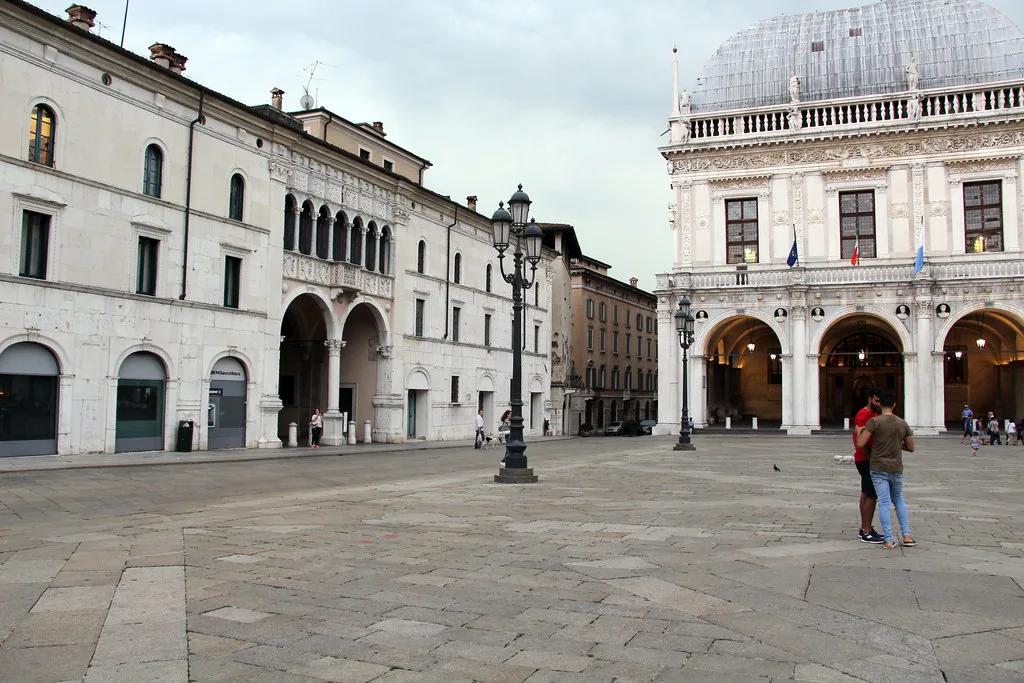
Piazza della Loggia is the square that tells you most about Brescia in the shortest time. It is a 15th-century Renaissance space lined with the town hall, a clock tower with an astronomical clock and bell-ringers, and two old money-lending houses with Roman tombstones set into their facades. None of that requires a ticket to look at, which makes it an efficient first stop in a compact historic centre.
Treat the visit as a reading exercise rather than a checklist. In the space of a few dozen metres you can compare Renaissance civic architecture with the Roman ruins near Piazza del Foro and the 20th-century Piazza della Vittoria, which gives you a mental map of how many layers the city holds. The suggestions below on pacing and routing are ours, not official guidance, and anything volatile such as interior access should be checked before you build a day around it.
Why the Square Deserves More Than a Photo
Brescia sits between Milan and Verona and is often treated as a stopover, yet its historic centre holds Roman remains, medieval churches and Renaissance squares within walking distance. Guide sources describe it as less touristy than the big Lombardy names, which is exactly why a square like this one still feels used by the city rather than staged for visitors.
What you see on Piazza della Loggia is civic confidence in stone: a Renaissance square built around the seat of local government, a clock tower that once organised working life, and lending houses that tied commerce to the piazza. If you only photograph the facade and move on, you miss the point that this was a working political and financial space.
A sensible first move is to circle the square once without stopping, then pick two details to return to, whether the clock face, the Loggia's arcade or the tombstones. That rhythm gives you context before close-up looking, and it costs about as long as a slow coffee.
Orientation: Where the Square Sits on a Walking Route
The historic centre is compact and pedestrian-friendly, and the main sights cluster closely enough to link on foot. Martha's Italy describes Piazza della Loggia as a good place to sit with a coffee or a drink, which makes it a natural hinge between the cathedral square and the Roman forum area.
A workable order for a half day runs from Piazza Paolo VI, with its two cathedrals side by side, to Piazza della Loggia, then on to Piazza del Foro and the Capitolium. The cathedral square is free to enter according to a guided-tour description, though it notes exceptions for special functions, so keep that caveat in mind when timing your morning. Related guide: Piazza Paolo VI Brescia Guide: Two Cathedrals, One Square.
If you want a longer version, continue to Piazza della Vittoria for the rationalist interlude, or cross to Santa Giulia and the Capitolium for the UNESCO core. Keep the cathedral interiors free and the museum tickets separate in your planning; they are different sites with different entry arrangements, and only the museum's own website confirms the current ones.
The Palazzo della Loggia: Reading a Working Town Hall
The Palazzo della Loggia gives the square its name and is still a civic building, which changes how you should look at it. Approach the facade as a piece of public architecture meant to be read from the piazza: look at how the arches repeat, how the upper level sits above the open ground floor, and how the building addresses the open space rather than dominating it.
Renaissance design here is about proportion and repetition rather than ornament for its own sake. Once you notice the rhythm of the arcade, the rest of the square makes more sense, because the surrounding buildings hold the space in a similar measured way. Ten minutes of looking at the facade teaches you more than a quick lap of the piazza.
What the sources do not settle is whether or how visitors can go inside on a given day. The palace houses civic functions, and the interior museum spaces are not confirmed in this material, so do not plan a visit around entering the Loggia; check the city's own pages if access matters to you.
The Clock Tower and Astronomical Clock
The clock tower on Piazza della Loggia is the element most visitors lift their phones for, and it earns that attention. It carries an astronomical clock and, on top, two figures of bell-ringers, and both are visible from the square itself. That means the tower's most distinctive features are part of the free, open-air experience rather than something behind a ticket.
The exact construction history of the tower and the mechanics of the astronomical dial are not confirmed here, so treat the signage on site and the city's own material as the reliable explanation. What is documented in this material is the sequence: Renaissance square, town hall, clock tower with astronomical clock and bell-ringers, and a public space that still frames daily life.
Whether the tower can be climbed or entered is not confirmed. Do not assume access, and do not build a tight itinerary around going up; if ascending is a priority, verify it with the municipal offices before travelling, and keep the observation as optional rather than guaranteed.
The Money-Lending Houses and Their Roman Tombstones
Two old money-lending houses stand on the square, and their facades carry Roman tombstones. This is the detail that rewards a second look: the stones were reused as building material, which is a compact lesson in how Brescia's Roman past was physically recycled into later civic architecture.
These houses also explain the square's commercial side. Lending tied the piazza to finance as well as government, so the space reads as the working heart of a Renaissance city rather than a decorative set piece. Look low on the walls, where the stones sit at eye level and are easy to walk past.
Pair the tombstones with a walk to Piazza del Foro afterwards and the chronology clicks into place: actual Roman remains a short stroll away, and fragments of the same Roman world embedded in Renaissance walls here. That comparison is the cheapest history lesson in the city.
Architecture Reading in Ten Minutes
Stand near the middle of the square and turn slowly. The Loggia and its neighbours give you Renaissance ambition; walk a few minutes to Piazza Paolo VI and you get Romanesque and Baroque side by side, with the round Old Cathedral beside the domed New Cathedral, whose dome Italia.it gives as 80 metres, the third largest in Italy, and whose construction ran from 1604 to 1825.
Continue to Piazza del Foro and you meet the Roman layer at first hand: the Capitolium, dedicated under Vespasian, and the theatre beside it. Then go to Piazza della Vittoria for the 20th-century layer. Four squares, four eras, and a route you can walk in an hour if you do not stop for coffee.
The comparison works because each square dominates its own block; you do not need deep architectural training to notice the shift in scale, colour and ornament from one to the next. The value is in the sequence, so keep moving rather than studying one piazza exhaustively.
Where to Pause: Coffee and the Square's Daily Life
This is a piazza built for lingering, and several guides treat it that way, recommending a coffee or drink at one of the tables around the edge. Claiming it as some secret spot would be inaccurate: it is central and well known, which is precisely why the café life is genuine rather than staged for tourists.
Sit on the side that lets you see the Loggia facade and the clock tower at once, and order at the counter if you want a quick, inexpensive stand-up stop rather than a full table service. The square is at its most useful as a pause between sights rather than as a destination in itself.
If you are doing a slow weekend in Brescia, this is a good place to let the itinerary loosen. If you are passing through in a day, give the square roughly twenty to thirty minutes, a suggestion rather than official guidance, then move on to the cathedrals or the Roman core.
What to Skip and What to Combine
If time is short, skip the attempt to get inside the palace or tower and spend the saved hour at Santa Giulia or the Capitolium instead. The museum's own page notes that the UNESCO corridor linking Santa Giulia to the Roman archaeological park is open freely and free of charge, which makes the archaeology side a strong return on limited time.
For the cathedrals, note the difference between looking and entering: the exteriors are always visible from Piazza Paolo VI, while the interiors keep church rules and can be closed for special functions. Check before you cross town on the assumption that a cathedral will be open.
Set the square against the cable-car-free alternative of a castle climb if the weather is clear, since the castle's panoramic view is often called the best free spectacle in town. Either way, the square is a 30-minute stop, not a half-day.
Practical Framing Before You Go
Wear comfortable shoes: the centre mixes cobblestones and flat paving, and you will cover more ground on foot than by any other means. The cathedral area is a restricted-traffic zone according to Visit Brescia, so plan to arrive on foot or by public transport rather than by car.
Nothing about the Loggia, the clock tower or any palace museum is confirmed here for opening hours, prices or booking, so check the municipality's own pages before you build plans around interiors. For cathedral and museum hours, the official sites are the ones to trust; third-party listings can lag behind.
Treat the square as the anchor of a walking day and everything else as flexible. If a museum is closed, the piazza and the tombstones still deliver the lesson you came for, and the route to the cathedrals and Roman forum stays open regardless.
Plan Your Visit
Piazza della Loggia works best as the hinge of a walking day in Brescia: start at the cathedrals, read the Loggia facade, find the tombstones, then follow the eras to the Roman forum and Piazza della Vittoria. The sequence does the teaching, and the square itself costs nothing to look at.
Check official municipal and museum pages for any interior access before you travel, since hours and rules are not confirmed here and can change. Then give the square a slow twenty to thirty minutes, sit down with a coffee, and let the rest of Brescia's layers unfold around the corner.
Frequently Asked Questions
Is Piazza della Loggia free to visit?
Yes, in the sense that the square is open public space: you can walk into it, see the Loggia facade, the clock tower with its astronomical clock and bell-ringers, and the Roman tombstones on the money-lending houses without a ticket. Any interiors in the palace or tower are a separate question, and their access is not confirmed by the city's public material, so check directly before counting on them.
Can you go inside the Palazzo della Loggia?
That is not confirmed. The palace is still a civic building, so access varies with its public functions, and this guide does not state that any museum inside it is free, shares one ticket, or is open on a given day. Verify with the municipal offices before you travel if entering is important to your itinerary.
How long should you spend at Piazza della Loggia?
Twenty to thirty minutes is a sensible suggestion if you want to read the facade, look at the clock and find the tombstones, plus longer if you stop for coffee. That is our recommendation rather than official guidance, and the square is small enough that lingerers and quick visitors can both be satisfied.
What is the clock tower in Piazza della Loggia known for?
The tower carries an astronomical clock and, on top, two bell-ringers, and both are visible from the square. It is also the visual anchor of the piazza, which is why it draws most of the photographs. Whether you can go up or inside is not confirmed here, so verify that separately.
What else is within walking distance of Piazza della Loggia?
Piazza Paolo VI with the Old and New Cathedrals, Piazza del Foro with the Capitolium and Roman theatre, Piazza della Vittoria for the 20th-century layer, and the Santa Giulia museum complex are all reachable on foot in the compact centre. The Old Cathedral and New Cathedral share the cathedral square, and the Roman core is a short stroll away.
Do I need to book to see the square?
No. The piazza is open public space and does not require booking to walk through, and its main features are visible from outside. Interiors and museums may need tickets or have limited access, but those arrangements are not confirmed here, so check official sources if you plan to go inside.
Sources
- Visit Capitolium of Brixia, Brescia in Brescia | Live the World
- Brescia: visit Santa Giulia and Unesco heritage site
- Brescia’s Duomo Nuovo and Duomo Vecchio – Jubilee Church | Visit Brescia
- Santa Giulia Museum | Visit Brescia
- Visit Brescia, discover the beauty of the Lombard city
- Duomo Nuovo - Italia.it
Continue exploring
More guides you'll find useful