Secret Spots in Ljubljana: A 2026 Guide to the City's Quiet Corners
Secret spots in Ljubljana beyond the Triple Bridge: Metelkova after dark, Plečnik's Žale Cemetery, the Nebotičnik snail staircase, and Krakovo's garden lanes.
On this page
Secret Spots in Ljubljana: Beyond the Triple Bridge
Last updated July 2026, this guide covers secret spots in Ljubljana for visitors who already did the Castle and the Triple Bridge. Most of them sit one or two streets back from the Ljubljanica river, inside residential districts like Trnovo and Krakovo. Each entry below is grouped by vibe, from gritty and alternative to quiet and green to culinary picks, matched to the afternoon you have.
Secret Spots in Ljubljana: The Fast Answer
Ljubljana keeps its best material in courtyards, side streets, and residential blocks rather than on the main riverside promenade. Step one street away from the Ljubljanica and the crowds thin out fast. Trnovo and Krakovo still feel like villages inside the city limits, with garden plots and quiet lanes instead of souvenir stalls. A district-by-district breakdown is worth reading first if you want to see how these areas connect.
Timing matters as much as location. Metelkova sits empty around 10 a.m. Ten hours later it turns into the city's main nightlife hub. Central Market, by contrast, is strictly a morning stop, and Nebotičnik's terrace rewards a visit an hour before sunset. Repeat visitors, slow travelers, and photographers get the most out of this list, since most of it rewards a second or third trip rather than a first one.
This list pairs well with the citywide quiet-corners guide. Add the off-the-beaten-path circuit for more picks nearby. Seasonal timing gets its own treatment in the low-crowd timing guide.
Metelkova Mesto After Dark
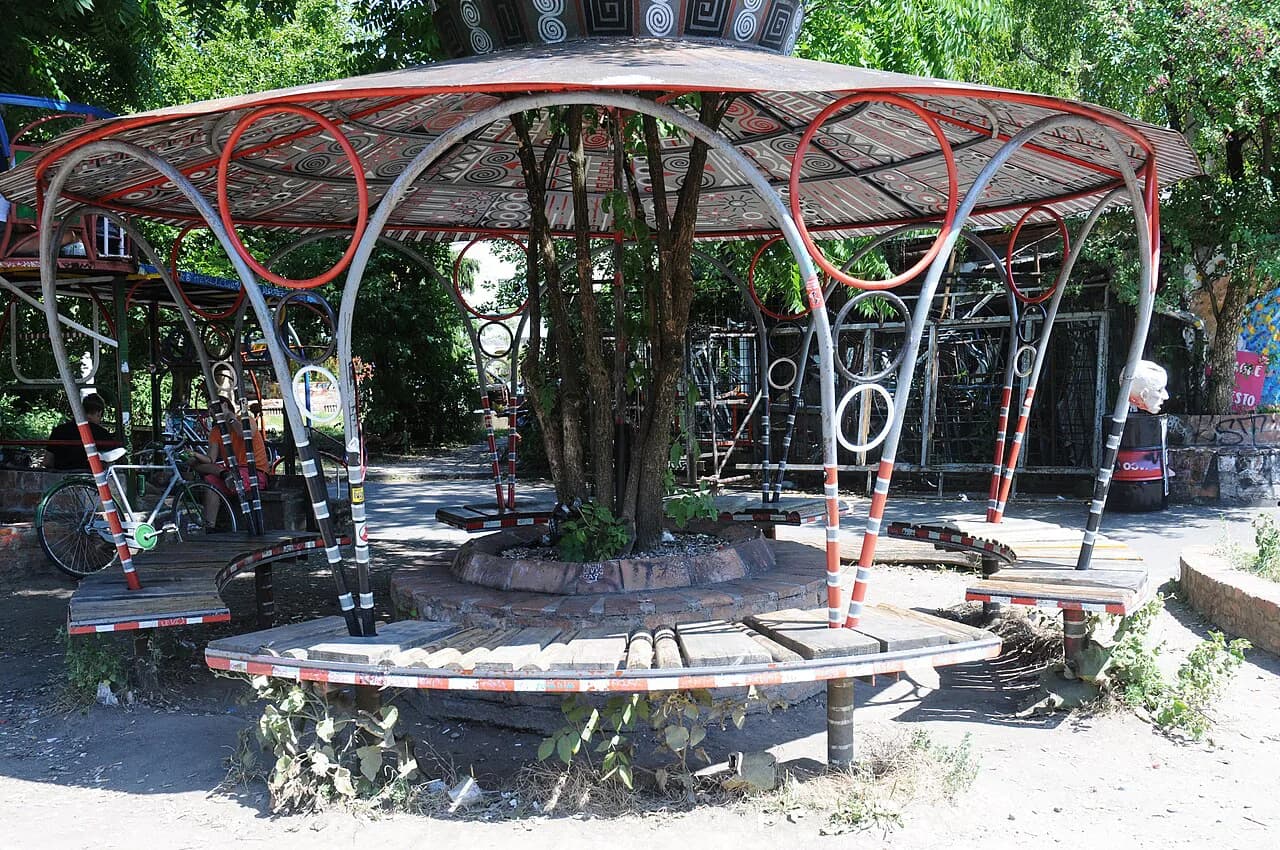
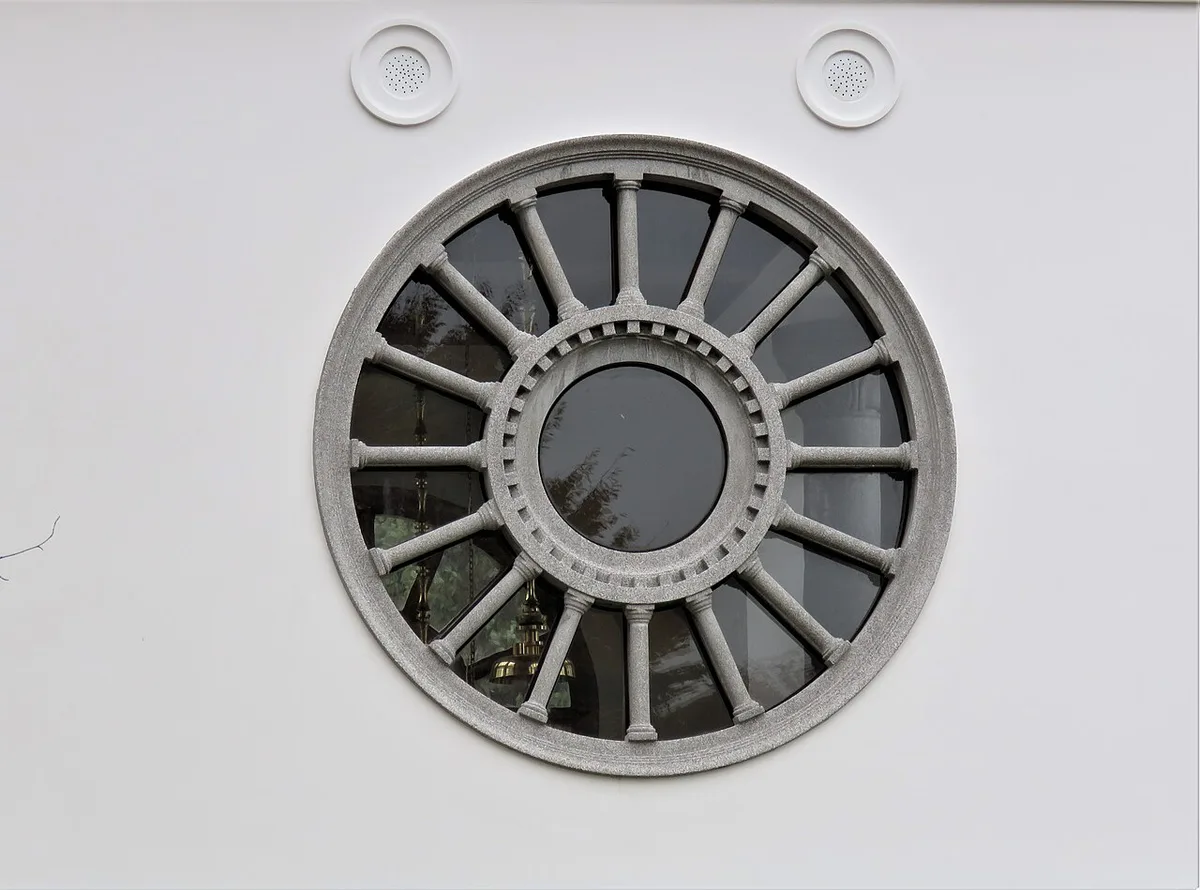
Metelkova Mesto anchors the alternative side of the city and carries a denser layer of graffiti and murals than almost anywhere else in Ljubljana. The site began as a military barracks and now runs as an autonomous cultural zone, packed with clubs, bars, galleries, artist studios, and NGOs. Celica Hostel occupies a former prison block on the same grounds; visitors can walk through the building even without booking a room. Arrive around 10 a.m. and the courtyards look empty. Arrive after 10 p.m. and the same courtyards run a full club scene. A cluster of museums sits next door, so the area works as a culture stop by day too. The full Metelkova guide covers specific venues and current opening patterns.
Unlike Central Market, which suits mornings only, or Nebotičnik, which shines an hour before sunset, Metelkova completely transforms—visiting at 10 a.m. finds empty courtyards, while after 10 p.m. brings the city's main nightlife hub, making it unique for repeat visits.
- Slovene Ethnographic Museum
- Museum of Contemporary Art
- National Museum of Slovenia
Center ROG: From Bike Factory to Creative Hub
Center ROG sits a short walk from Metelkova and carries a similar spirit on a smaller scale. The building once operated as a bicycle factory, reportedly the largest in the former Yugoslavia, and ROG-branded frames still turn up around the city today. It has since moved on from its earlier informal-squat period. Center ROG now runs as a municipal creative hub, with studios, workshop space, and exhibition rooms open to the public. Programming rotates often, so confirm the current schedule before planning a visit around a specific workshop or show.
Trubarjeva Cesta's Hanging Shoes and Šiška Street Art
Trubarjeva cesta connects the main square to Center ROG and carries the city's best-known piece of street folklore: rows of shoes strung on overhead wires. Locals tell two competing origin stories. One traces the tradition to a shoe shop owner marking a business success. The other ties it to a memorial for people lost to suicide. Neither account is confirmed, so treat both as local lore rather than settled history. This stretch works well for less conventional things to do if street art is the draw. For photography or a first taste of counter-culture Ljubljana, this corridor is the most efficient stop. For nightlife specifically, Metelkova after 10 p.m. is the better choice. Street art continues beyond the center in Šiška, a few bus stops away, where the 1107 Klan crew keeps a rotating body of work under an underpass on Celovska cesta. The Šiška district guide covers the neighborhood beyond that one underpass.
Plečnik's Quiet Ljubljana: Križanke, Krakovo, and Žale
Several of Ljubljana's quietest spots cluster within a few minutes of each other, in and around Trnovo, and nearly all of them cost nothing to see. That lines up with the wider free things to do list for the city. Here is what is worth seeking out and why:
- Križanke Atrium: reconstructed by Jože Plečnik between 1952 and 1956 from a former monastery of the German Knights; passers-by can see straight into the arcades from the street, and a small bar still operates inside.
- Križevniška Street: a short lane around the corner from Križanke, with a local reputation as the city's most photogenic street, thanks to seasonal flower boxes and quiet benches.
- Krakovo gardens: working garden plots that locals still tend, informally called the city's own salad bowl; the Krakovo gardens guide covers which lanes to walk.
- Puppet Path: a walking route to the Castle that starts at the Ljubljana Puppet Theatre and swaps the funicular line for animal-character waypoints.
- Žale Cemetery: another Plečnik project, with colonnaded chapels that rank among his most complete work in the city; the Žale Cemetery guide covers the layout.
- Švicarija Creative Centre: working artist ateliers behind Tivoli Castle on Rožnik hill, skipped by most walking tours; the Tivoli and Rožnik hill guide covers the approach.
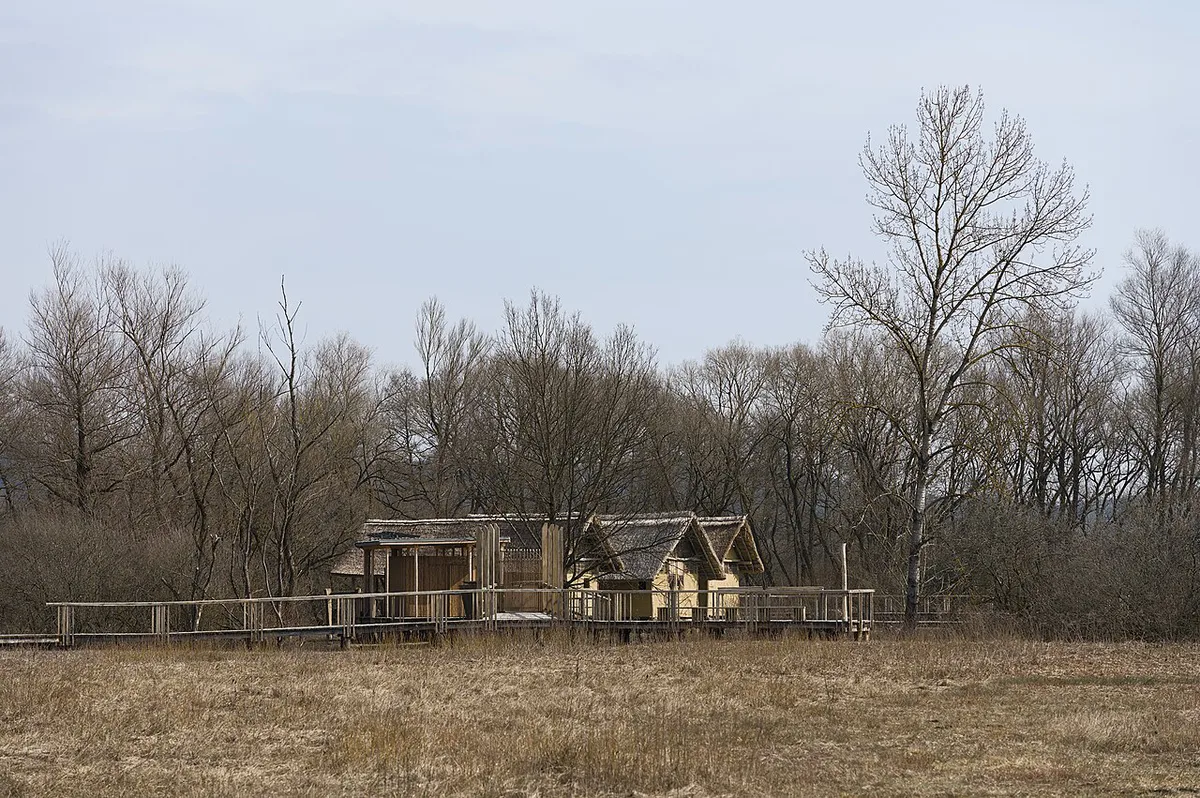
- Ljubljana Marshes pile dwellings: a UNESCO-listed prehistoric settlement south of the center; the pile dwellings guide explains what is visible on-site today.
Nebotičnik's Snail Staircase and the Original Robba Fountain
Nebotičnik dates to 1933, when architect Vladimir Šubic designed a building that briefly ranked, by some historical accounts, among the tallest in Yugoslavia and the tallest residential building in Europe at the time. Its top floors still hold a cafe, a bar, and an open-air observation deck with views toward the Castle. Photographers should look past the terrace: an Art Deco spiral staircase winds from the ground floor up to the tenth floor. Sunset is the strongest window for both the staircase light and the deck view. Arriving an hour beforehand lets you catch daylight, the color change, and the first city lights from the same seat.
Trnovo holds a quieter secret in the Plečnik House, the architect's own home and studio for decades. Interiors preserve his drafting tools, models, and personal furniture, offering a closer look at his design process than any completed building can. Confirm current opening hours and whether a guided time slot is required before visiting, since house-museum schedules shift more often than major sights do. The Trnovo neighborhood guide covers what else sits within walking distance.
Near Prešeren Square, one more swap is worth knowing: the Robba Fountain outside City Hall is a copy. Francesco Robba sculpted the original between 1743 and 1751, and it represents three rivers of Slovenia. The original now stands inside the National Gallery of Slovenia, protected from weather and traffic vibration. Seeing both versions in the same day makes the difference in carved detail obvious.
Hidden Cafes and Local Food Beyond the Riverbank
Slovenska Hiša sits right by the river near Prešeren Square, close enough to the Triple Bridge that most visitors walk past its specialty without stopping. Ask for what locals just call Slovenian coffee rather than a standard cappuccino. A 2016 menu priced two cups of it at €3.80 combined; treat that figure as a floor, not a current quote, since prices have climbed since then. Its listed hours have run from around midday to 1 a.m. on weekdays and from 9 a.m. on weekends, so it doubles as a late stop too.
BicikeLJ weekly passes cost around €1, making it economical to reach riverside cafés and distant locations without expensive rentals. The combination of €3.80 Slovenian coffee, €2.40 riverside tea, and budget bike access keeps daily café exploration affordable.
| Café | Location | Specialty |
|---|---|---|
| Slovenska Hiša | Near Prešeren Square | Slovenian coffee (€3.80 for two, 2016 pricing) |
| Caffetino | Old Town | Flavored coffee beans |
| Čevabdžinice Sarajevo 84 | Basement | Balkan grilled meat |
| Tea House Gallus | Riverside | Whole-leaf teas (caramel €2.40, 2016 pricing) |
| Twenty Caffe | 20th floor, Kristalna palača near BTC | Coffee with glass walls and external glass elevator |
Caffetino, tucked into the Old Town, roasts and sells its own flavored beans, hazelnut and vanilla among them, so a coffee here doubles as a bag to take home. Around the corner, Čevabdžinice Sarajevo 84 serves Balkan-style grilled meat in a basement space that gives no street-level hint of what sits downstairs. Tea House Gallus pours whole-leaf teas in metal pots instead of bags along the riverside; a 2016 menu priced its caramel blend at €2.40, again a floor rather than a 2026 figure. Its river-facing seats fill up without feeling like a tourist trap.
Twenty Caffe sits on the 20th floor of the Kristalna palača, or Crystal Palace, building near the BTC shopping complex, reached by an external glass elevator, with full-glass walls instead of a balcony. It sits further from the center than Nebotičnik, which makes it the better pick when the closer terrace gets crowded.
For a full meal rather than a snack, see the local restaurants guide. The local food guide covers sit-down options beyond this cafe list. Seasonally, from early spring to late autumn, the Central Market area also runs Odprta Kuhna, an open-air market with Slovenian and international stalls plus craft beer, though it runs strictly as a midday event.
- Slovenska Hiša — near Prešeren Square; specialty Slovenian coffee, roughly €3.80 for two in a 2016 listing, expect more today
- Caffetino — Old Town; flavored coffee beans by the cup or the bag
- Čevabdžinice Sarajevo 84 — basement Balkan grill food
- Tea House Gallus — riverside; whole-leaf teas, caramel blend listed at €2.40 in 2016
- Twenty Caffe — 20th floor of the Kristalna palača near BTC, glass elevator, no balcony
How to Reach Ljubljana's Unfindable Spots
Ljubljana overall is highly walkable, so BicikeLJ is a supplement, not a requirement, for most of this list. A full week of access runs around €1, which makes it one of the cheapest ways to close the distance to spots that sit too far apart to walk comfortably. Both the Botanical Garden in the Rudnik district and Vila Zlatica in Rožna dolina fall into that category.
Smaller sites carry their own scheduling quirks. Vila Zlatica, the former home of mayor Ivan Hribar, has only been open to the public since May 2021. Guided-tour requirements for house museums like this one change more often than they do for major sights. Confirm current booking rules before building a visit around it.
The most common mistake is treating the pedestrian Circle around the Old Town as the whole city. Cross one bridge or one road out of that loop and you reach Trnovo, Krakovo, or Šiška, three areas most tourist itineraries skip entirely. Once the central districts are covered, the day trip options extend the same slow-travel approach outside the city limits.
- BicikeLJ weekly access: around €1
- Vila Zlatica: open to the public since May 2021; confirm current guided-tour requirements
- Central Market: a morning stop; Odprta Kuhna: seasonal, spring through autumn only
The James Joyce Memorial at Ljubljana Railway Station
Ljubljana Railway Station hides a literary curiosity linked to Irish novelist James Joyce. On 19 October 1904, Joyce and Nora Barnacle left their train while travelling from Zürich to Trieste. They had mistaken Ljubljana for their destination and spent the night around the station before continuing south.
Slovenian sculptor Jakov Brdar created the small memorial marking the episode. It was unveiled on Bloomsday, 16 June 2003, when Joyce readers commemorate the date depicted in Ulysses. The understated bronze work sits near the platform and underpass area, so it is easy to overlook among signs and station traffic.
Check the platform-side passage when arriving by train, or ask station staff for the James Joyce plaque. Access routes may shift during railway works. The stop takes only a few minutes and fits naturally before Metelkova Mesto or Center ROG. Both cultural districts are a short walk east of the station.
Check before you go: Confirm current opening hours, event dates, and visitor notices with Visit Ljubljana, and verify local bus or access changes on the City of Ljubljana public transport page.
Frequently Asked Questions
What is the best neighborhood in Ljubljana for finding secret spots?
Trnovo and Krakovo hold the highest concentration of quiet, local-feeling corners, from garden plots to the Plečnik House. Cross just one street from the main river promenade and the crowds drop off fast.
Is Metelkova Mesto safe to visit at night?
Metelkova functions as an active nightlife district after dark, with clubs, bars, and steady foot traffic rather than an empty industrial lot. Standard late-night precautions apply, as they would in any entertainment district, and a visit during museum hours works just as well for a quieter look.
When should you visit the Nebotičnik skyscraper for the best views?
Arrive about an hour before sunset to catch daylight, the color change, and the first city lights from the same seat on the terrace. The Art Deco snail staircase leading up to the tenth floor is worth the walk even on a cloudy day.
How much does Ljubljana's BicikeLJ bike-share system cost?
A full week of access runs around €1, which makes it one of the cheapest ways to reach spots like the Botanical Garden or Vila Zlatica that sit outside comfortable walking range. Docking stations cluster around the Old Town and extend into surrounding districts.
Is Center ROG still an underground squat?
No. Center ROG moved on from its earlier informal-squat period and now runs as a municipal creative hub with studios, workshops, and exhibition space. Programming rotates, so check the current schedule before visiting around a specific event.
What is the difference between Krakovo and Trnovo?
Krakovo keeps working garden plots that give it a village feel, often described locally as the city's own salad bowl. Trnovo surrounds it with residential streets, the Plečnik House, and a small memorial park near Trnovo Church.
Continue exploring
More guides you'll find useful