Metelkova Mesto Ljubljana: A Guide to the Autonomous Cultural Zone
Plan a visit to Metelkova Mesto Ljubljana: 1993 squat history, day-vs-night tips, club costs, and etiquette for visiting this autonomous cultural center.
On this page
Metelkova Mesto Ljubljana: Inside Slovenia's Autonomous Cultural Center
Last updated July 2026: Metelkova Mesto Ljubljana is a squatted former army barracks turned autonomous cultural center. By day it functions as a free, open-air gallery, and by night independent clubs take over the same courtyards. Seven buildings cover roughly 12,500 square meters off Masarykova cesta, a short walk from Ljubljana's train and bus station.
What Is AKC Metelkova Mesto in Ljubljana?
AKC stands for Avtonomni kulturni center Metelkova mesto, Slovene for Metelkova City Autonomous Cultural Center. The site occupies the northern half of a former Austro-Hungarian army barracks complex, built between 1882 and 1911. It takes its name from Metelkova ulica, the street on its edge, itself named for the 19th-century Slovenian priest and philologist Fran Metelko. Seven barracks buildings, about 12,500 square meters in total, hold artist studios, galleries, LGBT association offices, and a handful of independent clubs. Today, the mix spans punk, techno, heavy metal, and dub nights, alongside daytime exhibitions and social-activist offices that keep the buildings occupied around the clock. Slovenia's register of immovable cultural heritage also lists the wider barracks complex, including the Slovene Ethnographic Museum and National Museum of Slovenia next door, though Metelkova itself grew as the unofficial, squatted half of that footprint. Expect an unpolished, still-in-use space rather than a curated museum exhibit; that rawness is part of the draw for most visitors who make the trip. Locals and repeat visitors often count Metelkova among Ljubljana's 12 Hidden Gems in Ljubljana Most Visitors Miss in 2026, since it sits a short distance from the old-town circuit around the river.
The History of Metelkova: From Barracks to Squat, 1991-1993
The Network for Metelkova formed in the early 1990s, proposing a creative reuse of the barracks along Metelkova ulica while the Yugoslav People's Army was still stationed there. The army left in June 1991, when Slovenia declared independence, and the barracks sat empty as a military brownfield. By 1992, around 300 artists and members of various subcultures had organized around the Network's proposal. In March 1993, the city assembly promised to legally transfer the barracks to the Network, but the handover stalled despite two signed agreements. Experienced squatters from Utrecht helped the Network prepare for a possible takeover as talks with the city broke down. On September 9, 1993, participants at a seminar on the site's future noticed workers secretly demolishing the buildings the city had promised the Network. Around two hundred volunteers occupied the barracks that same month to stop the demolition. The occupation held, and the site was redefined as an autonomous social center in 1995. Volunteers built a wooden pavilion called Mala Šola on the grounds in 2001, but the state inspectorate ruled it unpermitted and had it demolished in 2006. Even so, the wider site kept expanding, and by the mid-2000s NGOs and LGBT associations had moved in alongside the original artists.
Day Visit vs. Night Visit: Choosing When to Go
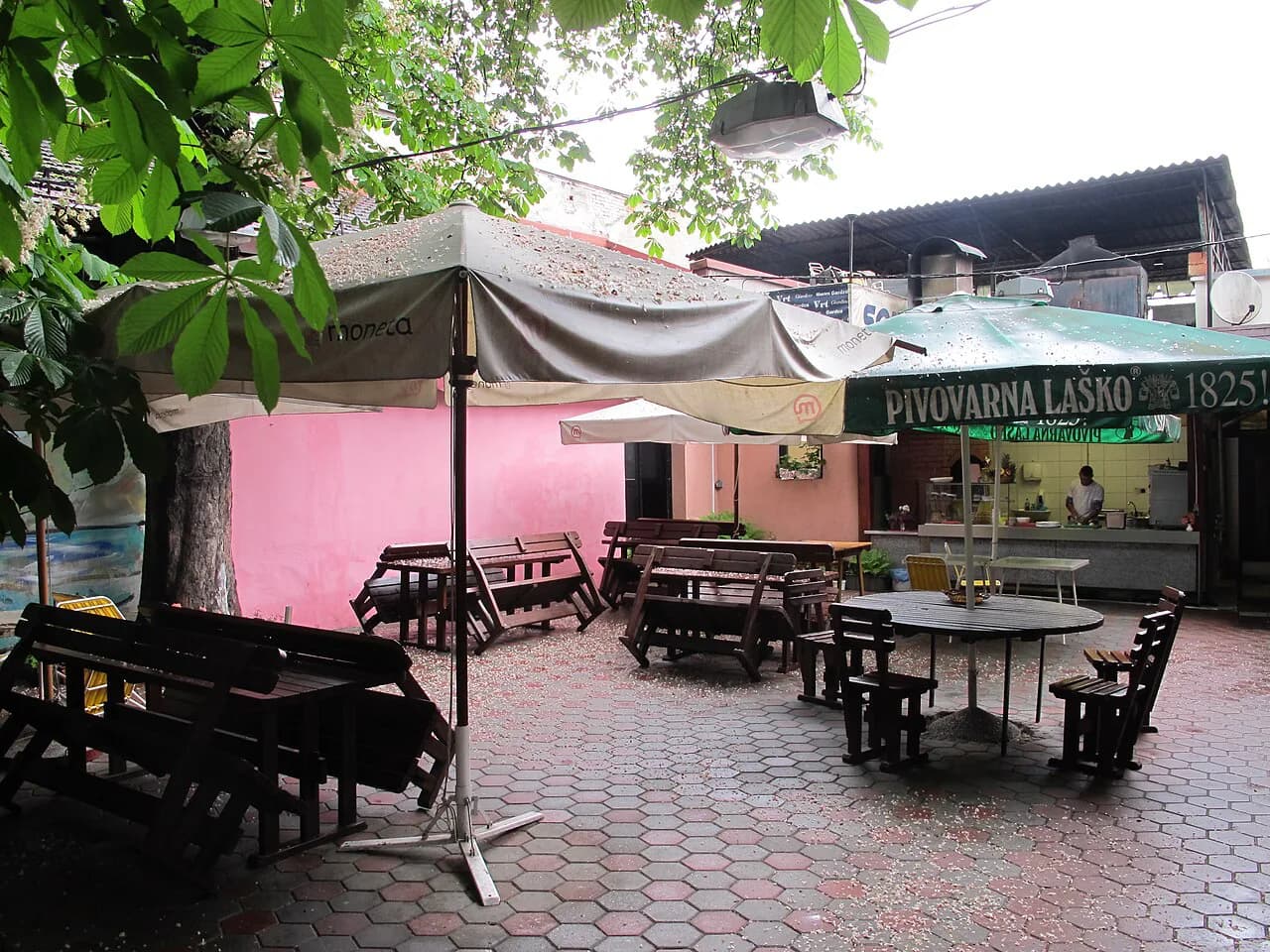
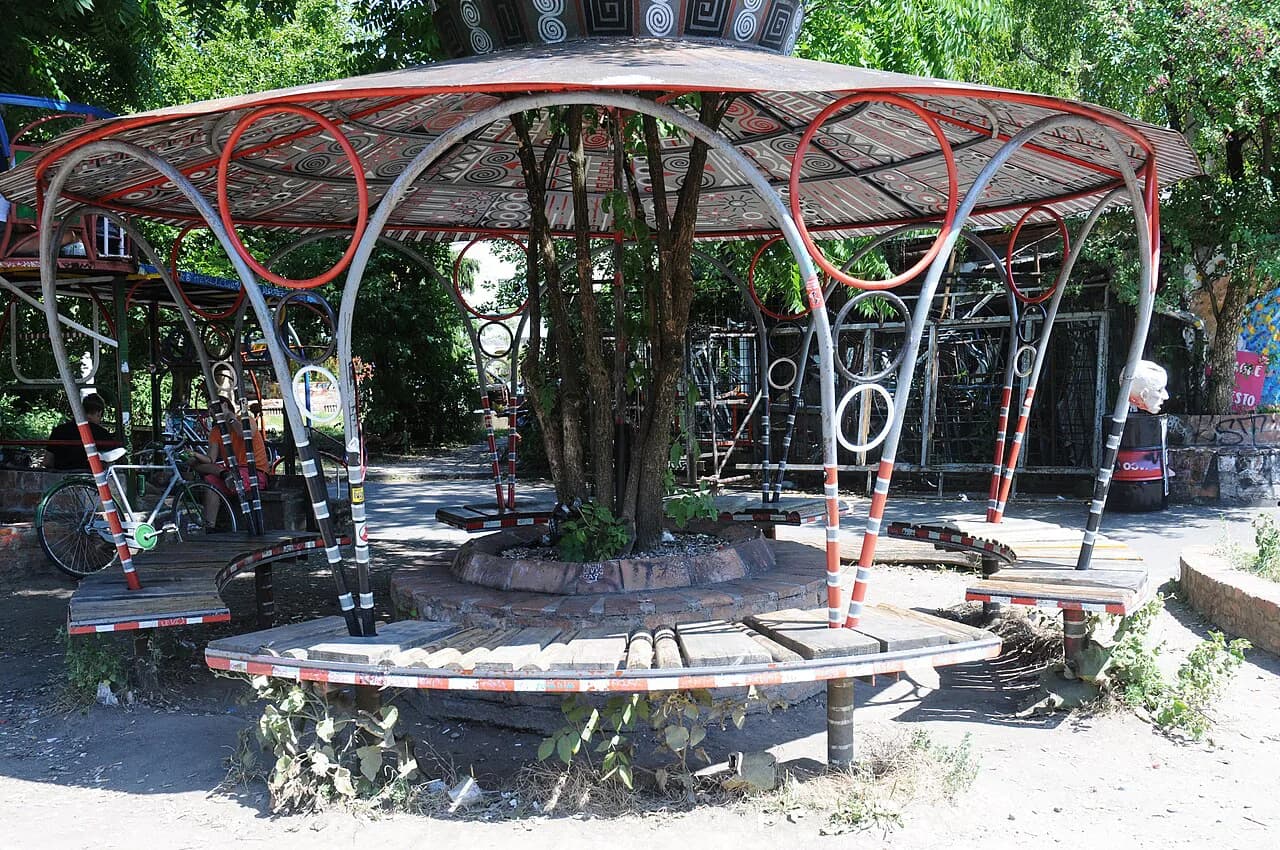
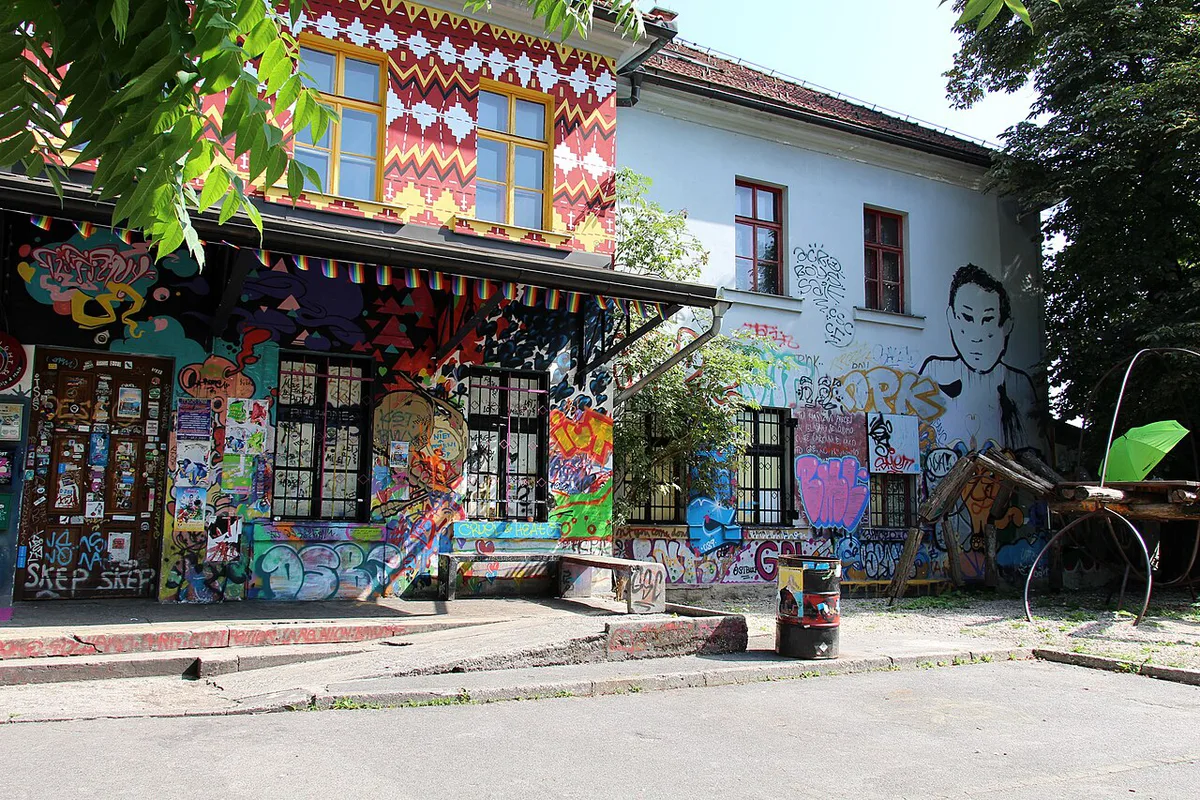
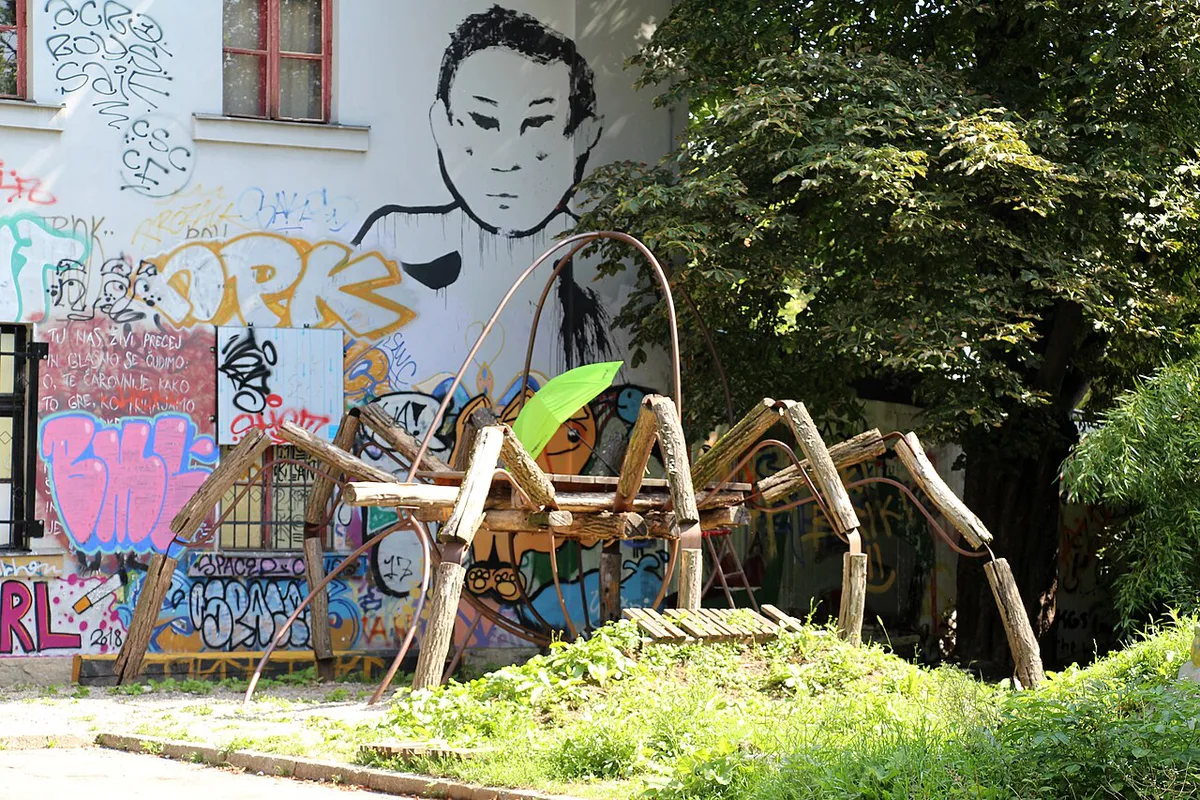
Metelkova reads as two different places depending on the hour. During the day, the complex functions as an open-air sculpture garden and street art walk, with murals, mosaics, and hand-built structures covering nearly every wall. Daytime is also the easier time to see the site's tile work and painted facades in full light, before the courtyard fills with a crowd. Treat a daytime walk as one of the city's Free Things to Do in Ljubljana: A Complete Budget Guide (2026), since nothing on the grounds requires a ticket. After dark, the same courtyards fill with a different crowd of students, touring bands, and regulars moving between clubs that share walls but book separate lineups. According to Visit Ljubljana's official listing, the evening crowd ranges from students and alternative-culture regulars to office workers out for a night off. For a quieter daytime visit with fewer people around the sculptures, pair the trip with the guide to the best time to visit Ljubljana without crowds. Weekday afternoons tend to be the calmest time to see the site, well before any club doors open. Weekend nights bring the heaviest foot traffic, especially once several venues have shows running at once.
| Factor | Daytime Visit | Nighttime Visit |
|---|---|---|
| Crowds | Light, mostly solo visitors and photographers | Heavy on weekend nights, a mixed local and international crowd |
| Safety and comfort | Well-lit and easy to navigate at a relaxed pace | Stick to the main courtyard and the lit paths between clubs |
| Visual appeal | Street art, mosaics, and facades visible in full light | String lights and club signage set a different mood, harder to photograph well |
| Cost | Free, grounds open at all hours | Grounds stay free; club cover typically falls in the €5 to €15 range |
Clubs and Venues Inside the Complex
Several independent clubs operate inside the complex, each with its own booking calendar and sound. Gala Hala hosts larger concerts and club nights that span multiple genres under one roof. Channel Zero leans toward punk, hardcore, and metal shows. Menza pri koritu runs a mixed program of DJ sets, dub, and experimental electronic nights. Gromka focuses on noise, industrial, and underground electronic acts. Most nights, more than one club runs a program at the same time, so the courtyard itself becomes a kind of lobby where crowds move between doors. None of the clubs keep fixed weekly residencies, so a Tuesday visit can look completely different from a Saturday one. Lineups change weekly, so check flyers posted around the courtyard or each venue's own page before building a night around one act.
Nightlife means committing money but not expectations; with cover charges in the €5 to €15 range at different venues, and no fixed weekly residencies, you can't predict which clubs will be running on your chosen night.
Getting There, Hours, and Costs
The complex sits inside Ljubljana's Tabor district. For more on the area, see the Ljubljana Neighborhoods Guide: Where to Stay in 2026. From the Ljubljana train and bus station, it is an easy walk off Masarykova cesta. There is no ticket booth or entrance gate anywhere on the grounds, since the space was never built as a paid attraction. Outdoor grounds have no admission fee, and they stay open around the clock. Individual clubs charge separately once music starts, typically somewhere in the €5 to €15 range depending on the event and the act. None of the venues share a joint cover, so budget club entry the way you would for any independent nightlife district. Clubs rarely get going before midnight, so an early evening visit can mean an empty dance floor even when a show is listed on the calendar. Treat any posted schedule as a starting point rather than a fixed timetable, since acts and start times shift from show to show. As of 2026, confirm the week's lineup on-site or through a venue's own page rather than relying on an old printed flyer.
Metelkova and Concepts of Urbanism
The land beneath Metelkova legally belongs to the City of Ljubljana, not to the people who use it day to day. That gap between ownership and use is why the site is often described as running on calculated tolerance rather than formal permission. City officials have periodically raised the possibility of redevelopment, yet the same officials have also promoted Metelkova internationally as part of the capital's creative identity. Observers studying the site often split it into three overlapping layers. One is an art and social scene, another a civic layer of NGOs and advocacy groups, and the third a small commercial layer that includes Hostel Celica. NGOs and LGBT associations run offices inside several buildings, adding that civic layer on top of the galleries and clubs. In 2005, Slovenia recognized Metelkova as a site of national cultural heritage, a status that has not fully settled its legal footing. In 2020, the Ministry of Culture asked NGOs based in the Metelkova 6 building to vacate, a reminder that the arrangement stays unsettled even decades in. Given that history, confirm which organizations and clubs are active before building a visit around a specific one. Researchers studying squats and informal urban spaces have compared Metelkova to Christiania in Copenhagen, another site that operates in parallel to the city around it.
The site gained national cultural heritage status in 2005, yet three decades after the 1993 occupation, Metelkova still operates on calculated tolerance rather than formal legal settlement.
Etiquette and Mistakes to Avoid at Metelkova
Metelkova is a functioning home, workspace, and nightlife venue for the people who use it, not a museum exhibit. Approached with that in mind, it stays one of the more 12 Unique Things to Do in Ljubljana: A Guide Beyond the Old Town rather than a stop that feels exploitative. The site has also seen isolated but well-documented safety incidents, including a 2018 arson attack on the Jalla Jalla club, so apply the same street sense used in any nightlife district. In our editorial assessment, Metelkova's overall grit factor sits closer to an alternative nightlife district than a dangerous area, provided visitors keep to lit, populated paths.
- Ask before photographing people. Residents, artists, and club patrons are not backdrops, and a camera-shy reaction is common and reasonable.
- Photograph murals, sculptures, and building facades freely during the day; save portraits for people who agree to them.
- At night, stick to the lit main courtyard and the paths between clubs rather than exploring dark corners alone.
- Keep noise and behavior in line with a space that people actually live and work in, not a stag-party stop.
- If the grounds look fenced off or carry a posted notice, skip the visit that day and check current status before returning.
Nearby: Hostel Celica and the Museum Quarter
Hostel Celica occupies the former military prison building at the edge of the complex, with rooms built inside the original cells. It sits close enough to hear Metelkova's nightlife and far enough to still sleep through it. For contrast, the Museum Quarter runs along Metelkova ulica just outside the squat itself, home to the Slovene Ethnographic Museum and the National Museum of Slovenia. Both institutions offer a formal, curated counterpoint to the informal galleries a few steps away, useful if the squat's rawer edges feel like enough for one afternoon. Many visitors pair a Metelkova afternoon with the museum galleries before the courtyard nightlife picks up, treating the two as one combined stop rather than two separate trips. Together, the hostel and the museums round out a route through Ljubljana's off-the-beaten-path Ljubljana spots, without requiring a taxi or a tram transfer.
For trip-planning details, see Metelkova – Wikipedia.
Other Autonomous Quarters in Europe
Metelkova is a former army barracks occupied in 1993 and never given back, which puts it in a small European category. Berlin's street-art scene came out of the same post-1989 vacancy. Budapest's ruin bars commercialised the idea, and Brussels's mural route shows the fully municipal version of putting art on walls.
Frequently Asked Questions
What does AKC stand for at Metelkova?
AKC stands for Avtonomni kulturni center Metelkova mesto, Slovene for Metelkova City Autonomous Cultural Center. The name covers the whole complex of galleries, clubs, and NGO offices inside the former barracks.
Is Metelkova mesto free to visit?
Yes. Outdoor grounds have no entrance fee and stay open at all hours. Only individual club nights charge a cover, typically somewhere in the €5 to €15 range depending on the event.
Is Metelkova safe at night?
Most nights pass without incident for visitors who stay in the lit main courtyard and the paths between clubs. The site has seen isolated incidents, including a 2018 arson attack on the Jalla Jalla club, so treat it with the same street sense used in any nightlife district.
Can you take photos at Metelkova?
Photographing the street art, sculptures, and building facades is welcome, especially during the day. Ask first before photographing residents, artists, or club patrons, since this is an active social center and not a backdrop for tourists.
How do you get to Metelkova from central Ljubljana?
The complex sits inside the Tabor district, an easy walk from the Ljubljana train and bus station off Masarykova cesta.
Should you visit Metelkova during the day or at night?
Visit during the day for street art, sculptures, and a calmer pace, and return after dark for the club scene. Weekday afternoons are the quietest time, while weekend nights bring the heaviest crowds and the most club activity.
Continue exploring
More guides you'll find useful