What to Eat in Taormina: Sicilian Dishes and Street Food
Plan what to eat in Taormina: arancini, granita con brioche, pasta alla Norma, seafood and almond wine, plus how to read menus aimed at day-trippers.
On this page
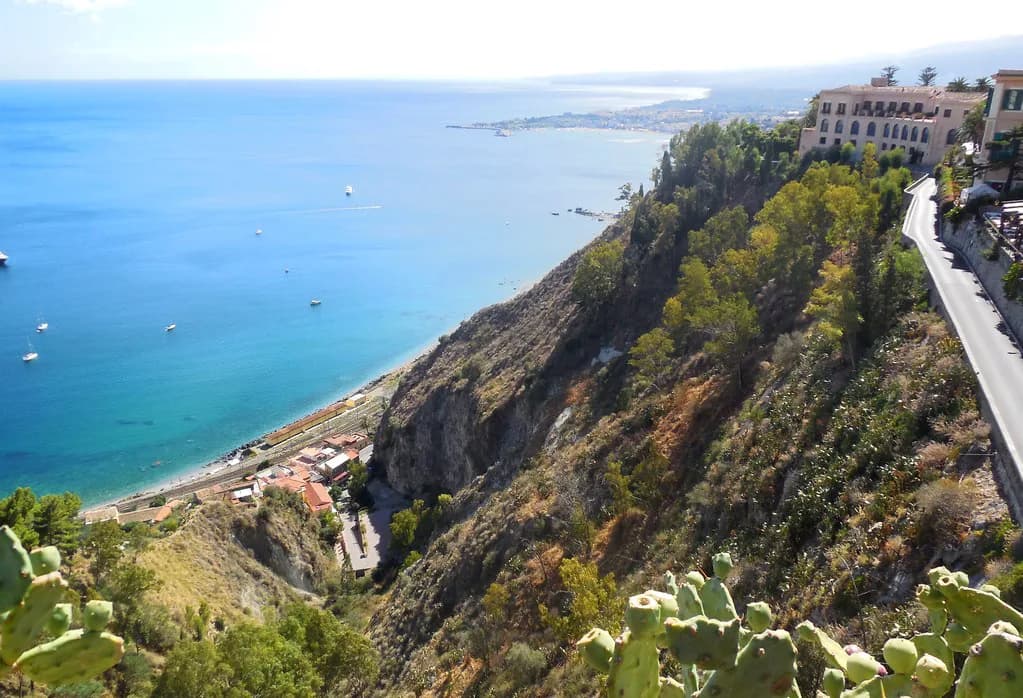
Taormina rewards eaters who plan around a few Sicilian classics rather than a ranked list of restaurants. Arancini, granita con brioche, pasta alla Norma, seafood and almond wine all appear across the island, so the question is less where to find them than which version and which setting suits your day. The town's geography helps: the historic centre sits on the cliff, while beaches such as Mazzarò sit below, so lunch plans differ for a town day and a beach day.
One traveller's account of eating in Taormina singles out arancini as the stand-out local specialty and describes them as light rather than heavy, with ragù, mozzarella and peas inside a breadcrumb shell. That is a useful benchmark: a good arancino should taste freshly fried and balanced, not like a dense leftover. Use that standard as a filter when you scan snack counters and bakery windows along the main street.
Quick Answer: The Short List Worth Building a Day Around
If you only eat a handful of things here, make them these: an arancino as a walking lunch, granita with brioche in the morning, pasta alla Norma or another aubergine dish at a trattoria table, seafood at a terrace or a beach club, and almond wine as a small digestivo. Finish with a cannolo filled to order or, in summer heat, a frozen fruit bar. None of these is exclusive to Taormina; they are Sicilian dishes that the town happens to serve in a range of settings.
Sicily's food traditions blend Greek, Arab, Spanish and French influences, which is why olives, pine nuts, saffron, pistachios and warm spices turn up in dishes that otherwise read as straightforward Italian. Olive oil and citrus, not butter, drive much of the cooking, and the volcanic hillsides near Mount Etna supply wines that show up on many Taormina tables. Knowing this helps you read a menu quickly: expect aubergine, seafood, citrus and nuts rather than cream-heavy sauces.
Arancini: The Walking Lunch
Arancini are deep-fried rice balls, typically filled with ragù, mozzarella and peas and coated in breadcrumbs. They suit Taormina because the centre is compact and pedestrianised, making a single arancino a sensible lunch when you want to keep moving between sights rather than sit down. Buy from a counter with visible turnover, and if the tray looks tired or the rice tastes dry at the centre, walk on.
Sicilian arancini come in more than one shape and filling, and you will see the familiar round form alongside elongated versions. There is no reason to treat one shape as more authentic than another; ask the counter what is inside, since fillings range from meat ragù to cheese or aubergine. That question also tells you how recently the batch was made, which matters more than any ranking.
Granita con Brioche: The Sicilian Breakfast Habit
Granita in Sicily is not a slushy drink; it is a finely textured, semi-frozen dessert often eaten with a brioche for breakfast. Almond is the classic, with pistachio and lemon as the other obvious choices, and the pistachio thread runs through Sicilian sweets generally. In Taormina the treat works best early, before the centre fills and before the heat makes anything cold feel like relief rather than pleasure.
Treat the morning granita as a slow start rather than a quick fuel stop. Sit outside if a table is free, order a small almond or lemon granita with the brioche, and watch the town before the day-trippers arrive. If you are planning a beach day below the centre, eat before you descend, because the beaches around Mazzarò and Isola Bella are pebble and beach-club food is a different, more expensive lunch.
Pasta alla Norma and Other Aubergine Dishes
Pasta alla Norma is the aubergine dish to know: tomato, fried aubergine, olives and basil, often with ricotta salata. It sits comfortably in the trattoria tier of Taormina eating, where a plate of pasta costs far less than a terrace seafood dinner, and it is also a reliable test of a kitchen, since it depends on good oil and properly cooked aubergine rather than expensive ingredients. Hotel and poolside versions exist, and they are usually milder and glossier.
Look for caponata too, the sweet-sour aubergine relish that appears on antipasto plates and alongside seafood. It travels well as a starter and tells you whether a kitchen works with vegetables or treats them as decoration. If both the Norma and the caponata taste of vinegar and nothing else, order grilled fish instead.
Seafood and Spaghetti alle Vongole
A credible seafood menu lists a limited number of fish and shellfish, says what is available that day, and prices it by weight where the fish is whole. A long list of every possible seafood in every possible sauce is a signal that the kitchen is buying frozen or pre-prepared. Sicilian seafood cooking is generally simple: olive oil, lemon, parsley, tomatoes, garlic.
One traveller's account describes the spaghetti alle vongole she ate in Taormina as light and savoury, and notes that after seeing flies around displayed fish during a heatwave, she chose to avoid the seafood counters. That is not a verdict on any restaurant, but it is a useful habit: look at how fish is stored and displayed, and if the product is sitting in warmth with no ice, order something else.
Spaghetti alle vongole is a safe order in the sense that the ingredients expose a kitchen quickly: the clams should taste of the sea, the pasta should be al dente, and the sauce should be just enough to coat rather than drown. If the dish arrives swimming in cream or tomato, that is a different recipe, not necessarily bad, but it tells you where the kitchen's instincts lie.
Almond Wine in Castelmola
Almond wine is the most particular drink in this part of Sicily, a sweet amber liqueur made with almonds and orange essence, served chilled in small glasses. The village of Castelmola above Taormina is its spiritual home: Caffè S. Giorgio, founded by monks and now a historic bar with a guestbook going back to 1907, is credited with the village's version of the drink. It is a digestivo, not a wine in any convention; the hidden gems in Taormina guide keeps a wider list of small stops like this.
Castelmola itself is worth the short trip for the terrace views rather than the drink alone, and it has another oddity: Bar Turrisi, which displays wooden, earthenware and ceramic phalluses as signs of abundance and good luck. Both bars make sense as a late-afternoon stop after the town centre rather than as a destination restaurant. Check how you plan to return to Taormina before you settle in.
Sweet Endings: Cannoli, Frozen Fruit and Gelato
Cannoli should be filled when you order them. A pre-filled cannolo goes soft within hours, and in warm weather the ricotta turns soupy; a crisp shell with cool ricotta is the version worth paying for. Along the main street you will also find granita, gelato and pastry counters competing for attention, so choose the one that appears to make fewer things and replenish them more often.
In summer heat, Sicilian desserts tend toward the light rather than heavy cakes, and frozen fruit bars are widely sold along Taormina's main streets. One traveller describes mango, lemon and melon bars as more popular than gelato in the August heat, and refreshing rather than sugary. That is a reasonable rule of thumb: the hotter the day, the less pastry you probably want.
Etna Wine: Why It Appears on So Many Lists
The hillsides of Mount Etna support vineyards rooted in nutrient-rich volcanic ash, which is the practical reason Etna wines turn up on so many Taormina menus. Waiters may describe them with more enthusiasm than detail, so ask for the grape and the village rather than the marketing names. A glass of an Etna white with seafood or a red with aubergine dishes is one of the simplest local upgrades to a meal.
Taormina's restaurant scene has long been built around visitors, from the days when writers and Hollywood figures summered here to the present, when a mix of terrace dining, enoteca bars and family trattorie share the same streets. That history explains the range of wine lists and the prices on them, and it also means you can drink well at almost any budget if you order by the glass and ask what is open.
Where to Eat at Three Budgets
At the street-food level, plan on arancini, a slice of pizza, granita or a pastry, and eat standing or walking through the centre. This is the most flexible option for a short visit, and it lets you spend your sit-down budget on one good dinner instead of three unremarkable lunches. Be aware that venues along the busiest stretch charge for position; a couple of streets back, the same snack often costs less.
At the trattoria level, expect pasta, caponata, grilled vegetables and simple secondi, with the total for a two-course lunch plus a glass of wine somewhere between the snack and terrace tiers. The practical test is the menu's balance: if it lists Sicilian dishes alongside a handful of international staples, you can usually still eat well by ordering the former. Ask what is made in house and what is not.
At the fine-dining and terrace level, you are paying for setting, service and often a view of the sea or Etna rather than for superior ingredients alone. The right approach is to book ahead in high season, order fewer courses than you think you need, and treat the evening as the main event of the day. Hotels with poolside dining such as the Belmond properties offer a gentler version of the same experience.
For a beach day, the lunch decision belongs to Mazzarò and Isola Bella rather than to the centre. The beaches directly below Taormina are pebble and largely organised by beach clubs, which makes lunch convenient but rarely cheap, while Spisone to the north offers lower prices and clearer water. If you want a proper restaurant lunch on sand, take the bus north to Letojanni instead.
How to Spot a Menu Aimed at Day-Trippers
The clearest signals are a menu translated into four or five languages, photographs of every dish, and a page that tries to cover pizza, sushi, burgers, paella and Sicilian pasta at once. A kitchen cannot do all of those well, so the safest move is to order the shortest, most local section. Wide menus are not proof of poor cooking, but they are a prompt to ask what the kitchen actually does.
Seasonality is the other clue. Sicilian food is built around what is available, so a menu offering the same aubergine, artichoke and citrus dishes in every month is probably working from a freezer. Look instead for a short list of vegetables, a catch of the day, and prices by weight for fish. In the busiest weeks, the pressure to turn tables quickly is highest, so a small menu that changes is often more trustworthy than a large one that does not. Check the best time to visit Taormina to avoid crowds if a calm lunch matters to you.
Read the fine print on meat dishes. One writer notes that horse and donkey meat appear on some Sicilian menus, with donkey listed as an ingredient in a hamburger while a children's menu version was simply called hamburger. That is not a claim about Taormina generally, but it is a reminder to ask what is in a dish if the name is vague, especially when ordering for children.
Timing Your Eating Around the Town
Shape the day with food rather than against it. Granita and brioche in the morning, an arancino or a light lunch near midday, an aperitivo at Piazza IX Aprile in the late afternoon, and dinner after the passeggiata begins. Taormina's historic centre is compact enough to walk between those moments without planning transport, which matters if you are also squeezing in the ancient theatre or a garden visit.
Weekends and peak summer days are the hardest times to eat spontaneously in the centre, and cruise-ship arrivals can fill the main streets within an hour. If you want a terrace table, arrange it earlier in the day; if you want a quiet lunch, move a street or two off the main axis or eat slightly before the noon rush. The evening passeggiata and late dinner are the town's natural rhythm, not an inconvenience to work around.
If you are combining eating with sights, give the town at least a day and plan the meals around a short walk rather than a long one. A Taormina one day itinerary that clusters the Greek theatre, the gardens and the main street will leave you near good lunch options without a detour. If you have longer, a two day itinerary lets you split a town day from a beach or Castelmola day.
Practical Etiquette and Menu Cautions
Churches and cathedrals in Italy are places of active worship, so dress and behave accordingly if you plan to step inside, and cover shoulders and knees rather than treating them as sightseeing stops between meals. The same applies when you are eating nearby: a swimsuit and a beach towel belong at Mazzarò, not at a table by the Duomo. A light layer in your bag solves most of it.
Ask about ingredients if you have dietary restrictions, because Sicilian menus use nuts, shellfish, aubergine and pork in less obvious places, and pistachio shows up in savoury dishes as well as desserts. Vegetarians will eat well on caponata, pasta alla Norma, grilled vegetables and granita, but should confirm that a vegetable dish is not finished with fish sauce or anchovy.
Eat With the Town, Not Against It
The best approach to eating in Taormina is to spend deliberately: street food and granita for the daytime, one good trattoria meal for pasta and vegetables, and a terrace dinner if the view is what you came for. Read the menu for breadth, seasonality and fine print rather than for rankings, and treat any recommendation as a starting point that needs checking when you arrive.
Before you go, confirm how you will reach the beaches, the station and Castelmola, since your lunch plans follow your transport. Current fares and timetables change, so check with the operator rather than relying on a guide; the cable car operator ASM Taormina publishes its own hours and rates. A short Castelmola day trip guide and the Taormina Attractions hub are the natural next reads.
Frequently Asked Questions
What food is Taormina known for?
Taormina is known for Sicilian dishes rather than a cuisine of its own: arancini, granita con brioche, pasta alla Norma, caponata, seafood such as spaghetti alle vongole, cannoli and almond wine from nearby Castelmola. Etna wines appear widely on restaurant lists. Treat these as island-wide dishes served in a tourist-heavy town, not as Taormina exclusives.
What should I eat for breakfast in Taormina?
The Sicilian habit is granita with a brioche, usually almond, pistachio or lemon, eaten slowly before the centre fills. Pastry counters also sell cannoli and other sweets, but pre-filled cannoli soften quickly, so choose one filled to order. Coffee and a pastry is the simpler option if you want to save your appetite for lunch.
Is pasta alla Norma from Taormina or Catania?
Pasta alla Norma is associated with Sicily broadly and with Catania in particular, not with Taormina. You will find it on Taormina menus at trattorie and hotels alike, usually with aubergine, tomato, olives and ricotta salata. Order it where the kitchen cooks vegetables well, and use it as a price-friendly way to eat well.
Where can I try almond wine near Taormina?
The village of Castelmola above Taormina is the historic home of almond wine, a sweet liqueur made with almonds and orange essence and served chilled in small glasses. Caffè S. Giorgio and Bar Turrisi are the two establishments most associated with the village's drinking culture. Confirm your return transport before settling in for a second glass.
How do I avoid tourist-trap restaurants in Taormina?
Watch for menus translated into many languages, photographs of every dish and a list spanning pizza, sushi, burgers and Sicilian pasta. A short, seasonal menu with fish priced by weight is usually a better sign. Read the fine print on meat dishes, since some Sicilian menus list horse and donkey meat, and ask what is in a vaguely named dish.
Is Taormina expensive for food?
It can be, because the town's restaurant scene is built around visitors and terrace tables command a premium. You can still eat cheaply on arancini, granita and pizza by the slice, and a trattoria plate of pasta or caponata costs far less than a seafood dinner. Check current menus on arrival rather than relying on any published average.
What should I wear when eating out and visiting churches in Taormina?
Dress for walking on cobblestones and carry a light layer for churches, where shoulders and knees should be covered. Beachwear belongs at Mazzarò or Isola Bella rather than in the centro storico. Evenings stay warm in summer, but a wrap helps on terraces after sunset.
Sources
- Exploring Italy: Where to Eat in Taormina, Sicily - My Life's A Trip
- Food and Travel Magazine | 48hr Guide to Taormina, Sicily
- The 10 Best Restaurants in Taormina 2026 | TheFork
- Taormina Food Guide: Where to Eat — HEDO
- Castelmola - Visit Sicily
- Corso Umberto Taormina 2026 Guide | Shops, Food, Tips
- The Very Best Things to Do in Taormina, Sicily — ALONG DUSTY ROADS
- Mazzarò Cable Car - Taormina - ASM Taormina
- Taormina Beaches: The Complete Guide to Every Beach Near Taormina - Mirasicily
Continue exploring
More guides you'll find useful