Hidden Gems in Olbia, Sardinia: Lesser-Known Sites and Quiet Corners
Discover Olbia's quieter corners, from the Peddone museum and Roman necropolis to Nuragic tombs and castle ruins, with practical advice on what to check first.
On this page
Most travelers meet Olbia through a boarding gate or a car deck, then drive straight toward the beaches of Gallura. Stay a little longer and the city opens up: a museum on a tiny harbour island, a Romanesque basilica ringed by excavated tombs, and Bronze Age monuments a short drive from the centre. These are not secrets, but they are the stops that a rushed transfer misses.
This guide concentrates on places that reward a slower half-day rather than a checklist sprint. It separates free outdoor ground, such as the seafront and castle hill, from ticketed collections, because those are different commitments of time and money. It also gives an approximate sense of distance and effort instead of promising precise travel times, which vary with traffic and season.
What Counts as a Lesser-Known Stop in Olbia
Olbia works as a year-round city rather than a resort, with a compact centre, everyday shops and a working port, which is exactly why it can absorb a quiet morning of sightseeing. The historic core sits a short walk from the harbour and is easy to cover on foot, though much of it was rebuilt after heavy bombing in the Second World War. Expect a lived-in townscape of Liberty-style facades and small squares, not a preserved medieval maze.
For this guide, a lesser-known stop means something you can reasonably fit around errands and ferry traffic: a church, a museum hall, a stretch of waterfront or a ruins site that does not demand a full day. Treat distances loosely. The museum and basilica are within walking range of the centre, while the Nuragic sites and the castle lie outside town and are best approached by car or a planned walk.
The Peddone Islet Museum: Roman Shipwrecks and the City's Harbour Story
The archaeological museum occupies a purpose-built structure on the small Peddone islet, joined to the waterfront by a short footbridge. Its collection follows the port's long sequence from Nuragic and Phoenician phases through the Roman and medieval periods, using amphorae, ceramics, coins and everyday objects recovered from the harbour and the city below. The highlight is the group of Roman ship remains lifted from the seabed, displayed with explanations of ancient trade routes.
That shipwreck material matters because it turns the modern harbour outside the window into a two-thousand-year-old commercial story. Sources differ on the exact date of the destruction that buried these vessels, variously attributing it to a Vandal attack in the fifth century, so treat any single year with caution. Before visiting, check the museum's own published opening days rather than relying on older guides; one source reports a Tuesday-to-Sunday pattern, but schedules can change.
San Simplicio Basilica and the Roman Necropolis
San Simplicio is the city's most representative monument and one of the best-preserved Romanesque buildings on the island, raised in local granite between the eleventh and twelfth centuries. Its sober facade with pilasters opens into a three-nave interior, a hallmark of Pisan Romanesque influence, and Roman inscriptions and funerary slabs were reused in its fabric over the centuries. The basilica is free to enter as a working church, so dress and timing should follow normal respect for services.
Around the church lies an extensive Roman necropolis uncovered during twentieth-century excavations, with dozens of tombs from the imperial period. Some finds remain in place to show their original setting, while others are displayed in the archaeological museum, so a visit to both gives the fuller picture. One source reports that guided visits to the necropolis may need to be booked in advance; confirm current arrangements locally rather than assuming a walk-up tour.
San Paolo Apostolo and Its Majolica Dome
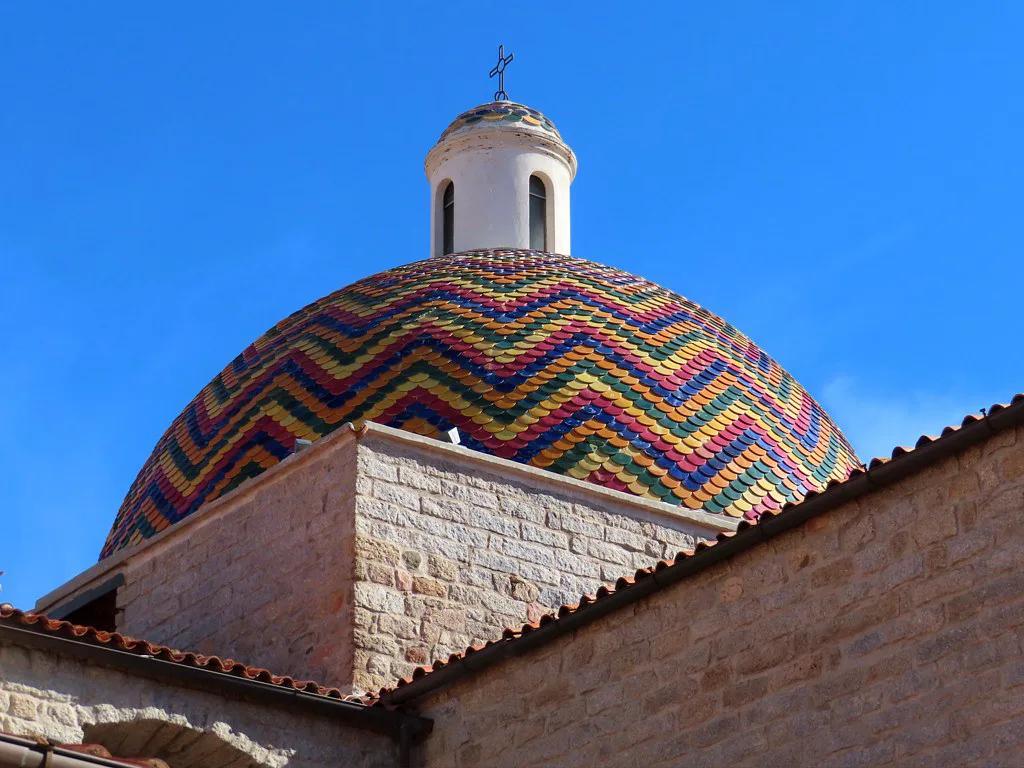
San Paolo Apostolo stands a few steps from the main street and is instantly recognisable by its dome covered in coloured majolica tiles, a decorative flourish that echoes Iberian styles likely introduced during the Aragonese and Spanish period. The building is largely an eighteenth-century structure incorporating earlier medieval elements, with a granite facade and a tall bell tower beside the dome. Inside, a single nave with side chapels carries painted vaults and Baroque decoration from later renovations.
It is a short stop, perhaps twenty minutes unless a service is underway, and it pairs naturally with a wander along Corso Umberto. Check the published mass times at the door if you want to see the interior without disturbing worshippers, and remember that churches are places of prayer first. The dome is best appreciated from a little distance, where the tiles read clearly against the sky.
Corso Umberto and Piazza Regina Margherita: The Everyday Centre
Corso Umberto is Olbia's main commercial street and a genuinely working one, lined with cafes, wine bars and shops selling Sardinian goods, with most of the surrounding lanes pedestrianised. It is not a sight so much as a way to read the city: locals run errands in the morning, and Piazza Regina Margherita fills in the evening with people walking, dining and meeting friends. Near the city hall you can spot the remains of a Roman court, and further out lie traces of the Punic defensive walls.
Set expectations accordingly. Because bombing destroyed much of the centre, this is a mix of older survivors and post-war rebuilding rather than an intact old town, and that honesty is part of the appeal. Wander without a fixed route, use the squares as rest points, and let the street lead you toward the waterfront rather than treating the walk as a ticketed attraction.
The Gulf Waterfront and the Peddone Footbridge
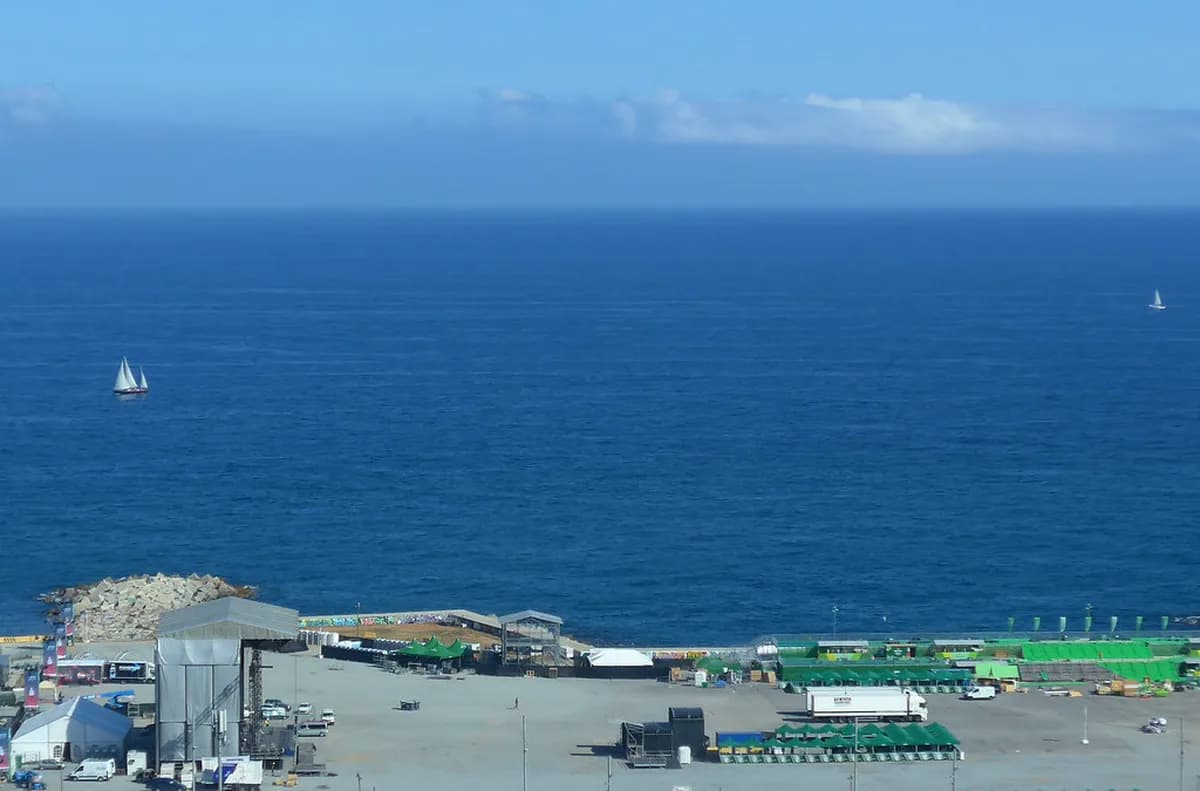
The seafront promenade runs the length of the Gulf of Olbia and costs nothing, which makes it the best value introduction to the city's maritime character. From the walk you can watch ferries shuttling toward mainland ports such as Genoa, Livorno and Civitavecchia, a reminder that this harbour has been a Mediterranean junction for millennia. The gulf is sheltered by small islands, and on clear days the view reaches toward the La Maddalena archipelago.
The footbridge to the Peddone islet links the promenade to the museum, so a single stroll combines a free viewpoint with an optional paid collection. A seasonal Ferris wheel has been reported near Molo Brin in front of the museum, described by one source as a landmark along the harbour, but it is a seasonal attraction rather than a permanent fixture. Do not plan an evening around it without checking whether it is running during your dates.
Beyond the Centre: Su Monte 'e s'Abe and the Sa Testa Sacred Well
Two Nuragic monuments make a rewarding counterpoint to the city's Roman layer. Su Monte 'e s'Abe is a Giants' Tomb, a Bronze Age collective burial structure of large granite slabs with a curved exedra at the front, partially reconstructed today after excavations revealed human remains and grave goods. Sa Testa is a sacred well cut from carefully fitted granite blocks, with a staircase descending to a circular chamber where a spring once collected water; one source calls it among the best-preserved Nuragic water sanctuaries in the north-east.
Both sit outside the built-up centre and are best reached by car, though the exact drives vary with the route you take, so build in slack rather than trusting a minute-by-minute plan. They are outdoor archaeological sites with uneven ground, so sturdy shoes matter more than a strict schedule. Opening arrangements and any on-site staffing can change seasonally, so verify before making them the anchor of a day.
Castello Pedres: Pisan Ruins on a Granite Hill
Pedres Castle occupies a granite hill south of town, overlooking the countryside and the road toward the airport. It was built in the thirteenth century during Pisan control of northern Sardinia as a defensive stronghold guarding inland routes and the approaches to Olbia, and its square stone tower still rises above the ruined walls. It was later used in the Aragonese period before falling into disuse.
One source describes reaching the castle on a hike that begins near the prehistoric tombs, which makes a sensible pairing: Nuragic burial ground first, medieval tower second, one continuous chronological arc across a single walk. Treat that route description as a rough pointer rather than a signposted trail, and allow more time than you think for the climb and the return. There is no reliable published guidance on facilities or accessibility here, so assess your own fitness and footwear before setting out.
Choosing a Base: Olbia Versus the Emerald Coast
Olbia is a real town with year-round life, a historic centre, local restaurants and everyday businesses that stay open outside summer, and its accommodation spans guesthouses to larger hotels. The Emerald Coast, by contrast, is built around luxury tourism, with high-end resorts, beach clubs and marinas centred on Porto Cervo, and it is described as largely dead outside the main season. Staying in Olbia and visiting the coast by day is the more flexible arrangement for most independent travelers.
The trade-off is atmosphere: you get a working city rather than a resort bubble, which means less glamour and more ordinary daily life. Olbia Costa Smeralda Airport sits a few kilometres from the centre, and the port connects the island with mainland Italy by ferry, so a base here simplifies arrival and departure. For a sense of how other cities handle this balance, our guide to the hidden gems in Florence shows a similar approach to looking past the headline sights.
A Realistic Half-Day and Full-Day Pairing
For a half-day, start at San Simplicio and its necropolis while the light is good, walk down through Corso Umberto for coffee, then finish at San Paolo's dome before a waterfront stroll. That sequence keeps you on foot, avoids depending on transport, and leaves the optional museum for the end if energy and opening days allow. Suggested durations here are planning aids, not official figures.
For a full day, give the morning to the Peddone museum and the seafront, then take a car to Su Monte 'e s'Abe and Sa Testa, finishing at Pedres Castle if time and daylight permit. Treat the road distances as approximate and check opening arrangements for each stop before you commit, since a single closed gate can undo a tightly packed schedule. Readers assembling a wider Italian trip can borrow the same slow rhythm from our hidden gems in Venice guide.
Eating Well Without Chasing a List
Olbia's food sits between sea and interior: seafood dishes from the port side, and mountain cooking from Gallura built on lamb, pork, cheese and bread. Look for zuppa gallurese, also called suppa cuata, a baked layered dish of stale bread, meat broth and pecorino that suits cooler months, and bottarga di muggine, dried mullet roe grated over pasta or eaten in thin slices with olive oil. Pane carasau and pecorino sardo appear widely on local tables.
Rather than hunting a named restaurant, use neighbourhoods as a filter: menus in less central streets lean more toward pastoral tradition, while the summer season brings a broader restaurant offer along the coast. Prices vary by season and venue, so check menus at the door instead of relying on outdated figures. Spring and summer also bring markets and food events worth watching for.
Add-Ons: La Maddalena, Tavolara and Nearby Coast
La Maddalena, an archipelago of seven main islands with clear water and white beaches, is reached by ferry from Palau, but schedules and crossing times should be checked with the operator rather than taken from a guide. Tavolara and Molara are accessible via boat tours departing from Olbia harbour or nearby Porto San Paolo, which makes them easy to slot into a stay based in the city. The Costa Smeralda lies north of Olbia and is easily seen on a day trip.
San Teodoro to the south and Golfo Aranci to the north both offer beaches and water activities if you want variety without relocating. Note that these are popular, well-known destinations rather than quiet corners, so visit early or out of peak season if crowds bother you. Confirm any boat tour or ferry details directly with the operator before booking.
What to Verify Before You Go
Museum opening days, church service times, guided necropolis visits and any seasonal attraction can shift with the calendar, and no single source in this guide guarantees current arrangements. Check the museum's own published days, ask at the basilica about access to the necropolis, and confirm whether the Ferris wheel or other harbour attractions are running during your stay. These checks take minutes and prevent a wasted trip.
For outdoor sites, ask locally about access and ground conditions rather than assuming a maintained path. Keep a paper or offline map, since rural roads around the Nuragic monuments and castle hill can be easy to miss. If you are travelling without a car, weigh whether a taxi or a guided excursion is worth the cost before committing to a day outside the centre.
Plan Your Visit
Olbia rewards the traveler who gives it a day rather than an hour. The Peddone museum, the granite basilica and its necropolis, the majolica dome and the free waterfront together explain how a small harbour city stayed connected to the Mediterranean for centuries, while the Nuragic tombs and Pedres Castle push the story back further. Pick two or three, check the details that matter, and leave room for an unplanned coffee. For related planning, see Olbia Food Guide: Seafood, Gallurese Dishes and Where to Eat.
Frequently Asked Questions
What should you not miss in Olbia if you only have one day?
Prioritise San Simplicio and its Roman necropolis, then walk Corso Umberto to San Paolo's tiled dome. Finish on the waterfront and cross the footbridge to the Peddone museum if its published opening days allow. That sequence keeps you on foot and covers the city's Roman, medieval and maritime layers in a single loop.
Is Olbia worth staying in, or should you base yourself on the Costa Smeralda?
Olbia is a year-round working city with a compact centre, everyday services and easier access to the airport and ferry port. The Emerald Coast is built around luxury resorts and is largely seasonal. For most independent travelers, staying in Olbia and visiting the coast by day offers more flexibility; choose the coast only if resort atmosphere is the point of your trip.
Which lesser-known archaeological sites near Olbia can you visit independently?
The Giants' Tomb of Su Monte 'e s'Abe and the Sa Testa sacred well are the two most accessible Nuragic monuments outside the centre, both outdoor sites usually reached by car. Pedres Castle, the thirteenth-century Pisan stronghold on a granite hill, can be combined with them on a longer excursion. Verify access arrangements before setting out, as conditions vary.
Are Olbia's churches free to visit?
San Simplicio and San Paolo Apostolo function as working churches, so entry is normally free and any donations are voluntary. The necropolis beside San Simplicio is a separate archaeological area, and one source reports that guided visits may require booking in advance. Check locally before planning around a tour, and avoid visiting during services.
What is Olbia best known for beyond its port and airport?
It is known as the gateway to the Costa Smeralda and Gallura, but the city itself holds a Romanesque basilica, a Baroque church with a majolica dome, a harbour museum built around Roman shipwrecks, and a seafront that still handles ferries to the Italian mainland. Its food blends seafood with mountain dishes from the Gallurese interior.
How far are the Nuragic sites and Pedres Castle from central Olbia?
They lie outside the built-up centre and are best reached by car, but published distances and drive times vary, so treat them as approximate. Build slack into any itinerary that strings all three together, and check access before you go. Within the centre, the museum, both churches and the waterfront are walkable from one another.
Sources
Continue exploring
More guides you'll find useful