Berlin Courtyard Walk: Hackesche Höfe and Mitte Passages
Follow a free 2–3 hour Berlin courtyard walk from Hackescher Markt through Hackesche Höfe, Haus Schwarzenberg, Rosenhöfe and Sophienstraße, with etiquette tips.
On this page
Berlin Courtyard Walk: A Self-Guided Route Through Mitte's Hinterhöfe
Last updated October 2026. This Berlin courtyard walk links the polished Hackesche Höfe with rougher Hinterhöfe in Mitte's Scheunenviertel and Spandauer Vorstadt. Expect Art Nouveau tiles, independent boutiques, street art and the marks of WWII on the walls. It takes 2–3 hours, costs nothing, and works as a stop on any list of 10 Secret Berlin Gems & Hidden Places to Explore (2026) routes.
What a Hinterhof Is and Why Mitte Is the Place to Walk One
A Hinterhof is an inner courtyard behind a street-facing building. In Berlin, many sit inside the Mietskaserne, the "rental barracks" built as dense tenement blocks. Apartments were stacked around a chain of courtyards, one behind another. Many of those yards survived, and some now hold cinemas, galleries and workshops.
Mitte's Scheunenviertel and Spandauer Vorstadt keep an unusually dense set of these yards within a few streets. That makes them practical for a single walk. You pass from a restored Art Nouveau complex to an un-renovated courtyard covered in street art, all without a taxi or a transit ticket. Many guides stop at Hackesche Höfe. This route treats it as the starting point, not the finish line.
Here is the plan in one view:
- Start: S-Bahnhof Hackescher Markt
- Stop 1: Hackesche Höfe
- Stop 2: Haus Schwarzenberg, Rosenthaler Str. 39
- Stop 3: Rosenhöfe, then Heckmann Höfe at Oranienburger Str. 32
- Stop 4: Sophienstraße and the Sophie-Gips-Höfe
- End: Rosenthaler Platz or Oranienburger Straße
Plan Your Berlin Courtyard Walk: Timing, Access and Cost
Allow 2–3 hours at a leisurely pace. Start at S-Bahnhof Hackescher Markt, which keeps the route logical and avoids backtracking. Check live service changes in the BVG journey planner before you travel. Finish at Rosenthaler Platz or Oranienburger Straße, both of which connect you back to other parts of the city.
Weekday mornings are quietest. Late afternoons give better light for photos. Many courtyards close their gates after 8:00 PM or 10:00 PM, so do not plan this as a late-night stroll. Opening times for individual shops and cafés differ from the gates, so verify them before you build a schedule around one.
Walking the courtyards costs nothing. Only food, drinks and shopping add to the budget. That puts it alongside other free things to do in Berlin. For wider context on which area suits your stay, see the 10 Best Berlin Neighborhoods and Local Stay Tips (2026). Official event and visitor information is on visitBerlin.
Stop 1: Hackesche Höfe, the Polished Starting Point
Begin at the first courtyard, where Endell's Art Nouveau tiles are the draw. Look at the glazed façade patterns rather than rushing through to the shops. Photography is easiest here, because this is a commercial, public complex built to receive visitors.
Hackesche Höfe is a set of 8 interconnected courtyards. Their uses run from cinema and theater to high-end boutiques. You move from one yard to the next through passages, so it feels like a sequence of rooms rather than a single plaza.
Treat this as the tourist must-see, but only the opening act. It is the most crowded stop on the route, and it can feel more like a shopping arcade than a neighborhood. That is the reason to arrive on a weekday morning. Spend 30–40 minutes here, then move on to the rougher courtyard next door.
- Best for: Art Nouveau tilework and a clear first look at the Hinterhof format
- Trade-off: busiest and most commercial stop on the walk
- Etiquette: public and commercial, so photos are fine; keep walkways clear
Stop 2: Haus Schwarzenberg, the Gritty Alternative
Haus Schwarzenberg sits directly next to Hackesche Höfe at Rosenthaler Str. 39. It is the contrast the walk depends on. Where the first complex is restored and tidy, this courtyard keeps an un-renovated look.
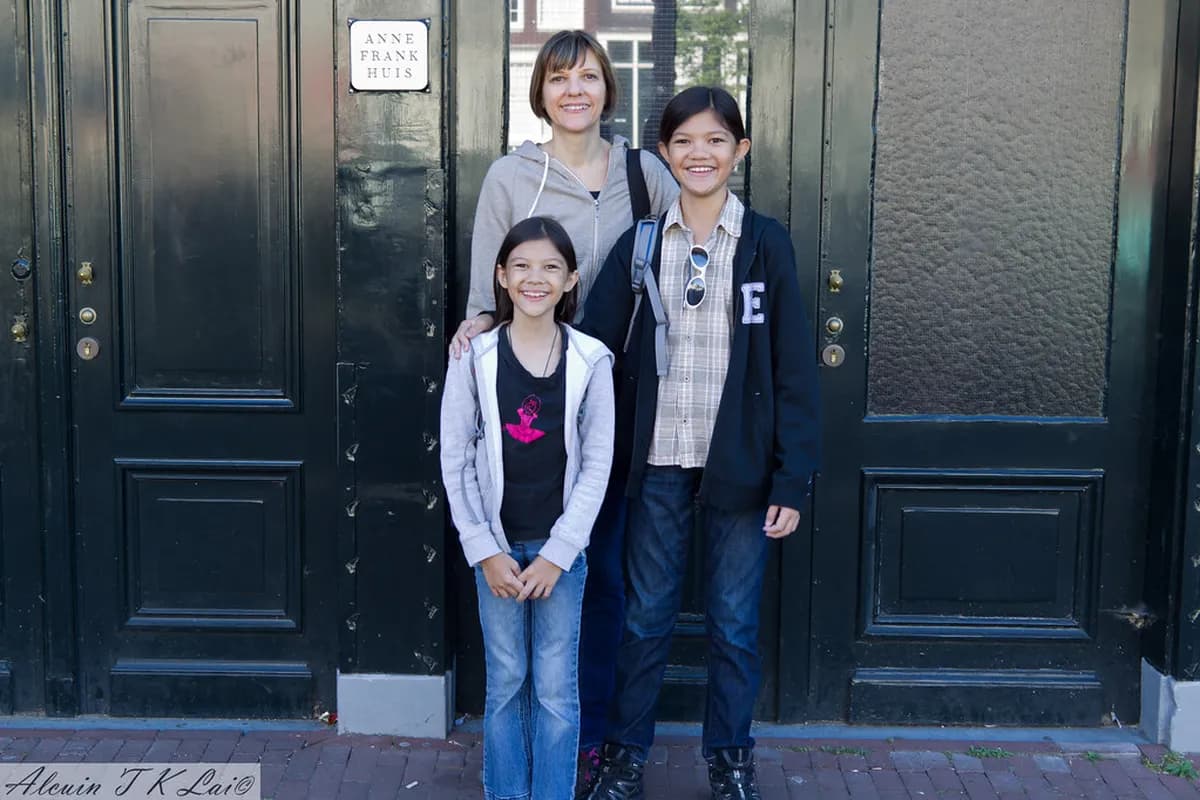
Expect street art on the walls, metal sculptures and a deliberately raw atmosphere. The Anne Frank Zentrum is also here, so keep the tone respectful, not just photo-driven. If you want more of this style across the city, read our guide to 10 Essential Berlin Street Art Spots to Explore (2026).
This stop suits anyone collecting 10 Unusual Things to Do in Berlin (2026) – Your Offbeat Guide. The passage known as Dead Chicken Alley is associated with this courtyard. Its current status and any changes to the installations should be checked before you go. Art here changes, so what you see may differ from older photos.
- Address: Rosenthaler Str. 39
- Look for: street art, metal sculptures, Anne Frank Zentrum
- Etiquette: stay quiet near any residential doors and windows
Stop 3: Rosenhöfe and Heckmann Höfe for Quieter Coffee Breaks
Rosenhöfe has a floral, feminine Art Nouveau style. Look up at the ornament and down at the planted layout. It is calmer than Hackesche Höfe, which makes it better for slowing the pace after two busy stops.
Budget 20–30 minutes each at the two quieter courtyards, which fits inside the 2–3 hours for the whole walk.
Heckmann Höfe is at Oranienburger Str. 32. It has a Mediterranean feel, and the Bonbonmacherei, a candy shop, is a draw. Confirm its current opening hours before you plan around it, because small shops change schedules.
These two courtyards are the better places for a coffee break. They offer quieter seating and less foot traffic than the main complex. The trade-off is that they are smaller, so they reward 20–30 minutes each, not a long stay. If you want a full meal rather than a snack, see our list of 10 Best Local Restaurants In Berlin (2026) – Travel Guide.
Stop 4: Sophienstraße and the Craft Courtyards
From Oranienburger Straße, turn toward Sophienstraße. The mood shifts from tourist traffic to a quieter residential street. This is where the walk feels least like an attraction and most like the neighborhood.
Highlight here is the Sophie-Gips-Höfe. It mixes modern art galleries with historic residential spaces. That mix is the point. A courtyard can host an exhibition on one side and people's homes on the other.
This section fits readers who want non-touristy things to do in Berlin. It also belongs with other 15 Unique Off The Beaten Path Berlin Experiences (2026) routes. Expect fewer people and more need for restraint. Keep voices low, and leave closed doors closed.
Mietskaserne Basics Without the History Lecture
Mietskaserne means "rental barracks." These were tenement blocks packed with apartments around a sequence of courtyards. The front building faced the street. Smaller buildings stood behind it, each one tucked further back.
That layering explains why Berlin courtyards feel like chains of rooms. It also explains the walls you see. Some are scarred from WWII, and some have been restored in bright colors. Reading the difference tells you which courtyards have been renovated and which have kept a rougher face.
Use this as a quick lens while you walk. Ask which buildings face the street, which sit deeper in, and whether the yard is now commercial, cultural or residential. That question alone makes each stop easier to read.
Public Courtyards vs. Private Residential Yards
Not every open gate is an invitation. Hackesche Höfe, Rosenhöfe and Heckmann Höfe are commercial and public. Shops, cafés and cultural venues expect visitors. Some other yards are residential, even when the gate stands open.
Use simple rules. Enter where there are shops, signs, galleries or visible visitor traffic. Stay quiet in any yard that looks like a home. Do not photograph windows or residents. If a door is closed or a notice asks for privacy, treat it as final.
Gate access also changes through the day. Many courtyards close their gates after 8:00 PM or 10:00 PM. On Sundays, gates are usually open, but shops are usually closed. Plan accordingly, and do not rely on one source for hours.
Rainy Days, Pitstops and Where to Extend the Walk
Courtyards offer some cover from light rain, because passages and arcades interrupt the weather. They are not a full indoor plan. For a wetter day, pair this route with the Berlin in the Rain: A Rainy Day Itinerary by Neighborhood.
Passages linking the 8 interconnected courtyards at Hackesche Höfe give some cover when light rain falls on the walk.
For pitstops, choose a café inside a courtyard such as Heckmann Höfe or Rosenhöfe. Verify names and hours before publishing a fixed plan. Clärchens Ballhaus is often a favorite nearby stop, but check the current accessibility of its courtyard first.
The courtyard idea extends beyond Mitte. For Prenzlauer Berg, use the Prenzlauer Berg neighborhood guide. For a rougher edge, try the Kreuzberg neighborhood guide. For more lesser-known city spots, see the lesser-known Berlin spots overview.
Follow the Route Without Backtracking
Use the Rosenthaler Straße entrance to Hackesche Höfe at no. 40, a short walk from S-Bahnhof Hackescher Markt. Begin with the tiled first courtyard, then pass through the linked yards before returning to Rosenthaler Straße.
Haus Schwarzenberg is immediately beside it at Rosenthaler Str. 39. Look for the narrow, art-covered entrance rather than expecting a formal plaza. This is the simplest point to compare the polished complex with a rougher Hinterhof.
Continue along Rosenthaler Straße to Rosenhöfe at no. 36. From there, head toward Oranienburger Straße for Heckmann Höfe at no. 32. Finish by turning into the quieter streets around Sophienstraße and the Sophie-Gips-Höfe.
- Start: Hackescher Markt S-Bahn station
- First entrance: Rosenthaler Str. 40
- End near: Oranienburger Straße or Rosenthaler Platz
This order keeps the busiest stop first and leaves the more residential-feeling courtyards for the quieter end of the walk.
Frequently Asked Questions
How long does the Berlin courtyard walk take?
Allow 2–3 hours at a leisurely pace. Start at S-Bahnhof Hackescher Markt. End at Rosenthaler Platz or Oranienburger Straße. Add time if you stop for coffee or browse shops.
Is the courtyard walk accessible for strollers and wheelchairs?
Partly. Cobblestones can be challenging in several courtyards and passages. Smooth routes exist in some restored complexes. Check each stop before you go if mobility is a concern.
Are the courtyards open on Sundays?
Gates are usually open on Sundays. Shops are usually closed. Café and gallery hours vary, so confirm them for the stops you care about.
Can you take photos in the courtyards?
Generally yes. Avoid residents' windows and doors. In residential yards, keep voices low and skip photos if anyone is nearby.
Does the walk cost anything?
Walking the courtyards is free. Food, drinks and shopping are the only costs. Check prices at each venue on the day.
Continue exploring
More guides you'll find useful