Balti Jaama Turg Tallinn: Complete Guide to Estonia's Largest Market
Plan a visit to Balti Jaama Turg Tallinn with this floor-by-floor guide to street food, antiques, opening hours, trams, and 2026 prices.
On this page
Balti Jaama Turg Tallinn: The Ultimate Visitor's Guide
Last updated July 2026. Balti Jaama Turg Tallinn is Estonia's largest market, spread across three floors beside the city's main railway station. Nearly 300 traders sell fresh produce, street food, antiques, and Estonian design here, steps from Kalamaja and Telliskivi. This guide walks through each floor, the best street food stalls, and how to time a visit around the midday rush.
What Is Balti Jaama Turg in Tallinn?
Balti Jaama Turg is Estonia's largest market, spread across three connected floors beside the railway station. Nearly 300 traders operate here, covering fresh produce, meat and fish, street food, antiques, and Estonian design. Astri Grupp, the company behind the market, describes its mission as promoting a healthy, balanced diet built on clean, authentic ingredients. That mix of fresh food, prepared meals, and secondhand goods sets it apart from a typical single-purpose grocery market. Underground services, ground-floor food halls, and an upper floor of design and antiques each serve a different kind of visit. Browsing every hall costs nothing, even before you buy anything.
- Foodies: close to 20 street food stalls and counters on the ground floor.
- Vintage and antique hunters: the Antiigiala section on the upper floor.
- Grocery shoppers: Selver supermarket underground plus fresh produce stalls at ground level.
- Photographers: the fish hall's ice displays and the antique tables' mixed-era goods.
Getting There: Location, Trams, and Best Times to Visit
Balti Jaama Turg sits at Kopli tn 1 in the Põhja-Tallinna district, right beside Tallinn's main railway station. The market sits northwest of the Old Town's city wall, an easy walk from the medieval center. Trams on lines 1, 2, and 5 also stop near the station, a faster option with heavy shopping bags. Morning visits suit fresh produce shopping, when stalls are fully stocked and aisles are quieter. Lunch and early evening bring a fuller street food atmosphere, with more stalls cooking to order. Seating in the street food area gets tight between 12:00 and 13:30, when the lunch crowd arrives. For a calmer visit overall, check the visiting Tallinn without crowds guide before planning around peak season.
| Area | Hours |
|---|---|
| Market halls (meat, fish, vegetable street, kiosk street) | Mon-Sat 09:00-19:00, Sun 09:00-17:00 |
| Selver supermarket (underground floor) | Daily 08:00-22:00 |
| Street food area | Mon-Sat 09:00-20:00, Sun 09:00-18:00 |
| MyFitness club (underground floor) | Mon-Thu 06:30-22:00, Fri 06:30-21:00, Sat-Sun 09:00-21:00 |
| Upper floor (design, crafts, antiques) | Mon-Sat 10:00-19:00, Sun 10:00-17:00 |
| Humalakoda brewery (upper floor) | Mon-Tue 12:00-22:00, Wed-Sat 12:00-24:00, Sun 12:00-19:00 |
| Bad Habits bar (upper floor) | Mon-Wed 11:00-21:00, Thu-Sat 11:00-23:00, Sun 11:00-21:00 |

Navigating the Three Floors of the Market
The market divides cleanly into three levels, each with a distinct purpose. Elevators connect all three floors, which helps when carrying shopping bags or a stroller.
- Underground floor: Selver supermarket, MyFitness sports club, and market services.
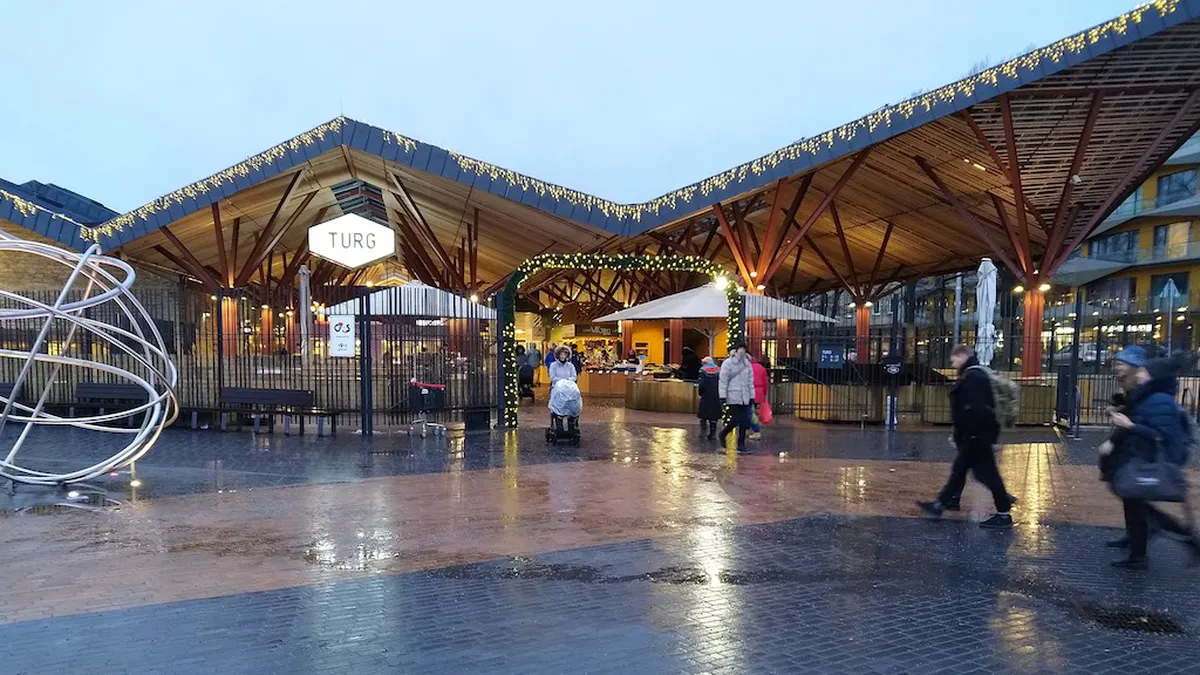
- Ground floor: a meat hall with stalls like Bill The Butcher and Mulgi Lihakarn, a fish hall, the juurikatänav vegetable street, and a street food area with close to 20 dining options.
- Upper floor: Estonian design and handicrafts, clothing and accessories, and the Antiigiala antique section.
The Street Food Area: What to Eat and What It Costs
The ground-floor street food area is the market's busiest stretch, with close to 20 stalls, cafés, and restaurants. Longtime favorites include Friikabaar, VegMachine, Kauss, Pelmen, Kebaboom, and Panda Köök. Samsa Family Bakers covers pastries and baked goods nearby. Humalakoda pours craft beer on the upper floor, and Bad Habits keeps longer evening hours on weekends for drinks. Expect to pay roughly €5 to €10 for a full street food meal. For more dishes worth trying, see the local eating options in Tallinn. Sit-down options within walking distance appear in the sit-down restaurant picks nearby guide.
Between 12:00 and 13:30, crowds pack the street food area and seating becomes very tight, even though meals cost only €5 to €10. Visit outside these hours if finding a seat matters to you.
Shopping for Antiques, Design, and Fresh Produce
Antique dealers and design vendors share the upper floor, with the antique section listed on-site as Antiigiala. Clothing and accessories stalls such as Mileedi and Trendbag round out the floor, alongside eyewear at Eesti Optik. Some tables mix Soviet-era memorabilia with genuine Estonian antiques, so ask sellers about an item's origin if provenance matters. Loose mushrooms have sold for around €3 a bag in season, and the fish hall stocks small packages of farmed sturgeon caviar, tuuramari, in sizes from 30 to 100 grams. That farmed caviar differs from wild Caspian caviar, so ask vendors directly if the distinction matters to your purchase. Biomarket, an organic grocer, and Kalamata, a Mediterranean deli, also operate inside the halls. The antique corner counts among the lesser-known Tallinn spots worth extra browsing time. Pair it with other quieter corners of Tallinn away from the main tourist track.
Green Astri: Recycling and Sustainability at the Market
Astri Grupp runs a sustainability program at the market called Taaskasuta koos rohelise Astriga, or Recycle with Green Astri. Deposit-return machines, taaraautomaadid, appear in the market's vendor directory for returning bottles and cans. Visitors are encouraged to cut packaging waste and use the on-site recycling points.
- Return bottles and cans at the taaraautomaadid deposit machines.
- Bring a reusable bag for produce and bakery purchases.
- Ask vendors where the nearest recycling point is if unsure.
Beyond the Market: Kalamaja, Telliskivi, and Noblessner
Balti Jaama Turg sits between the railway station and the Kalamaja district, so a market visit fits naturally before or after exploring the neighborhood. The courtyard next to the market, Balti Jaama Turu Hoov, connects directly to the Telliskivi Creative City quarter. Independent venues such as One Sixty, Karjase Sai, D3, and Fonoteek have operated in that courtyard. Confirm current tenants before a special trip, since small venues turn over. Astri Grupp has also filed a detailed spatial plan for Telliskivi 62 and 64. That plan aims to fold the courtyard into a larger market footprint. Treat the expansion as a planning-stage project, not something to visit today. For an afternoon further afield, pair the market with the Noblessner waterfront quarter.
Mistakes to Avoid and Practical Tips
Most vendors accept cards, but antique dealers and small produce stalls often prefer cash. Compared with an open-air flea market, Balti Jaama Turg feels more modern and organized, though it still carries wide vendor variety. Browsing every floor costs nothing, which puts the market among free activities around Tallinn even on a tight budget. For more low-key ideas nearby, see the low-key stops beyond downtown guide.
- Bring small notes for antique tables and some produce stalls.
- Look for the outdoor kiosk street, kioskitänav, in summer for extra stalls.
- Arrive before 12:00 or after 13:30 to avoid the tightest lunch seating.
Accessibility and Visiting with Limited Mobility
Balti Jaama Turg is easier to navigate with a wheelchair, stroller, or rolling luggage than many older Tallinn shopping spaces. Elevators connect the underground, ground, and upper floors. The main interior aisles are also wide enough for easier movement between sections.
The ground floor provides direct access to the produce halls, fish and meat counters, and street food area. Selver and market services are one level below, while Estonian design and Antiigiala antiques are upstairs.
Lunch hours require extra planning because seating becomes scarce between 12:00 and 13:30. Visit earlier for clearer routes through the food hall and more space near counters. Morning is also the better period for browsing produce without the busiest dining crowds.
The market stands beside Balti Jaam railway station at Kopli tn 1. Trams 1, 2, and 5 stop nearby, reducing the distance visitors must travel with mobility aids or heavy bags.
Frequently Asked Questions
What are Balti Jaama Turg's opening hours in 2026?
Market halls run Monday to Saturday from 09:00 to 19:00, and Sunday from 09:00 to 17:00. Selver, the underground-floor supermarket, stays open daily from 08:00 to 22:00. Street food stalls extend later, until 20:00 on weekdays and Saturday, and 18:00 on Sunday.
How do you get to Balti Jaama Turg from Tallinn's Old Town?
Balti Jaama Turg sits northwest of the Old Town's city wall, right beside the railway station. Walking there is straightforward on a mostly flat route. Trams on lines 1, 2, and 5 also stop near the station entrance for a faster option.
What should you eat at the Balti Jaama Turg street food area?
Longtime vendors include Friikabaar, VegMachine, Kauss, Pelmen, Kebaboom, and Panda Köök. Samsa Family Bakers covers baked goods, and Humalakoda pours craft beer on the upper floor. Budget roughly €5 to €10 for a full street food meal.
Is Balti Jaama Turg good for antiques and souvenirs?
Yes. Antique dealers occupy a dedicated section of the upper floor, listed on-site as Antiigiala, next to Estonian design and handicraft stalls. Cash works better than cards at the smaller antique and produce tables.
Can you combine a Balti Jaama Turg visit with Kalamaja or Telliskivi?
Yes. The market sits between the railway station and Kalamaja, and its courtyard connects directly to Telliskivi Creative City. Both neighborhoods work well as a follow-on stop after browsing the market floors.
Continue exploring
More guides you'll find useful