Treviso Local Food Guide: What to Eat and Where
A practical Treviso food guide to radicchio, tiramisù, cicchetti, Prosecco and the morning bar ritual, with ordering tips and eating formats explained.
On this page
Treviso is not a city you visit for a single destination restaurant. Its food culture runs through everyday habits: a standing coffee before work, radicchio on winter menus, a spritz with a small plate before dinner. That makes it easy to eat well here without planning a grand culinary itinerary.
This guide covers what to order, how the eating formats differ and when the kitchens actually run. It treats spending figures as the indicative bar-and-trattoria ranges reported by About Treviso rather than current menu prices, and it flags where a source states a schedule you should re-check before you rely on it.
Why Treviso eats well without trying hard
Treviso's advantage is compactness: the historic centre is walkable, so a morning coffee, a market stop and an evening aperitivo can all happen on foot. The food identity is regional rather than formal, built on a bitter red vegetable, a celebrated dessert, small bar plates and wine from hills that begin just outside the city.
That everyday character matters for planning. Rather than booking one elaborate meal, spread your budget across several small stops and let the day's rhythm set the pace. Few visitors leave disappointed by the eating here; the common frustration is arriving at the wrong hour.
Start with radicchio di Treviso
Radicchio di Treviso is the long, tapered variety with deep red leaves and pale ribs, and it carries Protected Geographical Indication status. Locals treat it as far more than a salad leaf: it turns up grilled, braised, folded into risotto, wrapped in pancetta or simply dressed with olive oil.
Two varieties matter for timing. The precoce type appears from October, while the prized tardivo, thin and curly with a pleasant bitterness, runs from late November through February. The tardivo costs more, so order it deliberately rather than assuming it is the default on every menu.
Outside that window, radicchio still appears, but the vegetable's season should shape what you expect from a menu. A winter visit rewards anyone who orders the braised and risotto dishes built around it, along with the heavier Veneto plates served in the same months.
Tiramisù as a city claim, not settled fact
Treviso claims tiramisù as its own, and the claim is taken seriously here. The dessert is said to have been created at Le Beccherie in the city centre, though accounts of when vary between the 1960s and the 1970s. Treat the origin story as a strong local tradition rather than a documented certainty.
The classic build is savoiardi biscuits, mascarpone, espresso, eggs, sugar and cocoa, and versions across the city range from faithful to freely interpreted. Order it after a sit-down meal rather than grabbing a plastic-wrapped portion from a tourist counter. Le Beccherie itself serves more than dessert, so it works as a full restaurant stop if you want the origin story with lunch.
Treviso also hosts a Tiramisù World Cup, which has drawn competitors and visitors to the city. The organiser's calendar is the place to confirm dates and competition details rather than relying on second-hand schedules.
Cicchetti and the bacaro format
Cicchetti are small bites, typically bread topped with salt cod, cured meat, grilled vegetables or soft cheese, served at bars across the Veneto. In Treviso you find them at osterie and bacari, with a good concentration of small bars in the canal area. The ritual matters as much as the food: you stand, talk, and decide where dinner will happen.
Budget accordingly: About Treviso reports that a cicchetto with a glass of wine usually falls in the region of three to five euros, and that standing at the bar costs less than sitting at a table. Treat those as indicative figures rather than fixed prices, and check the board or ask before ordering a second round.
Cicchetti are not a meal, and that distinction is the point. They fill the gap while you decide where to eat properly, which is exactly how the evening is designed to unfold here.
Aperitivo: a separate ritual from snacking
Aperitivo in Treviso happens roughly between six and eight in the evening, and it is a transition rather than a cheap dinner. You order an Aperol spritz, a Campari soda, a glass of Prosecco or a local white, and the bar usually brings something small alongside: olives, toasts or chips.
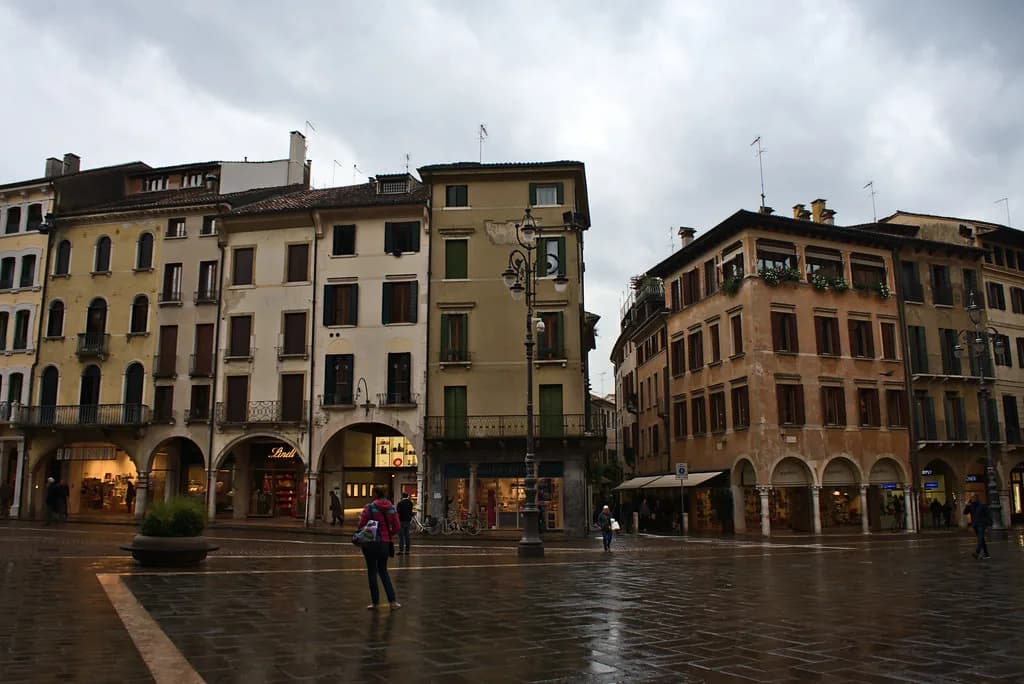
Piazza dei Signori and the surrounding streets are reliable territory for this, and the square fills up in the early evening, especially in warmer months. Sit outside, order a spritz and let the city slow down before dinner. If you are travelling on a tight budget, remember that the drink is the purchase and the snack is a gesture, not a meal replacement.
Prosecco labels: DOCG versus DOC
Treviso sits at the base of the Prosecco hills, which run northeast toward Conegliano and Valdobbiadene, and Prosecco here is an everyday drink rather than a celebration-only bottle. Locals order it at aperitivo, with lunch, or whenever it seems like a good idea.
The label tells you what you are getting. Conegliano Valdobbiadene Prosecco Superiore DOCG is the tighter, hill-specific designation, while plain Prosecco DOC covers a much wider area and tends to be less complex. Most wine bars in the city will have both, so ask which you are being poured before you commit to a bottle.
Coffee, cornetto and the morning bar ritual
Coffee in Treviso is a bar ritual: you stand, order, drink and leave. A caffè means espresso, a caffè macchiato adds a splash of milk, and a cappuccino is acceptable in the morning but rarely after noon. The morning stop, with a cornetto alongside, is part of daily life.
Stand at the bar unless you want to pay more for a seat, and use Via Calmaggiore or the streets near Piazza dei Signori if you want several options close together. About Treviso puts a bar coffee at roughly one to one and a half euros, which is an indicative range rather than a guaranteed current price.
Isola della Pescheria market: timing is everything
The fish market on Isola della Pescheria sits on a small island in the canal and is one of the city's most distinctive sights even if you buy nothing. Stalls carry fresh fish, vegetables, cheese and local produce, and the setting itself, framed by water and nearby bars, is worth the detour.
About Treviso describes the market filling on Tuesday and Saturday mornings, with an early arrival by eight o'clock giving you the stalls before the crowds. Schedules can change, so check local listings or the city's own information before building a morning around it. Going early also tells you what is in season, which is useful when choosing lunch.
Nearby bars and osterie tend to serve whatever is fresh that morning, so the market doubles as a menu preview. That connection between stall and kitchen is one of the more satisfying things about eating in a city this size.
Choosing between osteria, trattoria, bacaro and enoteca
The format you choose shapes both cost and duration. An osteria is simple and often old-fashioned, with local food, modest prices and wine by the glass or carafe. A trattoria is slightly more structured and suits a proper multi-course lunch or dinner.
A bacaro is the Venetian-style wine bar for cicchetti and wines by the glass, more casual than a restaurant. An enoteca is a wine shop or wine bar with a serious bottle list, sometimes with food alongside. Match the format to your energy: bacaro for a quick stop, osteria for a slow plate, enoteca when the wine matters more than the menu.
If you are comparing Italian cities for eating, this same format logic travels well. Our Bologna local food guide and the Turin local food guide apply a similar approach to ordering and pacing elsewhere in the country.
Meal timing and the kitchen closure trap
Italians lunch between roughly half past twelve and half past two, and dine from about half past seven onward, with kitchens closing in between. Arriving at three expecting a hot lunch or at six expecting dinner is the most common planning error. Build your day around those windows rather than fighting them.
That gap is the natural slot for cicchetti, a market wander or an early aperitivo. Use it deliberately and the day feels generous rather than rushed.
Indicative budgets and spending less without eating badly
Treviso is genuinely more affordable than Venice, and About Treviso reports a full trattoria meal with wine rarely exceeding around thirty euros per person. Those are indicative ranges rather than current menu prices, so confirm on the day rather than budgeting to the cent. Standing at the bar is cheaper than sitting, and places without an English menu often offer better value than restaurants facing the main square.
A practical low-cost pattern: coffee and cornetto standing, a market visit, one cicchetto or two with a glass of wine, then a single osteria meal. You eat locally without chasing discounts, and you keep the flexibility to change plans.
What changes across the seasons
Late autumn and winter bring radicchio tardivo along with ribollita-style soups, braised meats and polenta. Spring shifts toward asparagus, including the white variety from Bassano del Grappa nearby, with lighter vegetable dishes on most menus. Summer pushes cicchetti outside near the canals and pairs it with gelato and evening aperitivo in the square.
Prosecco, tiramisù, fresh pasta, cured meats and the morning bar ritual are constants year-round. If radicchio is the reason for your trip, late November or December also brings city events around the harvest, so check local listings closer to your dates.
A first-day eating plan
Start with a standing coffee and cornetto near Via Calmaggiore or Piazza dei Signori, then walk to Isola della Pescheria if it is a market morning and you have arrived early. Note what looks good at the stalls; it is a preview of what nearby kitchens may be serving at lunch.
Take a proper lunch inside the midday window at an osteria or trattoria, then use the quiet afternoon hours for a walk along the canals rather than another meal. As evening approaches, order a spritz with something small in the square around six or seven, and finish with dinner from half past seven.
On the following day, swap the sit-down lunch for a couple of cicchetti at a bacaro and spend the saved time exploring the city's quieter corners instead. Two days of this rhythm give you a fair picture of how Treviso actually eats.
Plan Your Visit
Treviso rewards visitors who follow its daily rhythm rather than chasing a checklist of restaurants. Order radicchio in season, treat the tiramisù story as a local claim worth hearing, stand at the bar for cicchetti and keep the evening aperitivo separate from dinner.
Before you go, confirm market days, restaurant hours and any event calendar directly with organisers, since schedules change between seasons. Then leave room for a slow afternoon by the canals, which is where the city's food culture and its everyday life meet.
Frequently Asked Questions
What food is Treviso known for?
Treviso is known for radicchio di Treviso, a bitter red chicory with Protected Geographical Indication status, and for tiramisù, which the city claims to have originated. Cicchetti, the small bar plates served across the Veneto, are part of everyday eating here, and Prosecco from the nearby Conegliano Valdobbiadene hills is the local wine to order with them.
Where was tiramisù invented?
Treviso makes a strong claim to the dessert's origin, with Le Beccherie in the city centre usually named as the birthplace. Accounts differ on whether this happened in the 1960s or the 1970s, so treat the story as a well-established local tradition rather than a settled historical fact. The restaurant still serves the dessert and much more.
What are cicchetti and how are they eaten?
Cicchetti are small bites, usually bread topped with salt cod, cured meat, grilled vegetables or soft cheese, served at bars and osterie across the Veneto. In Treviso you eat them standing at the bar with a glass of wine in the late afternoon or early evening. They are a snack and a social ritual, not a substitute for dinner.
When is radicchio tardivo in season in Treviso?
The prized tardivo variety runs from late November through February, when it is at its best and more expensive than the standard precoce type. Precoce appears from October onward. If radicchio is central to your trip, plan around the colder months and look for the curly, thin-leaved tardivo on menus and at the market.
What is the difference between Prosecco DOC and DOCG?
Conegliano Valdobbiadene Prosecco Superiore DOCG is the tighter, hill-specific designation from the area northeast of Treviso toward Conegliano and Valdobbiadene. Plain Prosecco DOC covers a much wider production area and is generally less complex. Most wine bars in Treviso pour both, so ask which you are getting before ordering a bottle.
What time do restaurants serve lunch and dinner in Treviso?
Lunch is generally served from about half past twelve to half past two, and dinner from around half past seven onward, with kitchens closed in between. Plan a market visit, a walk or cicchetti for the afternoon gap rather than expecting a full meal. Confirm with the individual restaurant, as hours vary.
Is Treviso a good food destination for a short trip?
Yes, for the kind of eating most short trips involve: market produce, local wine, simple pasta and meat dishes, good coffee and the slow aperitivo ritual. It is not a city built around a large fine-dining scene. The strength is everyday eating that is easy to fit into a day of walking.
Is Treviso cheaper to eat in than Venice?
Treviso is generally described as more affordable than Venice for everyday eating, with coffee, wine and simple trattoria meals costing noticeably less. Reported ranges are indicative rather than guaranteed, so check the board or ask before ordering. Standing at the bar and eating away from the main square usually helps keep costs down.
Sources
Continue exploring
More guides you'll find useful