Sorrento Neighborhoods Guide: Choosing Where to Base
Compare Sorrento's areas, from the busy centre by Piazza Tasso to Marina Grande, the station end, the clifftop and quieter Sant'Agnello and Meta.
On this page
Sorrento sits on a clifftop above the Bay of Naples and works well as a base for Capri, Pompeii, Naples and the Amalfi Coast. Because the town is compact, the area you choose changes the character of your stay more than it does your access to the wider region. The main trade-off is between stepping out into the busiest lanes, waking up to a sea view, or spending less in a calmer spot next door.
A source that compares Sorrento's bases describes the centre as the easiest choice for a first visit, with shops, restaurants, the station and the ferry port all within a short walk, though you pay more and accept evening noise for that convenience. That single judgement frames most of the decisions below.
Start With What Your Trip Is About
Pick the neighbourhood that matches how you will spend most days. On a first visit, when you want shops, restaurants, the station and the port within a short stroll, the historic centre is the obvious choice. If sea views and quiet evenings matter more, look east along the cliff or one town over. If cost is decisive, the towns along the Circumvesuviana line offer softer room rates.
A useful way to frame the choice is as three axes: walkability, view and budget. Central Sorrento scores highest on walkability, the clifftop strip on views, and the outlying towns on budget. Most visitors trade one for another rather than finding a place that wins on all three, so decide which one you can give up before you start searching.
Centro Storico and Piazza Tasso: Everything on Foot
The old core clusters around Piazza Tasso, with narrow lanes running off it towards the cathedral and the shops of Corso Italia. Staying here puts restaurants, the ferry port and the station within a short walk, which is why it suits first-timers who want to step outside and be in the middle of things. Rooms tend to be smaller and pricier than on the edge of town, and noise from the lanes carries into the evening.
The centre is also the natural start for a wander on foot. A self-guided Sorrento walking tour lets you cover the squares, side lanes and viewpoints at your own pace, breaking for coffee whenever the crowds build. Because everything sits close together, you rarely need transport within the centre itself.
Central convenience has a cost. The Sorrento area comparison source places the centro storico at the higher end of the price bands it uses, with rooms often small and evening noise a genuine factor. If you want the location without the premium, look a few streets back or consider the station end of Corso Italia.
Marina Grande: The Old Fishing Quarter
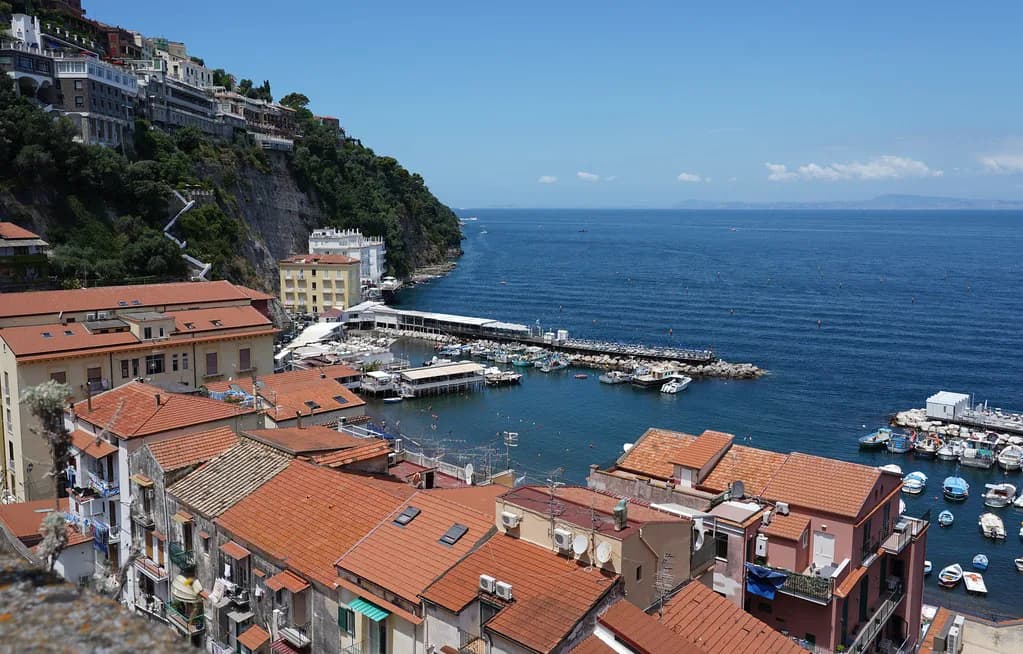
Marina Grande is the old fishing quarter, a cluster of pastel houses and waterfront trattorias below the main town. It keeps a working, village-like feel, with fishing boats, a small beach and terraces sitting right over the water. This is where you come for atmosphere and fish suppers rather than shops or nightlife, and the pace slows noticeably after dinner.
The catch is the climb. Marina Grande sits below the centre and is reached by steps or a short bus ride, with a steep walk back up that shapes how often you pop into town. The comparison source notes that the area favours people who do not mind the ascent or who will use the local bus, and that there is little going on after dinner.
One guide to where to stay in Sorrento singles out Marina Grande as a favourite part of town, describing it as like a small fishing village that still belongs to Sorrento, with hotels and restaurants along the water and the main beaches close by. It also warns that the quarter is a walk from the centre, so it is less handy for trains and ferries.
Corso Italia and the Station: The Practical Base
The streets around the Circumvesuviana station and the upper end of Corso Italia suit day-trippers who will be out most days. Sorrento is the last stop on the line from Naples, so trains toward Pompeii, Ercolano and Naples leave from here, and the ferry port at Marina Piccola is a short downhill walk. Corso Italia is the main shopping street, busy by day, with calmer, better-value guesthouses a street or two back.
Treat this area as convenient rather than scenic. Sea views are limited and the daytime bustle on Corso Italia is constant, so it suits people who value transport links over atmosphere. The payoff is that you lose little time reaching the region's headline sights, and you can always walk into the historic lanes for dinner.
Via Califano Clifftop: Sea Views and Higher Prices
Via Califano runs east along the cliff edge and holds the larger, higher-end hotels, many with terraces, pools and lifts down to swimming platforms on the rocks below. This is where you pay for the view across the Bay of Naples towards Vesuvius, often with breakfast on a terrace above the water. It remains a short walk from the centre, so you keep the town in reach while staying somewhere calmer.
Expect the top of Sorrento's price range here, especially for a sea-facing room. Sea access is by cliff lifts, decks and steps rather than sand, which matters if you are travelling with children or hoped for a beach on the doorstep. For couples and anyone prioritising a view, it is the most rewarding stretch of town to book.
Sant'Agnello: Calmer, Next Door
Sant'Agnello is a separate town immediately east of Sorrento, so close that the two run together along the coast road. It has its own Circumvesuviana stop, a handful of clifftop hotels and a residential, quiet feel, yet you can walk into Sorrento's centre when you want it. Prices tend to sit a little below central Sorrento for a similar standard.
It works well for travellers who want quiet evenings and are happy to walk or take one train stop into town. The trade-off is fewer restaurants and shops of your own, and some hotels sit back from the sea rather than over it. Longer stays often benefit most, since you settle into a calmer rhythm and use the train only when needed.
Meta: Best Value and a Rare Sandy Beach
Meta sits a few stops along the line towards Naples and is the most affordable base among those compared here. It is a real working town rather than a resort, and it has one of the few proper sandy beaches on this stretch of coast at Marina di Meta. You give up Sorrento's immediate buzz and lean more on the train for evenings out.
That beach is the reason many families choose Meta over the centre. Most bathing in Sorrento itself is off rock platforms and cliff decks, so if swimming from sand matters, basing yourself here solves the problem. Prices are the lowest of the areas covered, and the railway keeps Sorrento and Pompeii within easy reach.
The Areas Side by Side
| Area | Best for | Relative price | Getting around | | Centro storico and Piazza Tasso | First trips, everything on foot | Higher | Walkable centre, no transport needed | | Marina Grande | Seafood and a quiet waterfront | Moderate | Steps or bus down, steep climb back | | Corso Italia and the station | Day trips by train and ferry | Moderate | Trains and ferries close by | | Via Califano clifftop | Sea views, couples | Highest | Short walk into the centre | | Sant'Agnello | Quiet stays, better value | Moderate | Walk or one train stop | | Meta | Best value, sandy beach | Lowest | Train into Sorrento |
These bands are relative, running from budget to premium, not fixed nightly rates. A source guide gives live results through a booking site so you can see current figures for your dates rather than a number typed months ago. Search the area you have chosen, then compare two or three specific properties before deciding.
Matching a Base to Trip Length
Two nights is enough for Sorrento itself: the old town, Piazza Tasso, the gardens and Marina Grande, with one day trip to Pompeii or Capri. That pace suits a short break rather than a full tour of the coast, and a central base saves you time. Three to four days is the comfortable length for using Sorrento as a hub, fitting Capri, Pompeii and a day on the Amalfi Coast while keeping a slower day to enjoy the town.
A week lets you add Naples, Herculaneum, Vesuvius and a walk on the peninsula alongside the headline day trips. With that much time, the quieter bases in Sant'Agnello or Meta become more appealing, and you can settle into a regular cafe and take the coast slowly. A one day itinerary covering the centre still works from any of these bases if your time is short.
Practical Cautions
Sorrento is mostly cliffs, so bathing is largely off rock platforms and cliff-lift swimming decks rather than sand, and the water can be deep close in. Use the ladders and marked areas, and take care on wet steps and jetties. Sant'Agnello and Meta are easier for families who want gentler access.
The town is busiest from June to September, when queues for ferries and popular sites build early. Book Capri and Pompeii trips ahead in peak season and carry water and sun cover. Quieter shoulder months make the same visit far more relaxed, and shoulders are also when the clifftop hotels feel least crowded.
Steps down to Marina Grande and Marina Piccola can be steep and slippery after rain, and the coast road leaves little room between walkers, scooters and buses. Cross with care and stand back on blind bends. These are small practical habits rather than reasons to avoid the area.
Getting Around Without a Car
The Circumvesuviana railway ends at Sorrento and runs to Naples, stopping at Pompeii Scavi and Ercolano on the way. Trains are frequent but basic and can be crowded in summer, and the station sits close to Piazza Tasso. Ferries and hydrofoils leave from Marina Piccola for Capri, Naples and, in the warmer months, Positano and Amalfi.
From Naples International, the Curreri bus runs direct to Sorrento, and taxis or private transfers take a similar time by road. Sorrento itself has no airport. A car is more burden than help here: the town is walkable, parking is limited, and day trips run by train and ferry instead.
For local hops, EAV and city buses connect the marinas, Sant'Agnello and Sant'Agata for those who would rather not tackle the steps. SITA buses run along the Amalfi Coast from near the station. Check current timetables and ticket rules with the operators before you travel, since schedules change by season.
Slow Corners Worth Building Into Your Days
Wherever you base yourself, leave room for the quieter corners of town. Our guide to the hidden gems in Sorrento picks out the spots that reward a slower pace, and it pairs well with a free things to do in Sorrento plan if you want to keep costs down. Both are suggestions for how to spend an afternoon, not a checklist to rush through.
If you are comparing how other Italian cities organise their neighbourhoods, the Bologna neighborhoods guide and the Turin neighborhoods Guide both approach the same question from a different angle. Reading one alongside this guide helps you judge how much weight to give walkability versus atmosphere when you book.
Plan Your Visit
Once you have chosen between the walkable centre, the clifftop views, the fishing-quarter calm of Marina Grande and the better value of Sant'Agnello or Meta, search current stays for your dates rather than relying on old rates. Sorrento is a small town, so any of these bases keeps the region within reach; the difference is how your mornings and evenings feel. For related planning, see Sorrento Attractions: Visitor Guides to 7 Sights.
Frequently Asked Questions
Which part of Sorrento is best for first-time visitors?
The centro storico around Piazza Tasso is the easiest first base, with shops, restaurants, the station and the ferry port within a short walk. You pay more and accept some evening noise for that convenience. If a view matters more, the clifftop hotels along Via Califano are a short walk from the centre.
Is it cheaper to stay outside central Sorrento?
Generally, yes. Sant'Agnello next door is usually a little softer on price, and Meta, a few train stops towards Naples, is the most affordable of the areas compared here. Both are linked to Sorrento by the Circumvesuviana railway, so you keep easy access to the centre while spending less on your room.
Does Sorrento have a sandy beach?
Sorrento is mostly cliffs, so bathing is largely off rock platforms and cliff-lift swimming decks rather than sand. There are small beaches at Marina Grande and Marina Piccola, and a proper sandy beach at Marina di Meta, a short train ride away. If sand matters to you, basing yourself in Meta makes sense.
Do you need a car in Sorrento?
No, and a car is more of a burden than a help. The town is walkable, day trips run by train and ferry, and parking is limited and expensive. Reach Sorrento by the Curreri bus or a transfer from Naples airport and use public transport once you arrive.
Which area of Sorrento is best for sea views?
Via Califano, along the clifftop, has the widest views across the Bay of Naples towards Vesuvius, with many hotels set above the water. Marina Grande and parts of Sant'Agnello also offer sea-facing stays. Expect to pay the top of the local range for a sea view, especially in peak season.
How many days should you spend in Sorrento?
Two nights covers Sorrento itself with one day trip to Pompeii or Capri. Three to four days is the comfortable length for fitting Capri, Pompeii and a day on the Amalfi Coast while keeping a slower day. A week lets you add Naples, Herculaneum and Vesuvius, and makes quieter bases such as Sant'Agnello or Meta more appealing.
Sources
Continue exploring
More guides you'll find useful