Best Time to Visit Siena: A Season-by-Season Guide
Compare Siena by season: spring walks, summer heat and Palio crowds, autumn food and winter calm. Practical timing advice for choosing when to go.
On this page
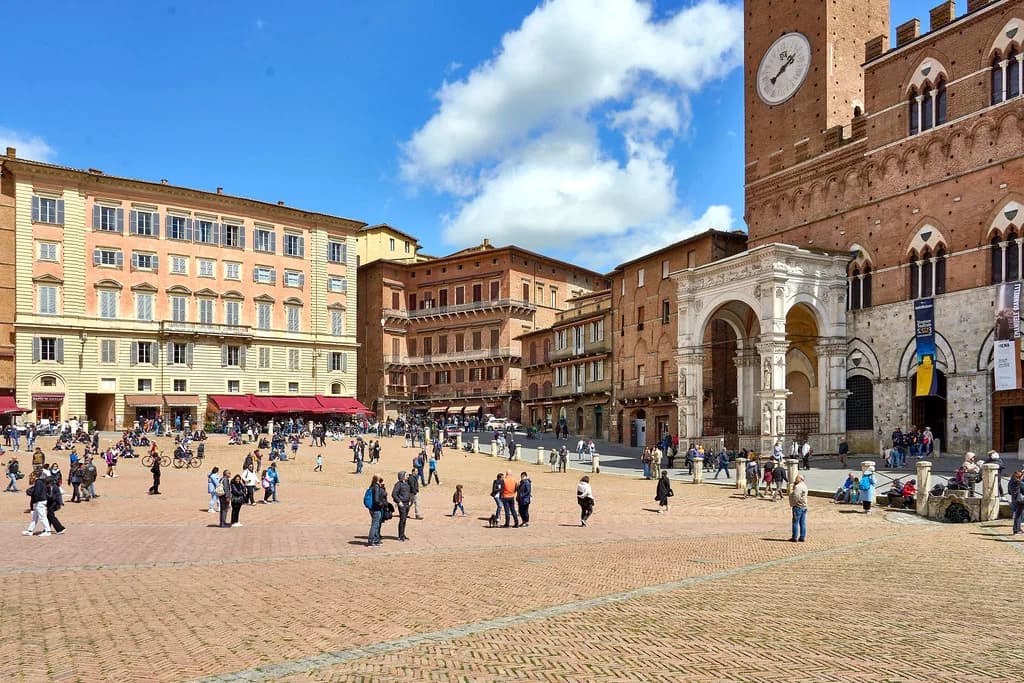
Siena packs a dense medieval centre into a small footprint, so the difference between a leisurely week and a shuffling one is often the calendar rather than the itinerary. Its rhythm is also reset twice a year by the Palio, the traditional horse race that the Comune di Siena states takes place in Piazza del Campo on 2 July and 16 August. Those two dates ripple outward through hotel demand, restaurant bookings and street traffic across the surrounding days. As a suggested pace rather than an official figure, two full days cover the headline sights comfortably outside festival windows.
The practical consequence is that Siena has two distinct planning calendars: an event calendar and a comfort calendar. Early July and mid-August belong to the first; late spring and early autumn usually favour the second. Everything below weighs both, and flags the details that change from year to year so you know precisely what to verify before committing money.
Quick Comparison: Which Season Fits Your Trip
Spring suits walkers and garden-lovers: mild conditions make long hours on foot comfortable, and the season brings antiques markets and a traditional Sienese New Year celebration, according to Terre di Siena. The trade-off is that specific event dates shift each year, so treat any spring event you read about as provisional until the current programme is published by the Comune.
Summer delivers the most atmosphere and the most pressure. The Palio on 2 July and 16 August concentrates visitors sharply around those windows, while the heat itself shapes how much ground you can cover in a day. Autumn is the easy compromise: cooler air, harvest energy and seasonal food, with early September still lively and late November turning quiet.
Winter is the option travellers most often overlook, and the evidence argues against dismissing it. Terre di Siena describes Siena's winter as relatively mild, with temperatures generally between 8 °C and 10 °C, plus Christmas lights and a large market in Piazza del Campo. For a short city break built on museums, churches and food rather than long country walks, that is a credible package.
Spring in Siena: Mild Air and Long Walks
Spring is one of the stronger periods for exploring the historic centre on foot, because the mild temperatures let you keep walking without the heat that defines July and August. Terre di Siena singles out the season for gardens and parks, naming the Orto de' Pecci as a green space just a few minutes from Piazza del Campo — a useful counterweight to a day of stone streets and church interiors.
The same source mentions antiques markets and the celebration of the ancient Sienese New Year, usually held at the Church of the Santissima Annunziata, as typical spring happenings. It does not publish fixed annual dates for either, and that matters if you are building a trip around them. Check the Comune di Siena events listings for the current year before you lock in travel dates.
Spring is also a sensible moment to think about how many days you actually need. A compact centre means you can cover the headline sights briskly, but the pleasure of the season is in lingering — a second coffee, a slower loop through the contrade streets. A Siena one day itinerary works as a skeleton; spring weather simply lets you stretch it.
Summer: Heat, Crowds and Palio Pressure
Summer is when Siena hosts the greatest number of visitors, and Terre di Siena is candid that this coincides with intense heat. The city does respond with a full outdoor programme of music, theatre, sport and food and wine events, so the season is far from a write-off. The realistic approach is to accept shorter, more fragmented days and build in shade, churches and long lunches rather than trying to march from sight to sight.
The Palio is the single biggest scheduling factor. Because the Comune di Siena confirms the traditional races take place in the Campo on 2 July and 16 August each year, the days around both dates are structurally different from the rest of the season. Whether you want that intensity or want to sidestep it is the key decision — and it should be made early, not improvised on arrival.
Religious buildings offer a practical retreat from the heat, and Terre di Siena points to the Duomo and Baptistery complex as well as the Basilica Cateriniana di San Domenico. Treat these as climate strategy as much as culture: cool interiors are where you want to be in the middle of a hot day. Any details on which interiors are ticketed and when they open should come from the sites themselves.
Autumn: Harvest, Food and the Festa dei Tabernacoli
Autumn is arguably Siena's most rewarding season for anyone travelling for food. September is grape-harvest month, and Terre di Siena notes that farms and wineries around the city invite visitors to join in. The same source lists ribollita, pici con il cinghiale and schiacciata senese as the dishes to seek out, which gives you a concrete eating agenda rather than a vague instruction to enjoy the cuisine.
The Festa dei Tabernacoli falls on 8 September according to Terre di Siena, with children from the seventeen contrade competing to decorate the city's tabernacles. It is a genuinely local fixture rather than a tourist production, which makes it a strong reason to be in Siena in early September. Confirm the current year's arrangements through the Comune before planning around it.
Later autumn brings cooler temperatures and changing colours, and the city becomes calmer once the September events pass. This is the window for travellers who want Siena's streets without summer density and who are happy to trade beach weather for walking weather. It pairs naturally with a slower evening rhythm of aperitivo and dinner rather than a packed daytime schedule.
Winter: Mild Days, Lights and the December Market
Winter in Siena is milder than many northern European travellers expect, and Terre di Siena puts typical temperatures between 8 °C and 10 °C. That is cold enough for a coat but warm enough for unhurried walking, which makes the season far more usable than its reputation suggests. Snow is possible but, by the source's own framing, a matter of luck rather than something to plan around.
The Christmas period brings decorations and, in Piazza del Campo, the Christmas market known as the Mercato nel Campo. Terre di Siena describes it as beginning on the first weekend of December with more than 160 stalls selling Sienese food, wine and handicrafts. Those stall counts and timings are the source's description rather than a live listing, so check the current year's edition with the Comune before arranging a trip specifically for it.
Winter also rewards a different itinerary shape. With shorter daylight and colder evenings, indoor time matters more, and a rainy day in Siena becomes a planning question rather than a disaster. Build in one flexible indoor day and the season stops feeling like a gamble.
Planning Around the Palio, or Deliberately Avoiding It
It helps to think of the Palio as a scheduling constraint first and a spectacle second. Because the two race dates are fixed annually, accommodation and crowds around early July and mid-August behave differently from the rest of the year, and the surrounding days are affected too. Decide which side of that line you want to be on before you search for rooms.
If you plan to be in the city during a Palio period, treat practical arrangements as unresolved until the organiser publishes them. Ticketing, viewing arrangements, security rules and accessibility provisions are not covered by the available sources, and guessing at them would be worse than useless. Go to the Comune di Siena and the contrade for the current rules, then book only what you can confirm.
If you would rather avoid the pressure entirely, the simplest rule is to keep clear of both race windows and enjoy Siena's ordinary texture: the shell-shaped Campo, the contrade emblems on the walls, the hidden gems in Siena that reward unhurried wandering. The city is atmospheric in its own right outside the races, and you lose very little by skipping the crowds.
Shoulder-Season Logic and Its Limits
A widely repeated travel rule holds that May, June, September and October are the better months for less crowded travel in the more touristy parts of Italy, as discussed in a long-running traveller forum thread. That guidance comes from travel community experience rather than from Siena's own tourism authorities, so treat it as a general heuristic, not a measured local dataset. It is still a reasonable starting point when you have no other constraint.
The limit of that rule is that Siena's own calendar can override it. Early September is shoulder season by the general rule, yet it also carries the Festa dei Tabernacoli and the tail of the harvest. Late June is shoulder season in theory but sits close to the 2 July Palio. Always check the local calendar before assuming a shoulder month will be quiet.
Season Traps Worth Avoiding
The most common mistake is assuming summer is the only reliable season for good weather. Winter in Siena sits in a mild range by the standards of the source, and spring and autumn are actively recommended for walking. Booking only in high summer means paying the density cost without gaining much in comfort.
The second trap is assuming winter means closures. Seasonal opening varies by site, and no source here publishes a blanket winter shutdown. If a specific church, museum or monument is central to your trip, confirm its current hours and ticket terms with that site directly rather than relying on a general seasonal guide.
The third trap is booking flights around event dates you found without checking the year. The Palio dates are annual and stable, but spring markets, the Sienese New Year and the December market all need confirmation against the current programme. Verify through the Comune di Siena before any non-refundable commitment.
How Long to Stay, by Season
As a suggested rule rather than an official one, two full days cover Siena's centre comfortably at any time of year, and three give room for a slower pace plus a half-day in the surrounding landscape. In summer, treat that third day as heat insurance rather than an extra sightseeing block. In winter, use it for the indoor stops you would otherwise rush.
Season should also change what you prioritise. Spring and autumn favour outdoor wandering and gardens; summer pushes you towards cool interiors and shaded squares; winter rewards a compact indoor circuit with warm food between stops. Planning in that order stops the weather from dictating your trip after you arrive.
Plan Your Visit
The short answer is that late spring and early autumn give most travellers the best balance of comfortable weather and manageable density, while winter is a genuinely underrated option for a short city break. Summer works if you accept the heat and plan around it, and the two Palio dates should be the first thing you check before choosing dates.
Before booking, confirm three things against current sources: the year's event programme through the Comune di Siena, the specific opening and ticket terms of any site you consider essential, and whether your dates fall near 2 July or 16 August. With those verified, the season becomes a choice rather than a gamble.
Frequently Asked Questions
What is the best month to visit Siena?
There is no single best month, but late spring and early autumn tend to suit most travellers: mild temperatures for walking, fewer people than the peak summer weeks, and good food. Early September adds harvest atmosphere and the Festa dei Tabernacoli, so check the current year's event programme before committing.
Is Siena crowded in summer?
Yes. Siena receives its greatest number of visitors in summer, and the season also brings intense heat. The two Palio dates of 2 July and 16 August concentrate pressure further around those windows. If you visit in summer, plan shorter days and use cool interiors during the hottest hours.
When is the Palio di Siena held?
The Palio is run in Piazza del Campo on 2 July and 16 August each year. Ticketing, viewing arrangements and access rules are not something to assume, so confirm current arrangements with the Comune di Siena and the contrade before travelling for the race.
What happens in Siena in September?
September brings the grape harvest, with farms and wineries around the city offering ways to take part, and the Festa dei Tabernacoli on 8 September, when children from the seventeen contrade decorate the city's tabernacles. Temperatures cool, making it a strong month for walking and eating.
Is Siena worth visiting in winter?
Yes, for many travellers. Winter is relatively mild, with temperatures generally between 8 °C and 10 °C, and the Christmas period brings lights and the Mercato nel Campo market in Piazza del Campo. Check the current year's market dates and any site opening hours before booking.
Do I need to plan around the Palio?
At least decide about it. If you want the race atmosphere, expect heavy demand around early July and mid-August. If you want a calmer city, avoid both windows entirely. Either way, verify arrangements through official sources rather than relying on secondhand accounts.
How many days do you need in Siena?
As a suggestion rather than an official figure, two full days cover the centre comfortably and three allow a slower pace plus time in the surrounding countryside. In summer, add slack for heat; in winter, use extra time for indoor sights.
Sources
Continue exploring
More guides you'll find useful