Hidden Gems in Positano: Quiet Corners and Slow Days
Positano rewards walkers over checklist-tickers: quieter stairs, belvederes and less touristy coast villages, with honest notes on what costs money and effort.
On this page
Positano is a vertical town, and its best moments tend to sit above or beside the busy waterfront rather than on it. Stepped lanes, small workshops and belvederes reward anyone willing to climb a little instead of riding everywhere. This guide treats lesser-known places as trade-offs, not secrets.
Expect honesty about what 'hidden' means here. A quieter lane may simply be one flight of stairs off the main route, and a calm hour in October looks nothing like a busy August afternoon. Where a place is described as less touristy, that reflects the cited guide's assessment rather than a promise of emptiness.
Use this as a framing guide rather than a fixed itinerary. It covers where to walk, which nearby villages to consider, what is free, and what to check before building a day around a named bar or restaurant. Detailed stop-by-stop coverage lives in the linked attraction and walk guides.
Why Positano rewards slow exploring
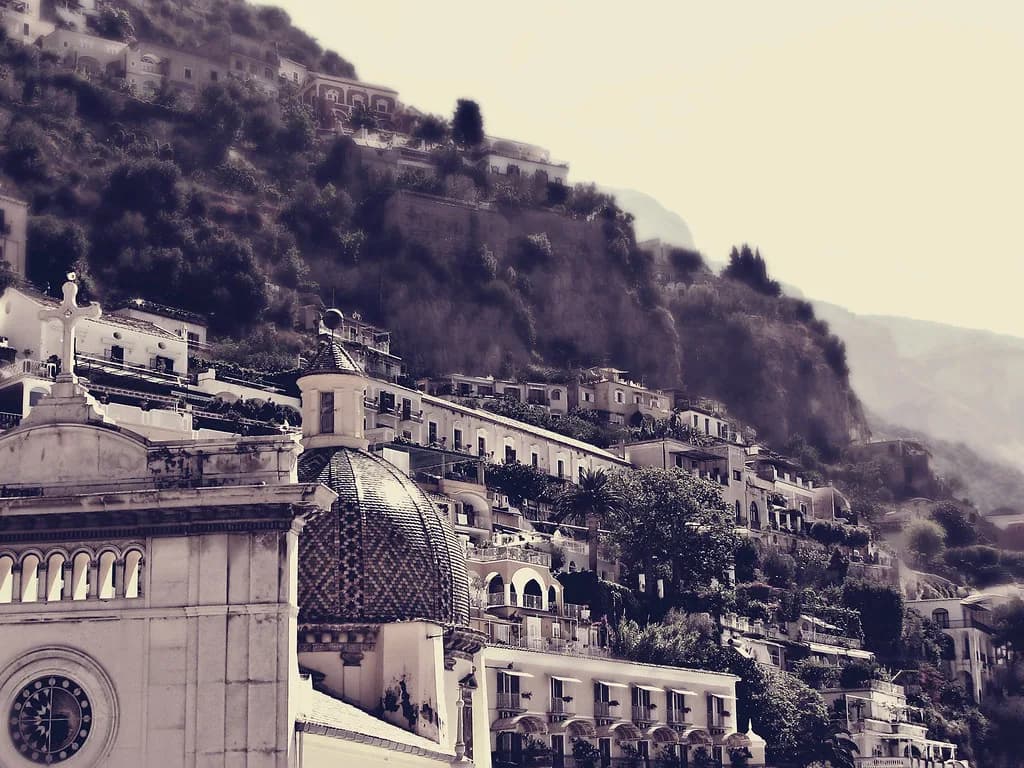
Positano's layout does much of the work for you: the town climbs in tiers from the beach, so simply walking upward between the waterfront and the upper lanes changes the view and the pace. Travel writers consistently frame it as a place to wander rather than a checklist of ticketed sights. That makes the stairways themselves part of the experience.
The comparison worth making is between paid and free coastal time. Beach clubs along the coast offer loungers, food and shuttle-style access, while public viewpoints, the church and sunset spots cost nothing but effort. A towns guide for the Amalfi Coast notes Positano suits couples and nightlife but involves cliffside terrain that is difficult for people with limited mobility, and that prices run higher than in other towns. Further visitor details appear in 25 Fun Things to Do in Positano on Your First Visit.
Build your day around one climb, one rest and one view rather than three restaurants and two boat trips. Stair-heavy wandering is tiring in the afternoon heat, so earlier starts and slower middles usually work better.
How to frame 'hidden gem' honestly
In a town this compact and this photographed, nothing is truly undiscovered. What changes is timing and effort: a stepped alley at 8am is a different place from the same alley at noon, and a path that starts outside the centre is quieter simply because fewer people make the trip.
Read any 'quiet' label as conditional. Small villages and upper lanes are described as less touristy in some guides, but that does not mean empty, and it certainly does not mean local-only. Treat those descriptions as a signal about atmosphere, then confirm current conditions yourself.
The practical test is simple: is the trade-off worth it for you? More stairs, fewer services and longer walks buy you calmer corners. If mobility, heat or a short visit makes those trade-offs unappealing, staying near the waterfront is a reasonable choice rather than a failure of curiosity.
Start on foot: wandering upward through the stepped lanes
The most reliable lesser-known experience in Positano is the simple act of leaving the beach road behind on foot. Between the waterfront and the upper town, narrow lanes pass small ateliers, ceramics shops and linen boutiques. Travel accounts of the town single out hand-painted ceramics, painted plates and linen clothing as the local shopping worth prioritising over generic souvenirs.
Choose a direction with a destination in mind rather than zig-zagging at random. Church squares and belvederes make natural turning points, and they give you a reason to keep climbing when your legs would rather stop.
If stairs are a concern, plan shorter climbs and more pauses, and pick accommodation accordingly rather than booking high on the hill and hoping. A neighbourhoods comparison helps here. For wider planning, see Positano Neighborhoods.
The Path of the Gods from Agerola and Bomerano
The Sentiero degli Dei, or Path of the Gods, is the best-known cliff walk in the area, and it begins outside Positano itself, in the hills above the coast around Agerola and Bomerano. Travel accounts describe it as a route with wide views over the Mediterranean, passing lemon groves and open slopes. Because it starts away from town, it draws a different, more walking-focused crowd.
Published lengths and walking times vary between accounts, so treat any figure as one walker's experience rather than an official measurement. As a suggested planning allowance, set aside a half day including travel to the trailhead, lunch and the return, and add buffer if you stop often for photographs. Check current trail conditions and how you will reach the start before committing.
Carry water, sun protection and food, since services on the trail are limited and the terrain is exposed in places. Sturdy shoes matter more than fashion on a rocky ridge path. If the weather looks unsettled, choose a town walk instead and keep the ridge for another day.
Cliffside alternatives for walkers
Not every quiet walk requires a full mountain day. The towns guide describes Conca dei Marini as a picturesque village that is not very touristy, with the Emerald Grotto among its must-see sights, and it flags that getting around involves a lot of stair climbing. That combination, calmer atmosphere traded for vertical effort, is the pattern to expect along this coast.
Compare that with Furore, which the same guide calls untamed and more challenging to reach, or Ravello, praised for calm evenings and cultural events but sitting some distance from its nearest beach. Each of these quieter-feeling places asks something in return, whether buses, stairs or a longer approach.
A useful approach is to pick one outlying village per trip rather than collecting several. Fewer stops mean more time on foot in each place, which is usually where the quieter moments are found.
Choosing a quieter Amalfi Coast base or day trip
If Positano's bustle is too much for a whole stay, the towns guide's pros and cons make a decent shortlist. Praiano is described as charming and less touristy than Positano, but far from the main connecting points along the coast. Minori is called calm and inexpensive, with limited nightlife. Cetara is described as off the beaten path and known for seafood restaurants, though removed from the tourist heart of the coast.
Atrani sits within walking distance of Amalfi's historic centre but is very small and crowded in summer, according to the same guide. That is a useful reminder that 'quieter village' and 'quiet in August' are not the same claim. Season and time of day shape the experience as much as the postcode.
Weigh price, connectivity and mobility together rather than picking the smallest name on the map. A cheaper, calmer base can mean more transfers and earlier starts. The neighbourhood comparison sets out what each area of Positano itself involves.
Free ways to see the coast
Public viewpoints, the church and sunset spots cost nothing, and the coastal ferry ride is itself a scenic experience whether or not you get off at the other end. Travel accounts describe hopping between Positano, Amalfi and Capri by ferry as an affordable, scenic way to see the coastline from the water.
Set those against paid options: beach clubs with loungers and food service, and organised boat tours that include swimming stops or island time. Neither is necessary for a good day, and choosing one deliberately leaves more room in the budget for the other.
Check current ferry timetables and ticket prices locally or through the operator before planning a loop, since seasonal schedules change. Nothing in this guide should be read as a timetable or a fare.
Sunset is the cheapest show in town. Claim a west-facing step or terrace early, bring nothing but patience, and let the afternoon crowds thin out around you.
Small-scale shopping: ceramics, linen and painted plates
Positano's shops lean toward artisan work rather than chain retail: hand-painted ceramics, painted plates decorated with lemons or the town itself, and linen clothing. Travel accounts rank these among the souvenirs most worth bringing home, and note the appeal of pieces painted locally on the beach.
For fragile purchases, ask the shop about packing and shipping rather than carrying ceramics through several connections. Some shops will arrange shipment of larger items or of food and drink such as limoncello and olive oil, but confirm the arrangement in person before you buy.
Budget for shipping as part of the purchase price, and keep receipts for anything sent abroad. If shipping is not offered, a well-wrapped small plate travels more easily than a full dinner service.
Lemon granita and other low-cost local tastes
Lemon granita is the classic rest stop here, made with Amalfi Coast lemons and sold at stands around town; travel accounts describe it served inside a hollowed-out lemon. It is a small purchase rather than a sit-down meal, which makes it a good pause between stair climbs.
Beyond granita, the guide to eating locally covers what to prioritise, from seafood to lemon-scented sweets, without steering you toward the most photographed tables.
Prices vary by stand and season, so check the board before ordering. A granita is not a substitute for a meal, but it is an honest way to rest without committing to a long lunch.
Beaches, water shoes and heat
Positano's main beach, Marina Grande, is the easiest to reach but also the most visible, so it fills first. Travel accounts recommend water shoes because many beaches here are pebbly rather than sandy, and note that beach clubs often run boat shuttles from the main beach to reach their stretch of shore.
For a free swim, use public beach areas rather than club loungers, and arrive early in high season. For shade and service, expect to pay, and confirm rates and shuttle arrangements with the club directly since these change seasonally.
Heat management matters more than most guides admit. Walk in the morning or late afternoon, carry water, and treat midday as a time for shade, a long lunch or a swim rather than a stairway climb.
A suggested half-day loop for limited time
This is a suggestion, not an official itinerary. Start at the waterfront in the morning, climb through the stepped lanes toward an upper belvedere with a couple of shop stops on the way, and finish with a granita or coffee before the heat peaks. Allow roughly three hours with pauses.
If you have more time, add a ferry ride to a neighbouring town in the afternoon and return for sunset. If you have less, cut the climb and keep the waterfront, the church and one viewpoint.
Anyone tempted by the fictional or filmic associations of the town should treat those as trivia, not planning material; this guide makes no claims about celebrity connections or filming locations.
What to skip with only a couple of hours
With two hours, skip anything that requires a shuttle, a queue or a booked table. A beach club visit, a boat trip and a long lunch each consume most of a short visit once transfers are counted.
Instead, do the waterfront, one stair climb, one viewpoint and one small purchase. That sequence gives you the town's shape and its atmosphere without racing between bookings.
If time is really tight, prioritise the view over the shopping. Ceramics can be bought online from many workshops, but the cliffside panorama cannot.
Where to go next
Detailed coverage of individual sights, from the church to the waterfront, sits in the attraction guides, while duration-specific itineraries handle one-day and multi-day planning.
If you are building a wider Italian trip, the hidden gems in Venice guide follows the same honest, trade-off-led approach in a very different city.
Readers comparing quiet towns elsewhere in Italy will find the same principle applies: fewer crowds usually mean more effort, fewer services or a longer approach.
Plan Your Visit
Positano's lesser-known pleasures are mostly free and mostly vertical: stairways, belvederes, quiet morning lanes and a ferry ride taken for its own sake. Paid beach clubs and boat tours are options, not requirements.
Before you go, check current ferry schedules, beach club rates and restaurant opening hours with the operators themselves, since these change with the season. Nothing in this guide should be treated as a live timetable or price list.
Then choose one climb, one village and one long view, and let the rest of the day stay open.
More Positano guides
- A Positano Self-Guided Walk Through Lanes, Stairways and Belvederes
- Free Things to Do in Positano
- Positano Ceramics and Artisan Crafts
- Positano in Two Days
- Positano Neighborhoods
- Positano One Day Itinerary
- What to Eat in Positano
- Chiesa di Santa Maria Assunta in Positano
- Fornillo Beach Positano Guide
- Palazzo Murat, Positano
- Spiaggia Grande Positano Beach Guide
- Torre Fornillo and Positano's Coastal Towers
- Villa Romana Positano Visitor Guide
Frequently Asked Questions
What are the best hidden gems in Positano?
There is no official list, and nothing here is truly secret. The most rewarding lesser-known experiences tend to be the stepped lanes above the waterfront, the belvederes you reach on foot, and outlying Amalfi Coast villages described as less touristy, such as Conca dei Marini, where getting around involves plenty of stairs. Treat 'quiet' as conditional on season and time of day.
Are there free things to do in Positano?
Yes. Public viewpoints, church visits, sunset spots and the waterfront itself cost nothing, and the coastal ferry ride is a scenic experience even without a destination. Free public beach areas are an alternative to paid beach clubs. Confirm any church visiting rules on site.
Is the Path of the Gods worth it from Positano?
If you enjoy walking, yes, but it is a half-day commitment rather than a quick stroll. The trail starts outside town around Agerola and Bomerano, so travel time counts. Published lengths vary between accounts, so check current trail conditions and transport before setting out.
Which Amalfi Coast town is quietest to stay in?
It depends on the season and what you mean by quiet. The towns guide describes Praiano as less touristy than Positano, Minori as calm and inexpensive, and Cetara as off the beaten path. Each trades atmosphere for connectivity, so weigh transport and stairs alongside calm.
Can you see Positano in a few hours?
Yes, though you will see the shape of the town rather than its quieter corners. With about three suggested hours, cover the waterfront, one stair climb, a viewpoint and a granita. Skip beach clubs and boat trips, which consume most of a short visit once transfers are counted.
Do you need a boat trip to enjoy Positano?
No. The ferry ride gives you the coastline from the water without booking a tour, and viewpoints and beach time work without any boat at all. Organised tours add swimming stops and island time, but they are optional extras.
Are named bars and restaurants in Positano reliable to plan around?
Treat any named business as something to verify rather than assume. Establishments open, close and change hands, so check directly before building a day around one. This guide deliberately avoids claiming that any specific bar or restaurant is currently operating.
What should I pack for Positano's stairs and beaches?
Sturdy shoes for stairways and cliff paths, water shoes for pebbly beaches, sun protection and a refillable water bottle. If you buy ceramics, ask the shop about packing and shipping rather than carrying fragile items between connections.
Sources
Continue exploring
More guides you'll find useful