
Fornillo Beach, Positano: Free Spots, Lidos and the Walk There
Plan a day at Fornillo Beach in Positano, from the cliff path off Spiaggia Grande to free public pebbles, paying lidos, water shoes and the climb back.
On this page
Fornillo Beach occupies a separate bay west of Spiaggia Grande, which makes it the closest alternative to the main beach within easy reach of central Positano, according to the Amalfi Coast Travel guide. The decision that shapes your day comes before you sit down: settle on the open pebbles with your own towel, or pay a beach club for a lounger, shade and service. Everything else, from the walk to the kit list, follows from that.
Use this guide as a practical companion to the wider Positano Attractions collection, where each sight and beach has its own page. For orientation, the Amalfi Coast Travel guide describes the beach as roughly 300 metres from Spiaggia Grande along a pedestrian path carved into the cliff, a walk it puts at five to seven minutes. That short distance is what makes Fornillo feasible on foot, without a boat or a bus.
How to Get to Fornillo Beach from Spiaggia Grande
The standard route is on foot. From the main beach, follow Via Positanesi d'America, the path carved into the rock that connects the two bays; the same guide puts the walk at five to seven minutes and notes that it passes Torre Trasita, the largest of Positano's coastal watchtowers. Closed shoes are a sensible choice, since it describes the stone surface as slippery in places.
If you are coming down from the town itself, expect a staircase descent rather than a level promenade; the Ckanani blog warns that mapping apps can be unreliable in Positano's stepped lanes, so a quick walking search before you set off is worthwhile. The Hostel Brikette guide describes a shortcut that drops you at the left-hand end of the beach when facing the sea, while the waterfront promenade from Spiaggia Grande reaches the right-hand end.
For the Spiaggia Grande end of the walk, the Spiaggia Grande Positano beach guide covers the port, the free strip and the surrounding restaurants in more detail. Taxi boats from the Marina Grande port and private parking near the Fornillo path are mentioned by the Amalfi Coast Travel guide as alternatives; treat any fare or parking charges it quotes as that guide's observations rather than published operator rates. Boat departures, parking availability and any seasonal path conditions are best confirmed with the operator or the comune before you rely on them.
What the Beach Is Actually Like
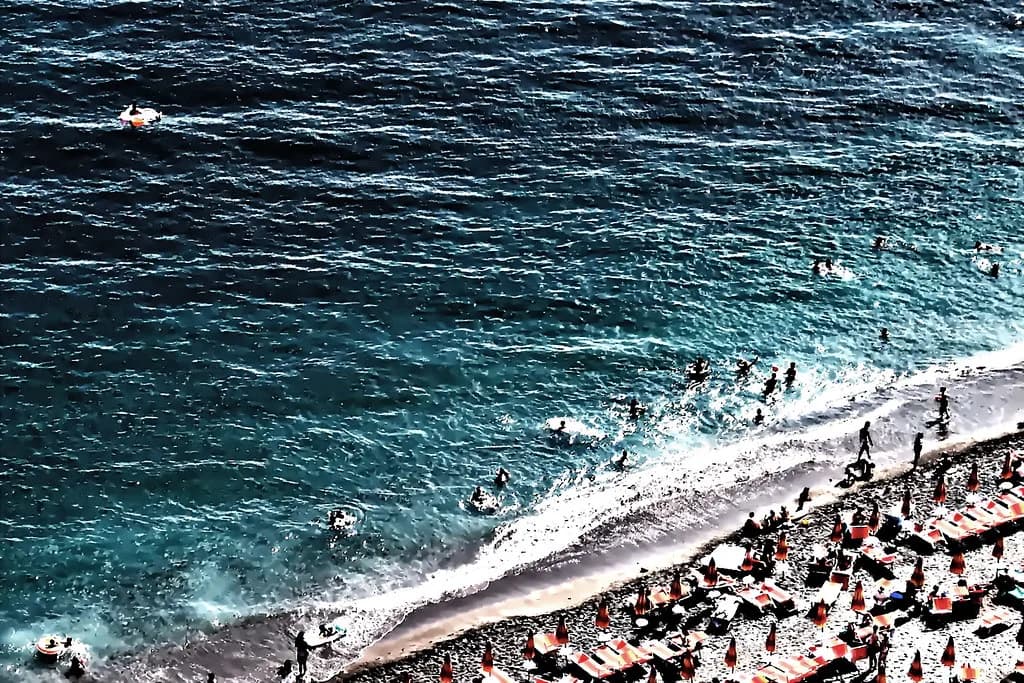
Fornillo is a pebble and coarse-sand beach, not a fine-sand one, per the Amalfi Coast Travel guide. Between the stones underfoot and the rocky water entry at the ends of the bay, closed-toe water shoes do more for your day than almost anything else; the Hostel Brikette guide adds that a thick towel or a cheap beach mat helps when the pebbles heat up.
The bay faces west, which is why guides single out the sunset, and the Amalfi Coast Travel guide notes that shade only arrives from late afternoon. Plan on full sun for much of the day and deal with it deliberately: a rented parasol for a few hours, a hat and plenty of water are the simple fixes. The views back to the vertical town, with Torre Trasita in the frame, are the reason many people make the walk in the first place.
Crowding has a season and a clock. The Ckanani blog reports that the Positano beach clubs generally open from May to October, with July and August the busiest stretch, and recommends reserving if you plan to visit then. The Hostel Brikette guide suggests arriving before mid-morning in high season if a free spot near the water matters to you, but treat that as one hostel's rule of thumb rather than a guarantee.
Free Public Stretches vs Paying Beach Clubs
Italian beaches often work on a split between spiaggia libera, the free public zone, and stabilimento balneare, the concession beach club, as the Hostel Brikette guide explains. That same guide describes Fornillo as having two public zones bookending a row of lidos: a wide free stretch beside Pupetto and a smaller one beyond La Marinella. On the pebbles, the free areas are simply the open ground without reserved loungers.
Each Positano beach keeps a small free section, but most of the frontage goes to paying clubs, according to the Ckanani blog. That means the free-versus-lido choice is really about what you want from the day: your own picnic and towel on open stones, or a rented lounger, shade and a guaranteed base with bar service. The Hostel Brikette guide says picnics are welcome in the free sections, though clubs expect you to use their bar or restaurant if you are renting their furniture.
Past the last lido, the Hostel Brikette guide points to a small, easy-to-miss stretch of public ground that it loosely calls a secret free section, while stressing that it is not really secret. It is not an officially named free zone, and that same guide describes a rockier entry with sea urchins possible near the edges. If you go looking for it, water shoes and a little caution are sensible, and space there is limited.
The Beach Clubs Along the Shoreline
Walking from the hostel side toward the Spiaggia Grande end, the Hostel Brikette guide lists the concessions in sequence: Pupetto, Da Ferdinando, Fratelli Grassi and La Marinella. Each has its own character, but all sit on the same pebbles, so the difference is service, shade and atmosphere rather than the water. Knowing the order helps you pick a spot without wandering the full shoreline with your bag.
Pupetto anchors the hostel side with rows of orange loungers, showers and a restaurant, and the Amalfi Coast Travel guide describes it as a long-standing part of the bay's identity. Da Ferdinando next door is the more informal option, with paddleboard rentals, easy lunch plates and a beach-bar feel. Grassi is compact, with red loungers and a shaded bar, and La Marinella sits closest to the Spiaggia Grande walkway, which makes it handy if you want a quick exit back to town.
On cost, the sources disagree on specifics and none is an operator rate card. The Amalfi Coast Travel guide reports a per-person lounger-and-umbrella range at Fornillo that it says is below what it quotes for Spiaggia Grande, while the Ckanani blog's detailed figures cover its own main-beach examples rather than Fornillo. Treat all such numbers as third-party observations from recent seasons, varying by month and by row; the club you choose is the only place to confirm what it charges today.
Swimming, Snorkelling and Water Time
Fornillo's distance from the ferry port means clearer water than the main beach, the Amalfi Coast Travel guide reports, and the rocky seabeds at both ends of the bay make it a reasonable place to snorkel. That guide singles out the rocks below Torre Trasita, where bream, octopus and wrasse are among the fish you might see. Mornings give calmer water and better visibility. Further visitor details appear in Fornillo Beach, Positano: 2026 Guide | How to Get There & Prices.
The practical pattern is simple: swim early, before the sun is high and before the beach fills, then retire to shade or a lido for the afternoon. The Hostel Brikette guide warns that sea urchins cluster near the rockier edges, so keep your feet covered on entry and exit. It also notes that when the sea is rough in shoulder season, the shoreline can shrink for a day or two and you may end up sitting higher up the pebbles.
Facilities, Showers and Food
Showers, changing rooms and toilets belong to the individual beach clubs rather than the free zones. If you are sitting on the public pebbles, ask at a bar before using facilities; the Hostel Brikette guide reports that many allow quick visits for a small fee or with a purchase. Neither that arrangement nor any facility hours are fixed, so confirm with the club when you arrive.
For lunch, the choice is between takeaway from a beach bar and a sit-down meal at a club restaurant. The Hostel Brikette guide notes Pupetto and Da Ferdinando for easy takeaway, which suits a budget day on the free stones, while the Amalfi Coast Travel guide describes seafood lunches and afternoon cocktails at Pupetto. That guide suggests booking a sea-view table the night before, and describes Da Ferdinando as more casual, with walk-ins possible outside weekends.
If you want a full meal before or after the beach, the Chiesa di Santa Maria Assunta Positano visitor guide covers the church just above Spiaggia Grande, whose majolica dome pairs with Torre Trasita in the views from Fornillo. Back in the lanes, Palazzo Murat Positano visitor guide makes a reasonable anchor for a late-afternoon wander once you have climbed back up.
What to Bring for a Pebble Beach
Pack light precisely because you will carry everything back up. The Hostel Brikette guide's core kit is water shoes, sunscreen, a hat, a thick towel or mat, and a refillable bottle, with a light shirt for the return climb. It also advises leaving passports and large amounts of cash behind, and carrying a little cash in case card machines struggle.
A small foldable umbrella can work in the free section, but that same guide notes it is awkward in wind, so renting a parasol for a few hours is often the simpler shade plan in peak summer. Keep your things compact at the water's edge and leave a clear walking line along the shore, especially where the free stretch narrows.
A Realistic Half-Day Plan and the Climb Back
Start early, swim when the water is calmest, and decide about a lounger once you see the day's conditions. Take lunch from a beach bar or a club, then leave before you are worn out rather than trying to stretch the afternoon to its limit. That rhythm keeps energy for the evening and roughly follows the day plan the Hostel Brikette guide sets out for guests.
The return is the part people underestimate. Walk the promenade back to Spiaggia Grande and use the internal bus up toward Chiesa Nuova, as the Hostel Brikette guide suggests, or take your time on the stairs, because the climb can feel steeper after a day in the sun. For a more structured route through town, the Positano self-guided walk pairs well with a beach morning and takes in the lanes, stairways and belvederes above the harbour.
If the plan is sunset, Fornillo's west-facing position is the draw, with the Amalfi Coast Travel guide placing the summer peak at roughly half past six in the evening. Stay for it if you have the energy, but arrange the walk back in fading light before the day begins. The hidden gems in Positano page is a useful next stop when you want more of the town beyond the beach.
Making the Choice: Free Pebbles or a Paying Lido
For a low-cost, self-contained day, the free stretches work well if you arrive early enough to claim ground and bring your own shade, food and water. The Ckanani blog's overall advice for Positano beaches applies here too: anywhere you see rows of sunbeds and umbrellas, expect to pay. For a relaxed base with showers, toilets and someone bringing lunch, pick a lido in the right stretch of shoreline and reserve ahead during busy weeks.
Check the comune's tourism information before you go if access, rules or seasonal services matter to your plans; the comune website is where official notices would appear, while beach clubs publish their own terms and can be contacted directly about the day's arrangements. Any figure you see quoted elsewhere should be treated as a guide, not a confirmed rate.
Plan Your Visit
Fornillo rewards a little planning more than it rewards impulse. Walk the cliff path in closed shoes, decide in advance whether you want free pebbles or a rented lounger, and pack for stones, sun and a steep return. The bay is a short distance from Spiaggia Grande on the map, but the day feels different once you are in it.
If you have time for a second beach day, compare the main beach and Fornillo side by side; the Spiaggia Grande Positano beach guide covers the busier alternative. Fornillo is the one you will remember for the walk and the swim rather than the crowds, so plan the effort and the timing, and leave the rest to the weather.
Frequently Asked Questions
How do you get to Fornillo Beach from Spiaggia Grande?
Walk from the main beach along Via Positanesi d'America, the pedestrian path cut into the cliff. The Amalfi Coast Travel guide puts it at about 300 metres and five to seven minutes, passing Torre Trasita on the way. Wear closed shoes because the stone can be slippery, and check locally if you want to try a boat alternative instead.
Is Fornillo Beach free to visit?
Yes. There are public stretches at Fornillo where you can spread a towel without renting anything; the Hostel Brikette guide describes a wide free area beside Pupetto and a smaller one beyond the last lido. Most of the shoreline is managed by beach clubs, so paid loungers and umbrellas occupy much of the frontage.
Do you need to book a sun lounger at Fornillo Beach?
Booking is worth considering in high season, especially summer weekends, when popular clubs fill up. The Hostel Brikette guide notes that some clubs take reservations by phone or messaging app. Walk-ins are often possible early in the day, but availability changes quickly, so contact the club you want directly.
Is Fornillo Beach better than Spiaggia Grande?
It depends on the day you want. The Amalfi Coast Travel guide describes Fornillo as smaller, calmer and farther from the ferry port, with clearer water and a west-facing sunset. Spiaggia Grande is the social heart with the port and the upscale clubs. For a relaxed beach day, the sources generally lean toward Fornillo.
Can you swim and snorkel at Fornillo Beach?
Yes. The Amalfi Coast Travel guide reports clearer water than at the main beach and recommends the rocky ends of the bay for snorkelling, especially the rocks below Torre Trasita. Go early for calmer water and better visibility, and wear water shoes because of the rocky entry and sea urchins near the edges.
How hard is the walk back up from Fornillo Beach?
The climb back to town involves stairs and can feel steeper than expected after a day in the sun. The easy option, per the Hostel Brikette guide, is to walk the promenade back to Spiaggia Grande and take the internal bus up toward Chiesa Nuova. Allow more time than you think you need, carry water, and consider leaving the beach earlier rather than later.
Sources
Continue exploring
More guides you'll find useful





