Hidden Gems in Orvieto: Quieter Places Beyond the Duomo
Look past Orvieto's headline sights with quieter churches, Etruscan ruins, gardens and craft shops, plus practical notes for planning a slower day.
On this page
Most visitors arrive in Orvieto with the same short list: the striped cathedral facade, the Underground tour, and the double-helix staircase of St. Patrick's Well. Those are genuinely worth the time, but they also absorb most of a day trip, leaving the quieter corners of the volcanic plateau unvisited. This guide deliberately looks past the headline sights to places that ask less of your schedule and more of your curiosity.
The suggestions below range from the hand-dug Pozzo della Cava and the Etruscan tombs below the cliffs to small parish churches, public gardens and workshops where ceramics and woodwork are still made by hand. Several are free to enter as churches or public grounds, while wells, towers and guided tours are ticketed separately rather than covered by any single city pass. Where a detail such as a price or an opening time matters, check it directly with the site or the tourist office before you go, because those figures change by season and are not published consistently online.
How to Use This Guide to Quieter Orvieto
Treat this as a menu rather than a checklist. The historic centre is small enough to cross on foot, and almost everything described here sits within a walk of the cathedral square, so the real constraint is not distance but energy and the number of steep side streets your legs will tolerate. Choose two or three stops that share a direction, and leave the rest for a return visit.
One practical framing helps before you start: Orvieto splits neatly into free and paid experiences. Parish churches such as San Giovenale and Sant'Andrea, the Belvedere temple ruins and the Giardini Comunali are open to anyone who walks in, while the wells, the tower and organised underground visits require a ticket or booking. A single combined Orvieto Card is mentioned by some travel writers, but its inclusions are not confirmed here, so ask at the tourist office before assuming one purchase covers several sights.
Also budget for the climb itself. The town sits on a tuff plateau with cliffs on all sides, and while the main streets are mostly level, the lanes dropping toward the edges are steep and paved with old stone. Comfortable shoes matter more than a detailed timetable here, and an afternoon with two stops and a long pause usually beats four rushed ones.
Pozzo della Cava: The Older, Quieter Well
Pozzo della Cava is the well to choose if you want the story of Orvieto's water supply without the theatrical scale of St. Patrick's Well. According to Strictly Italy, the shaft was dug by hand through the soft volcanic rock in two sections, a wider circular part and a narrower rectangular one. Pope Clement VII had it modified in the sixteenth century during his time in the city, and the city later closed it, leaving it to be rediscovered and opened to visitors in the modern era.
The underground complex around the well is privately run and visitable on a pre-booked tour, which makes it a different proposition from the city-managed sites. Confirm current opening days and tour availability directly, since a private cave can close for maintenance or seasonal reasons without a city-wide announcement. If you are weighing the two wells, pick St. Patrick's Well for the architecture and engineering spectacle, and Pozzo della Cava for a closer, calmer look at how the tuff under the town was worked.
A local tradition gives the cave a second life in winter, when its largest chamber hosts an animated Nativity scene with figures that change from year to year. The display is seasonal rather than permanent, so check the dates with the site if it is your reason for visiting. Outside that period, the appeal is the cave itself, the small museum-style displays, and the relative quiet of a site that sits away from the cathedral crowds.
The Etruscan Necropolis and the Faina Collection
Below the cliffs, the Crocifisso del Tufo necropolis holds rows of rectangular tombs cut into the rock, many still carrying the family names of the people buried there more than two thousand years ago. Browsing Italy notes it is one of only two Etruscan burial grounds in Umbria, and because it sits outside the walls it draws a fraction of the foot traffic in the centre. Expect an open archaeological site rather than an indoor museum: overgrown in places, unsheltered, and best visited in dry, mild weather.
The necropolis and the Museo Claudio Faina work best as a pair, because many of the objects recovered from these tombs are now in the museum's collection on Piazza Duomo. Strictly Italy explains that the museum opened in 1954 after Claudio Faina Jr. gave his family's collection to the city, and it holds Etruscan material from the area as well as the family's art collection on the upper floor. Seeing the tombs first and the finds second gives the site a context that the bare rock alone cannot.
Neither stop is a headline attraction, so neither needs to be booked far ahead in the way a popular underground tour might. Do check museum opening days before you plan a morning around it, and treat the necropolis as a walk with a purpose rather than a guided experience. A city bus or a longer walk from the centre will get you there, and the route down to the tombs is steep enough that you should allow more time coming back up.
Belvedere Temple and the View That Came With It
The Belvedere Temple is a set of Etruscan foundation ruins near St. Patrick's Well, built in the fifth century BC in honour of the god Tinia. Very little of the structure remains above ground, and most of its artefacts have moved to the Museo Claudio Faina, so the visit is short. What makes it worthwhile is the position: the name means beautiful view, and the spot looks out over the countryside below the plateau.
Think of it as a viewpoint with a historical footnote rather than a monument. Because it sits close to the well, it fits naturally onto the end of a visit there, but it does not require its own ticket or a separate trip. The ground is uneven and the ruins are unshaded, so it works best in the cooler hours of morning or late afternoon, when the light also flatters the view.
San Giovenale and Sant'Andrea: Two Churches, Two Eras
San Giovenale is among the oldest churches in Orvieto, documented from the early eleventh century and built over an Etruscan temple site that later passed through Roman hands. Inside, twelfth- and thirteenth-century frescoes survive in good condition, and the layers beneath the building tell the story of how each civilisation reused the same sacred ground. Entry is as a working church rather than a ticketed museum, so dress respectfully and check locally if a service is in progress.
Sant'Andrea offers a sharp contrast and sits closer to the arrival points from the car parks below the cliffs. Before the cathedral existed, this was the city's main religious centre, and its unusual decagonal bell tower is the most photographed thing about it. The basement holds remnants of Etruscan and Roman buildings and an early Christian church, so the visit is as much about the layers under your feet as the architecture above.
Together the two churches make a good free counterweight to a day of paid attractions. Neither needs a reservation, and both reward a short, unhurried stop rather than a checklist visit.
Giardini Comunali and the Fortress That Vanished
The Giardini Comunali occupy what was once the site of the Fortezza Albornoz, a castle whose moat and drawbridge are gone but whose defensive wall can still be traced at the edge of the gardens. Today the grounds are a public park with benches, shade and a playground for children. Entry is free, which makes this the easiest place in the city to sit down without spending anything.
The reason to come is the outlook over the Paglia river valley, especially in late afternoon when the light picks out the plateau's edges. The gardens also make the geology legible: from here you can see how Orvieto sits on its block of volcanic rock, protected on all sides. Bring a picnic or just a book, and treat the stop as recovery time between steeper walks.
Piazza della Repubblica: Everyday Orvieto
Piazza della Repubblica has been a civic centre since Etruscan times, and it remains the square where the town does its ordinary business. The Town Hall faces the square, with original thirteenth-century Gothic windows visible on one side that were never completed. Unlike the cathedral square, which is built for arrival and admiration, this one is built for coffee, errands and conversation.
Its character shifts through the day. Mornings bring locals for coffee and shopping, while the evening turns livelier with aperitivo before dinner. Plan to pass through twice if you can, once early and once at dusk, and use it as a natural rest stop between the churches and the shopping streets rather than a destination in itself. The surrounding bars and cafes make it a sensible place to pause without committing to a full meal.
Craft Shops, Ceramics and Wine Along the Side Streets
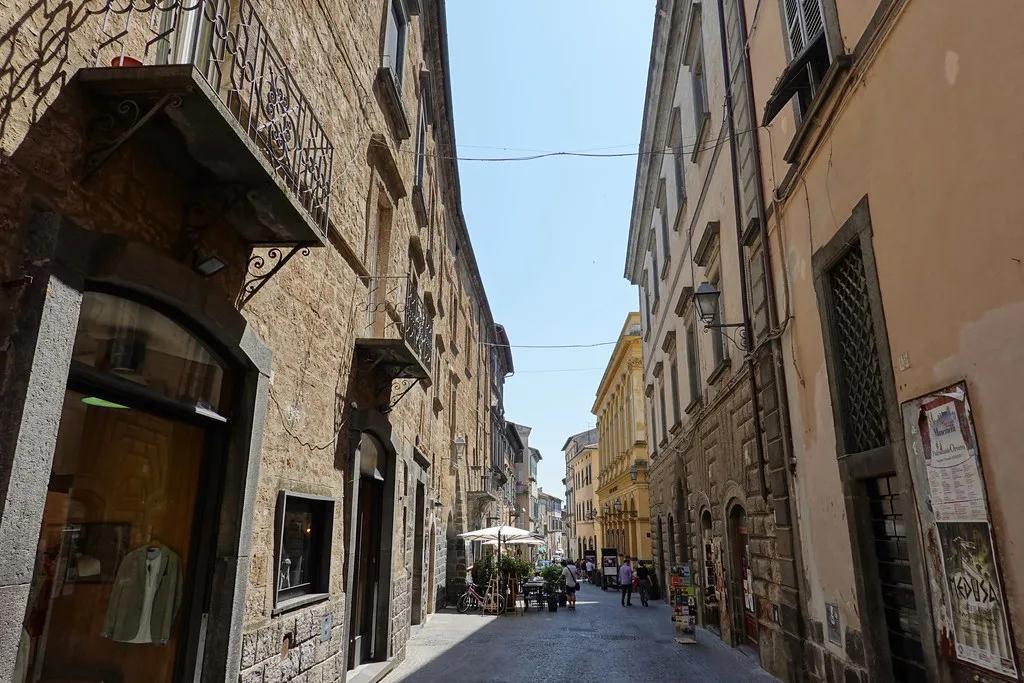
Orvieto's artisan tradition is visible in the small workshops clustered around Via del Duomo and the lanes off Corso Cavour. Ceramics are the signature craft, and some studios let you watch the work in progress, while others concentrate on lace, leather, jewellery and woodwork. Bottega Michelangeli, a woodworking workshop founded in the eighteenth century, is one of the oldest names in town and has its showroom on Via Michelangeli, a street worth walking for its own sake.
Prices in these independent shops are often gentler than in Rome or Florence, which makes Orvieto a reasonable place to buy a proper souvenir rather than a fridge magnet. Look for food shops selling olive oil, cured meats and truffle products alongside the crafts. Shop hours vary by family and season, so plan browsing for mid-morning or late afternoon rather than assuming everything opens early.
Wine Tasting: Enoteca or Vineyard
Orvieto Classico has been exported since Roman times, and its dry, light white is the drink to try here. The simplest route is an enoteca in the centre, where you can taste a glass or two without committing to a tour. A wine bar near the cathedral or on Corso Cavour is an efficient choice if your day is already full and you want a single, well-chosen glass with a plate of local cheese.
The fuller experience is a visit to a vineyard or a cellar outside the walls, where the volcanic soil and the local grape mix are explained at the source. Several tours leave from the city and may include a tasting paired with cheeses and cured meats, but availability varies by season and operator, so confirm details with the provider rather than relying on a listing. If you are not driving, arrange transport as part of the tour.
Pacing a Half Day Around the Quieter Stops
A practical pairing is an Etruscan morning followed by a garden afternoon: the necropolis and the Faina collection first, while you are fresh, then a slow lunch, then the Belvedere ruins and the Giardini Comunali. Alternatively, give the cathedral a focused morning and spend the afternoon on Pozzo della Cava, San Giovenale and a wine bar. Both routes avoid the mistake of trying to fit two wells, a tower and three churches into one day.
Season shapes the experience more than any itinerary. Spring and autumn give comfortable walking weather and thinner crowds, with harvest adding life to the wine country around the plateau. Summer brings heat and the biggest visitor numbers, so start early and keep the middle of the day for churches, caves or a long lunch. Christmas adds lights and the Nativity tradition at Pozzo della Cava, though exact dates change each year and should be checked with the site.
Plan Your Slower Visit
The pleasure of Orvieto's lesser-known places is that they let you stop being a visitor for an hour. A hand-dug well, a row of Etruscan tombs, a bench in the gardens and a glass of Classico cost little in time and repay it generously. Pick two or three stops that sit close together, check the practical details with the site or the tourist office the week you travel, and leave the rest of the list for next time.
If you are building a wider Italian itinerary, the same slow approach works elsewhere. Readers heading north can apply it to the hidden gems in Florence or, in the lagoon city, to the hidden gems in Venice, where stepping off the main route is the whole point. For related planning, see Orvieto Majolica and Ceramics: A Craft Lover's Guide.
Frequently Asked Questions
What are the best hidden gems in Orvieto?
The strongest candidates are Pozzo della Cava, the Crocifisso del Tufo Etruscan necropolis, the Belvedere temple ruins, the churches of San Giovenale and Sant'Andrea, the Giardini Comunali and the craft workshops around Via del Duomo. None is secret, but all draw far fewer people than the cathedral and the underground tours.
Is Pozzo della Cava worth visiting instead of St. Patrick's Well?
They offer different things. St. Patrick's Well is the larger architectural spectacle, while Pozzo della Cava is a smaller, privately run complex where the story is how the tuff was worked and how the city's water was managed. Choose St. Patrick's Well for scale and Pozzo della Cava for a calmer, more intimate visit, or see both if you have a full day.
Are Orvieto's lesser-known churches free to enter?
San Giovenale and Sant'Andrea function as parish churches, so entering costs nothing, though you should dress respectfully and avoid visiting during services. The wells, the tower and guided underground tours are ticketed separately, and there is no confirmed single pass covering all of them, so ask at the tourist office before assuming otherwise.
How long do I need for Orvieto's quieter sights?
A half day is enough for two or three stops done properly, such as the necropolis and the Faina museum in one stretch, or Pozzo della Cava plus the gardens. Trying to add the cathedral, two wells, the tower and several churches in a single day will leave you rushing, and the steeper lanes make that tiring.
Do I need to book the Etruscan Necropolis or Pozzo della Cava in advance?
Pozzo della Cava is privately operated and visited on a pre-booked tour, so confirm tour times and availability directly before travelling. The necropolis is an open archaeological site with no advance booking implied. For both, check current opening days with the operator or the tourist office close to your visit date.
Can I see these quieter places on a day trip from Rome?
Yes, if you choose selectively. Trains connect Rome with Orvieto and a funicular links the station area to the historic centre, so the trip suits a single day. Pick one cluster, such as the churches and gardens or the necropolis and the Faina collection, and keep the cathedral as the anchor rather than trying to cover everything.
Sources
Continue exploring
More guides you'll find useful